#Wordless Wednesday
#Wordless Wednesday
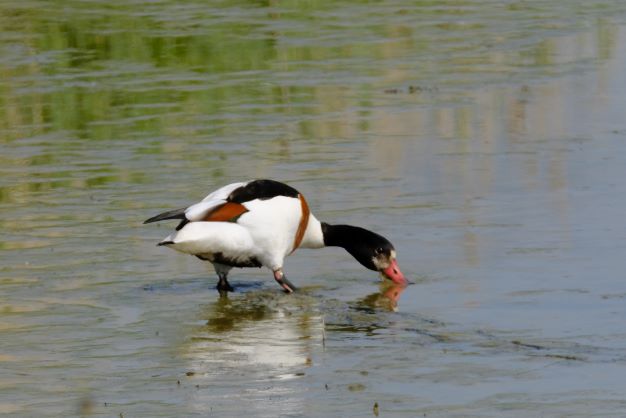
A day at Titchfield Haven nature reserve & Meon shore enjoying the sunshine and nature. There are real signs of summer with birds nesting and young birds in many areas.
Blackheaded Gull are sitting on nests and on eggs, others have fluffy chicks {not close enough to film yet}
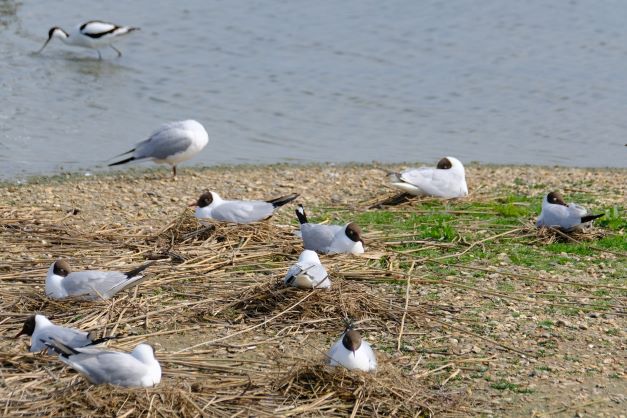
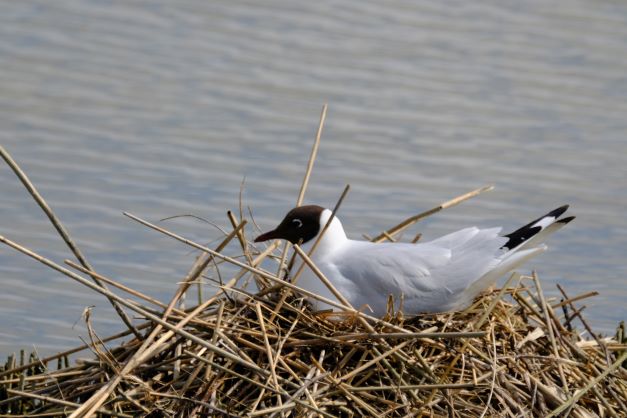

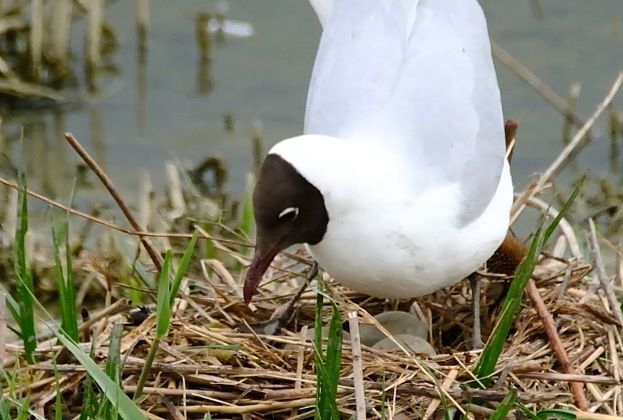
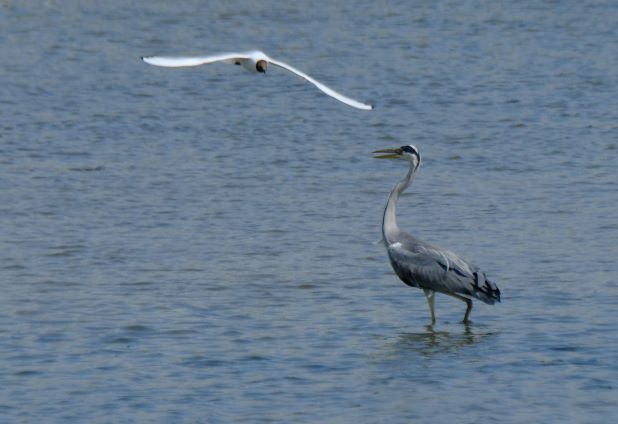
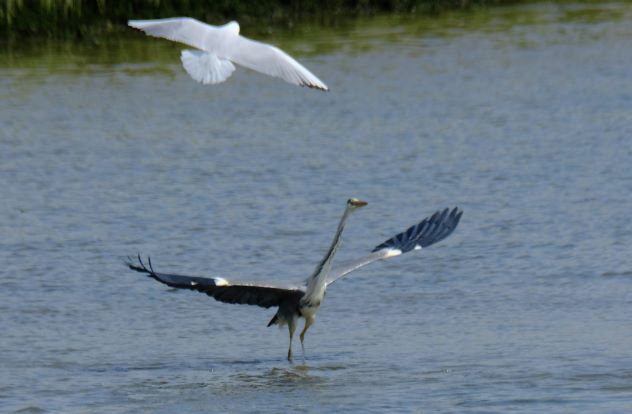
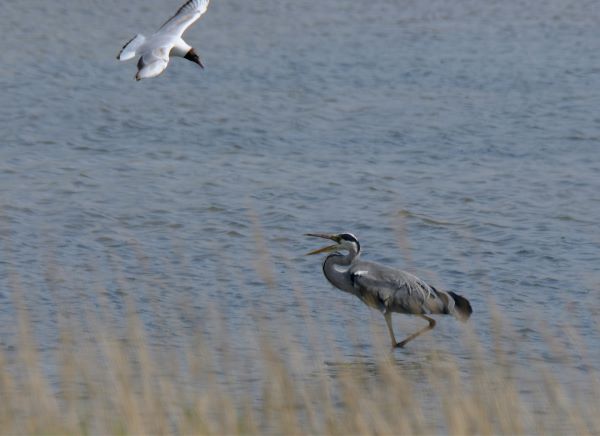
The gulls are very territorial in their nest areas and will chase off any invaders such as the larger Herring Gulls which will grab a chick for a quick meal. The pictures below show a Grey Heron being buzzed and steered away from the gull’s nests.

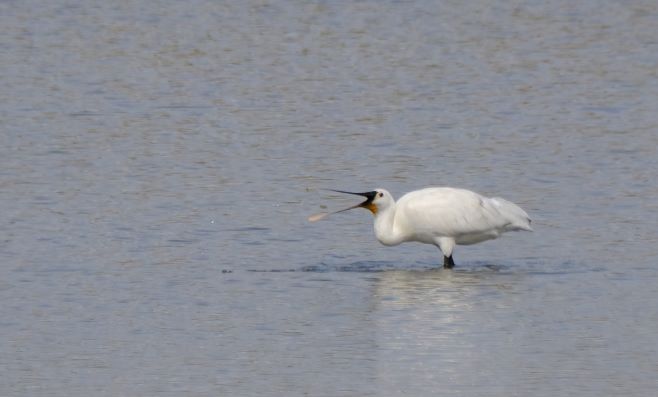
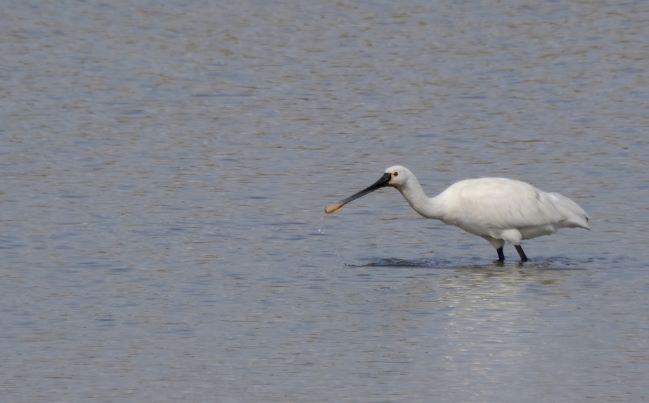
Over the weekend a pair of Spoonbills had been spotted in the nature reserve. There have been a few birds this year on the Beaulieu River across the Solent on the edge of the New Forest. Today one of the birds was still there and I was able to get a good view and some pictures. Spoonbills are named after their bizarre spatula-like bill. Young birds are known as tea Spoons. Although these birds bred in East Anglia during Medieval times, they had not bred in Britain for over 300 years. Then in 2010, when a small colony was discovered on the north Norfolk coast. By 2014 a flock of 30 birds were recorded in Norfolk ay Cley Marshes.


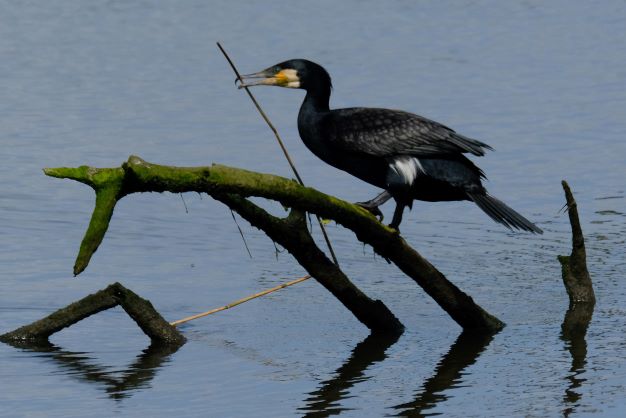
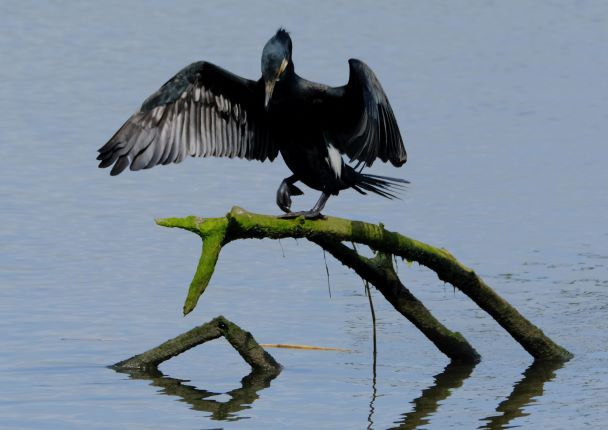
Cormorants are often spotted perched with their wings held out this is to dry their feathers off which are not waterproof.

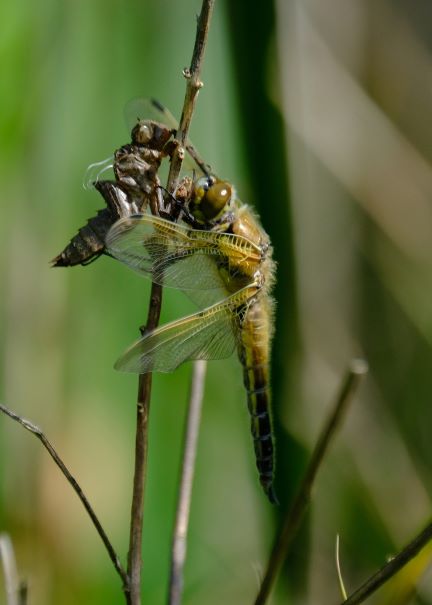
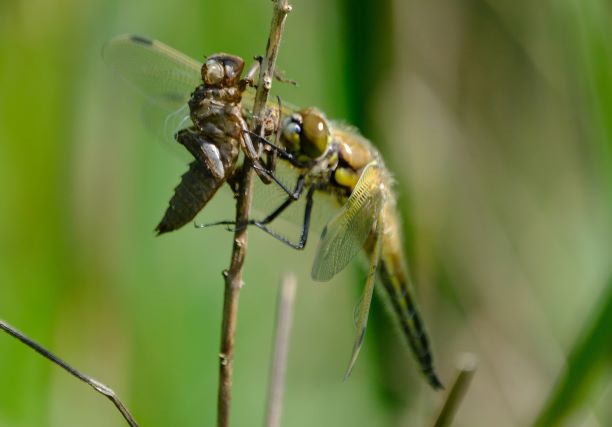
Dragonflies are starting to emerge, They have three stages in their life cycle: eggs which are layed under water these hatch into a lava{or Nymph} some species will remain in the lava stage and stay for in this state for several years. The final stage is the lava leaves the water and the dragonfly emerges. On the wing their life is short they mate and by the end of the summer they have gone.
This was a 1st for me a dragonfly just emerged from the lava drying its wings while perched by the empty husk of the lava.


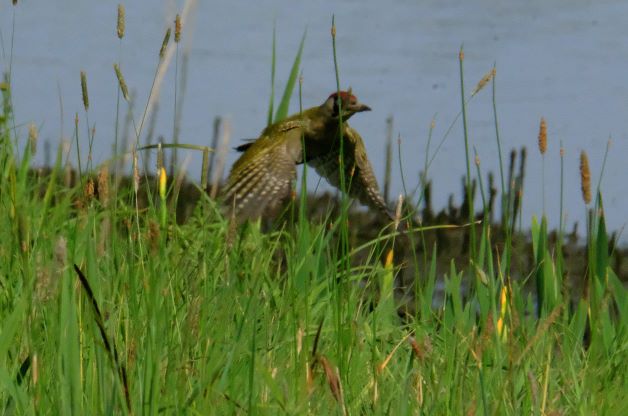
A quick view of a green Woodpecker.

Wintering in southern Africa. Wheatears have one of the longest migration routes of any songbird.
Birds spotted in the UK are summer visitors and passage migrants. Some birds do breed in the UK these are mainly found in western and northern Britain and western Ireland, although smaller numbers do breed in southern and eastern England.
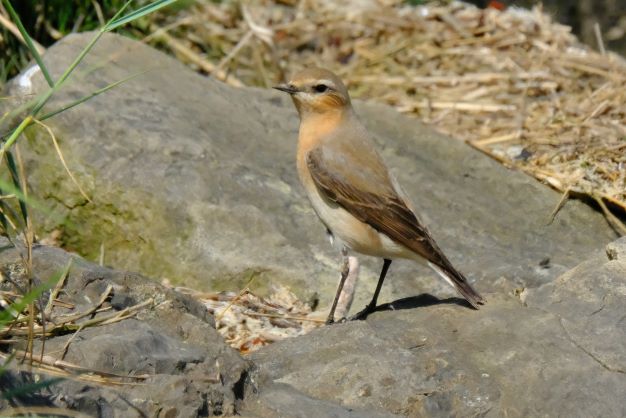

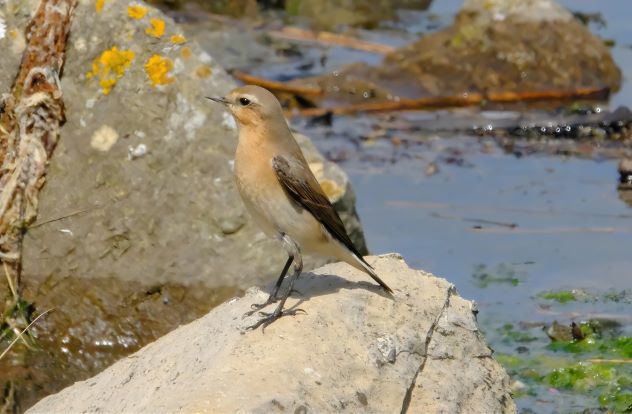
This bird is a female I spotted today at Calshot point Hampshire this morning.
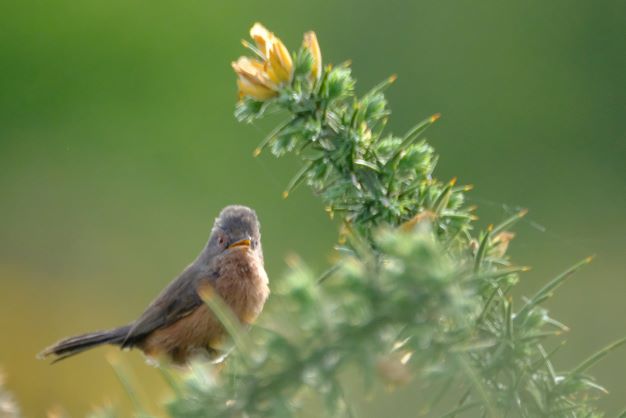
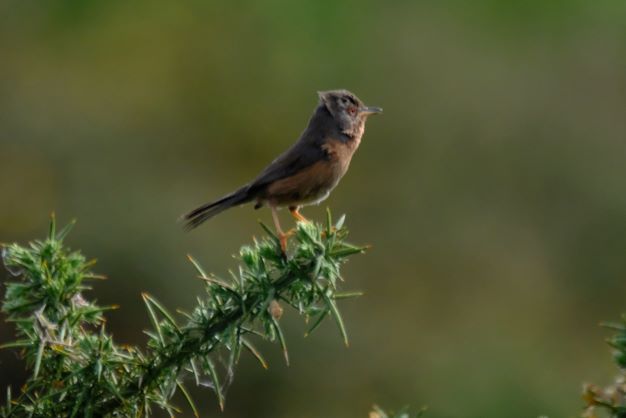
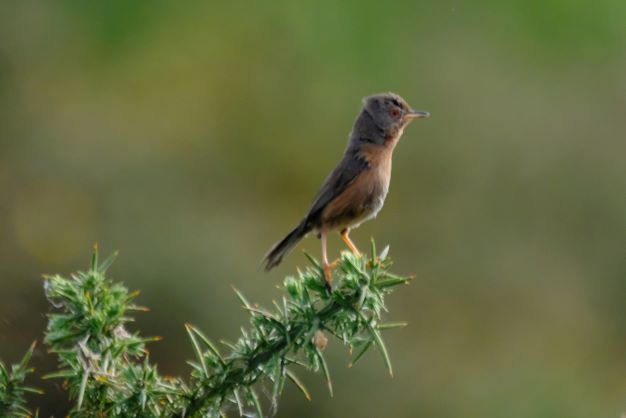
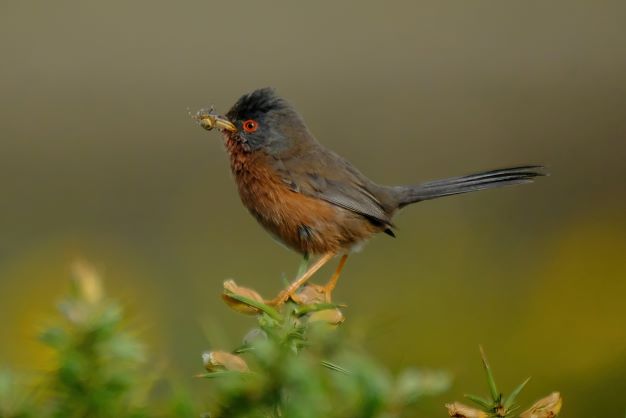
The Dartford Warbler is found in a few localised places in the UK. Back in early1960’s following servere winters Dartford warblers numbers crashed and only10 pairs remained (They only eat insects and do not migrate for the winter, which means it is vulnerable to cold weather and prolonged snow cover ). On a positive note today, there are about 3,200 pairs nesting.
They are dependent on dry heath habitats, particularly on gorse in good condition. It is a ground-nesting bird, preferring to breed under the protective cover of dense heather or compact gorse. It makes a grassy, cup-shaped nest, in which it lays three to five eggs. It can have up to three broods from April to July.
A bird I only saw once in my childhood today I know of 4 places where they are doing well close to my home.

Wordless Wednesday
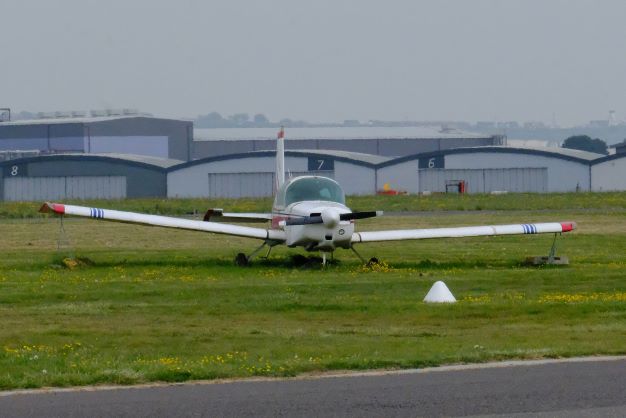
Solent airport’s origins date back to the First World War. In 1917 it was established as Royal Naval Air Station Lee-on-Solent (HMS Daedalus). Its first role was as a seaplane training base. During the Second World War a number of Naval Air Squadrons were posted or formed at Daedalus.
In 2006, whilst undertaking repairs to the runway, repair crews discovered an unexploded pipe bomb, which was over 60 feet long, placed underneath the runway during the war and was designed to destroy the runway of the airfield in the event of a German invasion. The pipe bomb and 19 others were subsequently safely removed.
Today Solent airport is a civil airport and the base for the Solents search and rescue helicopter.








Titchfield Abbey.
The Abbey of St Mary and St John the Evangelist was founded in 1231/2. At the Suppression of the Monasteries the abbey was granted in 1537 to Thomas Wriothesley, later 1st Earl of Southampton. He remodelled the abbey into a palace. Over the years Royal guests at the house included Edward VI, Elizabeth I and Charles I.
Thomas Wriothesley’s grandson Henry, 3rd Earl of Southampton, was a friend of William Shakespeare and it is said that some of Shakespeare’s plays were performed at Titchfield Abbey for the first time.
On the death of Henry, the palace passed through several families. Around 1781 in disrepair, most of the building was demolished for its building stone. Today the ruin is a scheduled monument in the care of English heritage.


Medieval Floor tiles the tiles were covered up by the courtyard of the palace house, where they lay preserved for over 400 years. They were rediscovered during excavations in 1923. They are covered up over winter by English Heritage to protect them from the weather.


Some small birds spotted on a walk in the New Forest yesterday. Walking on marked paths/trails to avoid disturbing ground-nesting Curlew and Lapwings. Much of the New forest is Heath and Moor and an important habitat for these ground-nesting birds.
Distant and high flying Skylarks were fairly abundant on my walk.

The flowering Gorse bushes provided some good spots for the Rare Dartford Warbler. They nest deep in these bushes and the thorns give the nests vicious and effective protection from praditors.

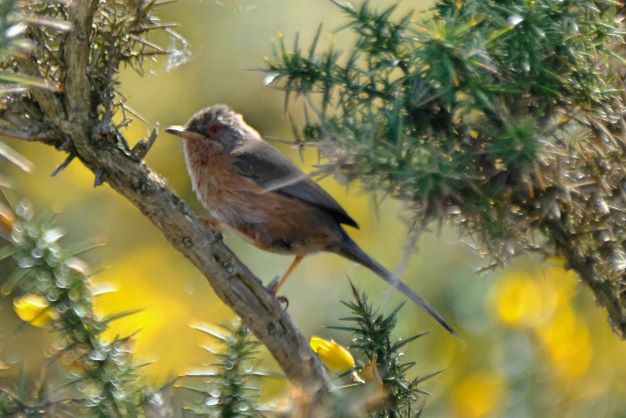


Some of these birds seemed to be collecting cobwebs I presume for glue for their nests.
Others were collecting insects so I think there must be some nearby nests.
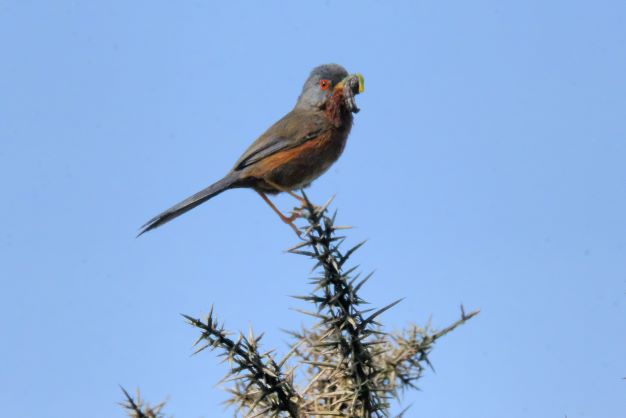
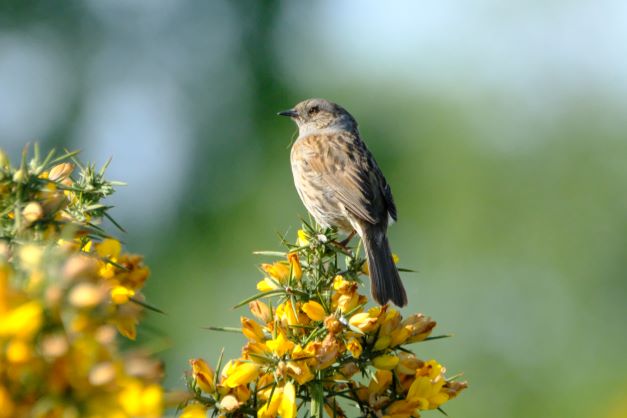
Dunnock’s caught me out a couple of times pretending to be a Dartford Warbler until I got a bit closer!
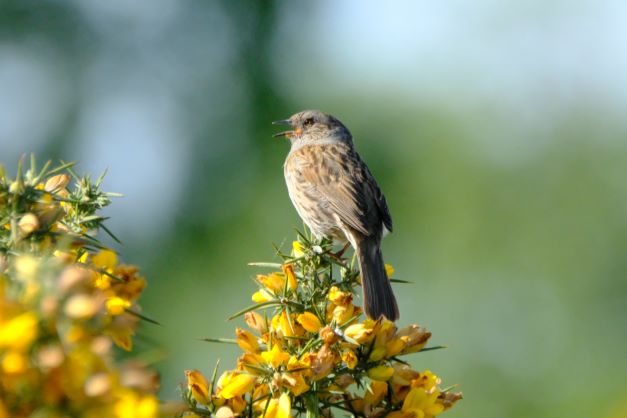
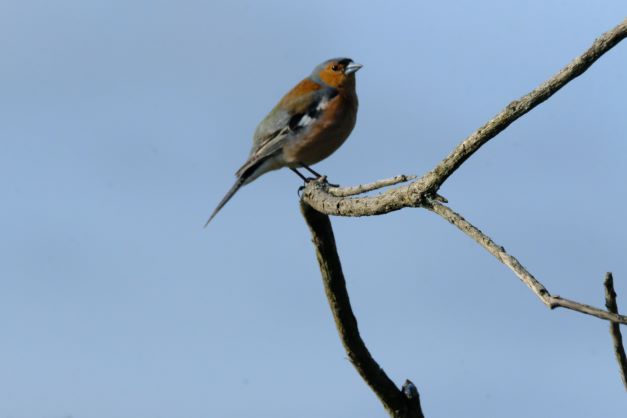
Also spotted a Male Chaffinch.
I found these duck eggs which had been predated probably by a crow or a magpie a fair distance from any pond or river.

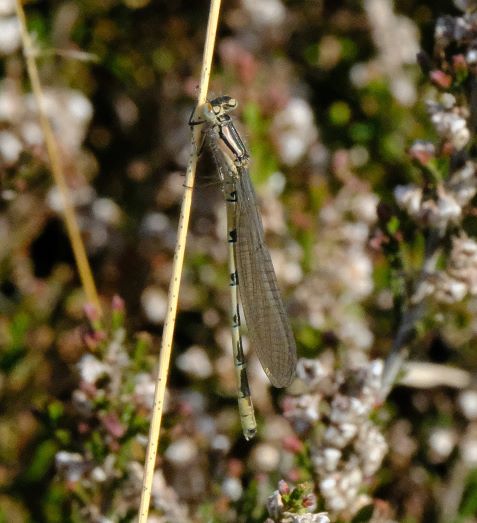
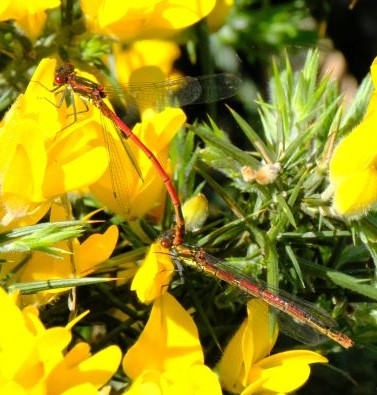
As well as bird insects are starting to appear.
The round-leaved sundew a heathland plant found in the New Forest has round leaves which have sticky, ‘dew’-covered tendrils that tempt onto it unsuspecting insects as prey. The ‘dew’ is very sticky, trapping the insect; the sundew’s tendrils detect the presence of its stuck prey and curl inwards to engulf it. After a while, the whole leaf wraps around the insect which is digested. The acidic habitats the round-leaved sundew lives in don’t provide enough nutrients, so it has evolved this carnivorous way of life to supplement its diet.


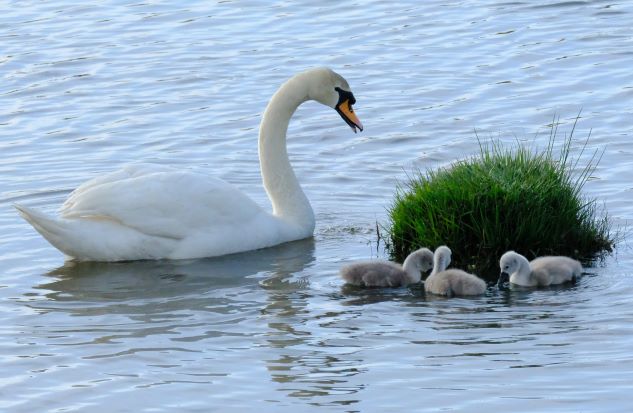
Today I spotted this year’s 1st cygnets – only a few days old. Three youngsters doing well.




The grey squirrel was introduced into the UK in the 1800s today the grey squirrel is classified as an invasive non-native species. they are widespread in England, Wales and central Scotland.
 Continued Reflections from my World.