Mandarin.

Another established non-native bird.
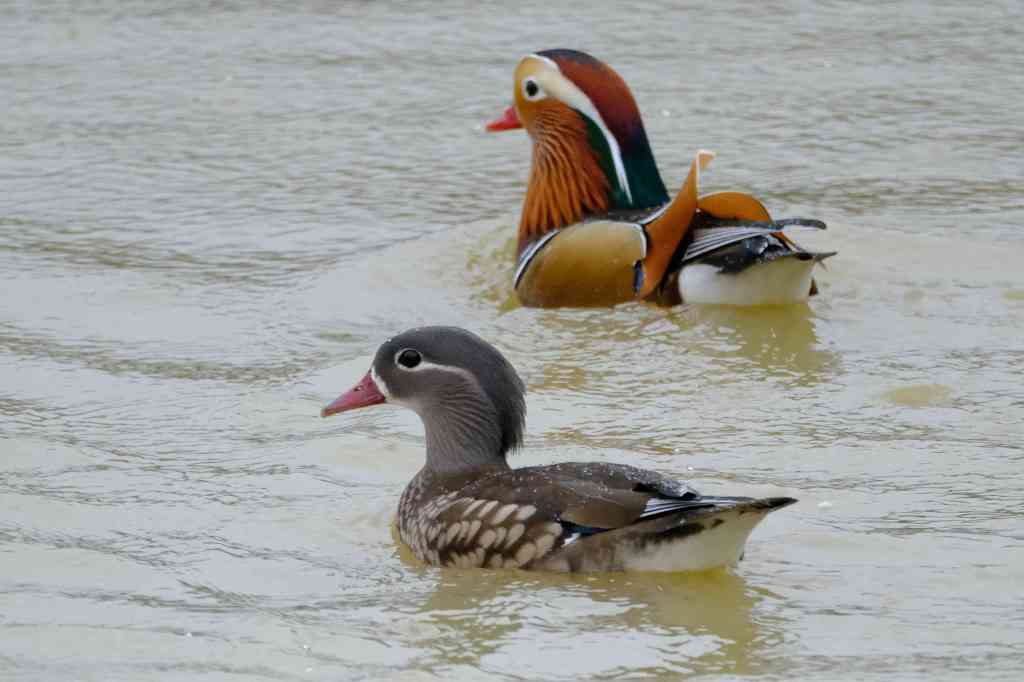
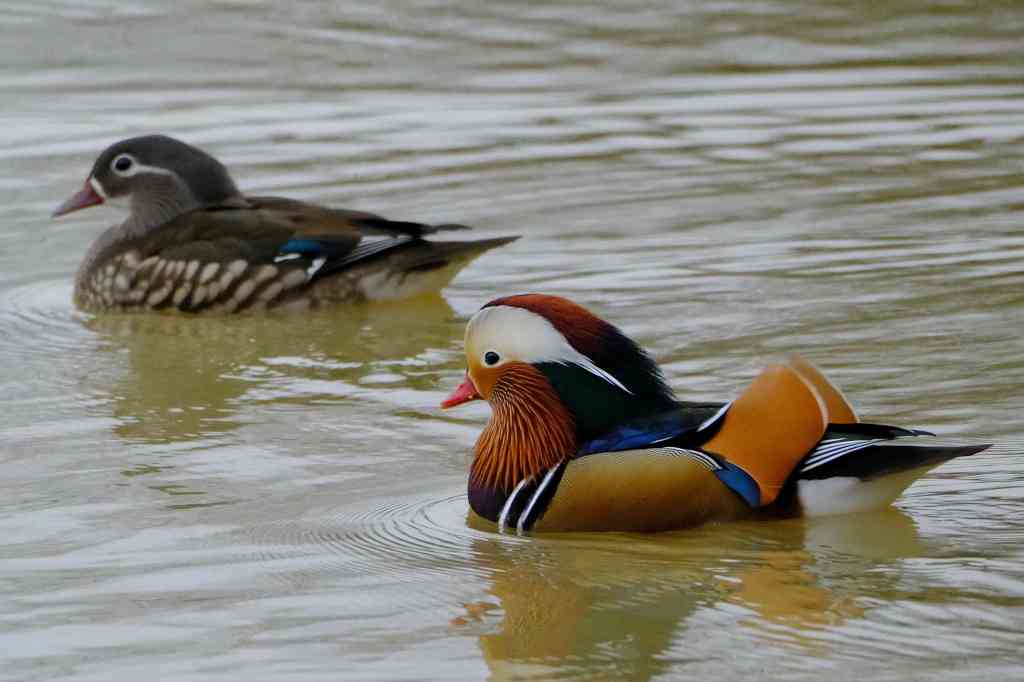
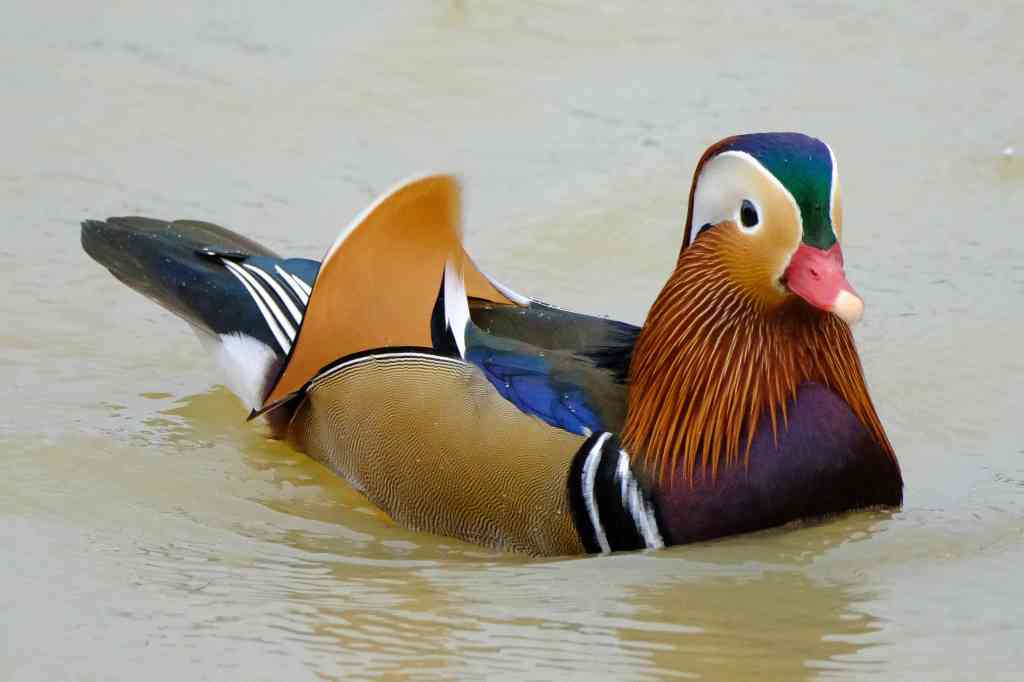
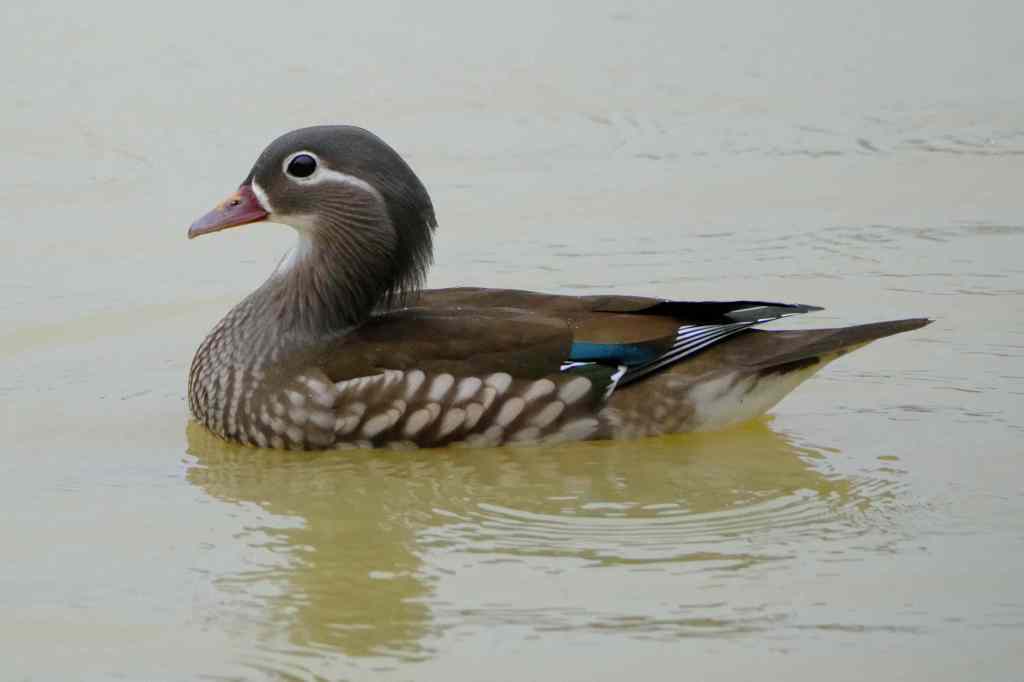
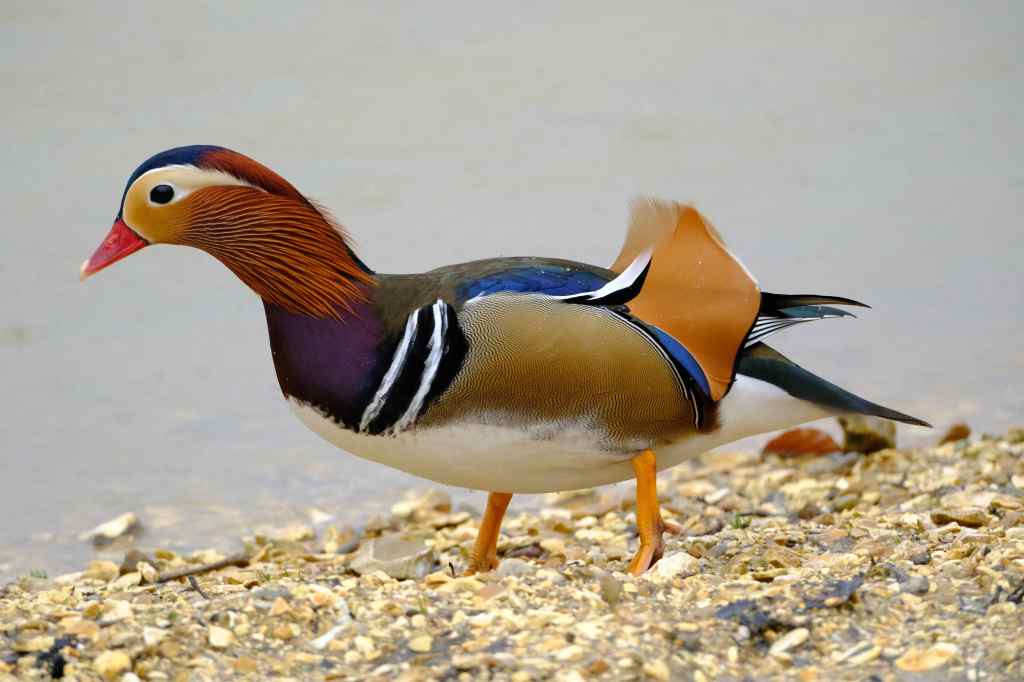
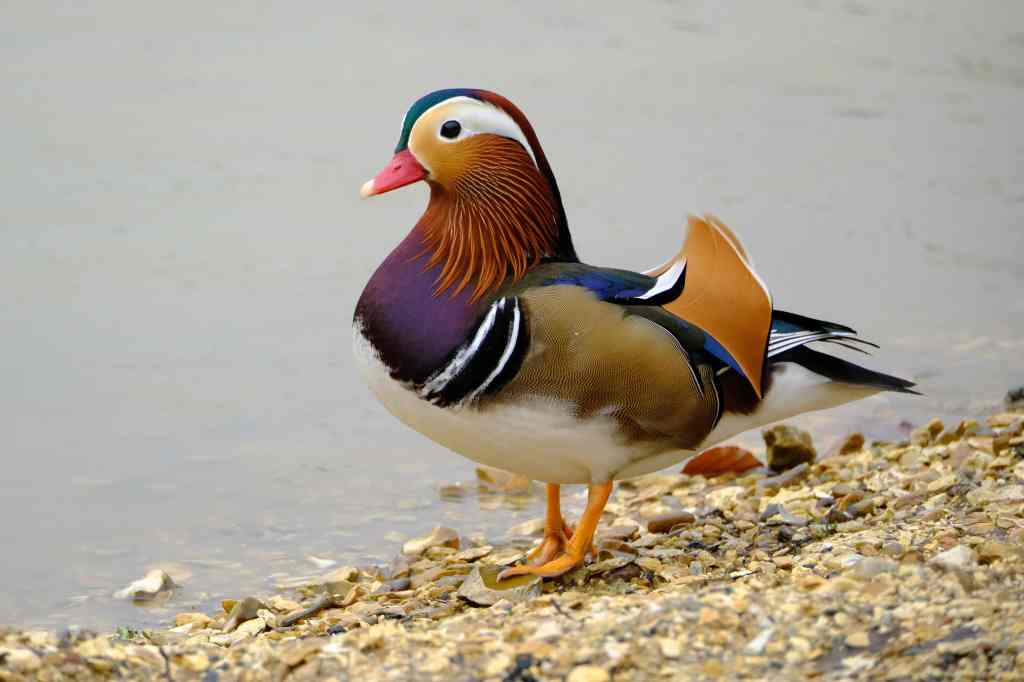
Mandarin Ducks were introduced from the Far East, They escaped, or were deliberately released, from captivity in the UK. A rather shy bird, often seen hiding beneath overhanging bushes, they form small flocks. The male bird has very elaborate and decorative plumage with distinctive orange feathers on the side of the face, a purple chest, and large orange feathers which look like small sails on its back. The female is not brightly coloured, with a grey head, white stripe behind the eye, brown back, and mottled lower sides. There was a flock of 10 birds today on the pond I visited today {the most I have seen there.}

These ducks nest in holes in trees, sometimes high up and a long way from the water. After the ducklings hatch, the female will coax the young to jump from the nest. Once they have left the tree make their way back to the water. The Drake will return to the family and help to protect the ducklings
Goosander.

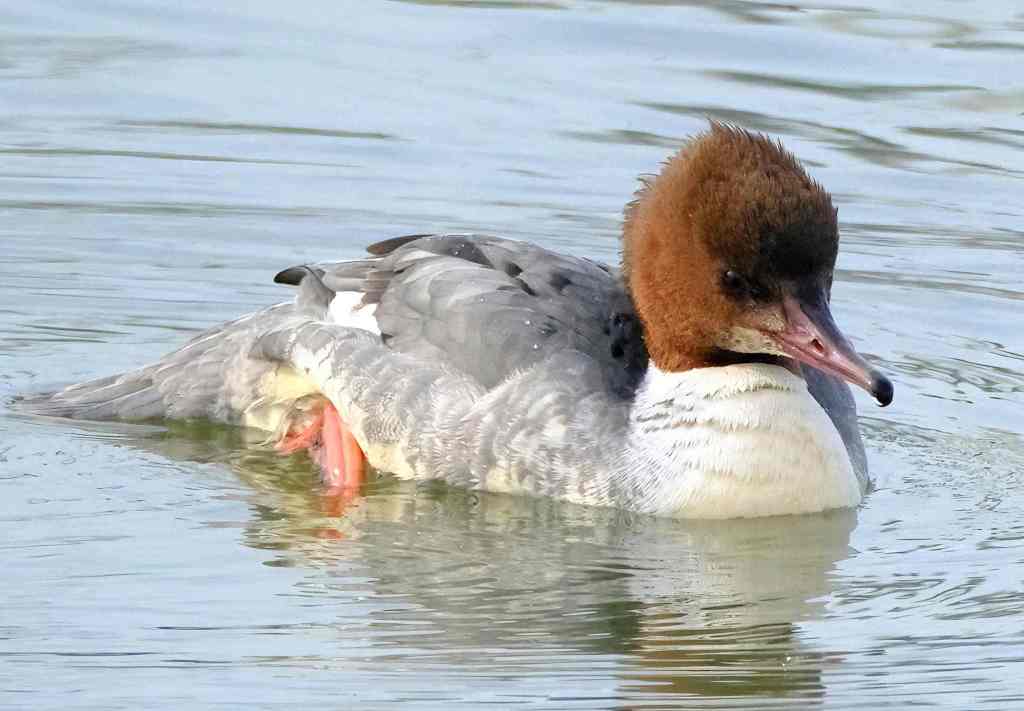
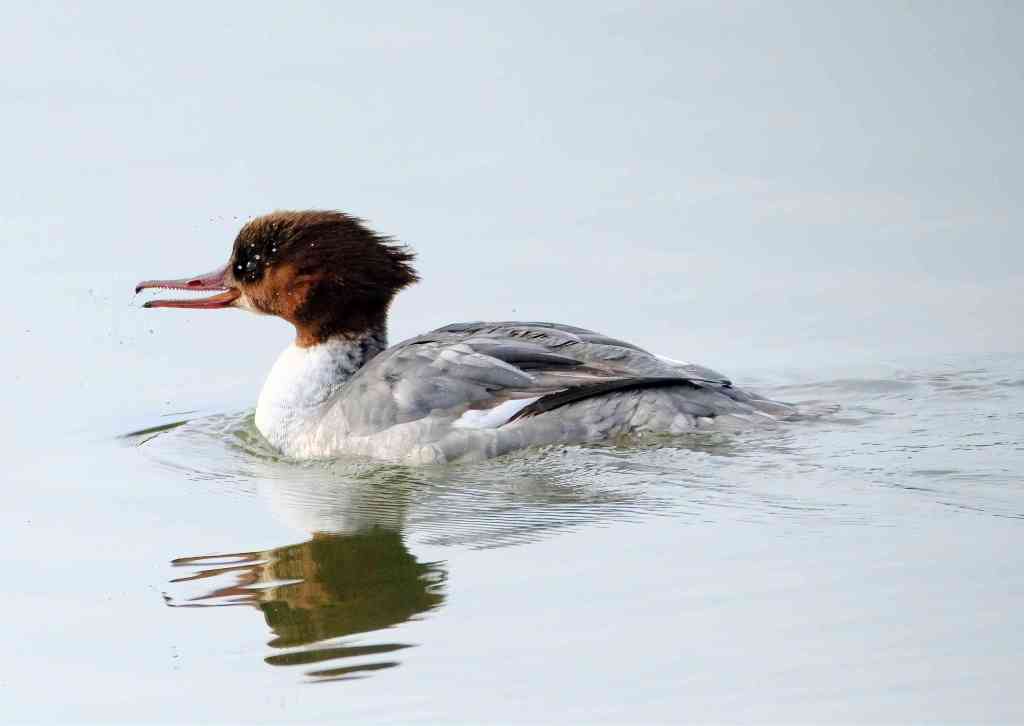
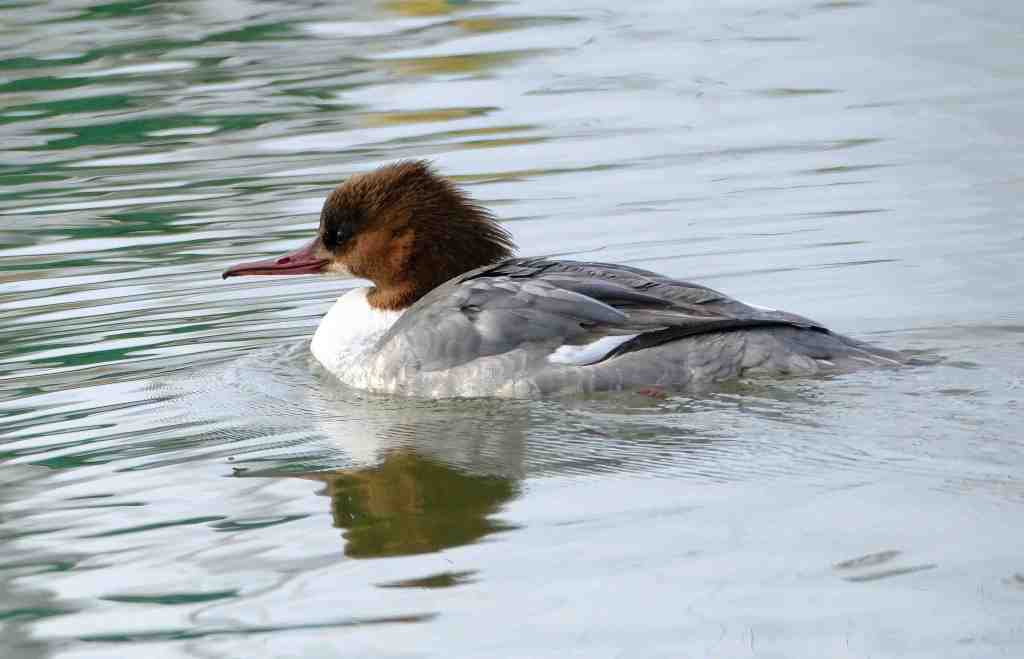
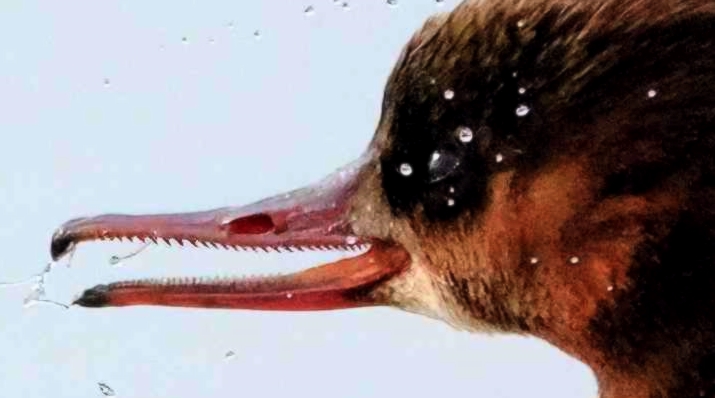
This diving duck is a member of the sawbill family, named for their serrated bills, that they use for catching fish. A largely freshwater bird, the Goosander first bred in the UK in 1871. This female was in the harbour at Titchfield Haven {the male has a green head and their body has more white}
Wagtail.

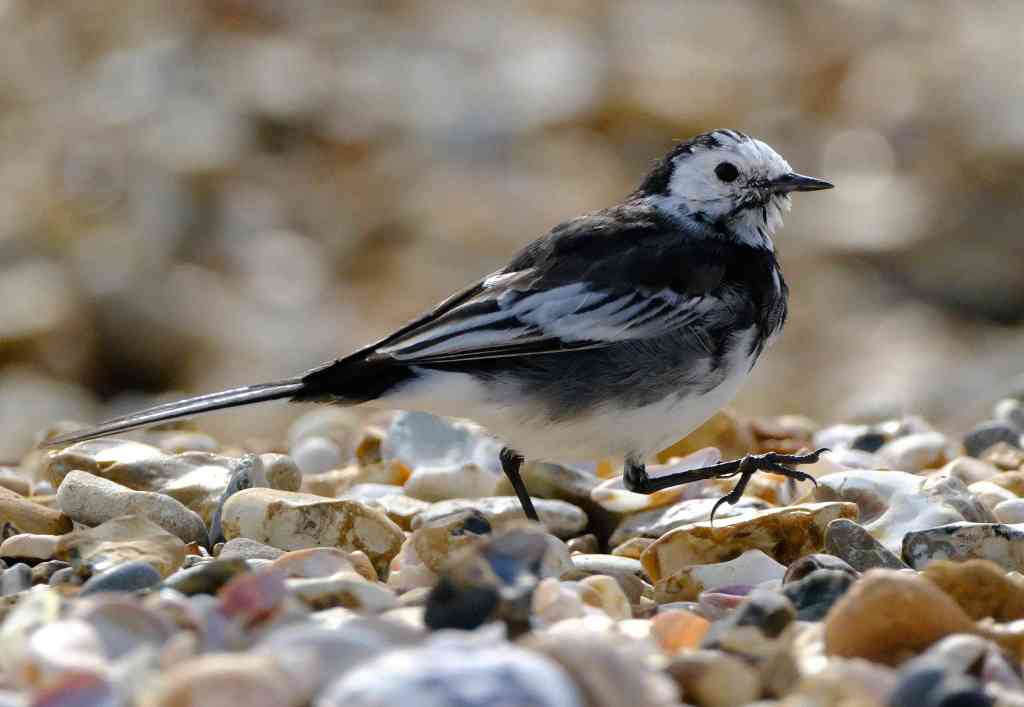
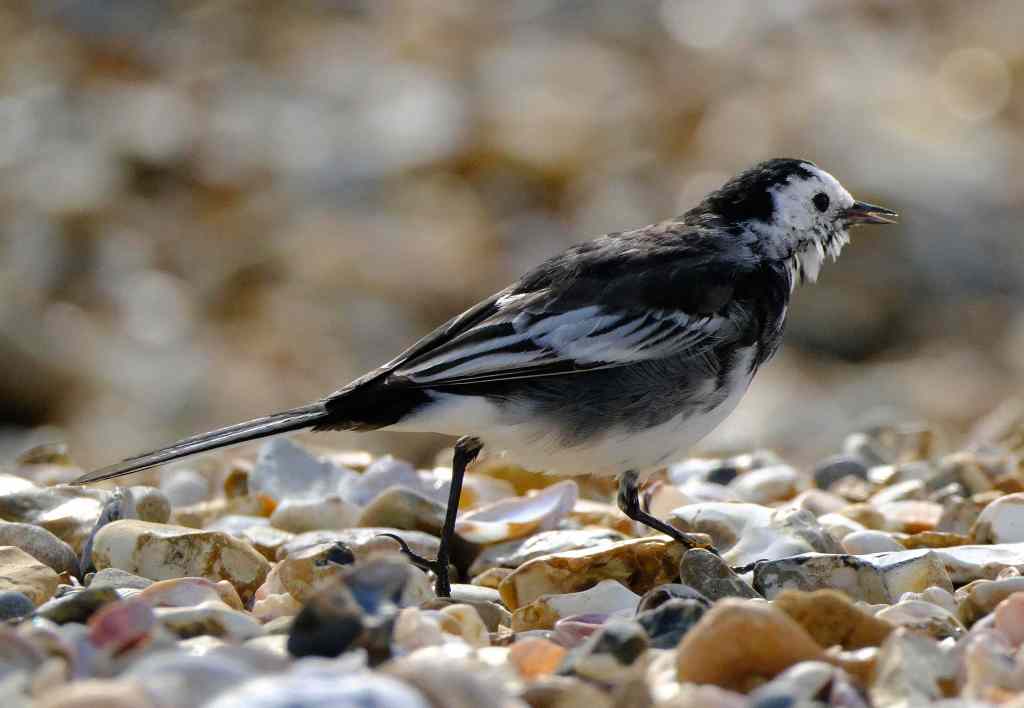
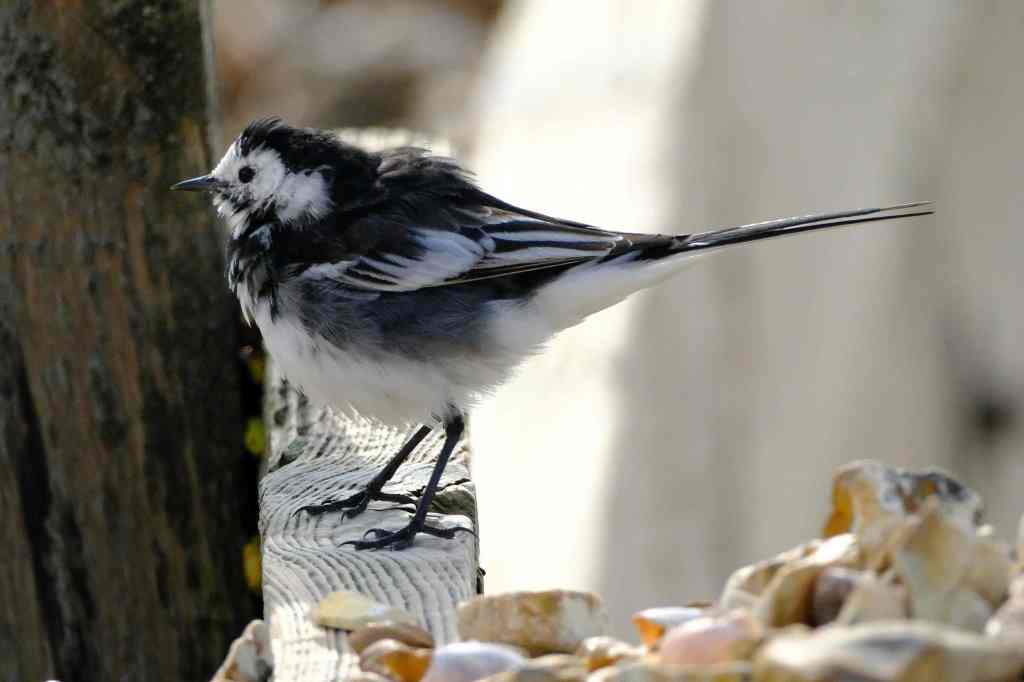
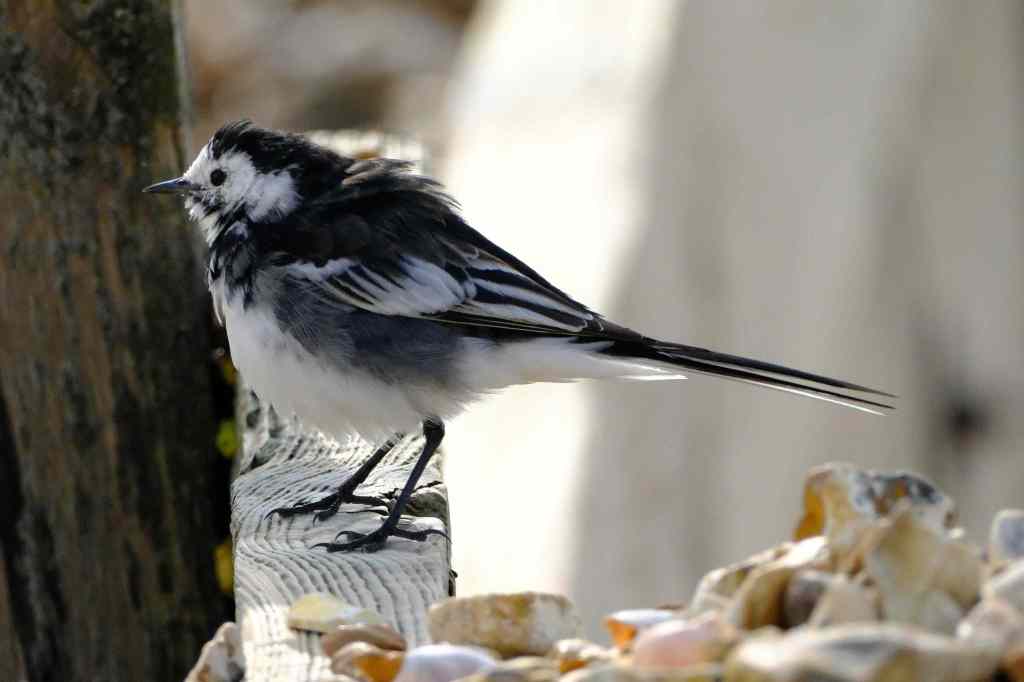
A Pied Wagtail on Meon Shore Beach. Frantically wagging their long tail up and down is an easy way to ID these little birds. I regularly see Pied and Grey Wagtails and very occasionally Yellow Wagtails. Their favourite food is insects.

Still, the photographs below are stitched together and run fast to show tail wagging.

Snipe.

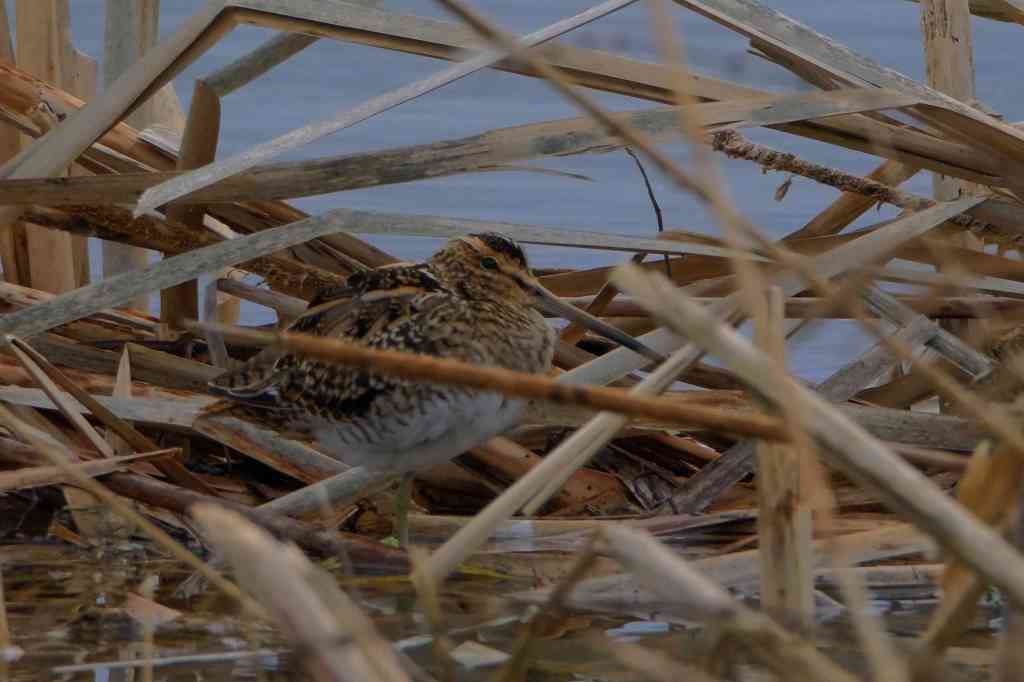
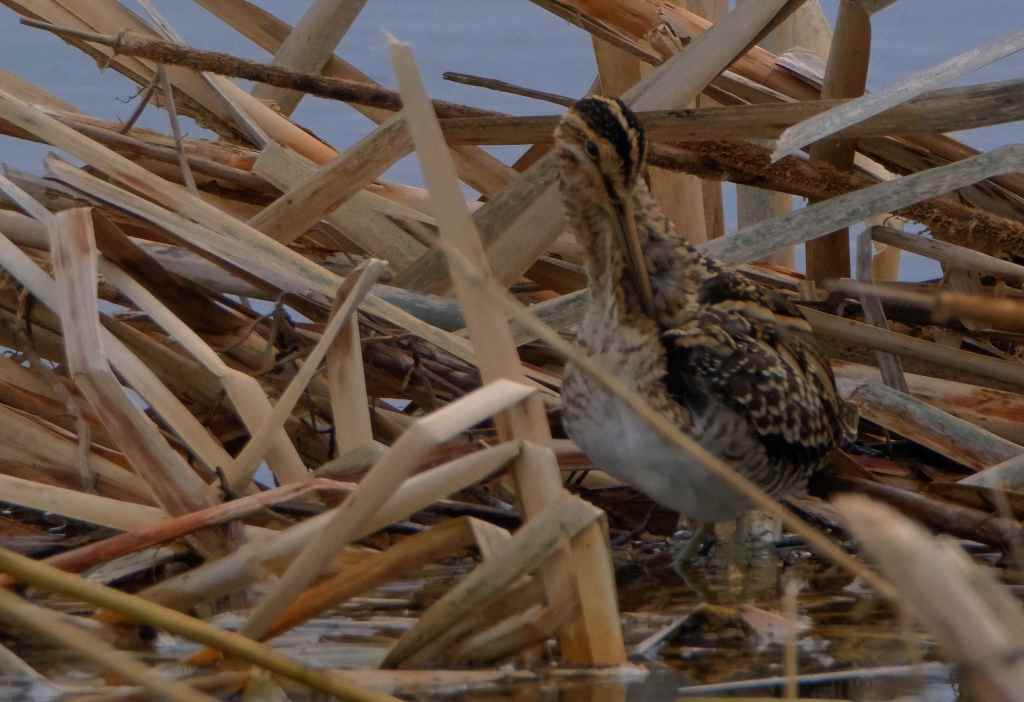
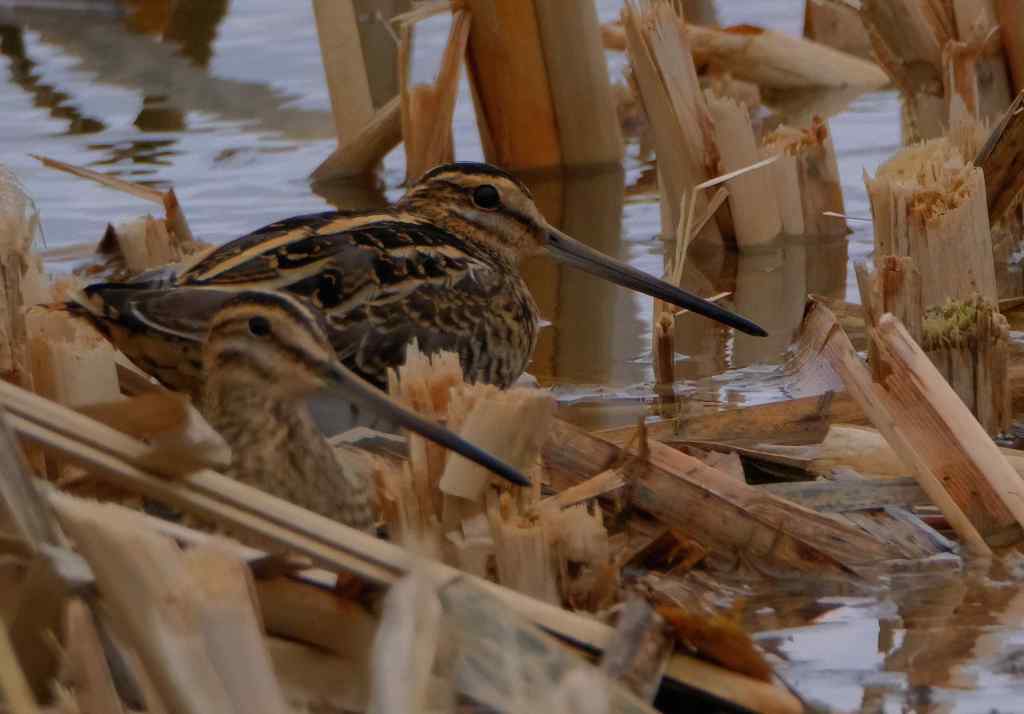
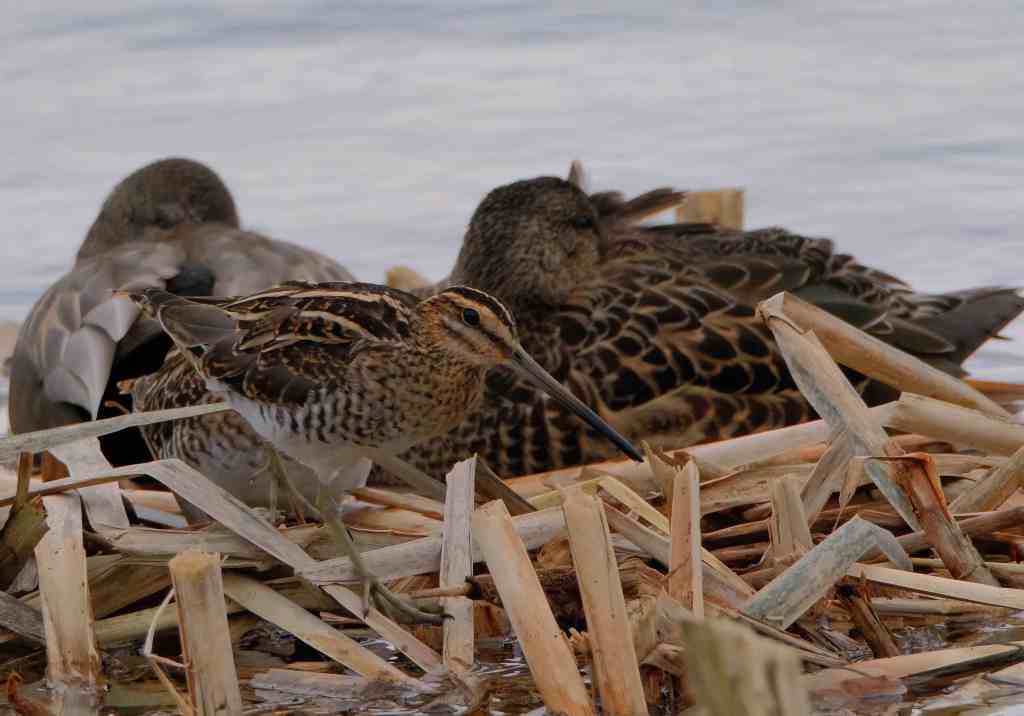
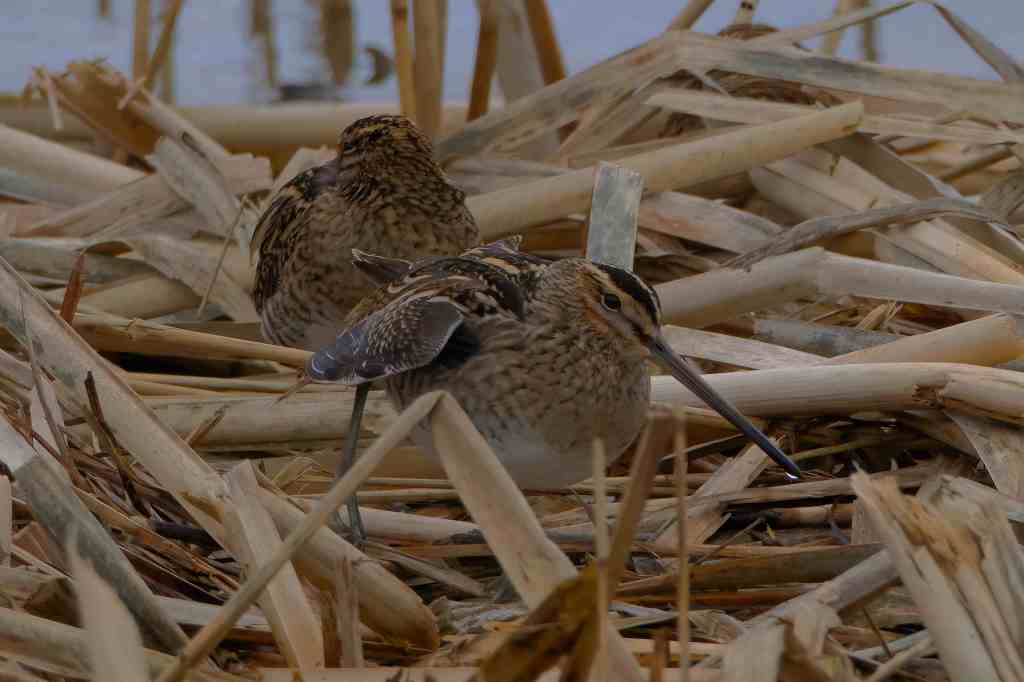
The snipe is a medium-sized wader, they are found in marshes, wet grassland and on moorlands, they use their long, probing bill to find insects, earthworms and crustaceans in the mud. There were a good number of Snipe at Titchfield Haven this morning.

The Snipe is another bird that is so camouflaged that it blends very well into its habitat. They are often invisible until they move. There are 3 birds in the picture below I only saw 1 when I took the picture.

Greylag

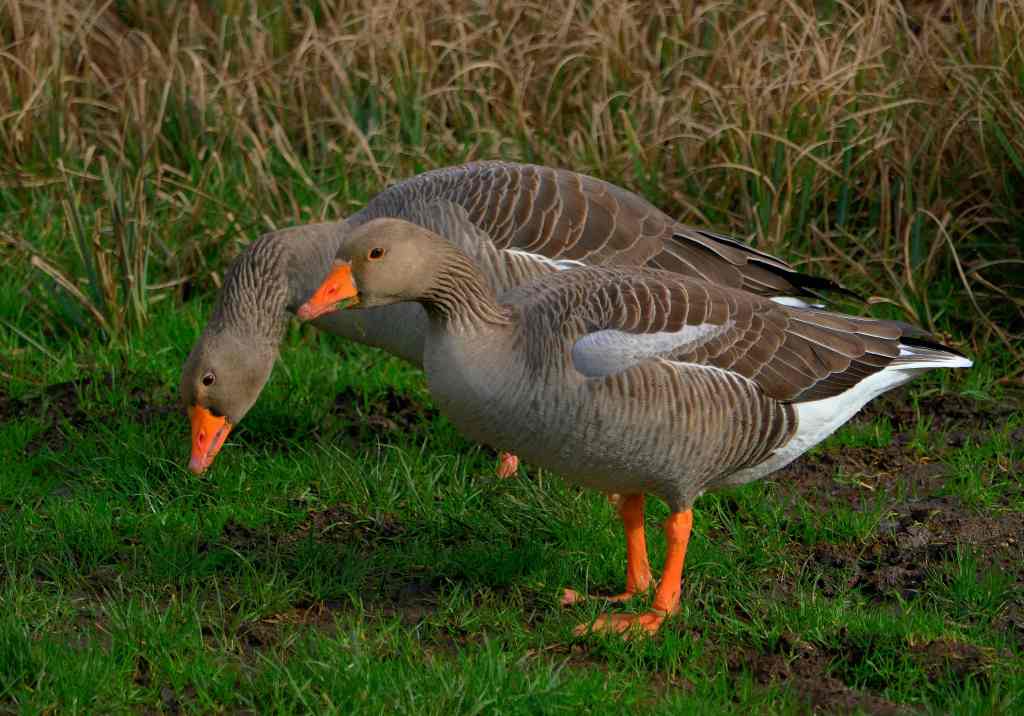
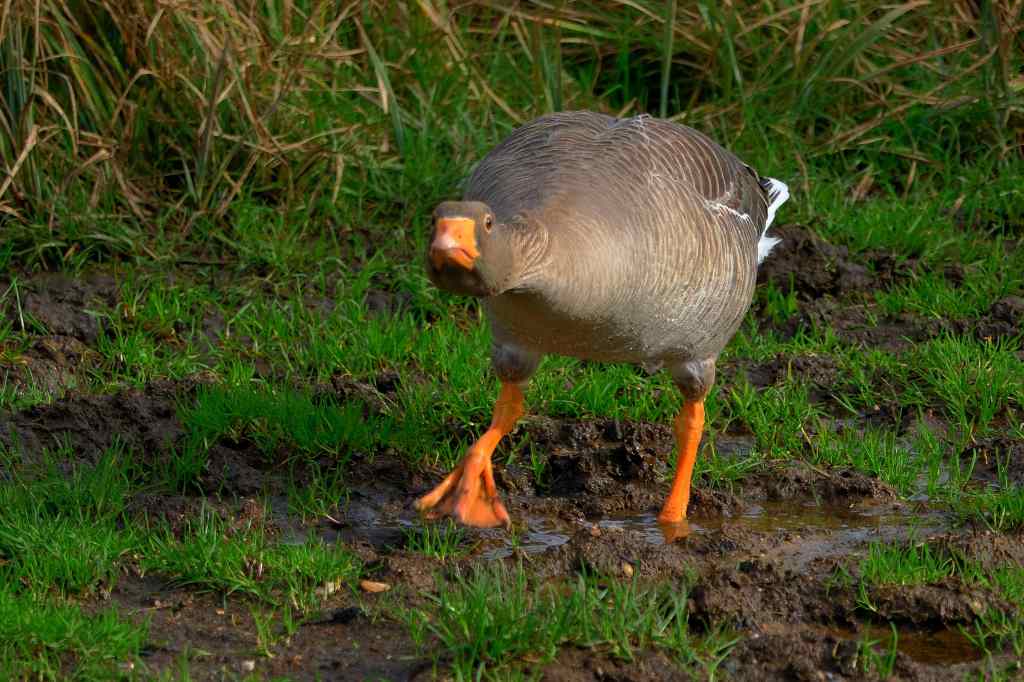
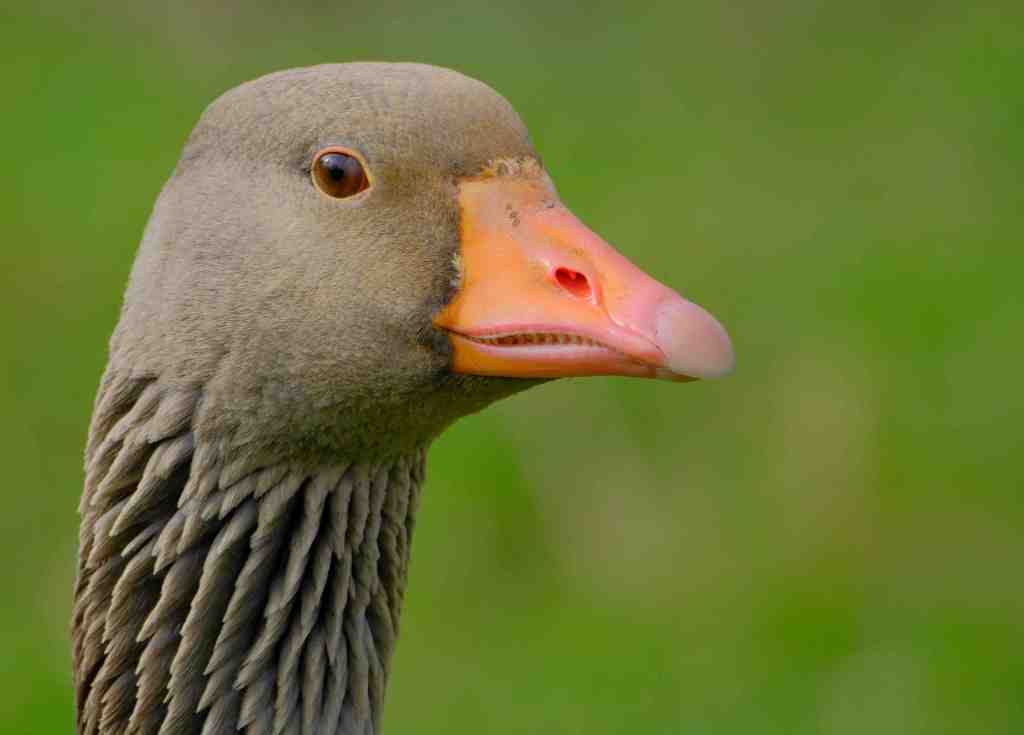
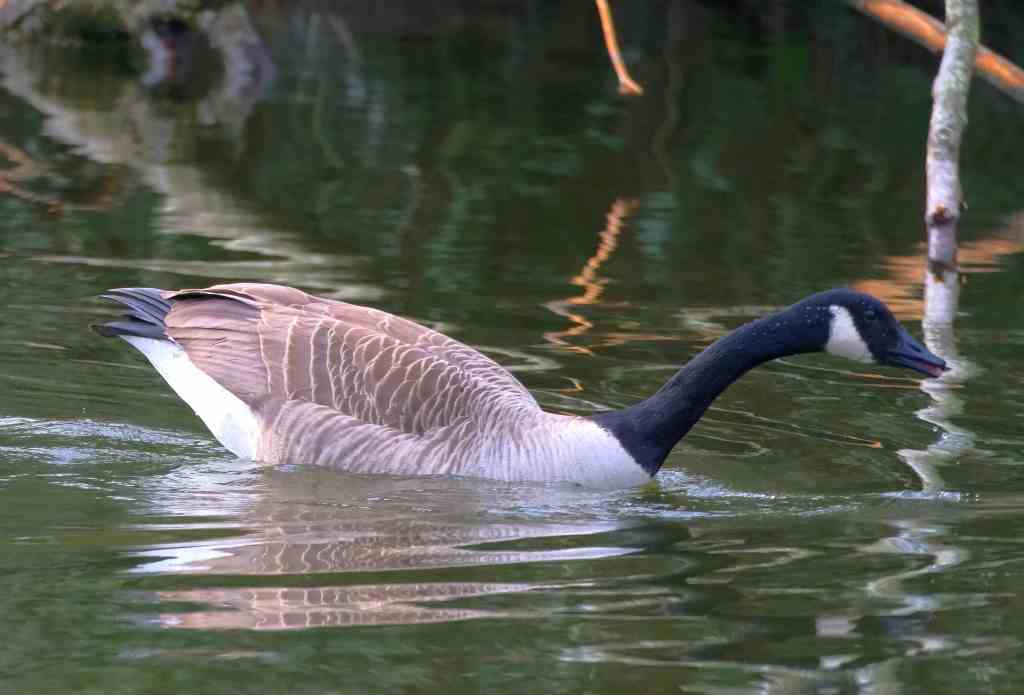
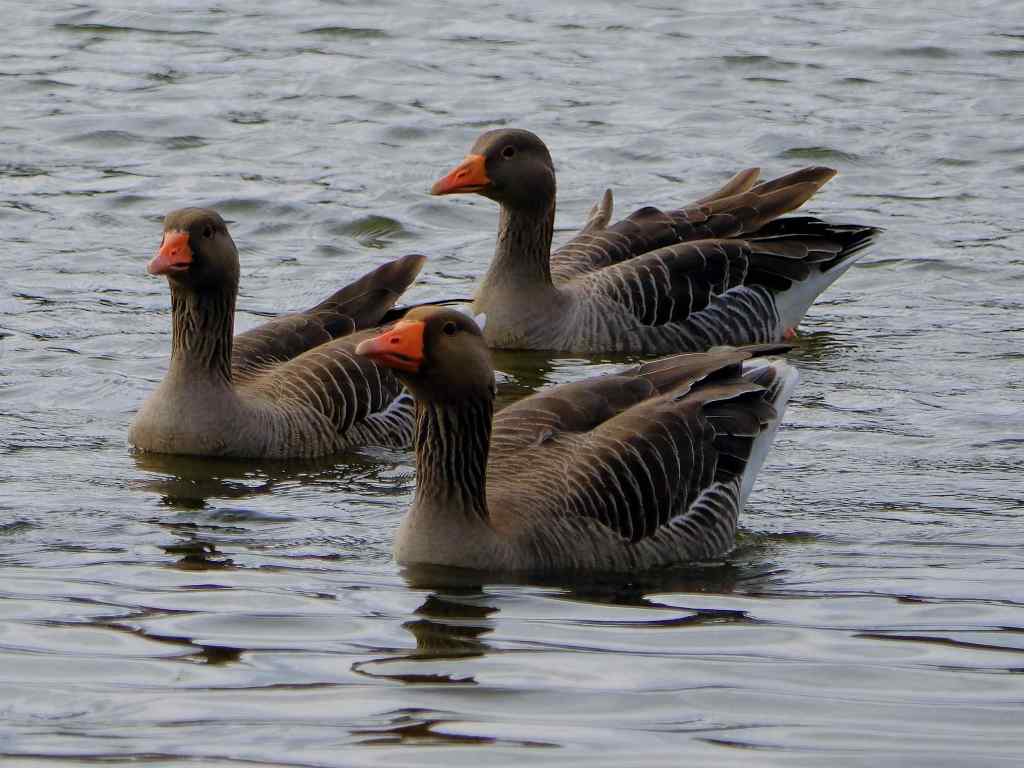
Our commonest native goose, the greylag. They are found around gravel pits, lakes and reservoirs all year round in southern Britain. These tend to be semi-tame birds. The native birds and wintering flocks found in Scotland these truly wild geese.