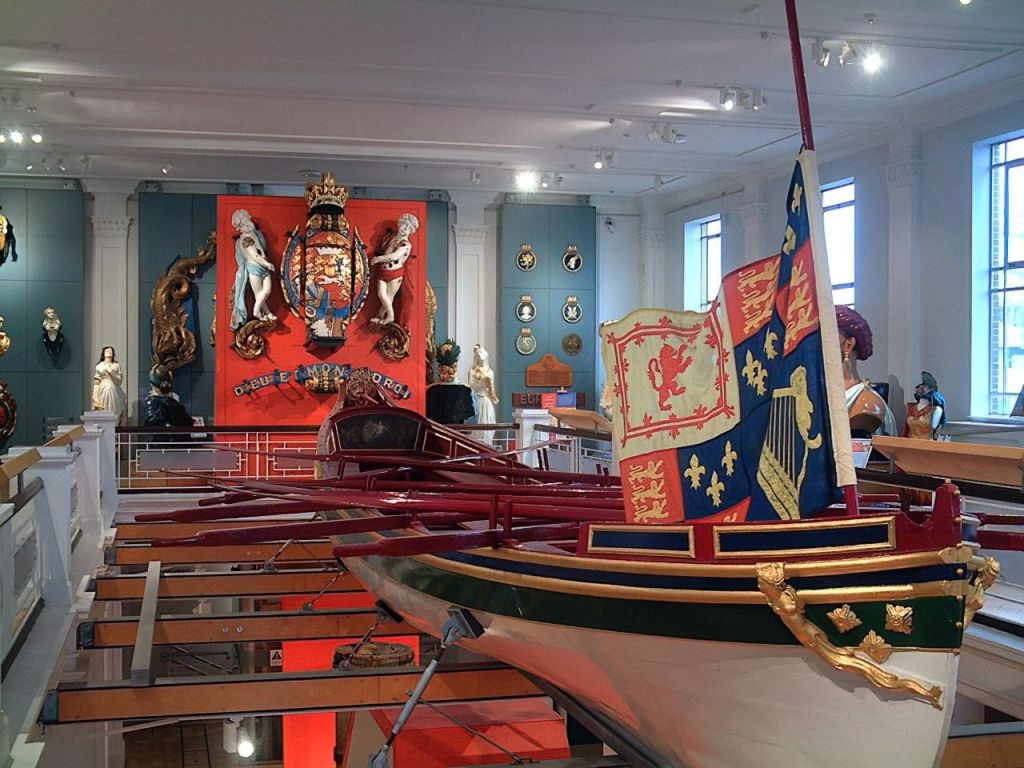
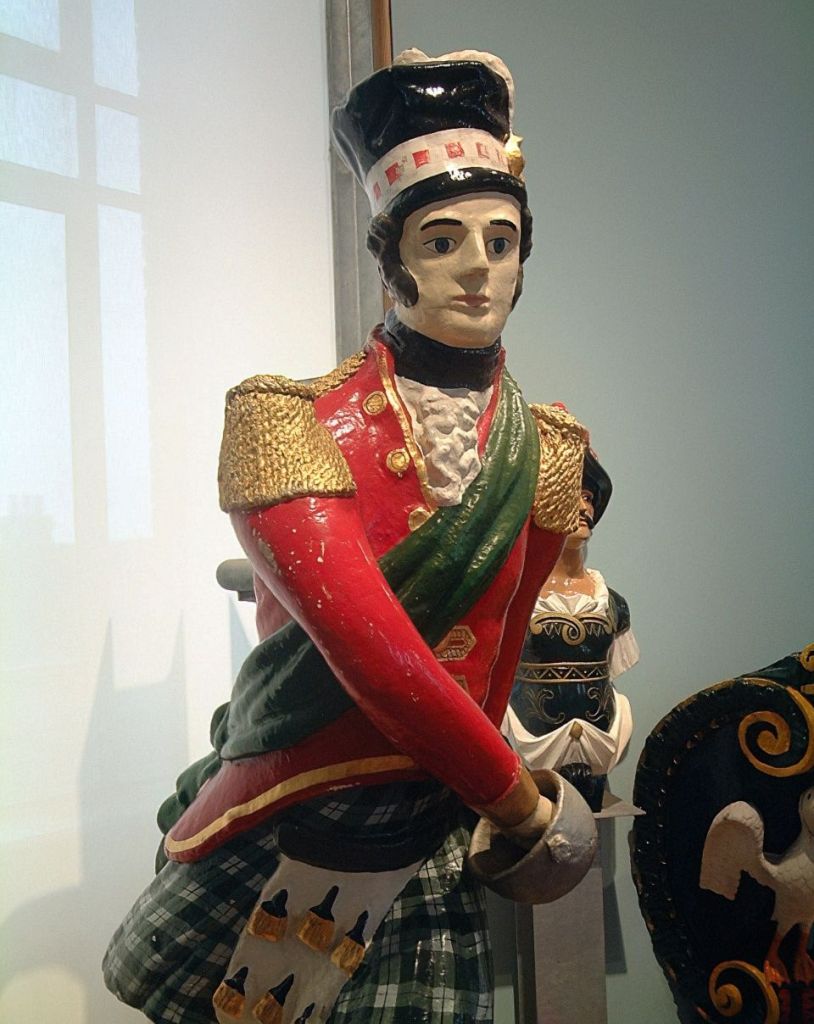
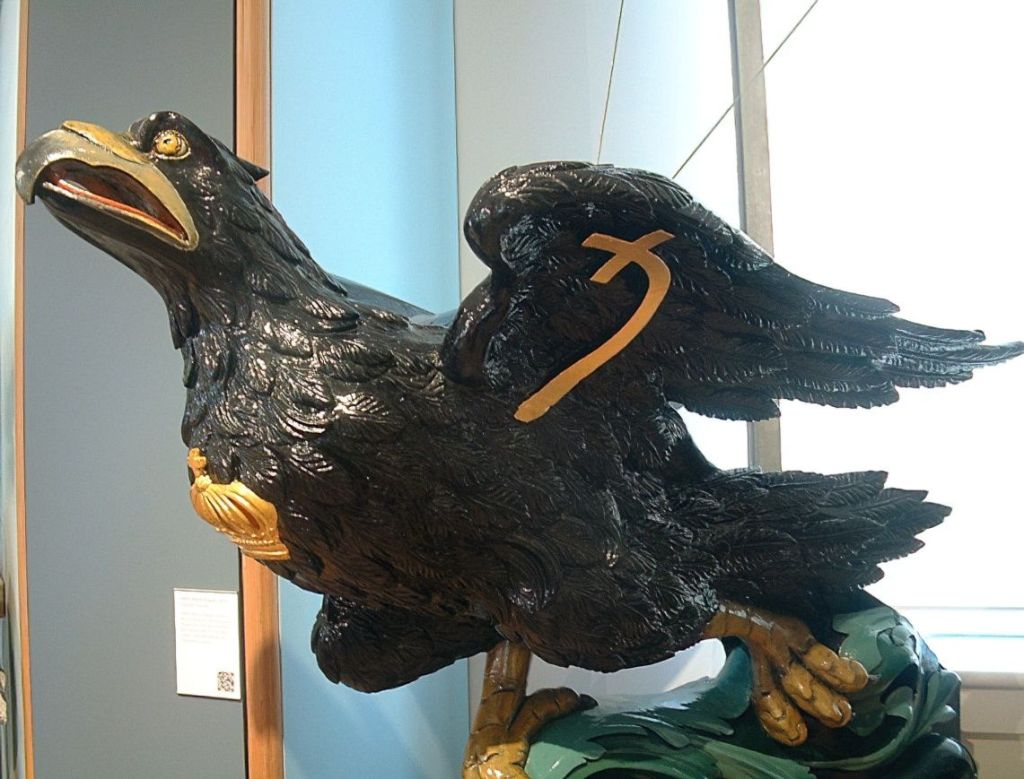
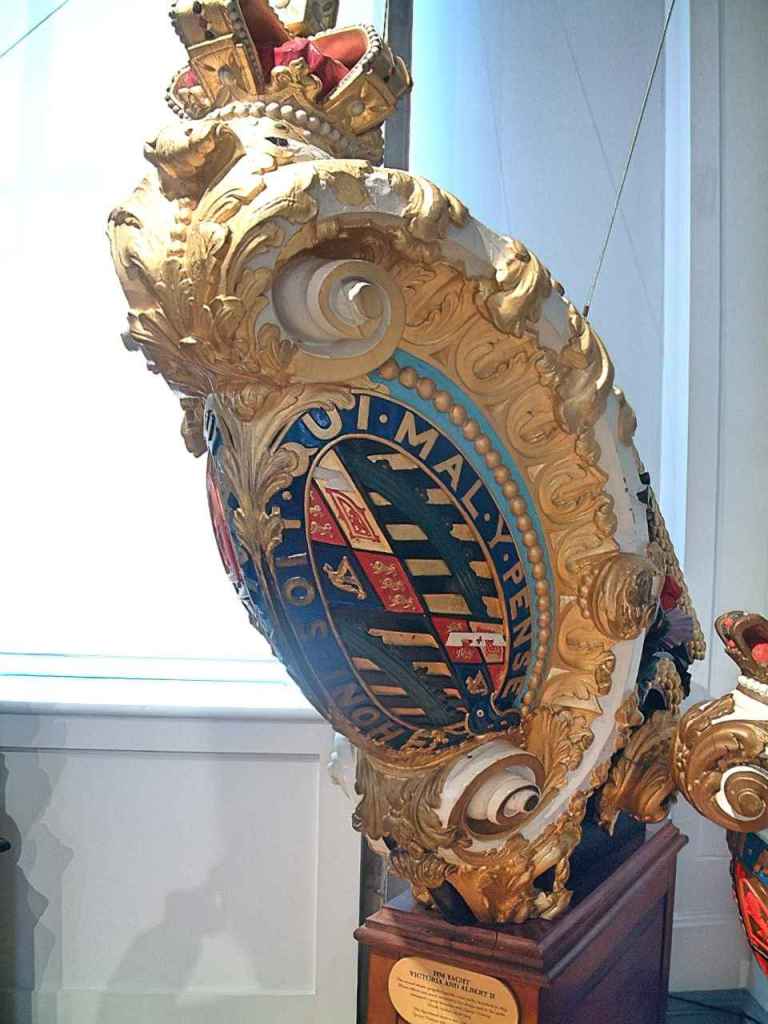
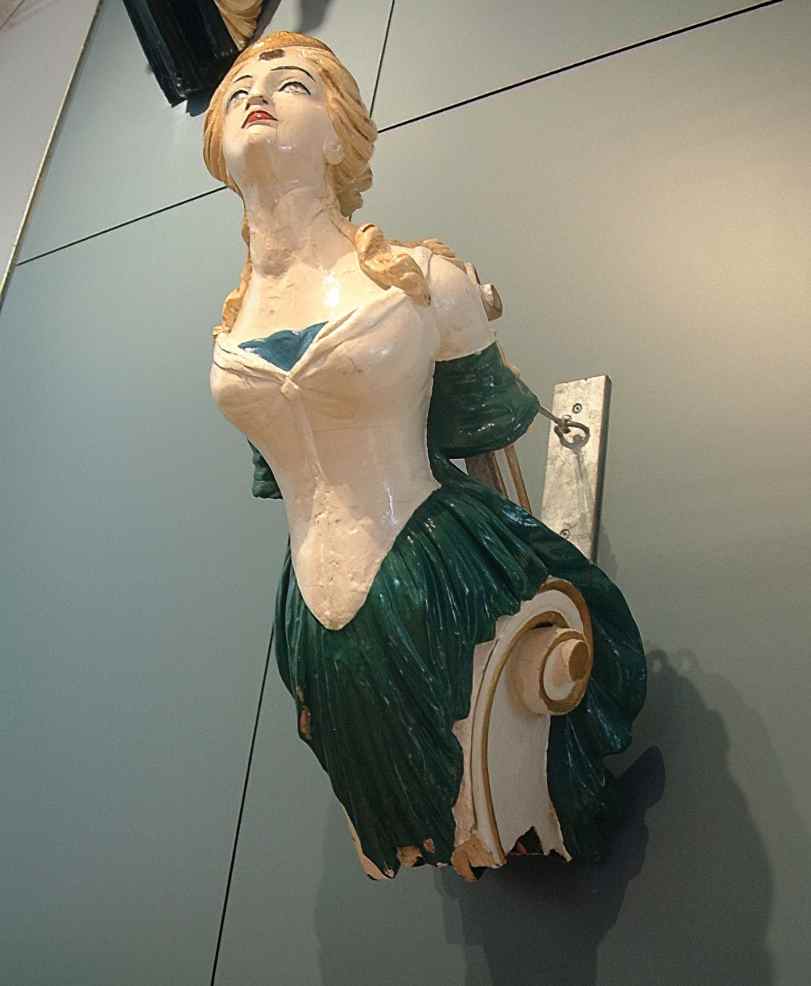
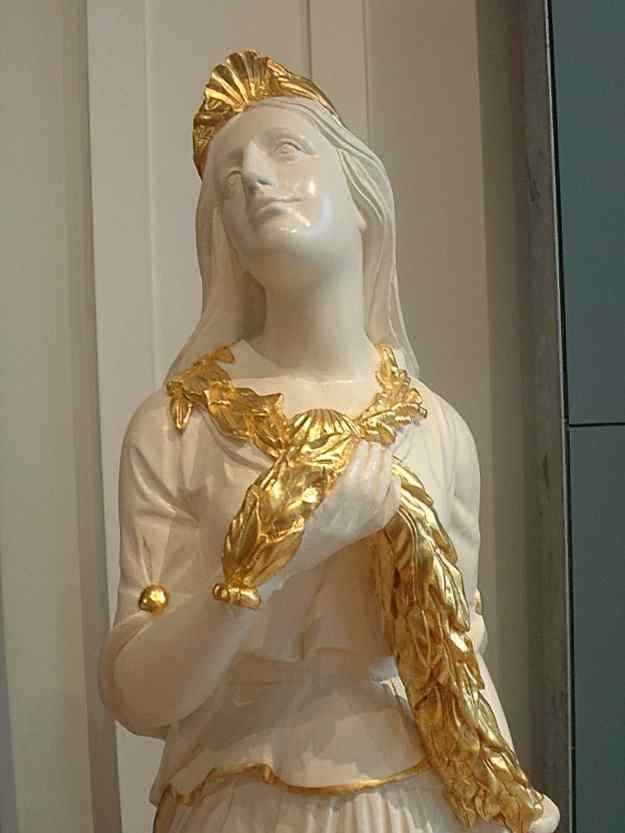
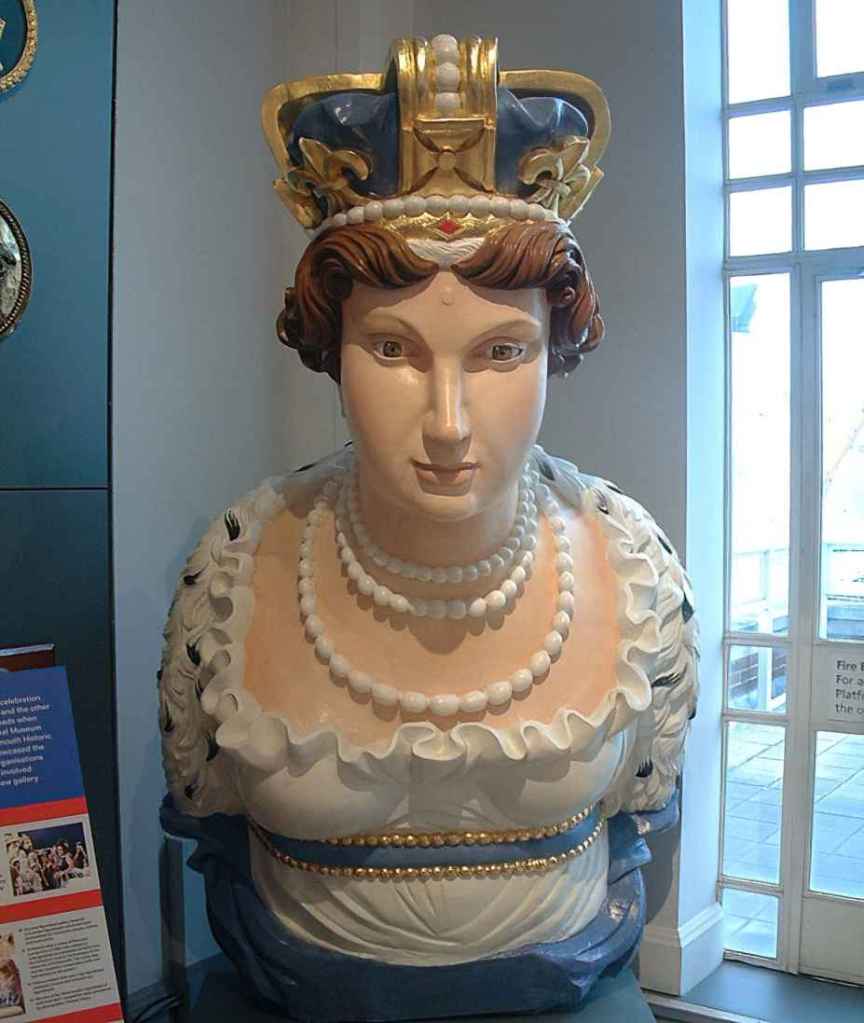
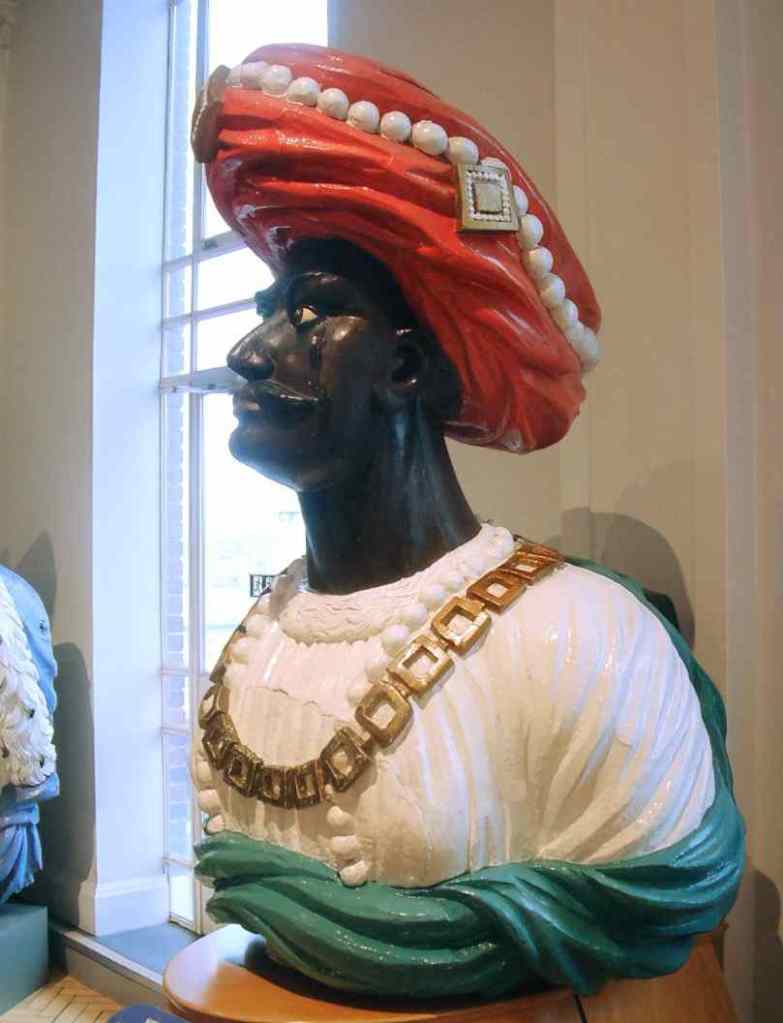
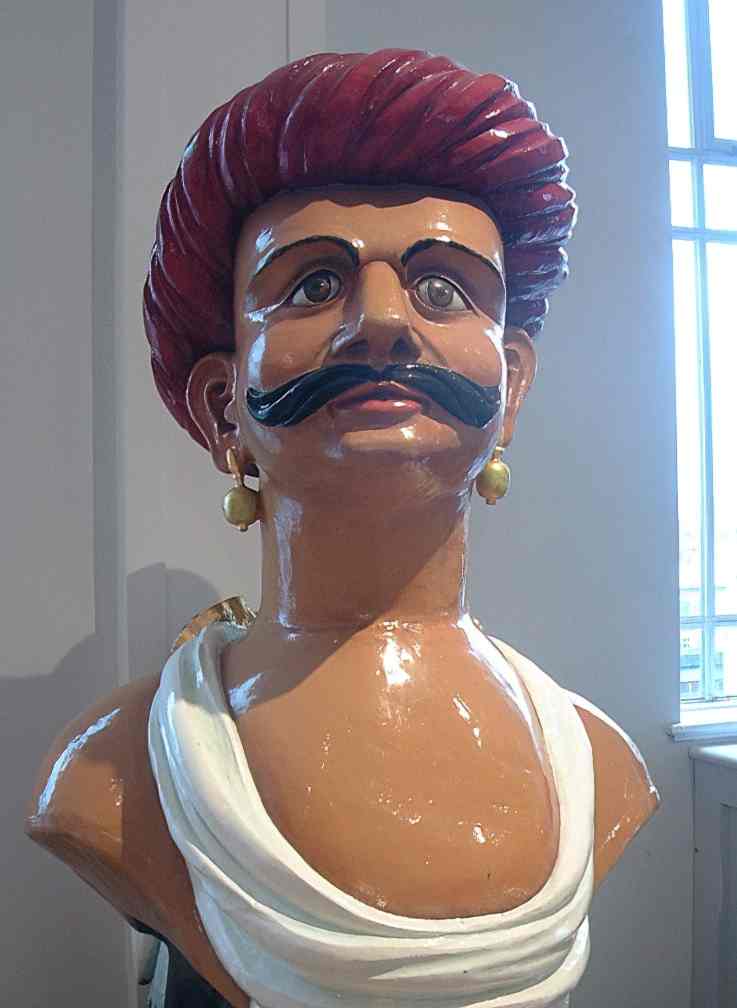
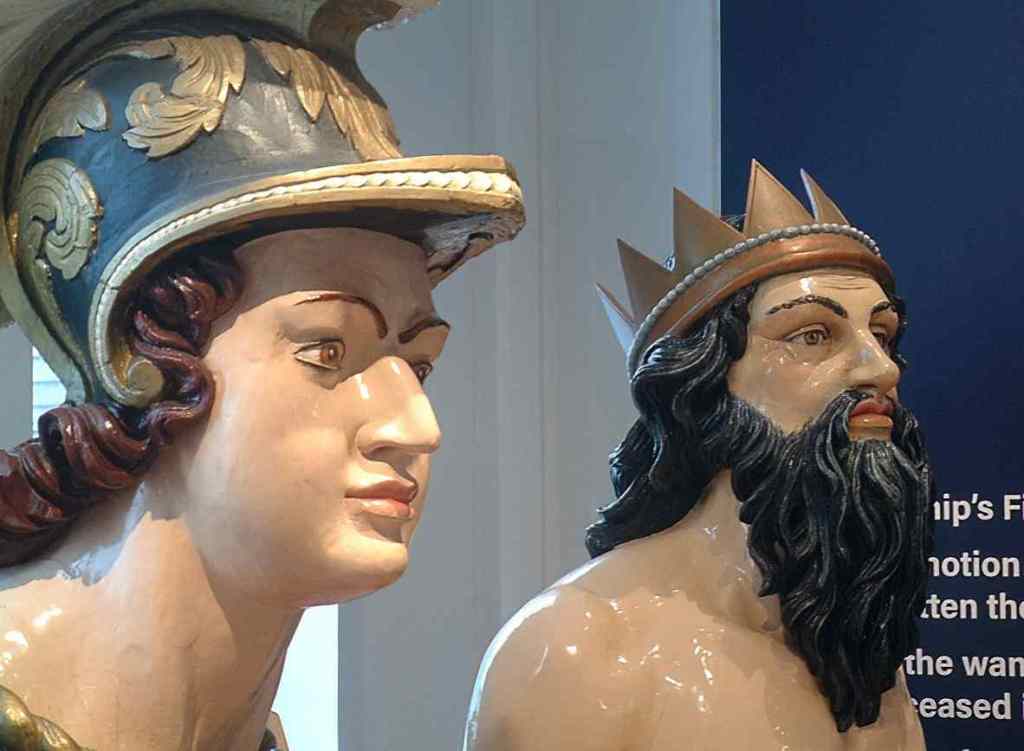
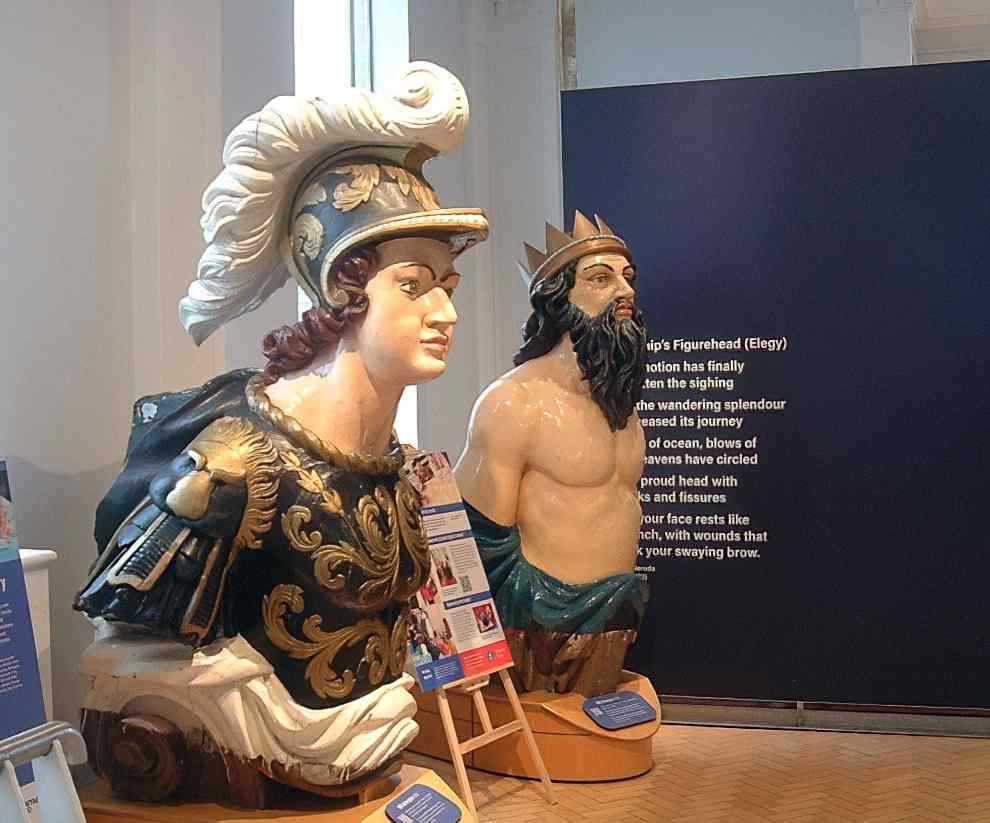
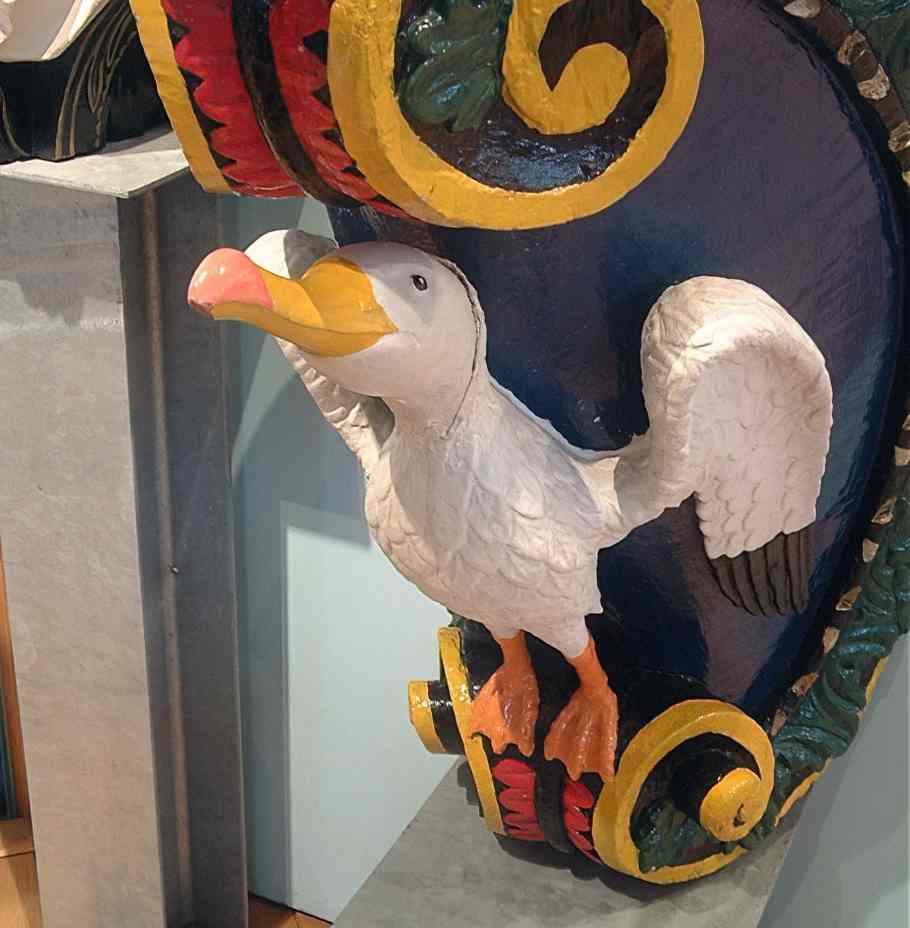
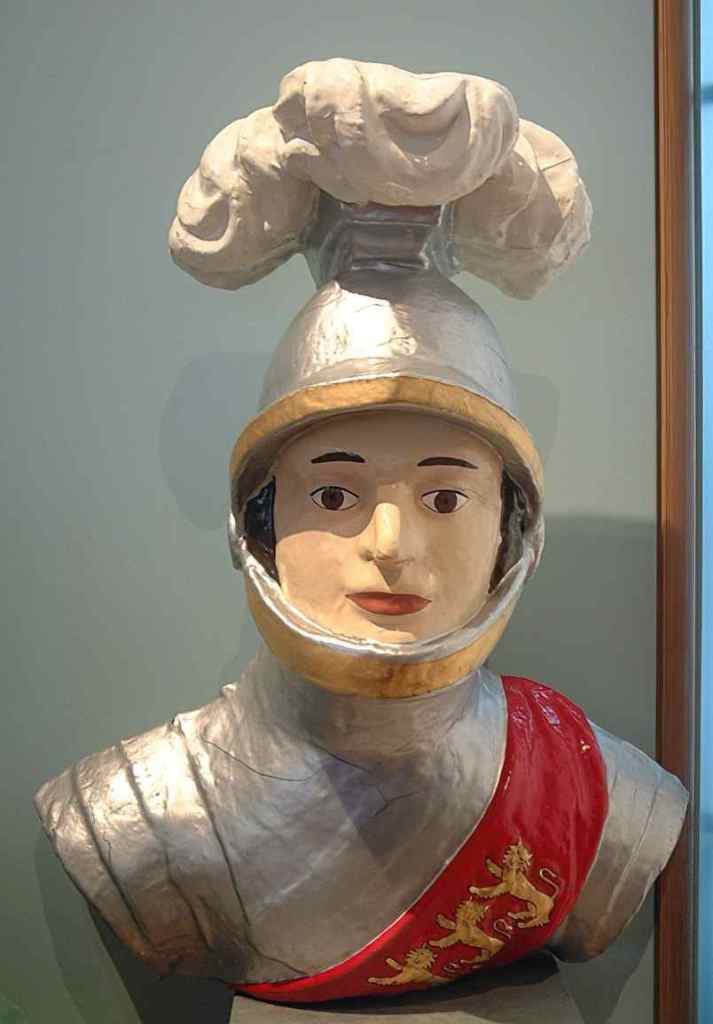
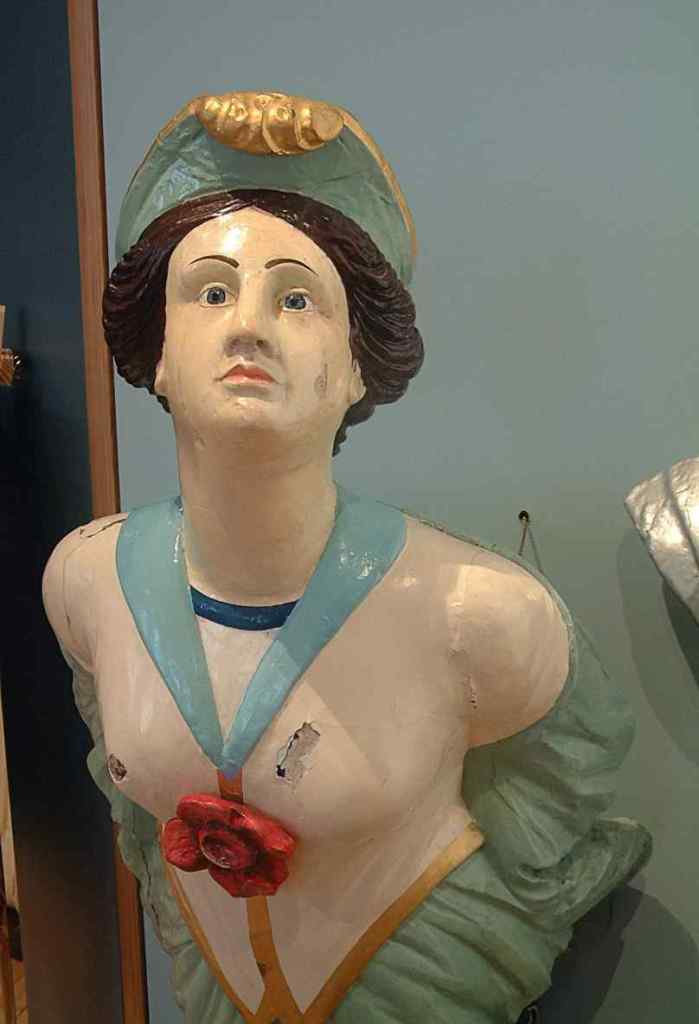
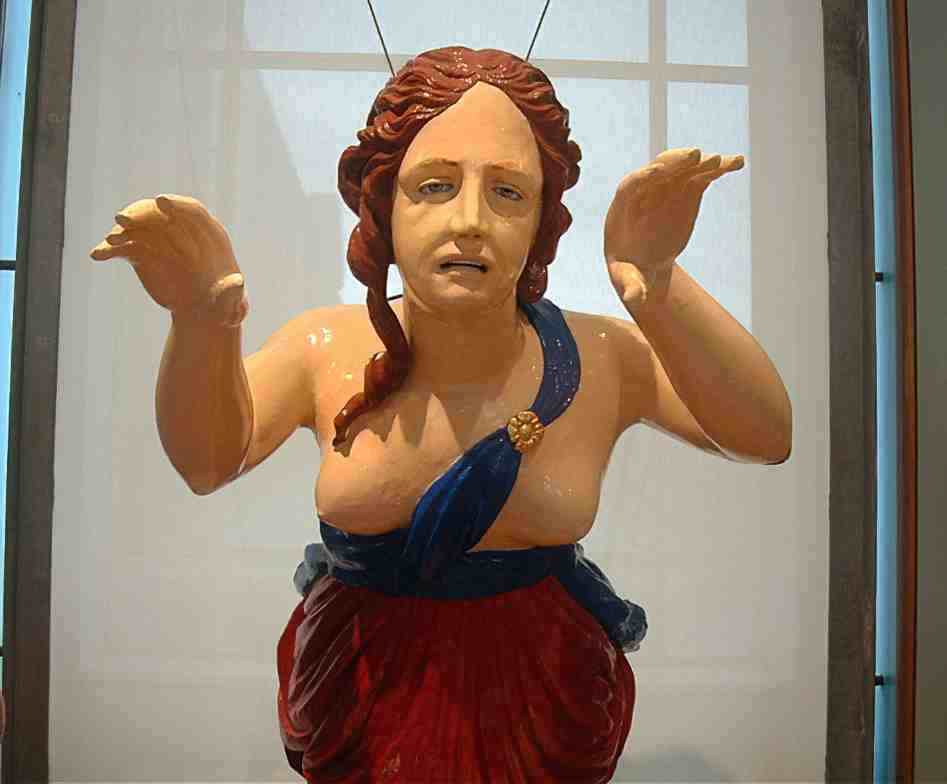
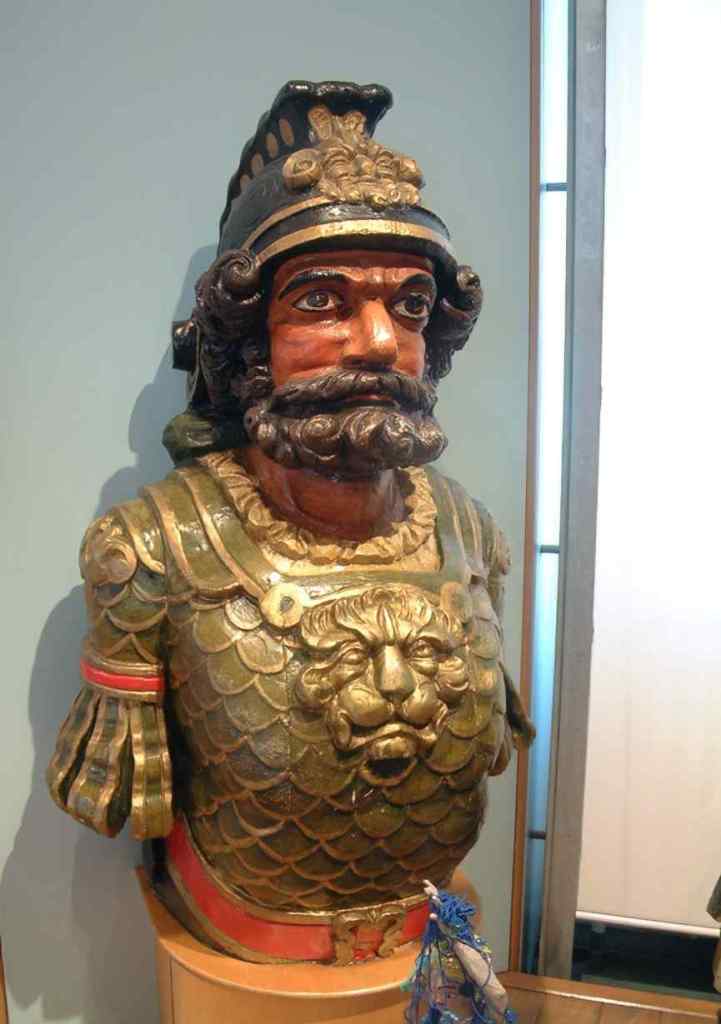
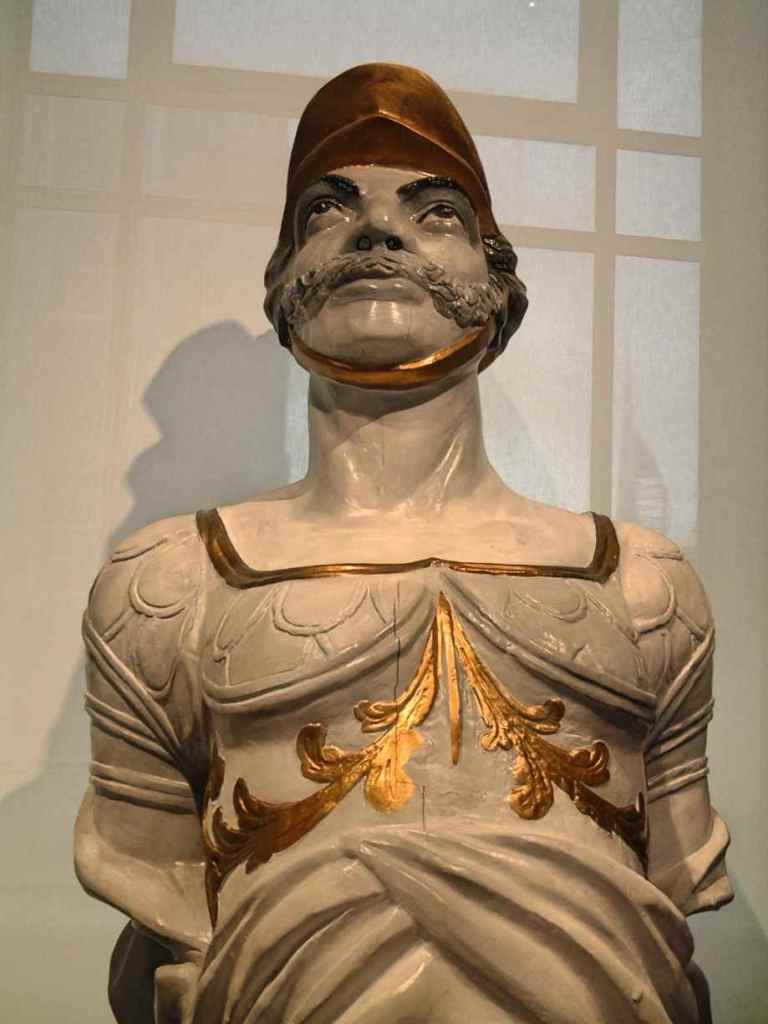
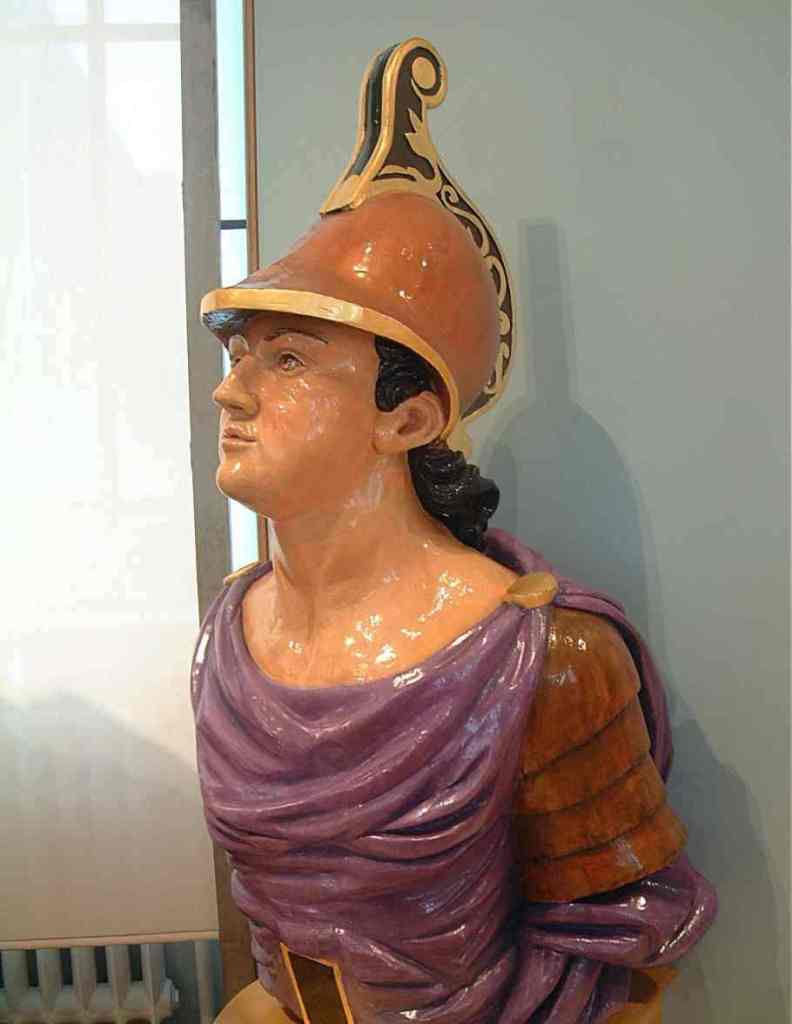
The National Museum of the Royal Navy at Portsmouth Historic Dockyard has a great collection of figureheads.
A figurehead is a carved wooden decoration often found at the bow of ships, typically designed to represent the name or role of the vessel. These sculptures served not only as decorative elements but also as symbols of a ship’s identity and character, intertwining artistry with functionality. In contemporary settings, ships’ badges have emerged to fulfil a similar role, providing visual symbolism yet without the historical significance and craftsmanship associated with traditional figureheads.
In 1796, the British Admiralty attempted to abolish figureheads entirely on new ships due to changing maritime practices and the evolution of naval warfare. However, this order was not fully embraced by shipbuilders and sailors. Many mariners believed that a ship devoid of a figurehead would bring bad luck, as these carvings were thought to have protective powers over the vessel and its crew. The figurehead was thus seen as a guardian spirit, a belief that persisted despite the Admiralty’s directives.
During the 19th century, as maritime technology advanced from sail-powered wooden ships to steam and iron constructions, the bowsprit—where figureheads were typically fixed—started to fade into obsolescence. With the transformation of ship design, the practical need for figureheads diminished, leading to their gradual decline in naval architecture.
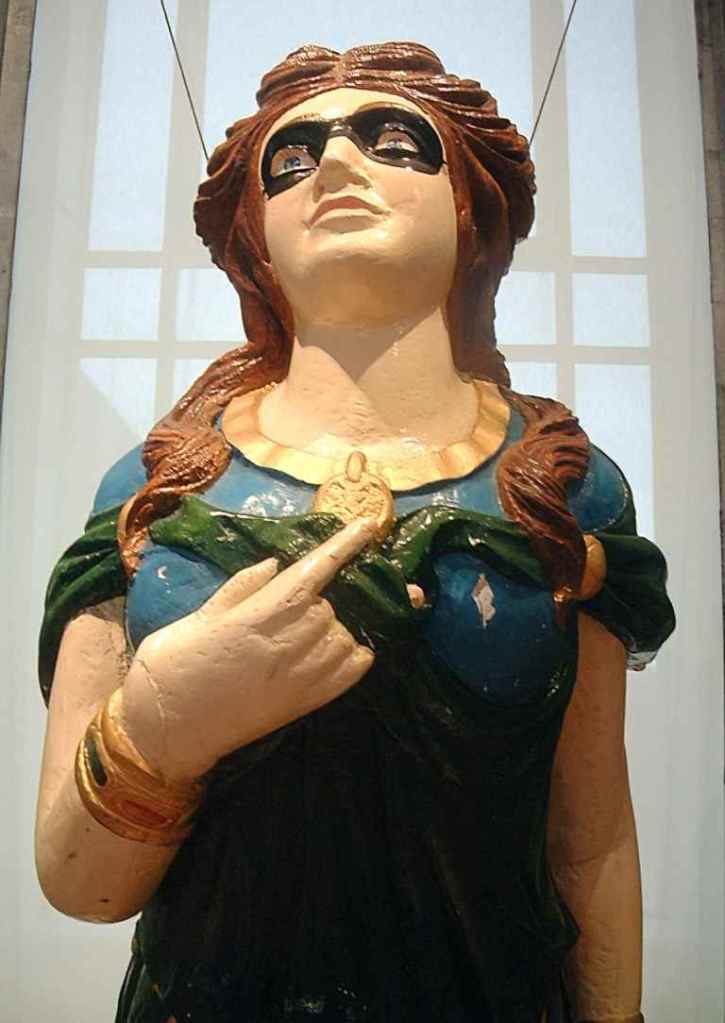
The last Royal Navy ship to showcase a figurehead was the HMS Espiegle. The name “L’Espiegle,” meaning frolicsome in French, aptly described the carved figurehead, which depicted a woman adorned with jewel-encrusted bangles and a striking masquerade mask. This artistic representation was meant to convey a sense of playfulness and allure, embodying the ship’s spirit. The HMS Espiegle was eventually broken up in 1923.
 Continued Reflections from my World.