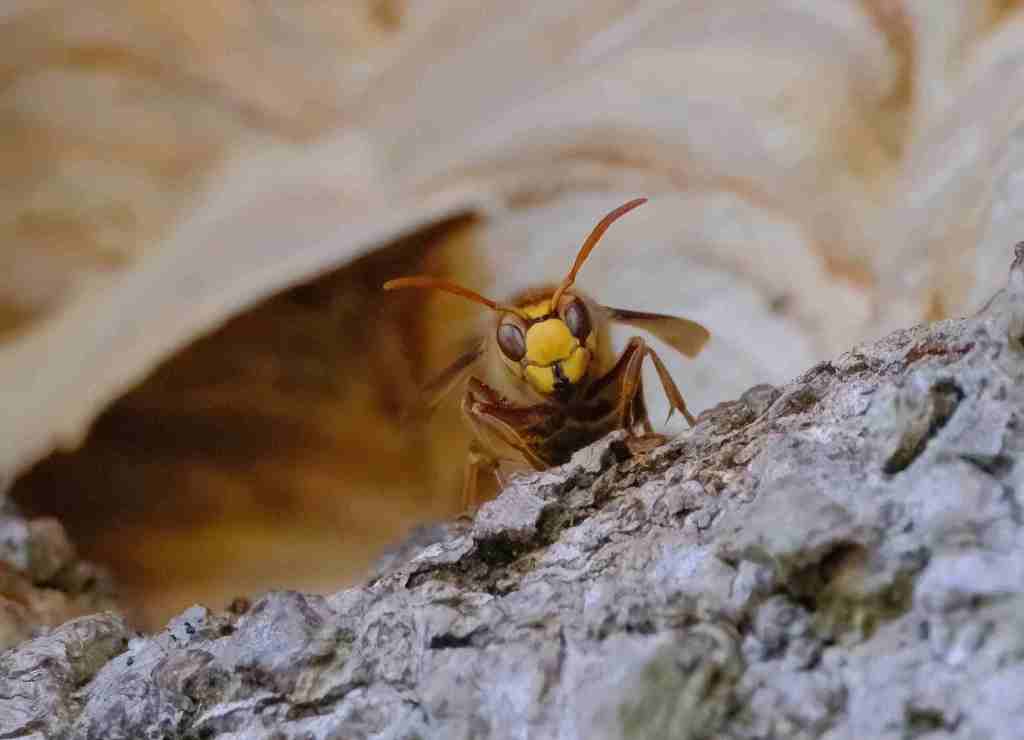
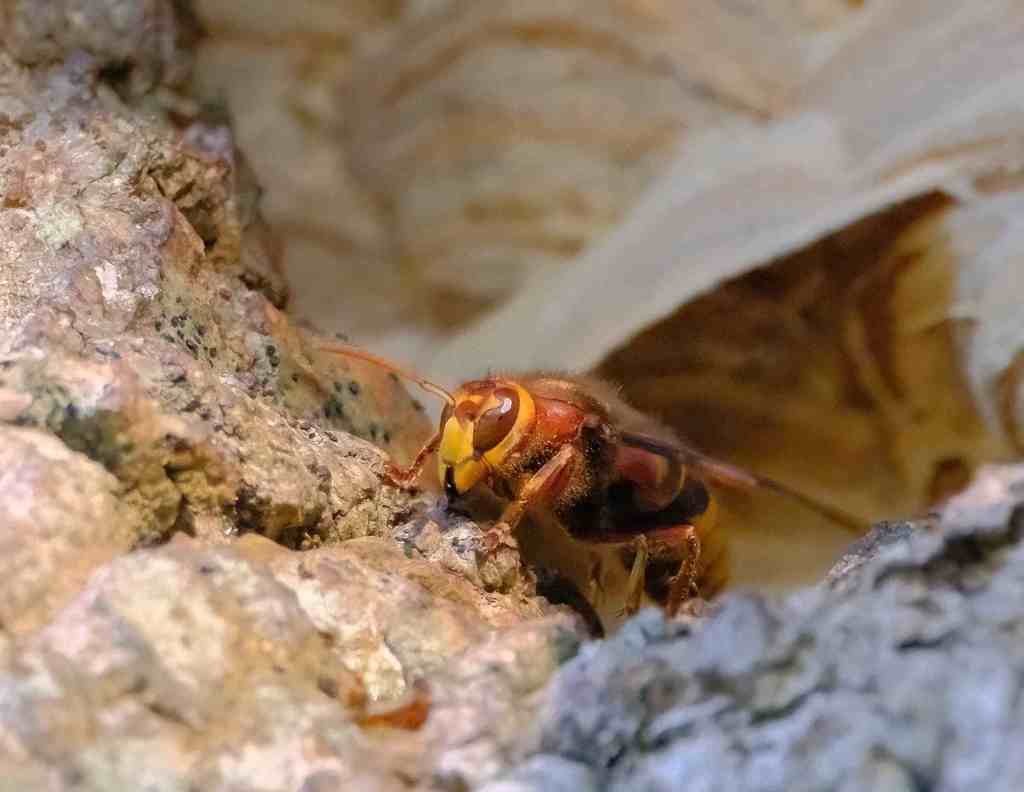
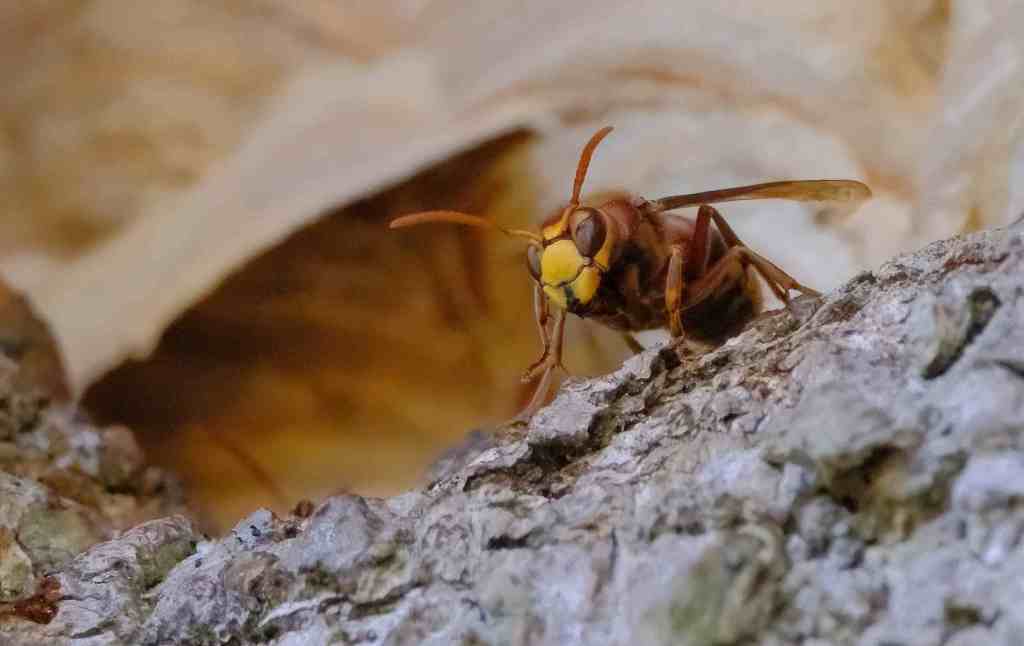
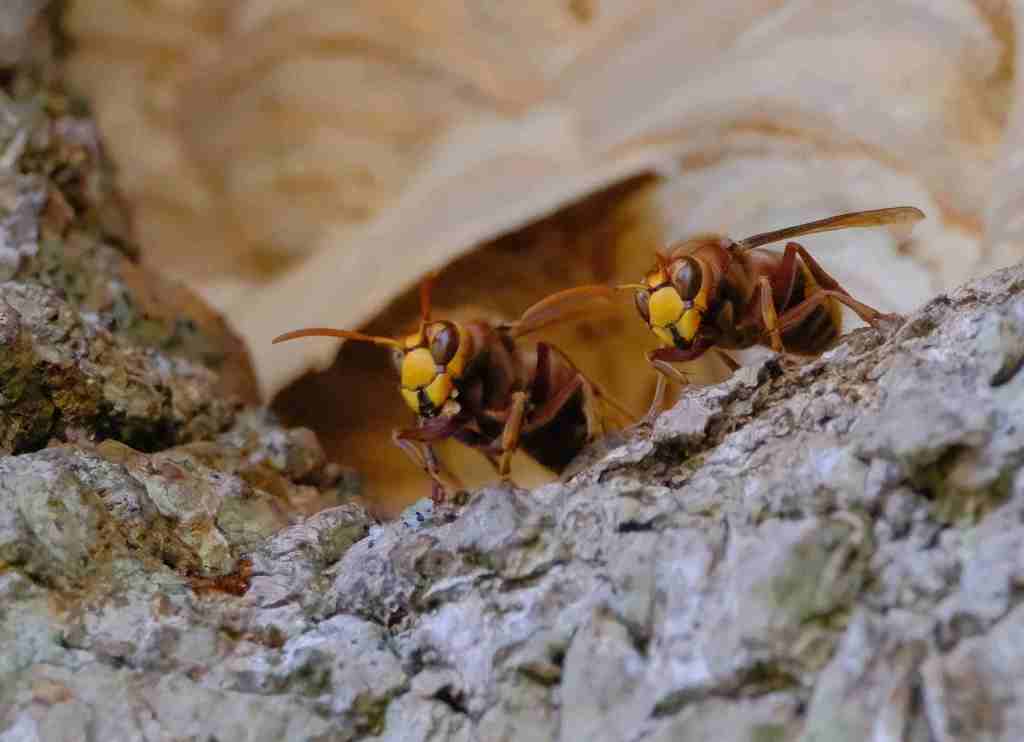
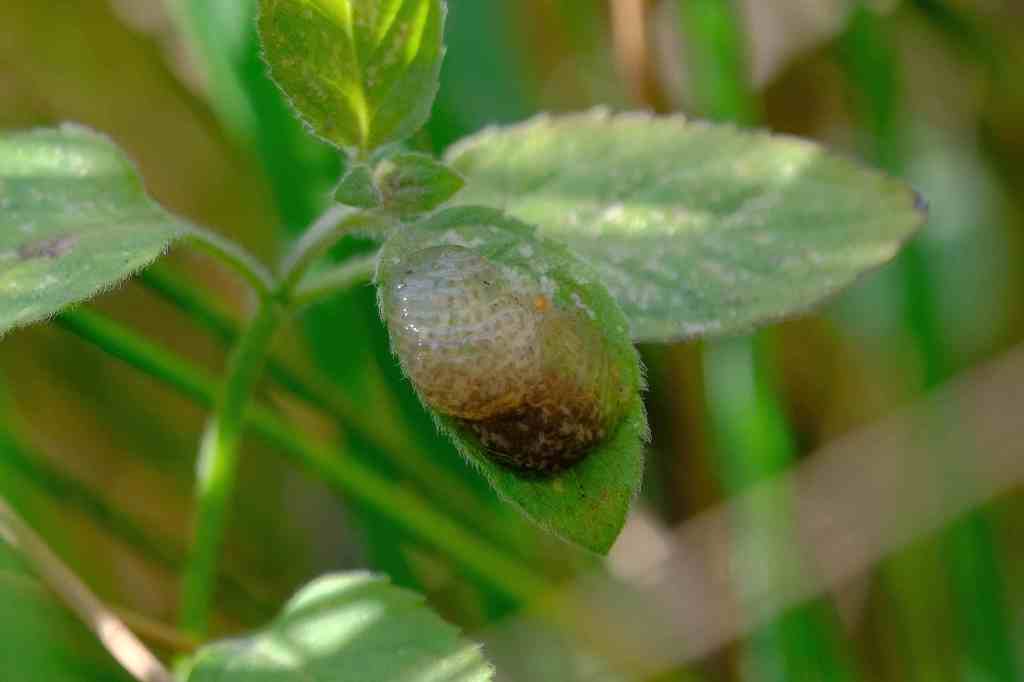
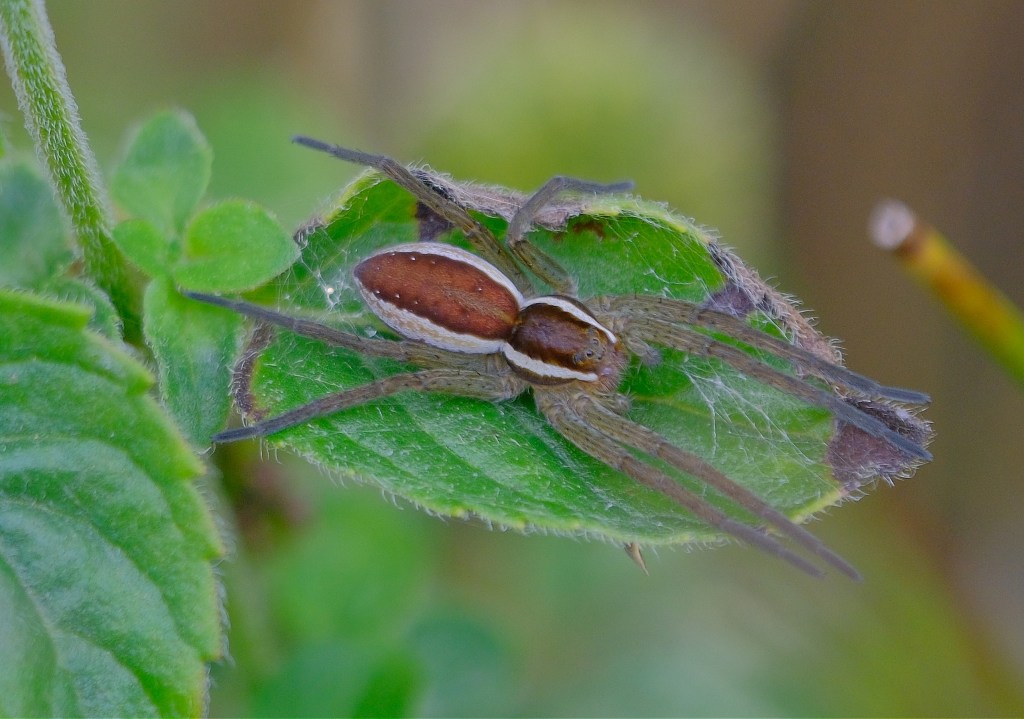
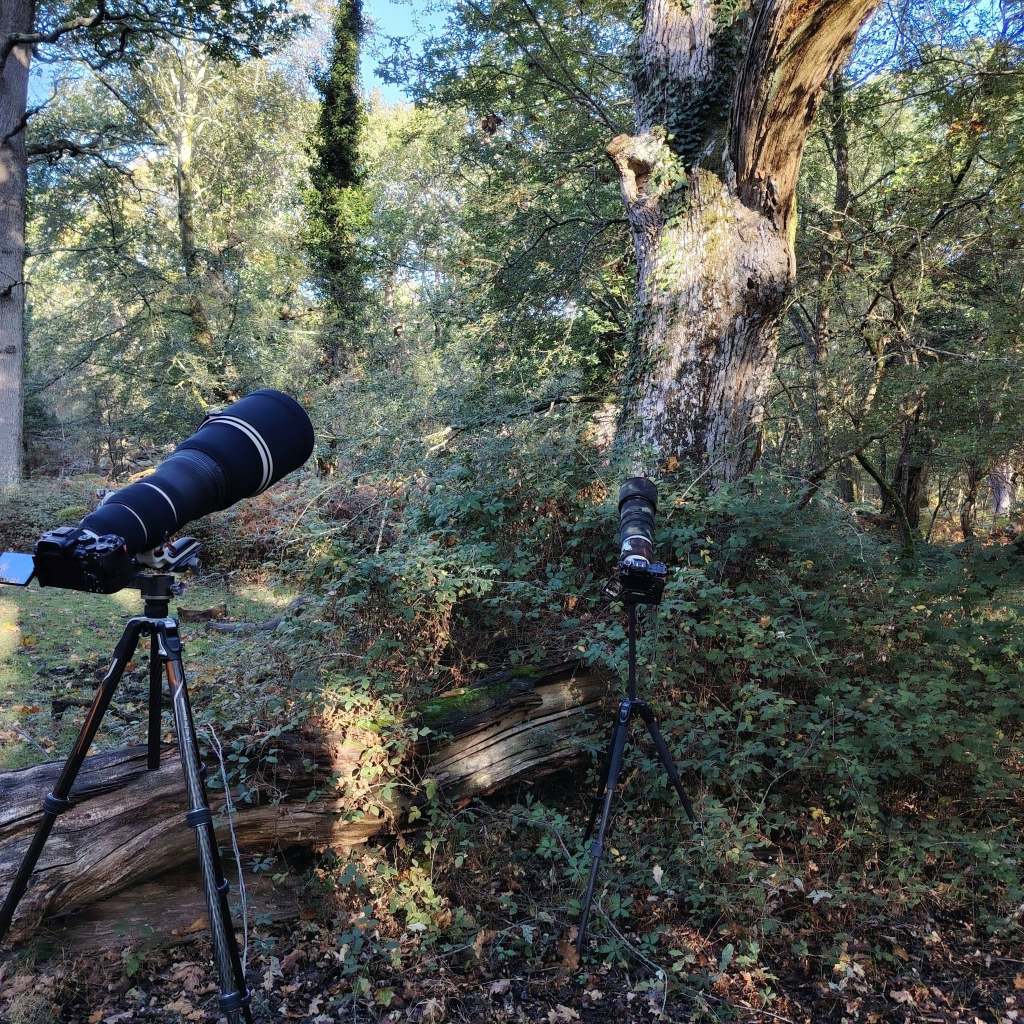
On our Monday walk looking for fungi in the New Forest, we came across a hornet’s nest and returned today with tripods to get better pictures of these interesting insects.
Despite their size and loud buzz, European hornets are placid and non-aggressive; they rarely sting unless the nest site is directly threatened. They feed on invertebrates, nectar, sap, and windfall fruit. They will bring back the invertebrates to their nests to feed their larvae.
Workers grow up to 25mm and queens can reach 35mm long, making them significantly larger than common wasps.
It is important not to confuse our native European hornet with the invasive non-native Asian Hornet, which is reportable; their nests are destroyed they are a threat to honey bees.