#Wordless Wednesday
Author: Andy Finnegan
Dartford Warbler.
Dartford Warbler in the New Forest this morning.


Deer.
Fallow Deer deep in The New Forest.


On an English Hillside.
Another circular Sunday morning walk on the South Downs.

This time of year, Rooks are re-establishing their nest sites. Rookerys are known for high noise levels, territorial disputes, and intense activity during nesting season.


Goldfinch.

Yellowhamer.

Brown Hare,

On the route, there is a memorial to a WW2 accident where 33 were tragically killed.
In early 1944, numerous training exercises were being undertaken in preparation for the Allied invasion of D-Day.
On the 4th April 1944, 1 HGSU, Horsa 1 glider, LG999 towed by Stirling IV LJ-842 of 196 Squadron took part in a large-scale glider exercise code-named ‘Exercise Dreme’.The night exercise of various legs was to take 3.5 hours, and the gliders were to be released over Brize Norton in Oxfordshire. The glider occupants were two glider pilots and members of No. 3 Platoon, ‘A’ Company, 7th (Airborne) Division, King’s Own Scottish Borderers.
Low cloud was reported in the Lewis area and on the leg from Lewis to Winchester. As the towing Stirling descended through the clouds, it hit a tree. The glider released immediately and crashed in Warnford. All 27 men on board the Horsa LG999 were killed. The Stirling flew on for another 15 minutes when it stalled, and crashed at 21:00 hours one-mile south-west of Romsey, some 18 miles from the site of the glider crash, and all six crew members were killed.
Sheep Farm
Sheep farming on the South Downs.


A time to build.
Kittiwake.
“Nests on seaside cliffs, often among auks and Northern Fulmar.” This bird, in non-breeding plumage, was in a flock of Black-headed Gulls at Titchfield Haven on Tuesday, a relatively rare sight for us on the Hampshire coast.


The Hospital of St.Cross.

‘The Hospital of St Cross’ was first conceived by the grandson of William the Conqueror, Henri de Blois. This remarkable establishment reflects a blend of history, charity, and architectural beauty, founded by de Blois, a young French monk and nobleman who later ascended to the esteemed position of Bishop of Winchester. In 1132, with a compassionate vision, he founded the hospital with the noble intent to provide shelter for 13 frail men who were unable to work. Additionally, the institution had a program to feed 100 men at its gates daily, reinforcing the values of community and care during a time when such charitable acts were vital.
During the mid-15th Century, Cardinal Henry Beaufort, recognising the importance of the institution, set up ‘The Almshouse of Noble Poverty.’ He played a crucial role in enhancing the hospital, overseeing the construction of the majority of its current buildings. Among these structures are the elegant line of Almshouses, which create a picturesque setting that has been appreciated for centuries. Over the years, the site has evolved through the medieval era, maintaining its foundational purpose of providing Almshouse accommodation. This commitment to charity and community support continues to this day.


Figureheads.
The National Museum of the Royal Navy at Portsmouth Historic Dockyard has a great collection of figureheads.
A figurehead is a carved wooden decoration often found at the bow of ships, typically designed to represent the name or role of the vessel. These sculptures served not only as decorative elements but also as symbols of a ship’s identity and character, intertwining artistry with functionality. In contemporary settings, ships’ badges have emerged to fulfil a similar role, providing visual symbolism yet without the historical significance and craftsmanship associated with traditional figureheads.
In 1796, the British Admiralty attempted to abolish figureheads entirely on new ships due to changing maritime practices and the evolution of naval warfare. However, this order was not fully embraced by shipbuilders and sailors. Many mariners believed that a ship devoid of a figurehead would bring bad luck, as these carvings were thought to have protective powers over the vessel and its crew. The figurehead was thus seen as a guardian spirit, a belief that persisted despite the Admiralty’s directives.
During the 19th century, as maritime technology advanced from sail-powered wooden ships to steam and iron constructions, the bowsprit—where figureheads were typically fixed—started to fade into obsolescence. With the transformation of ship design, the practical need for figureheads diminished, leading to their gradual decline in naval architecture.
The last Royal Navy ship to showcase a figurehead was the HMS Espiegle. The name “L’Espiegle,” meaning frolicsome in French, aptly described the carved figurehead, which depicted a woman adorned with jewel-encrusted bangles and a striking masquerade mask. This artistic representation was meant to convey a sense of playfulness and allure, embodying the ship’s spirit. The HMS Espiegle was eventually broken up in 1923.


Down memory lane.
While sorting out, I came across my 1st digital camera.{2002} A Fujifilm FinePix 6900Z has a 3.3 megapixel SuperCCD, which generates a 6 megapixel image. My current camera, a FujiFilm HX2s, has a 26 megapixel image APS-C Stacked CMOS sensor
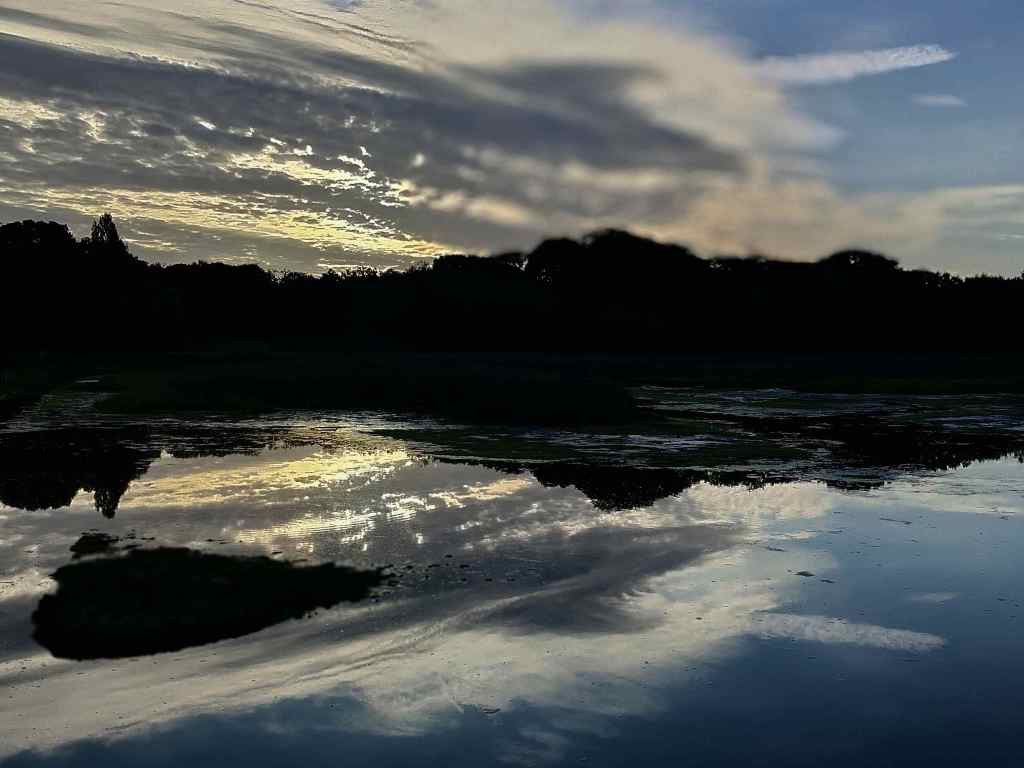
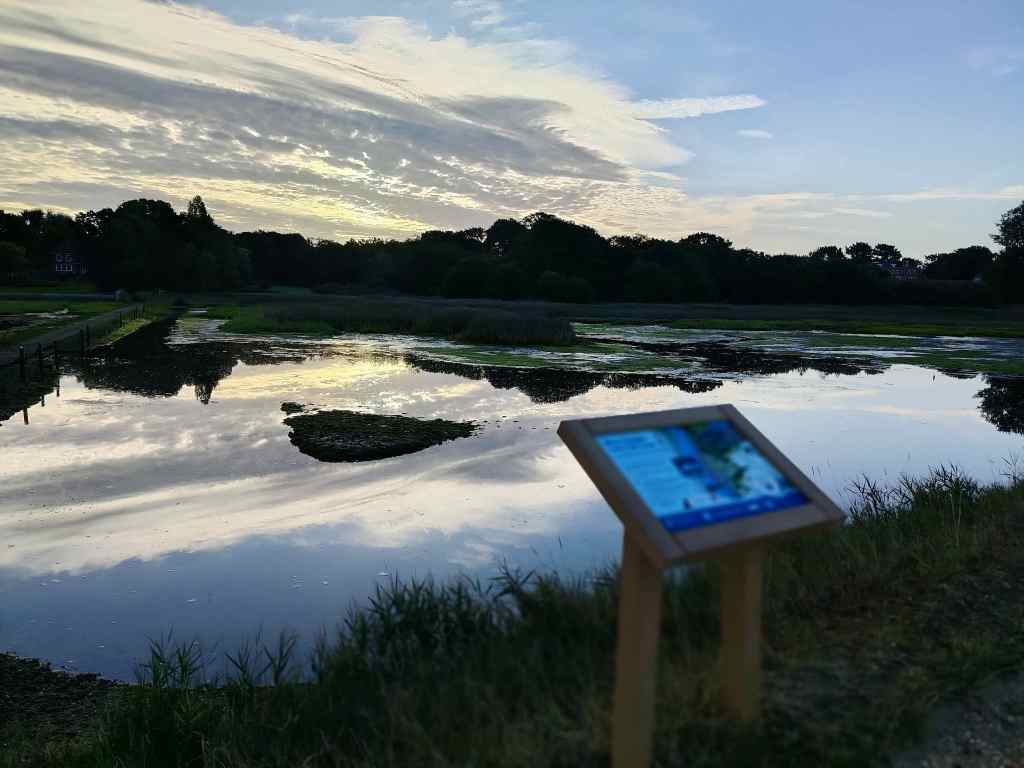
I had to order a new Battery via eBay and once sorted, took it out for a 2026 test run {only 24 years later!}
Manor Farm Open Air Museum, Botley, Hampshire.