Black Swans were first brought to the UK in 1791 from Australia they became popular in zoos and private collections. Some birds escaped into the wild and have bred successfully, though the population remains small. For years there have been small numbers on the River Itchen at St Deny’s Southampton. They are an easy spot between Cobdon Bridge and Wood Mill from Riverside Park.
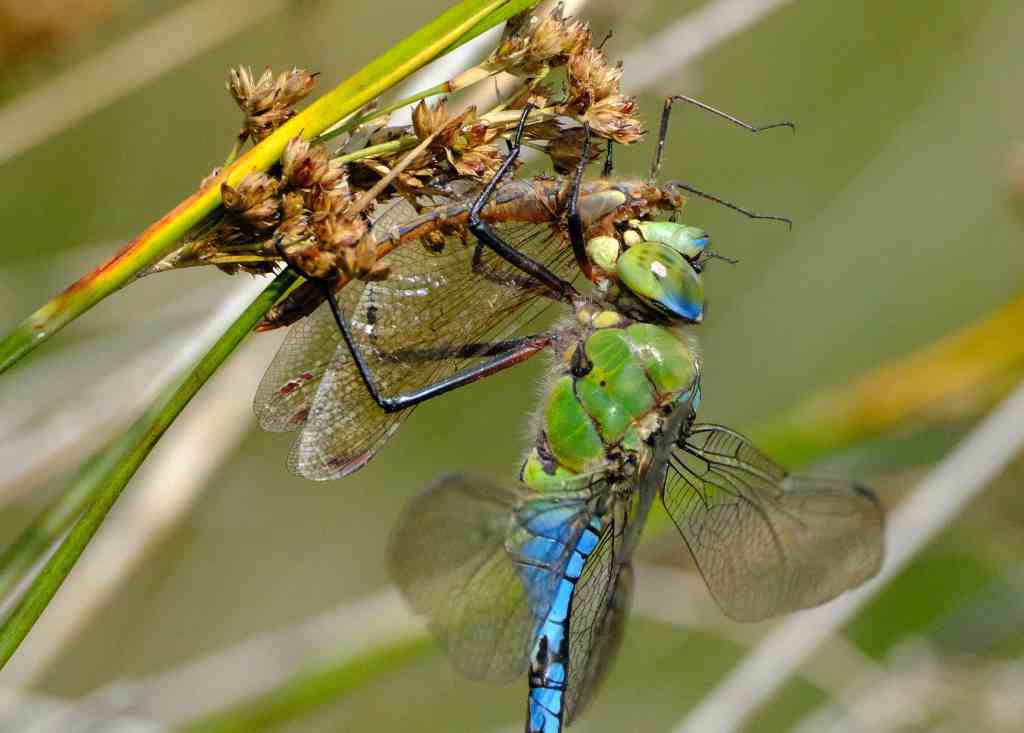
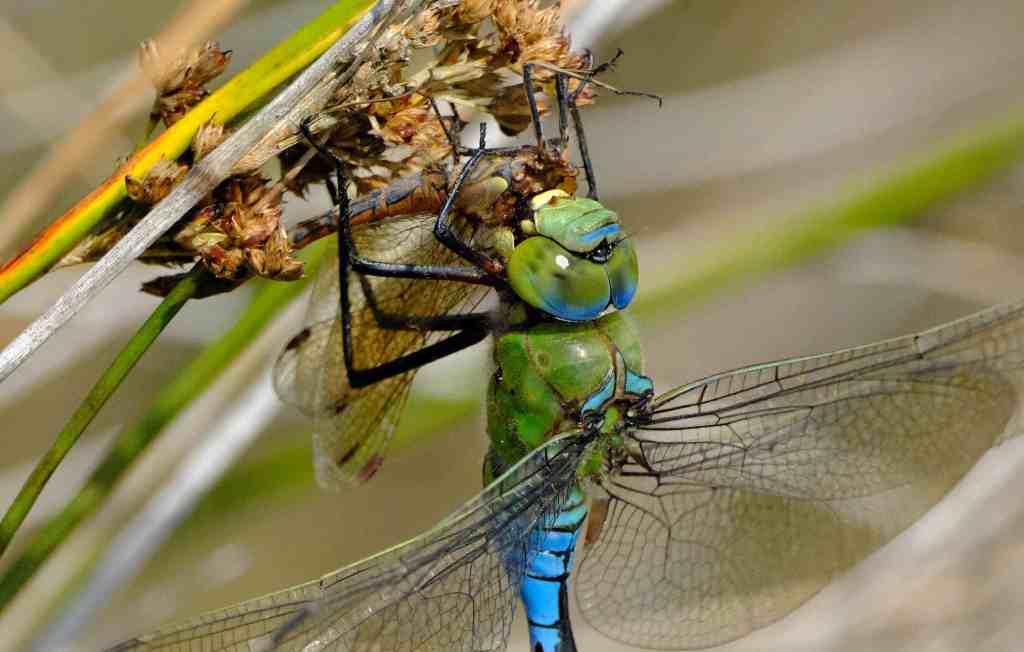
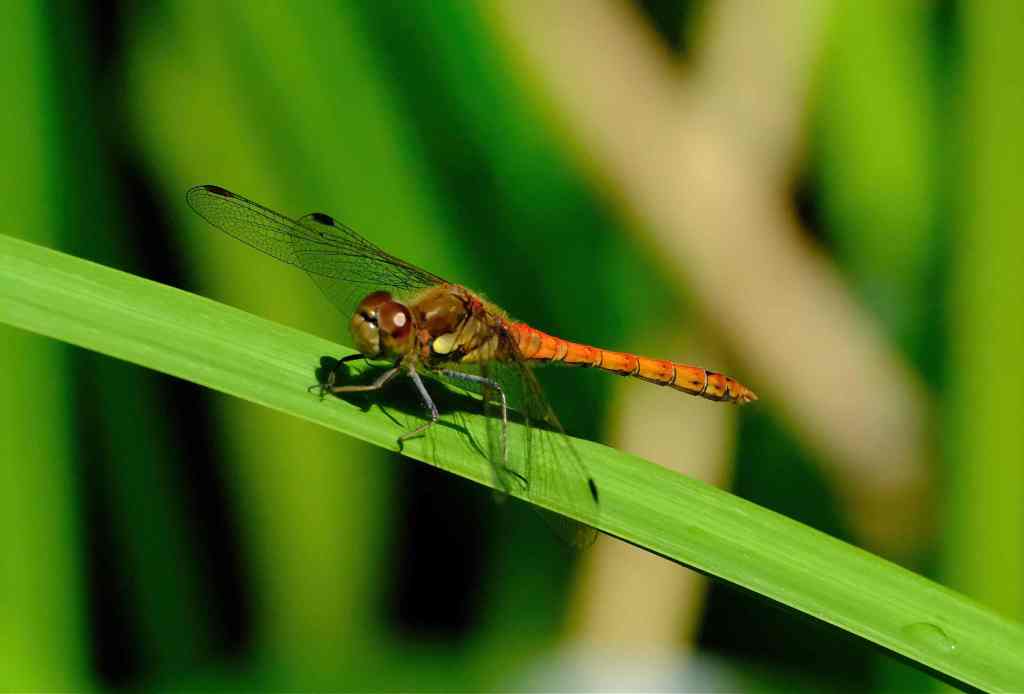
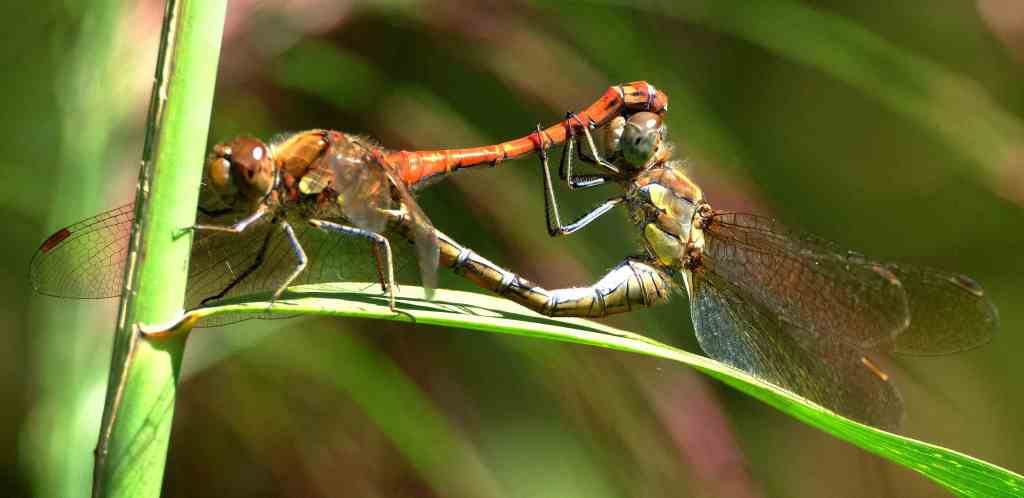
Watching Dragonflies today reminded me of the 1969 film The Battle of Britain with those airmen engaged in aerial combat in the blue sky over Southern England. There were no Spitfire flights over the Solent today. In flight, combat was taking place, an “Emperor Dragonfly” was on the hunt on the wing chasing and then catching a smaller dragonfly a “Common Darter”. Taking it to a nearby perching stick first killing it by removing its head then eating the contents of the darter’s insides Nature is both cruel and fascinating at the same time. I have witnessed this hunting and killing before of wasps and bees but this was the first dragonfly catching another dragonfly observation for me.
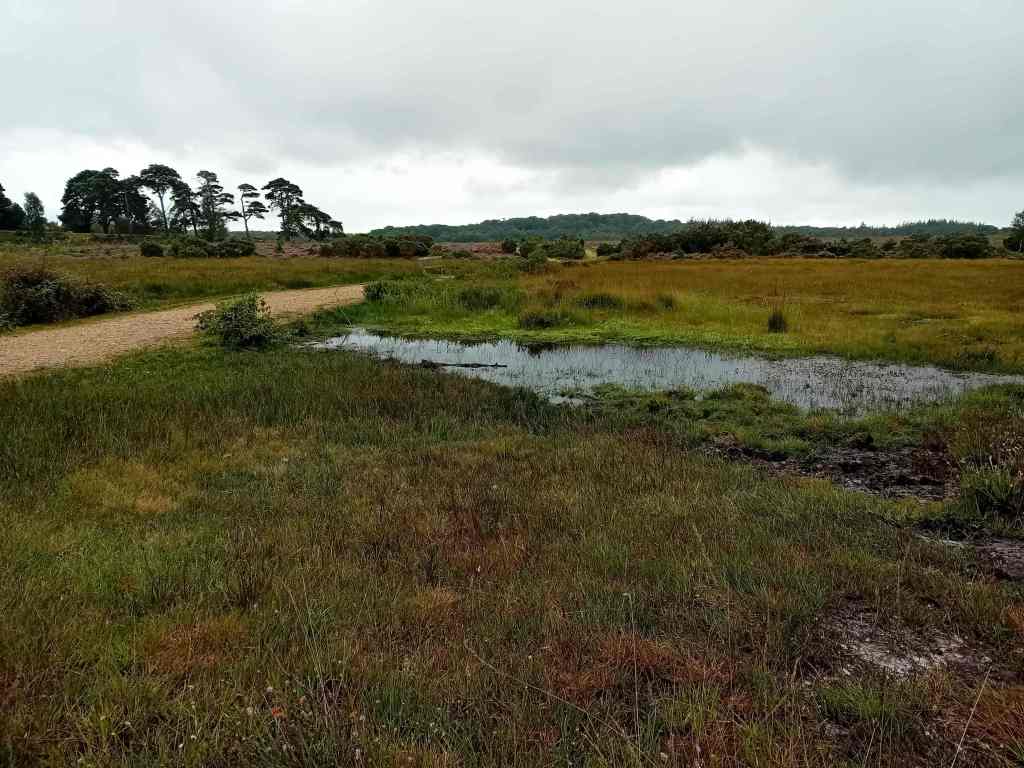
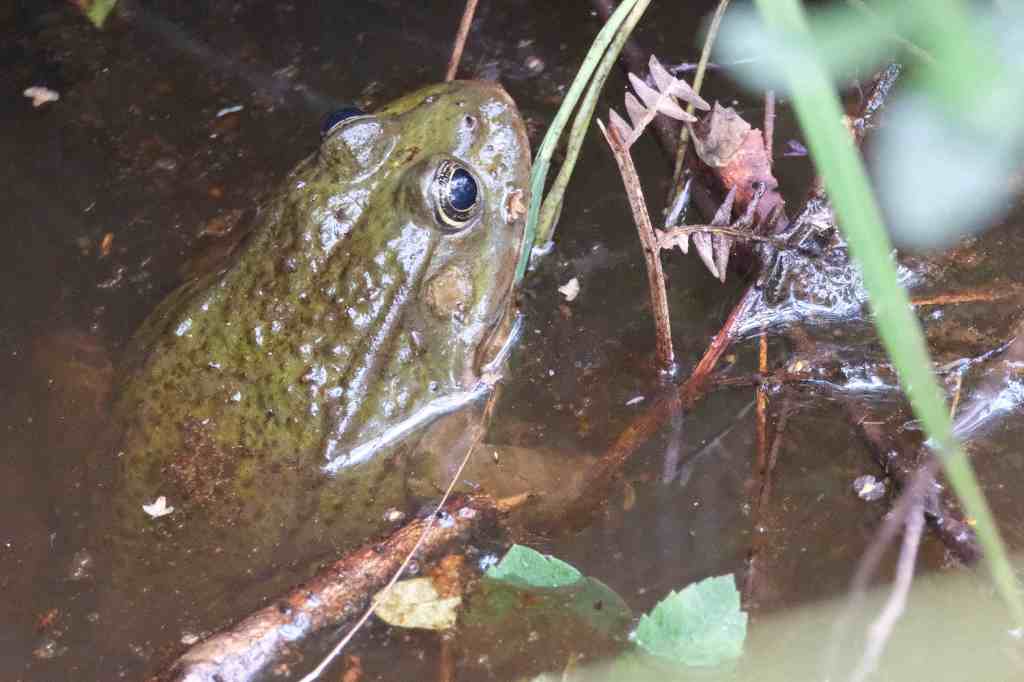
Marsh frogs were regularly imported into the UK from the late nineteenth century and were introduced to the Walland Marsh in Kent in 1935, from Hungary. They originate from the eastern half of Europe into western Asia. There are established populations in the UK, which are now predominantly found in south-east England, with populations in other areas in the south are far west as Devon. Following seeing some in “captivity” in The New Forest Reptile Centre I wanted to see some in the wild as there was said to be an established population in the forest.
On a tip-off with my brother we last year looked at marshland southwest of the national park near Lymington. After unsuccessful trips, we tried again this year and spotted one solitary Marsh Frog last week. Yesterday we returned to look closer and were lucky to spot at least 6.
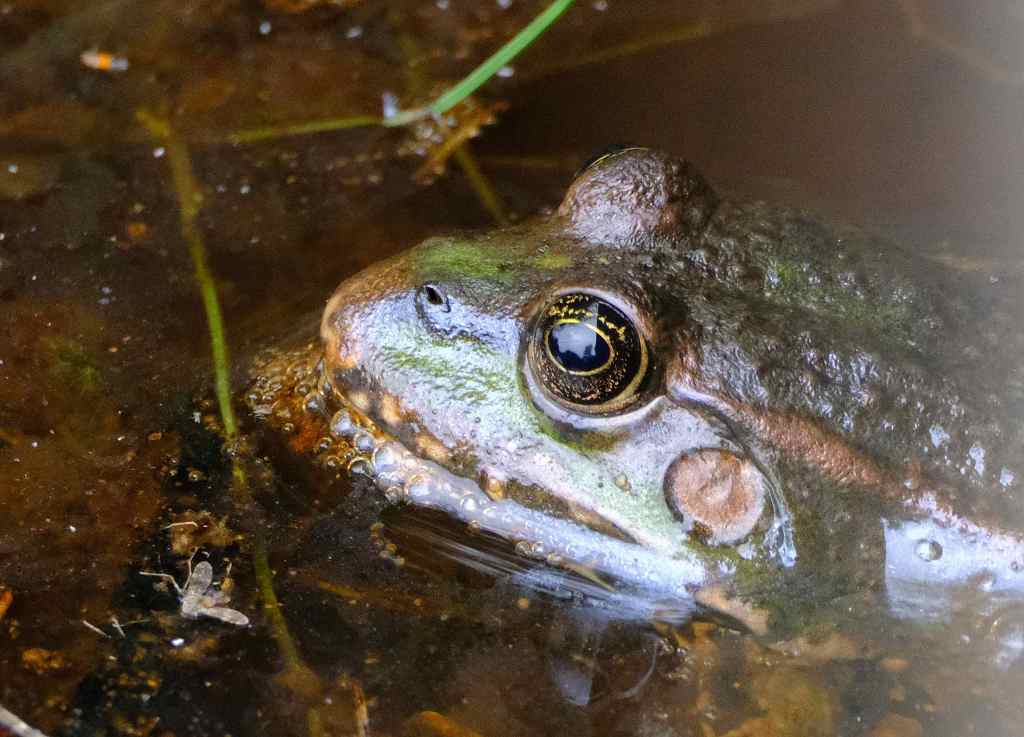
Some information on how to spot a Marsh Frog
The colour is from brown to green with dark green blotches.
Size of the females can be up to 13cm in length, and the males are normally smaller.
Pronounced snout with a wide gape.
Eyes are closer together than our native Common Frogs.
There are two parallel skin folds on the back.
The male has two dark grey vocal sacks, one on each side of the mouth.
The skin is warty and granular.{like on a Toad}
They can be noisy with a quacking or laughing sound more so in early summer.
They prefer to stay in or close to water.
Schedule 9 of the Wildlife and Countryside Act, makes it illegal to distribute or allow the release of Marsh Frogs into the wild.
After visiting the forts we turned and headed back towards Portsmouth. In the distance out towards the nab tower, we could see ships waiting at anchor to enter the port.
Tuesday had been wet and windy but Wednesday the day of our trip was sunny and flat calm.
There is a passenger Hovercraft service from Southsea to the Isle of Wight. Hovertravel provides the fastest Isle of Wight ferry it is said to be the world’s only year-round passenger hovercraft service. The service takes you directly to the shore at Southsea or Ryde in just 10 minutes.
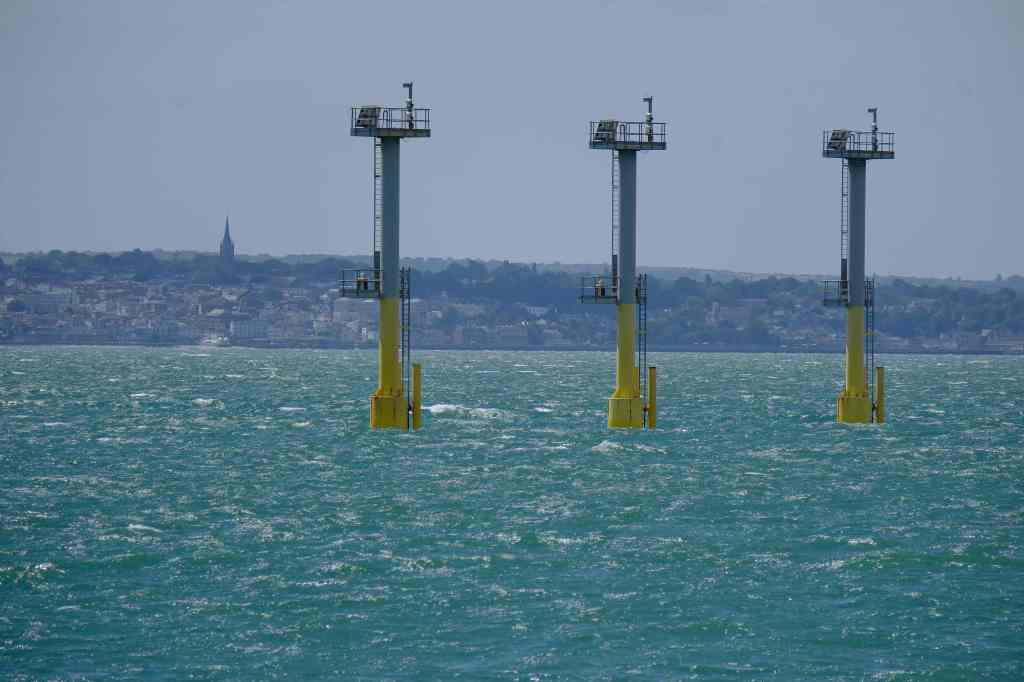
Outside Portsmouth Habour are 2 rows of 3 lights these mark the channel for HMS Queen Elizabeth and her sister ship HMS Prince Of Wales.
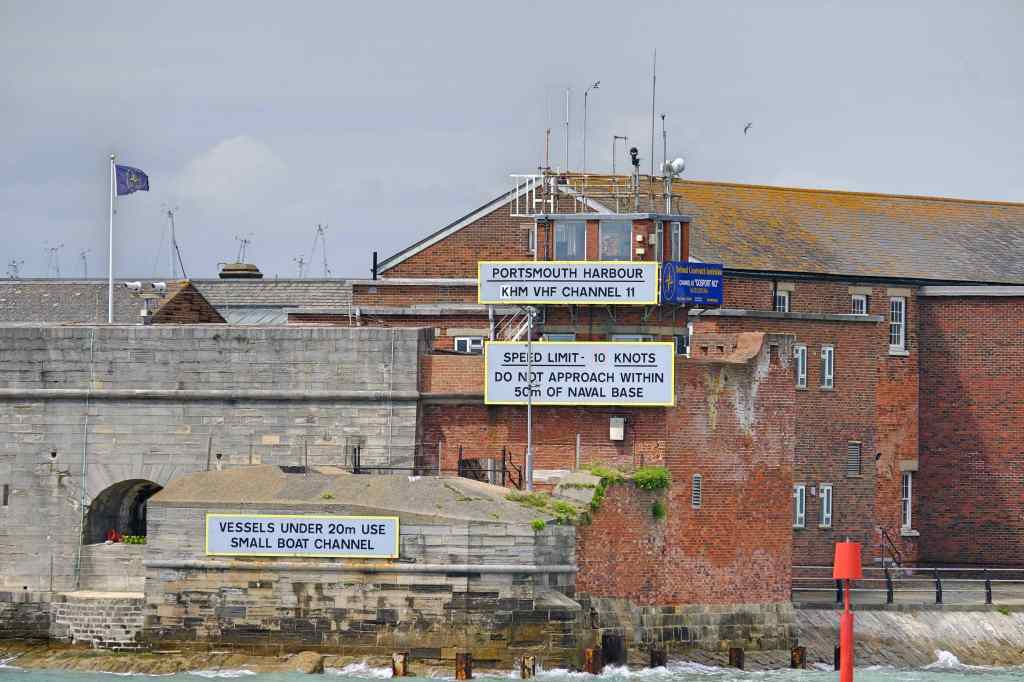
The harbour entrance into Portsmouth Harbour is only around 200 m wide. A tight squeeze for our Aircraft Carriers!
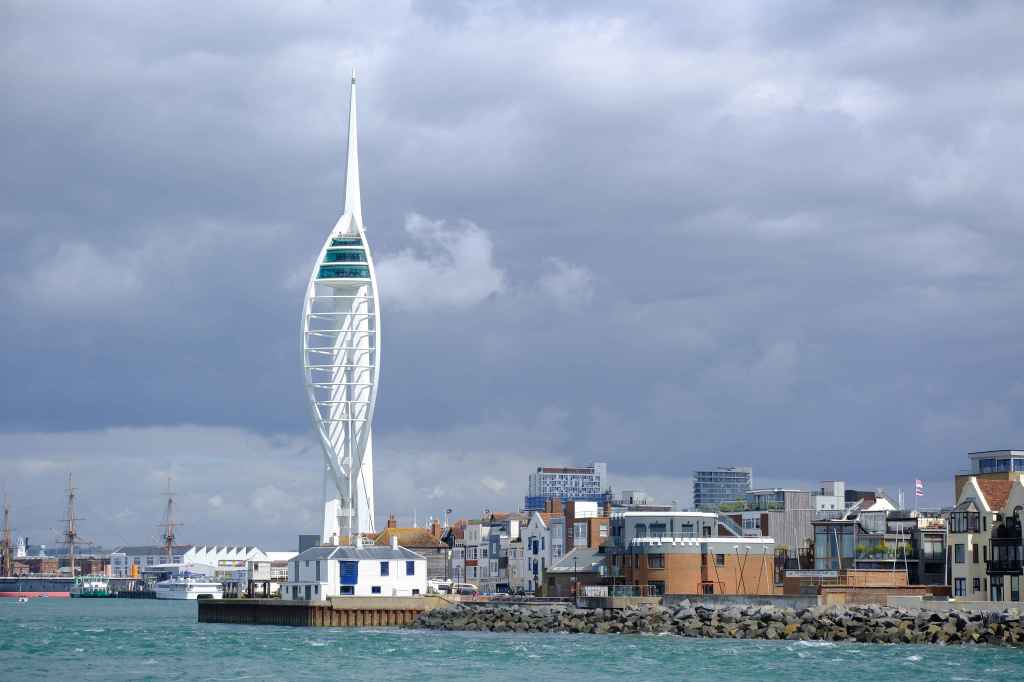
Once into the Harbour, we proceeded past the Spinnaker Tower and historic dockyard into the Naval dockyard.
The Spinnaker Tower is a 170-metre (560 ft) observation tower A landmark it is the centrepiece of the redevelopment of Portsmouth Harbour, Its building was supported by a National Lottery grant. there are viewing platforms near the top.
HMS Warrior is Britain’s first iron-hulled, armoured warship, she was launched in 1860, {around the same time as the forts}The pride of Queen Victoria’s fleet she was powered by steam and sail, – the largest, fastest and most powerful ship of her day and had a massive effect on naval shipbuilding of that time. Warrior was, in her time, the ultimate deterrent however within a few years, she was obsolete. Today, she is restored and back afloat and open to the public.
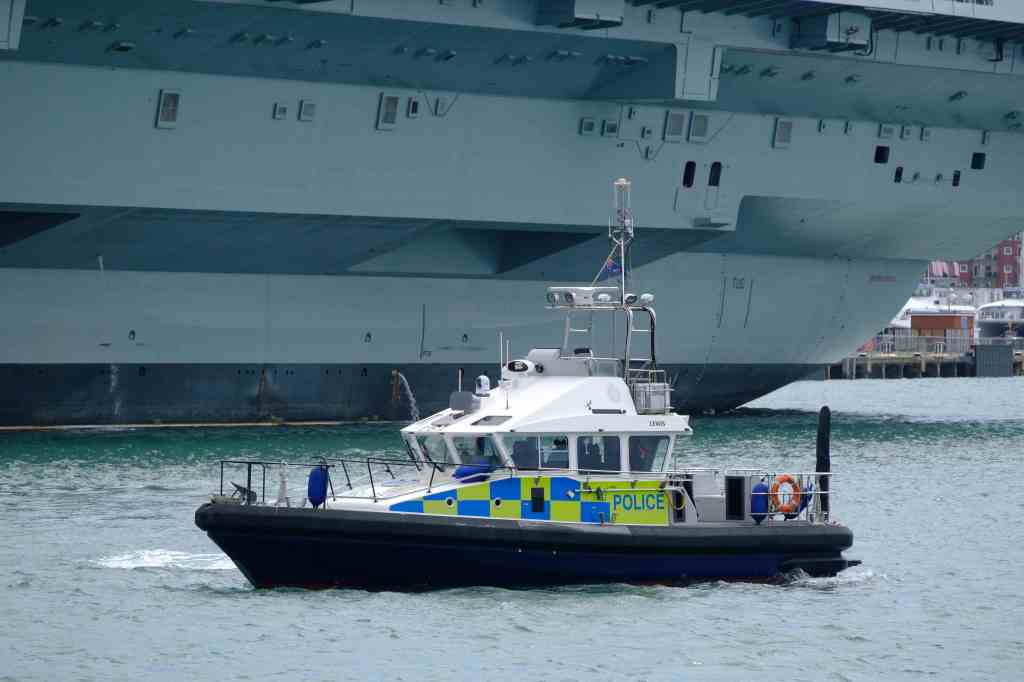
We were escorted into the Naval Dockyard. MOD police which ensure no craft gets too close the warships.
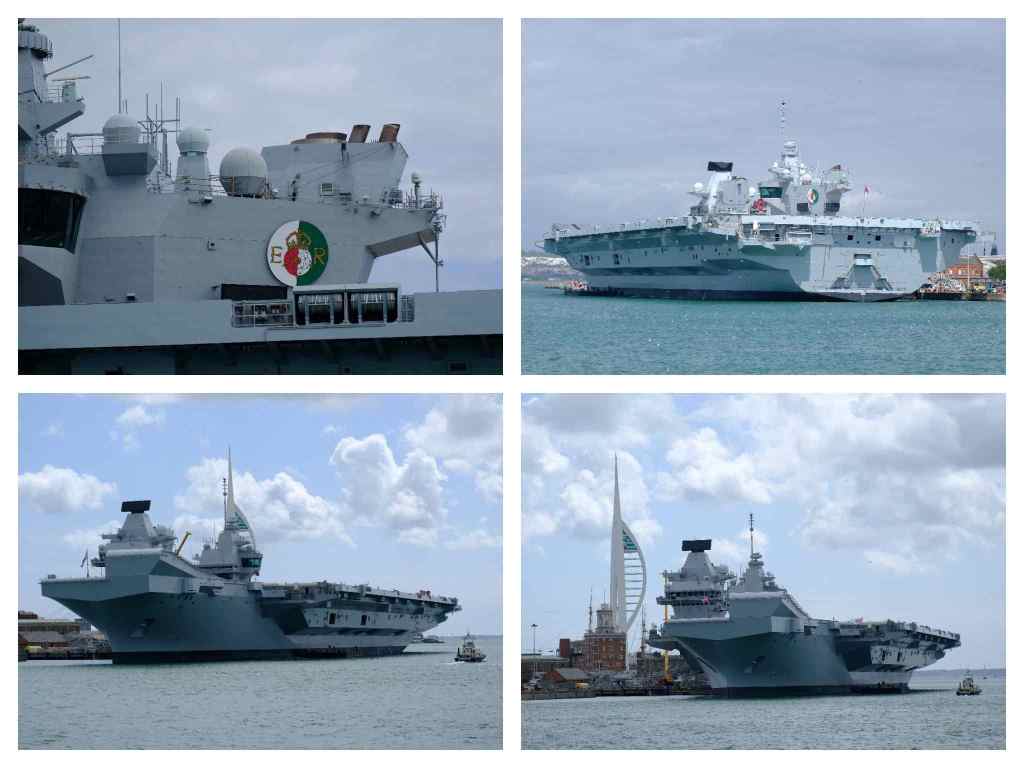
HMS Queen Elizabeth was in port the 1st of our 2 Aircraft Carriers which are the largest and most powerful vessels ever constructed for the Royal Navy. They each weigh 65,000 tonnes, have a top speed of over 25 knots per hour and a range of 10,000 nautical miles. Her Length is 284 m (932 ft)
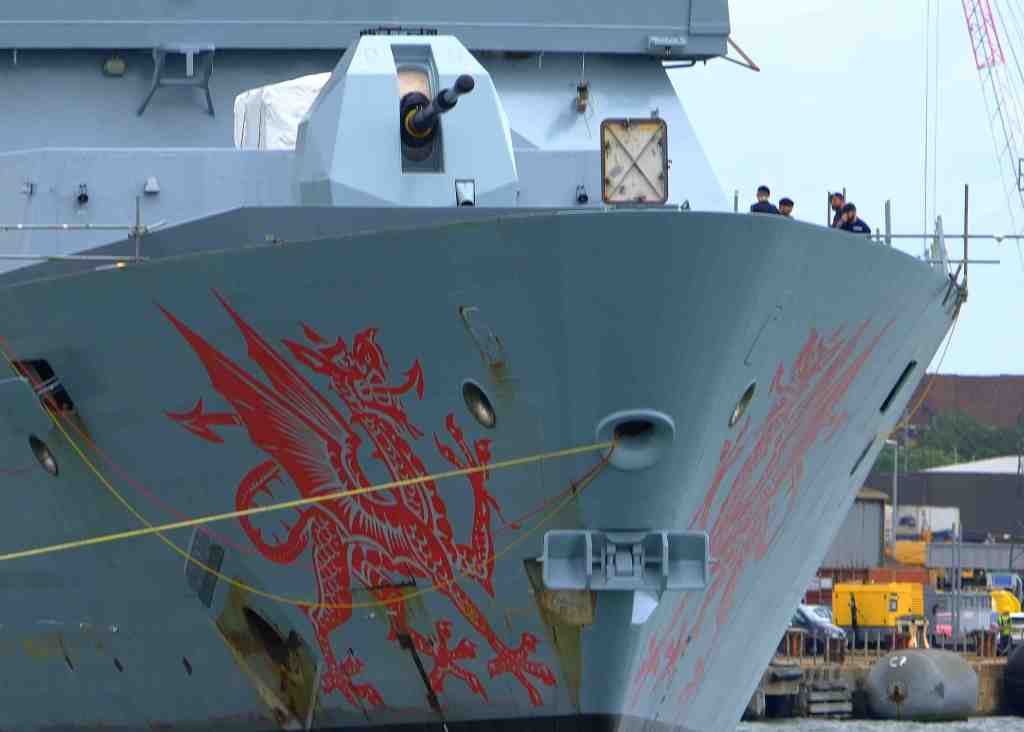
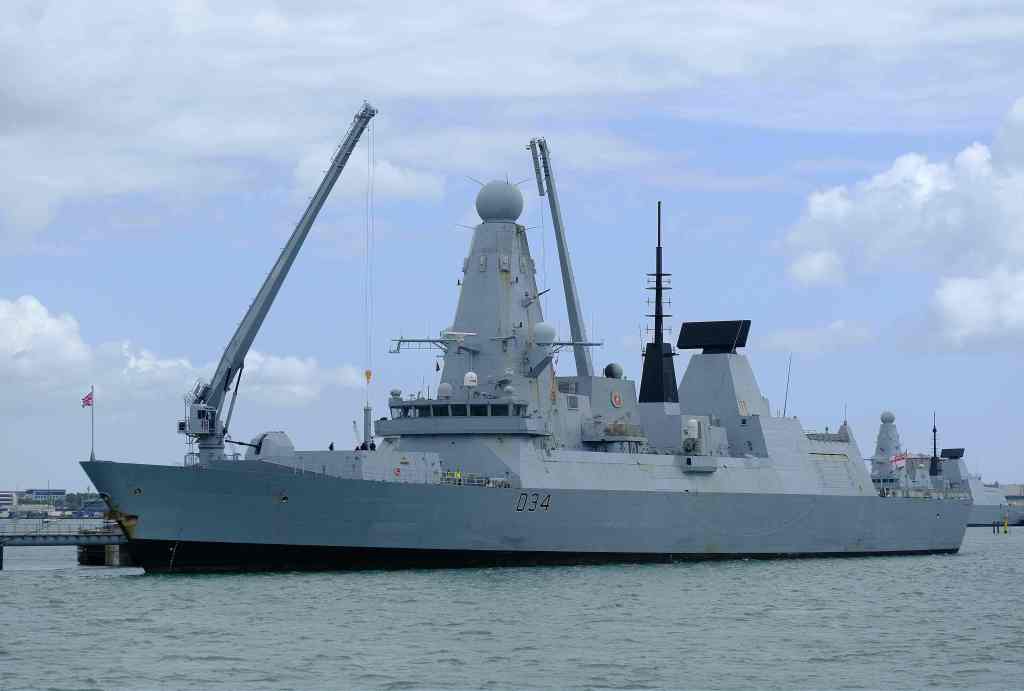
HMS Dragon Type 45 is a Daring-class air-defence destroyer. She was launched in November 2008 and commissioned in 2012
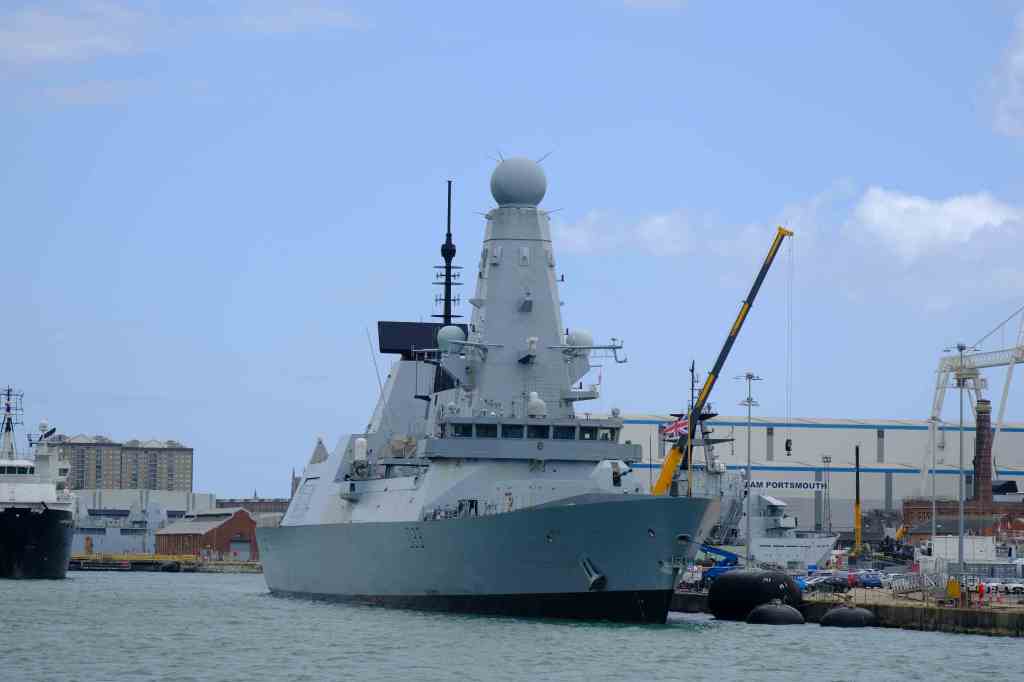
HMS Diamond D34 another Daring-class was undergoing replenishment, further in the dockyard.
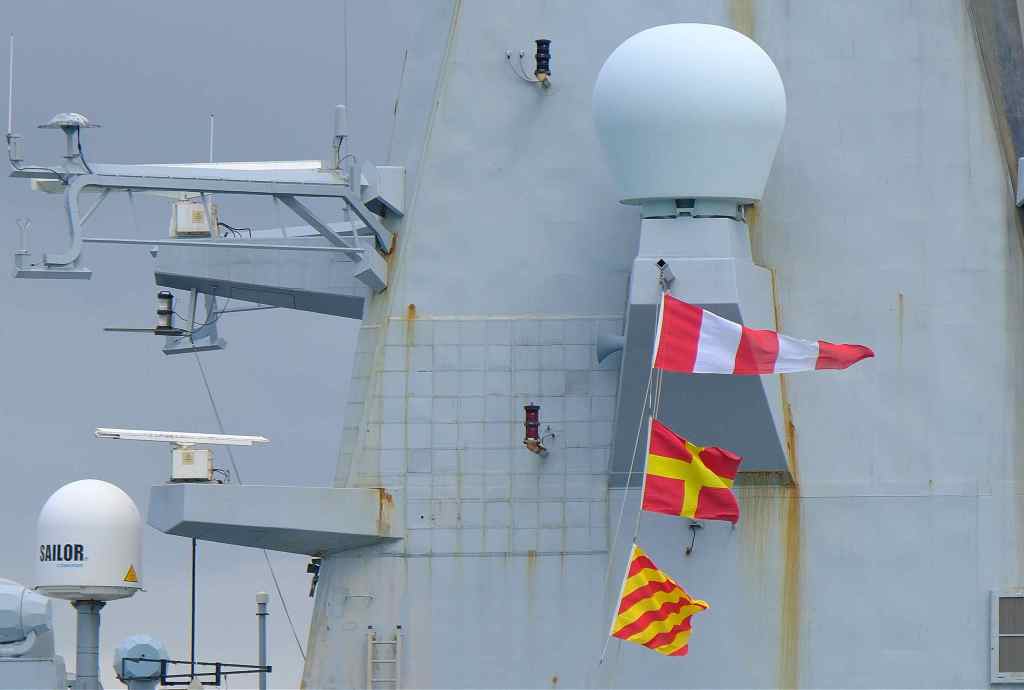
Note the barge with crane alongside, the signal flags read -top one CODE, then ROMEO then YANKEE – this means “slow down and no wash as you pass. The ship is being replenished.” I guess not munitions as no explosive flags were flying.
The 3rd Daring-class in port was HMS Dauntless {D33}
Decommissioned Royal Navy Type 23 Frigates HMS Monmouth F235 and HMS Montrose F236 stand awaiting their fate or scrapping on the “trots” at Portsmouth.
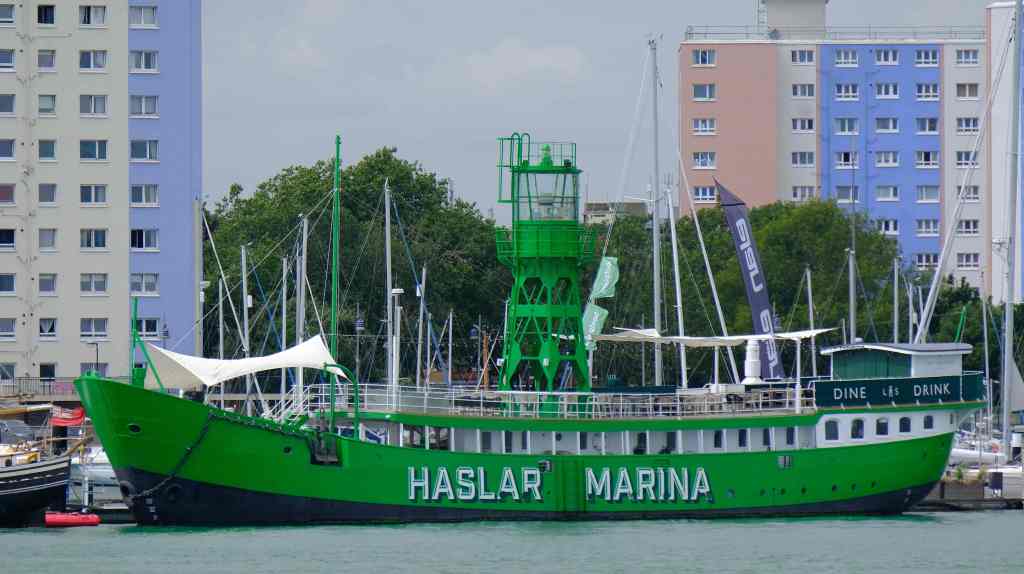
Leaving the Naval part of the dockyard we passed this old Lightship, now a nightclub and a Border Force patrol boat.
The tour ended from where we started,- a great day out on this Gosport ferry cruise.
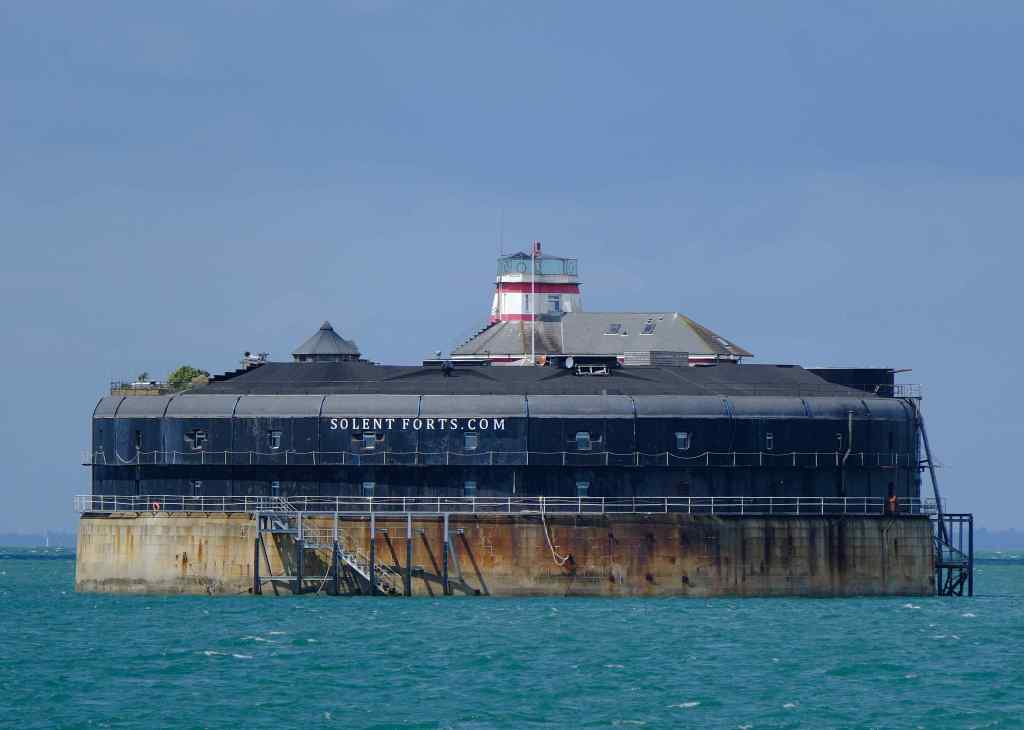
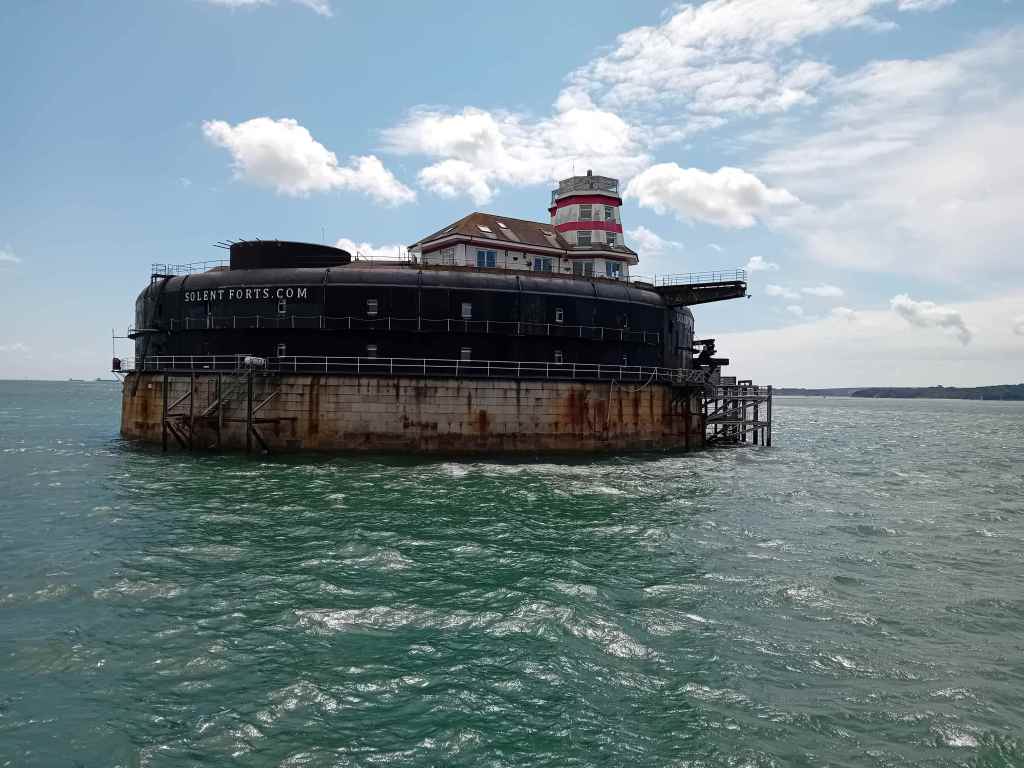
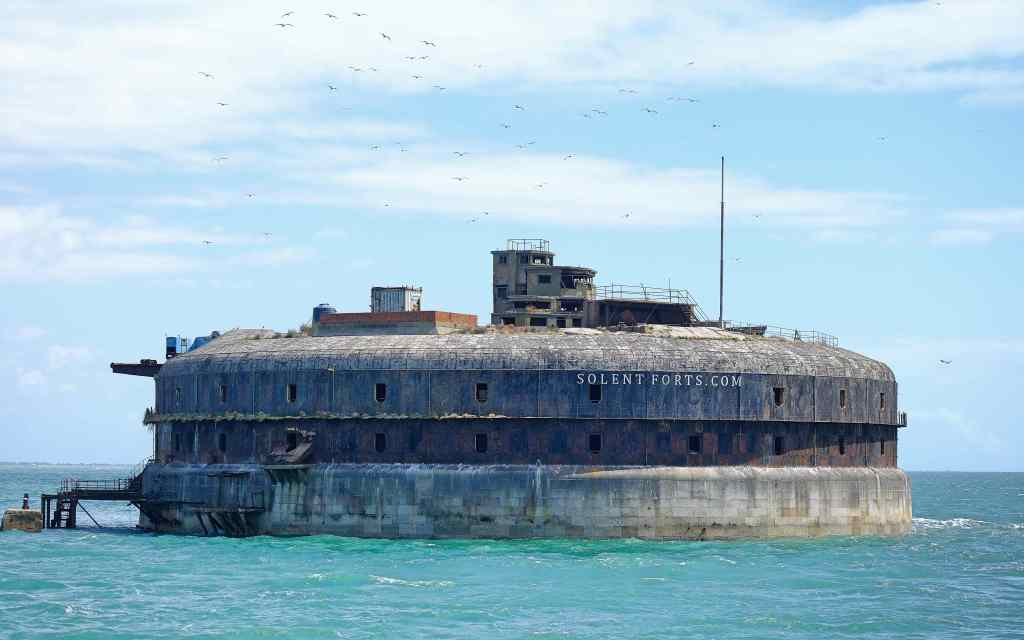
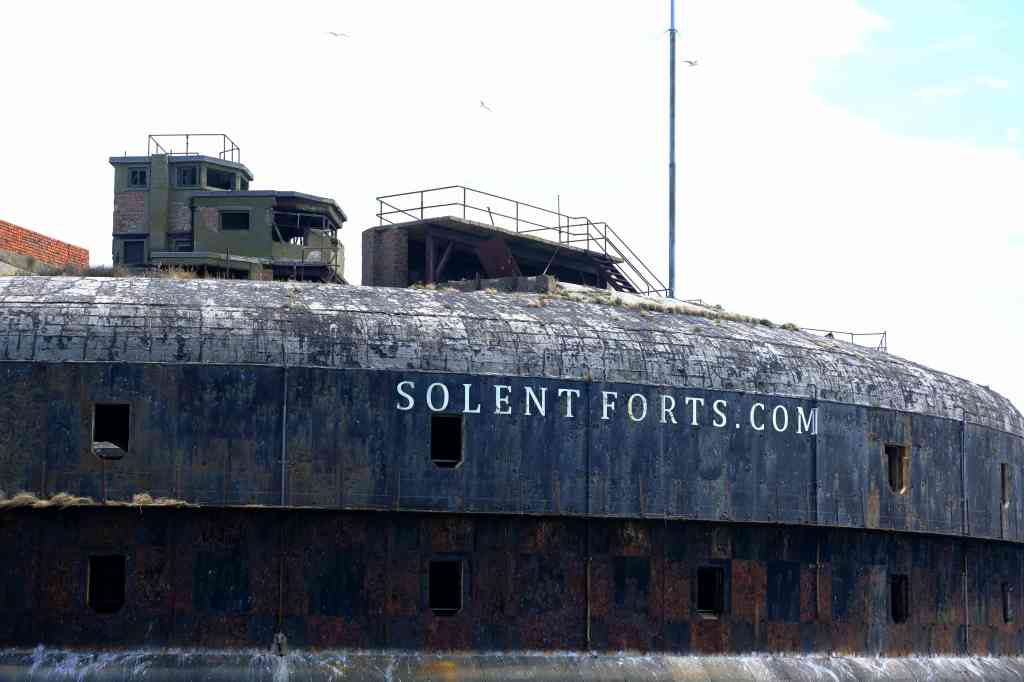
On Wednesday I took an afternoon small boat cruise into the Solent taking in No Man’s Land, Spitbank and Horse Sand forts, designed and built in the 19th century by Lord Palmerston to protect the eastern approaches to Portsmouth Harbour.
Leaving from Gosport on one of the Hythe ferry boats The ” Spirit of Portsmouth” the trip gave a good close-up of the forts.
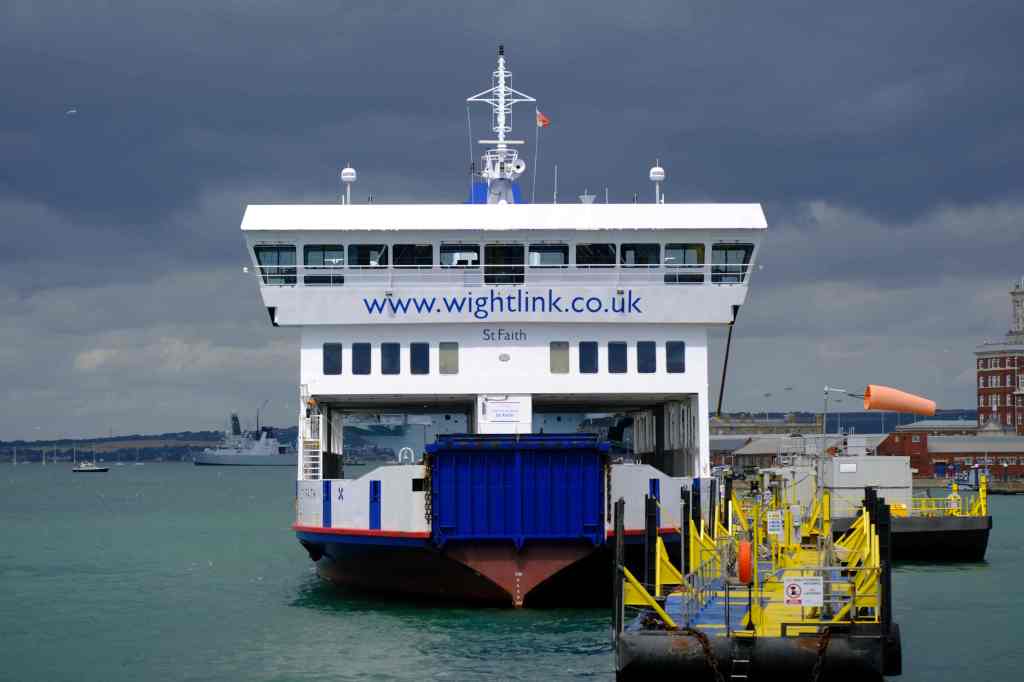
Below is a picture of one of the other ferries similar to the boat we were on.
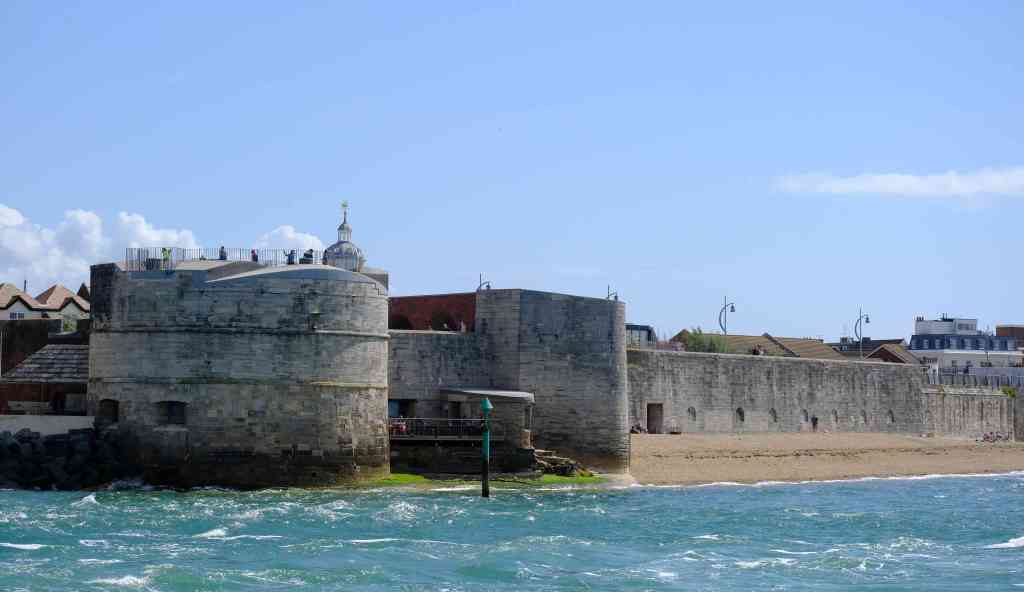
One of the fortification Towers at the entrance into Portsmouth Harbour.
Heading out of Portsmouth we passed Fort Gilkicker one of the shore forts {which I have posted about in the past} This fort is being restored and redeveloped into apartments.
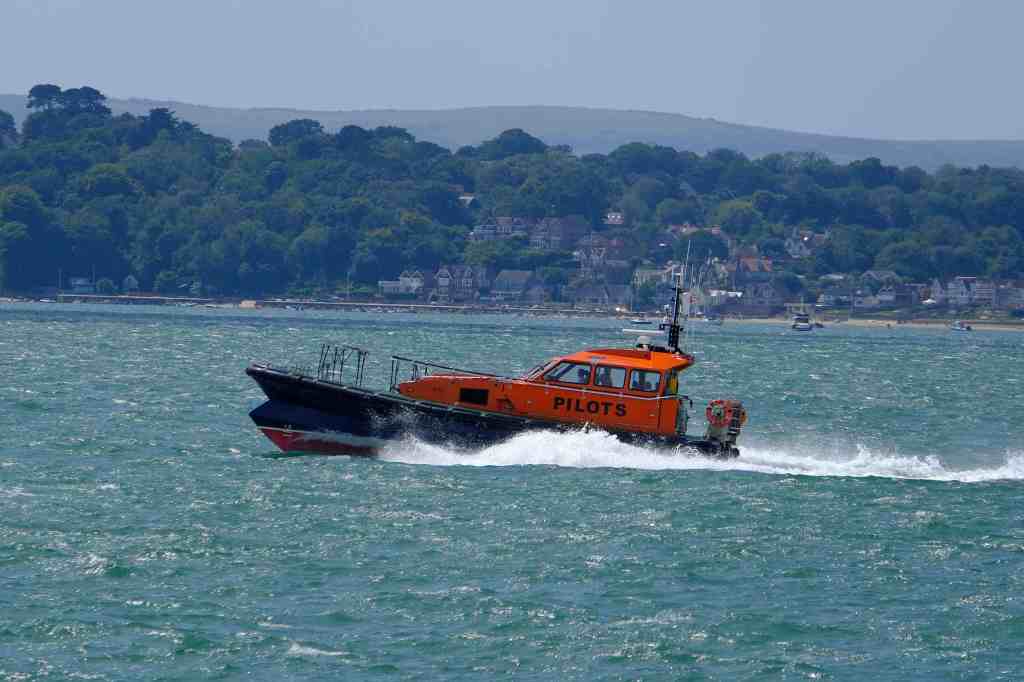
A pilot boat headed out to meet an incoming ship into the Solent.
Spitbank Fort.
No Man’s Land fort.
Horse Sands Fort.
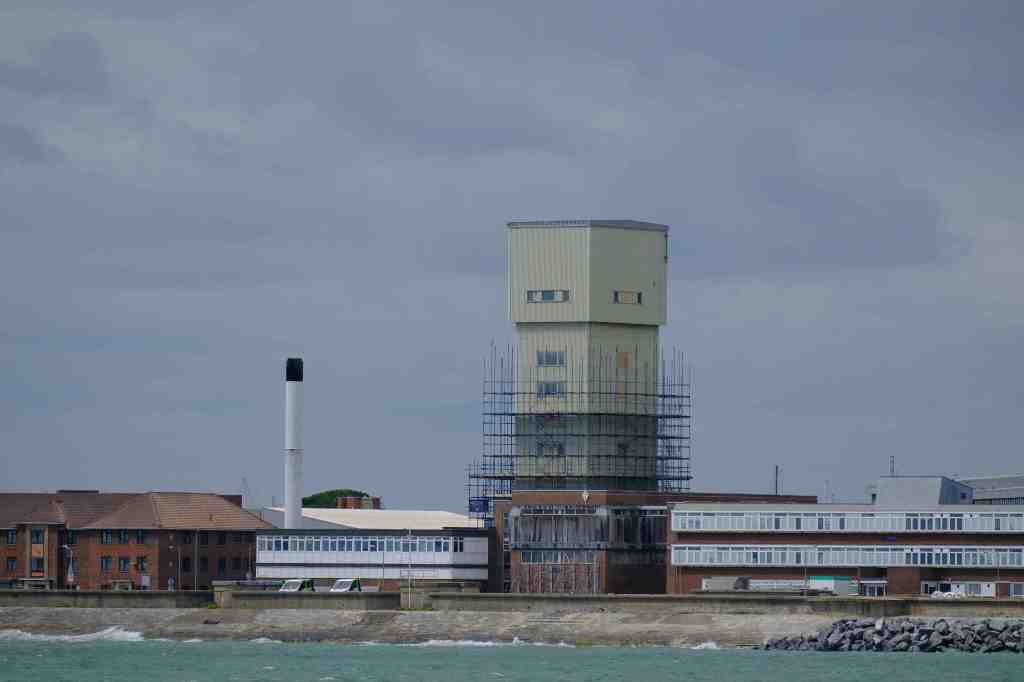
Returning to Portsmouth Harbour we passed the now no longer used Submarine training escape tower – I understand the tower was filled with water and the crew could practice emergency escapes from a stranded submarine there.
Further pictures from the boat trip will be posted later.
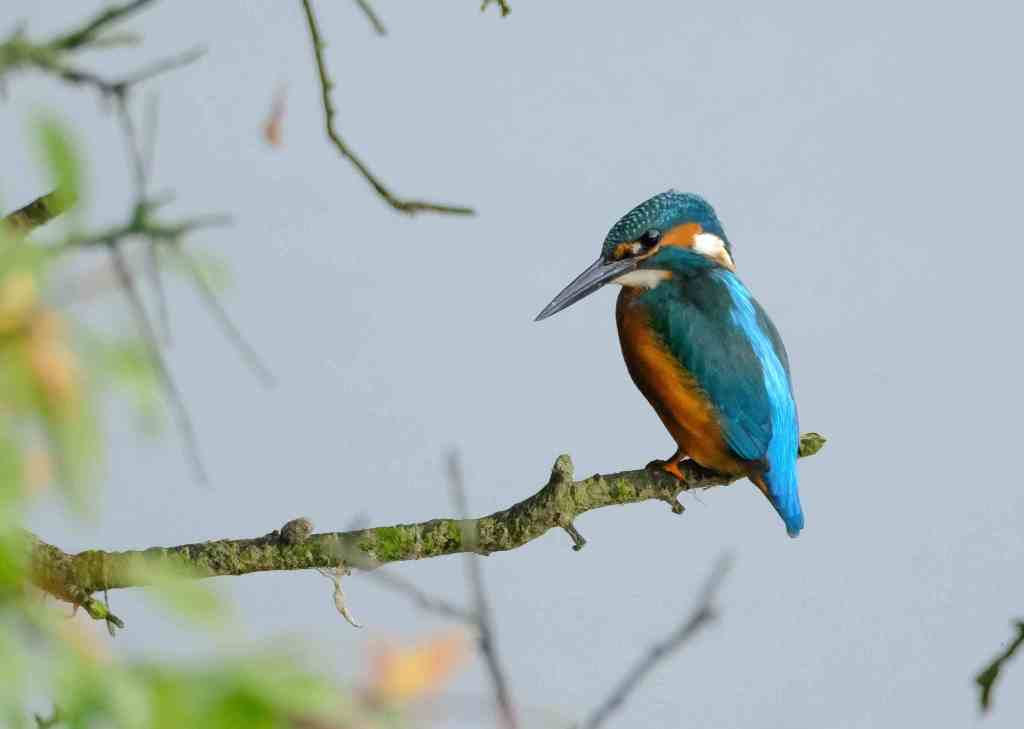
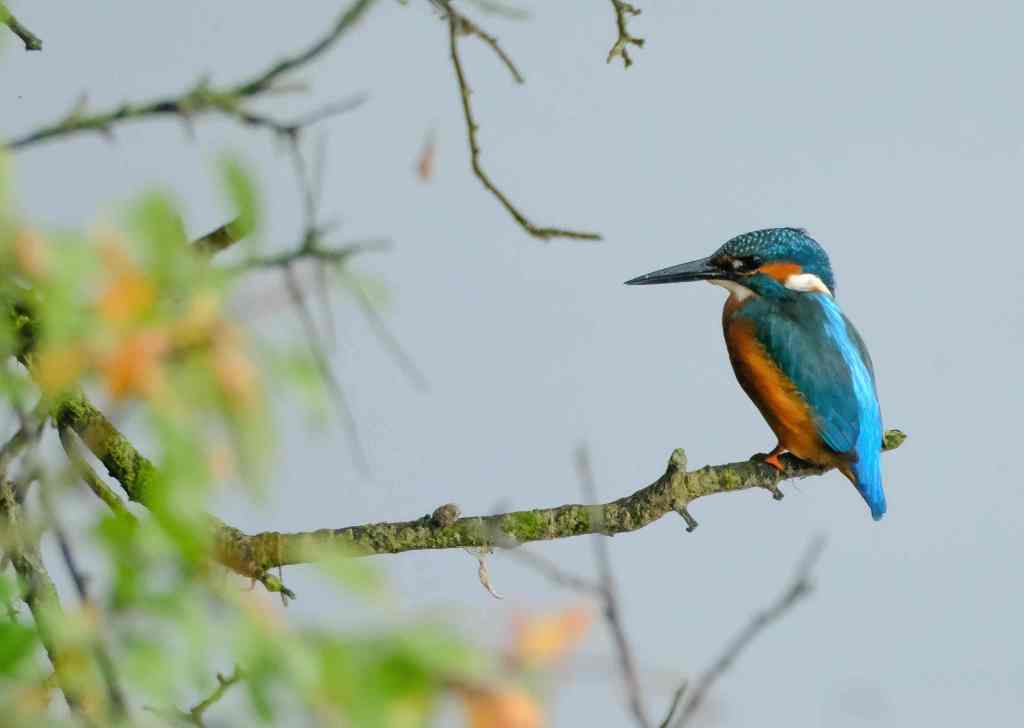
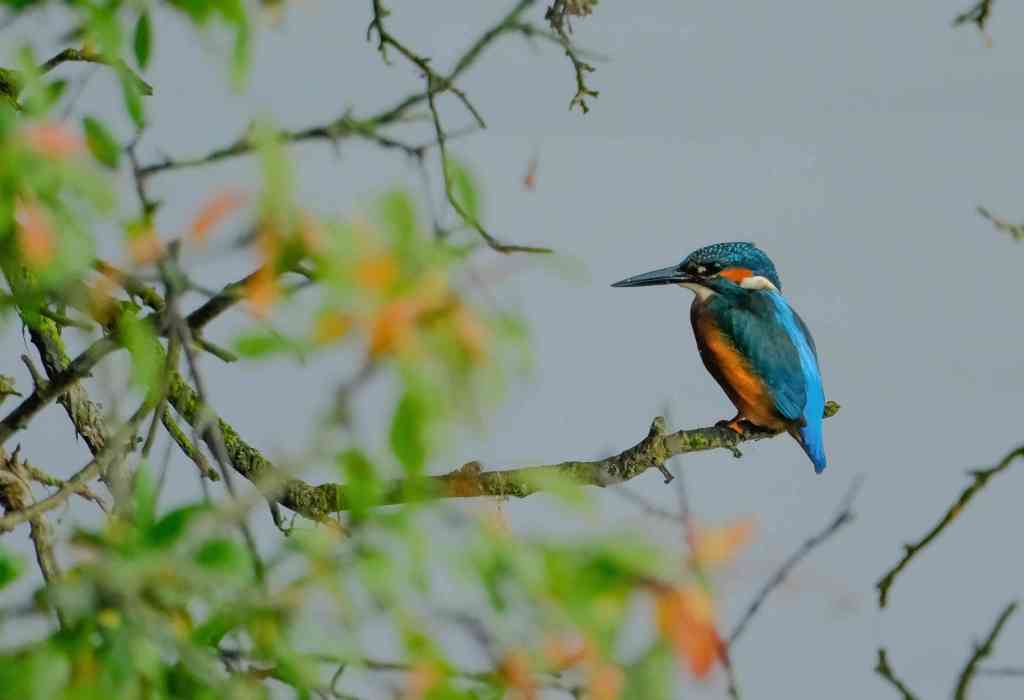
The bottom of the beak is a different colour for females. The male Kingfisher’s beak is entirely black. The female’s beak has a pinkish-orange tinge on the bottom.
To remember it is a female, many people say she is wearing lipstick.