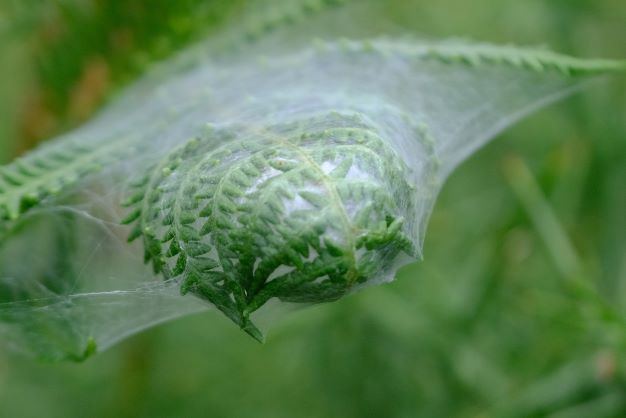
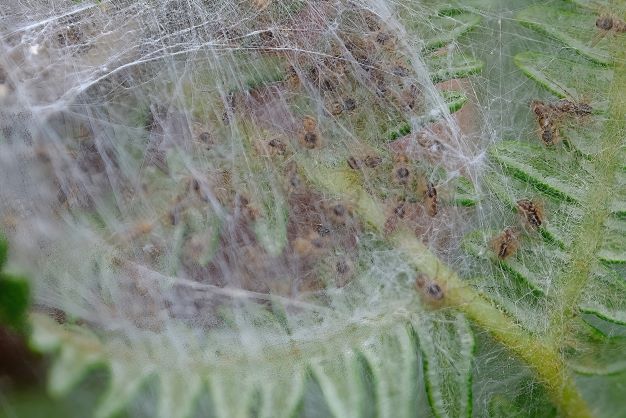
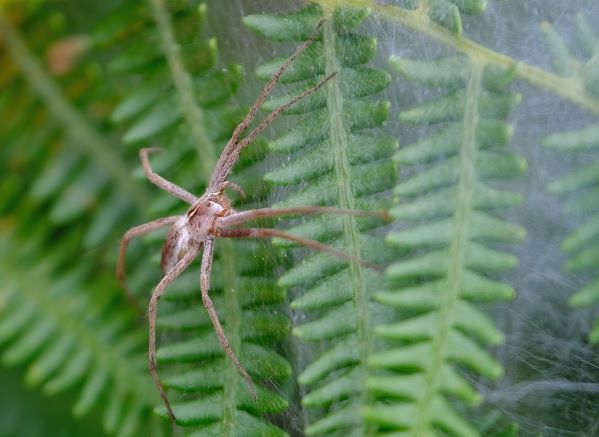
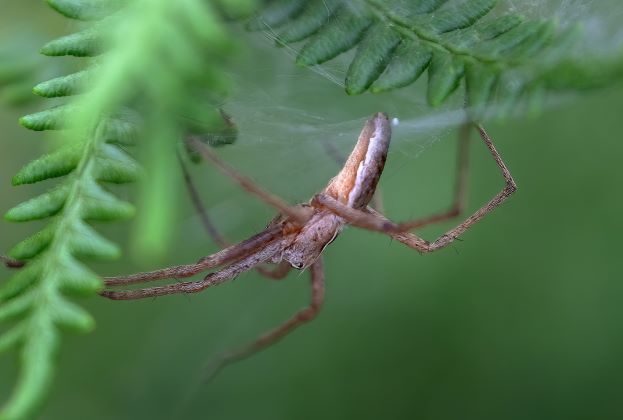
A spider’s nest on some bracken. The nursery web spider builds a nest and is very parental overseeing the eggs and carefully supporting the baby spiders when they hatch. In this nest, they have already hatched turning the leaf to look brought out the mother spider!
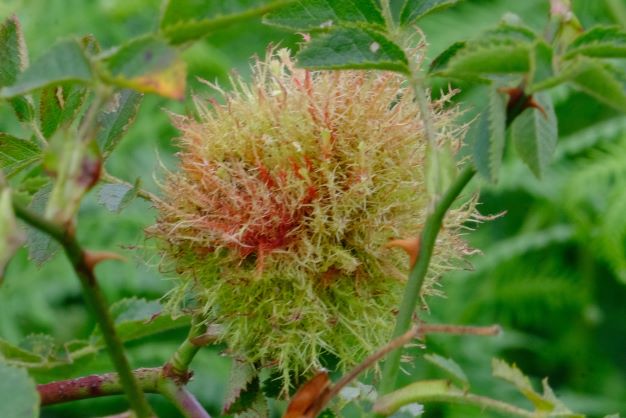
An interesting growth on a Dog Rose known as a rose bedeguar gall, Robin’s pincushion, mossy rose gall or moss gall. A gall wasp known as Diplopepis rosae causes these galls (Plant galls are abnormal outgrowths of plant tissues, similar to benign tumours) they mainly develop directly after the female insect lays the eggs.
Another New Forest walk yesterday. Much cooler this morning- The recent heatwave has left its mark. Many of the streams have dried up along with some of the pools where we study Dragonflies. Much of the grass is baked brown the whole forest waits for some of the forecast rain and thunderstorms.
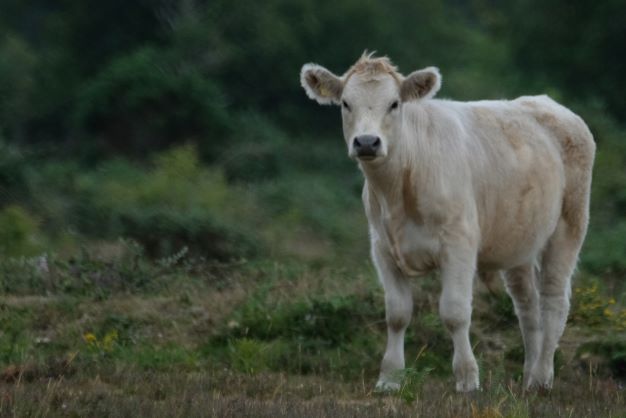
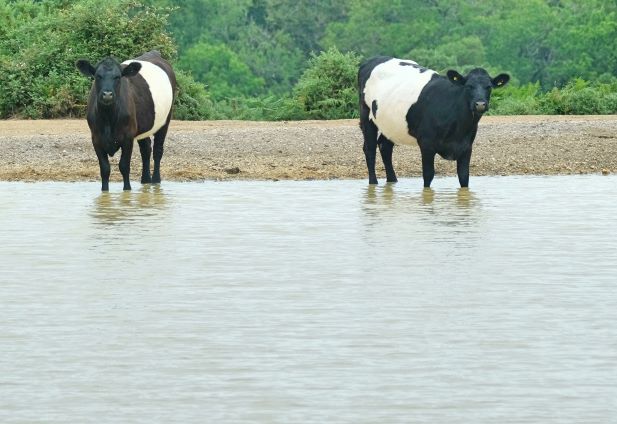
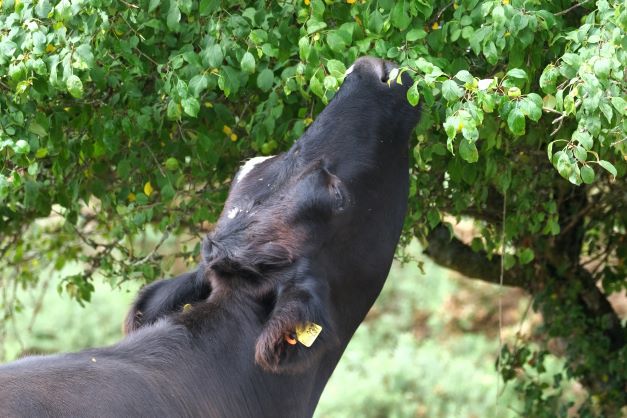
The cattle and ponies are staying close to or regularly drinking water places such as Cadnams Pool. Due to the lack of fresh grass, they are eating leaves from the trees.
BBQs and open fires are now banned in the New Forest due to the fire risk. Although there are a lot of green areas within the forest underfoot the grass and gorse is tinder dry.
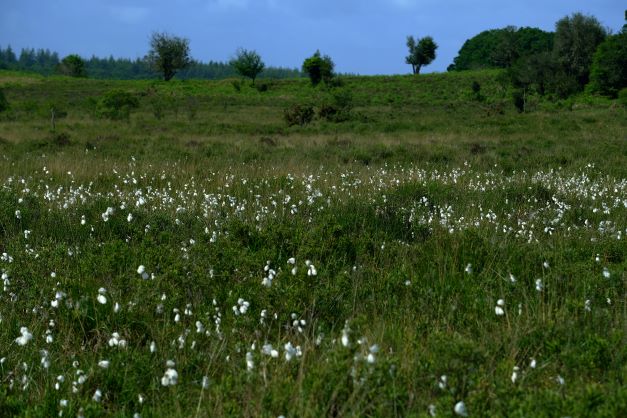
Ponies cooling off. Note the cotton grass in a green area of none brown grass at the end of the film which warns of a boggy area.
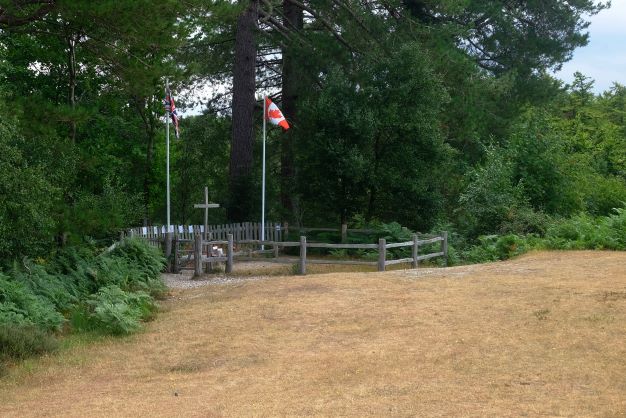
The Canadian Memorial is a simple wooden roadside cross with two flag poles. It is situated overlooking the sloping ground, near Bolderwood on a forest road leading to Emery Down.
The memorial remembers World War Two Canadian forces present in the New Forest before the D-Day invasion of June 6th, 1944 ‘
At this site, during the build-up to D-Day, Canadians were stationed in the area. It is also close to one of Forest’s wartime airfields at Stoney Cross.
A plaque with an inscription reads: ‘On this site, a cross was erected to the glory of God on 14th April 1944, by men of the 3rd Canadian Division RCASC’ ( the Royal Canadian Army Service Corps.)
On D-Day, RCASC soldiers of the 3rd Canadian Division and 2nd Armoured Brigade landed on Juno Beach.
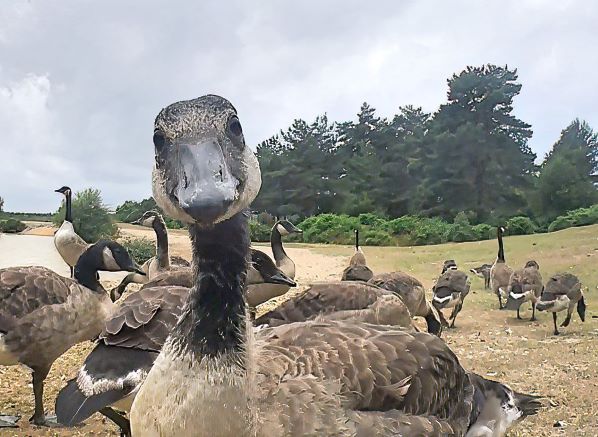
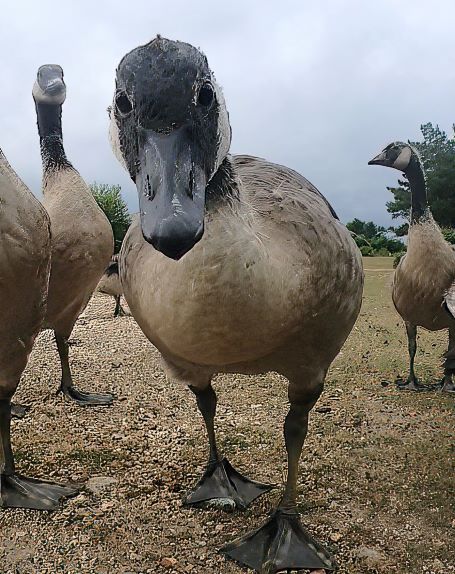
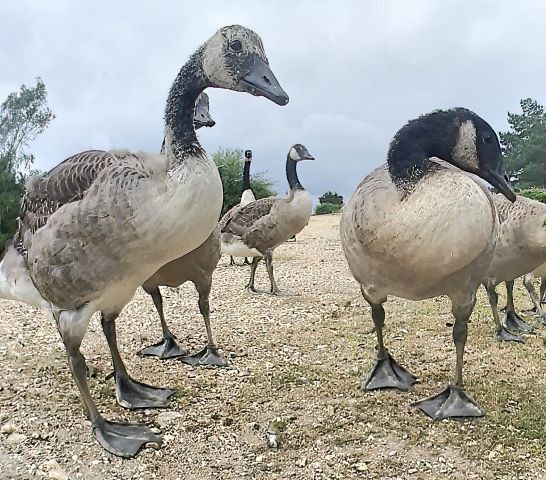
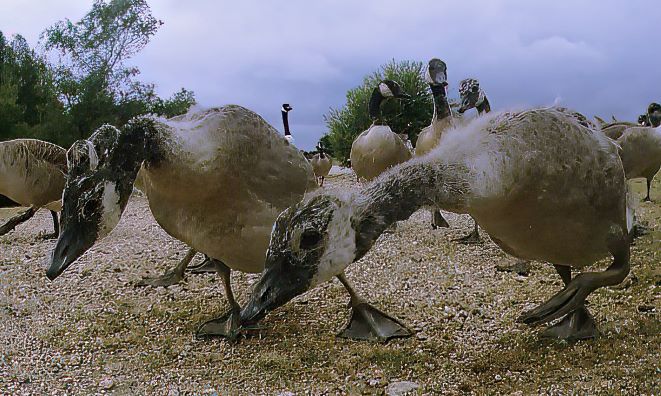
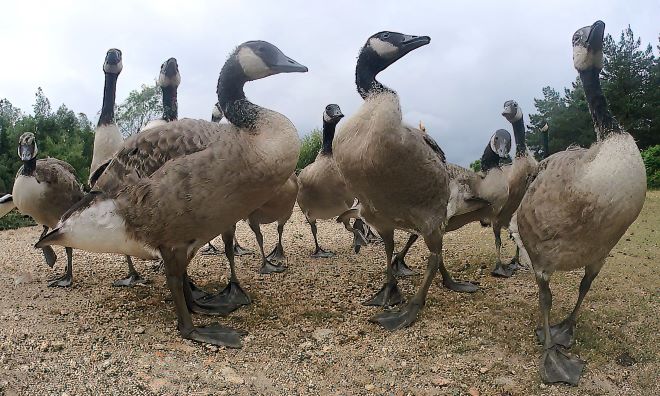
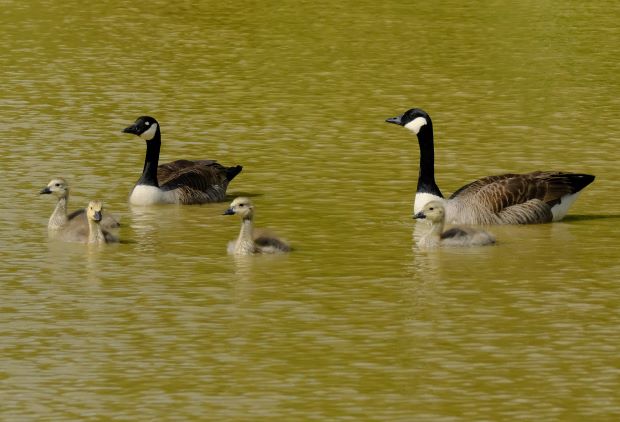
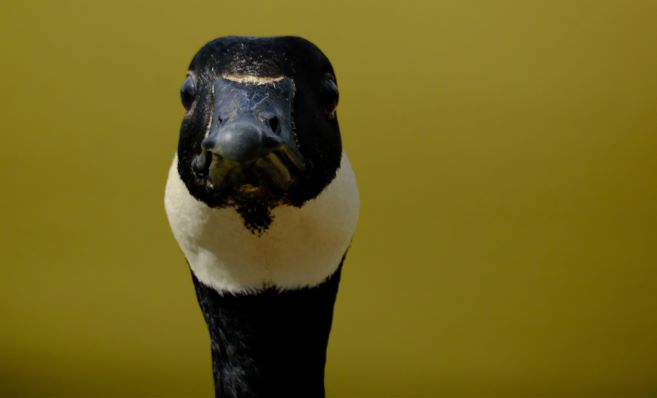
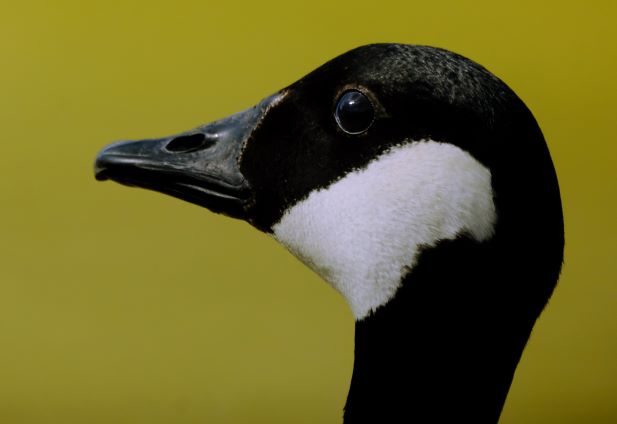
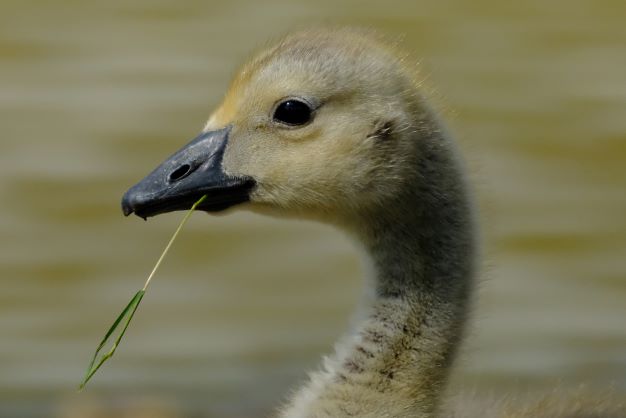
The Canada Geese goslings have grown up so much over the last few weeks. Three families despite the odds have raised all their little ones into “teenagers”.
I placed my small action camera {Olympus Tough} on a stool and let it capture the geese coming over for a feed. Video and stills from the film. Some of these portraits have got to make you smile.
Common cotton grass has fluffy, white seed heads that dot boggy moorlands and heaths its bright heads show up across the landscape which looks like something has been dropped until you get close enough to see it is a seedhead. Despite its name, common cotton grass is a member of the sedge family, rather than being a true grass.
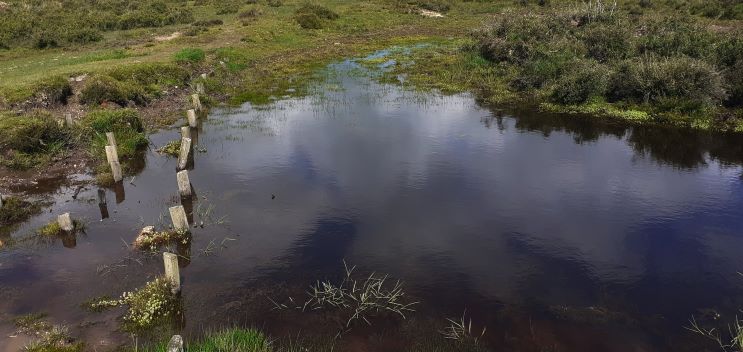
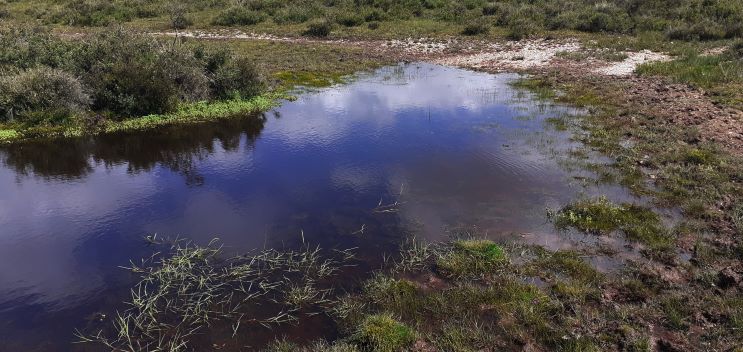
In the winter we came across a small pond on the moor and decided to return in the summer as it
looked like a good site for Dragonflies, we returned today and it was.
Female Broad-bodied Chaser.
Male Broad-bodied Chaser.
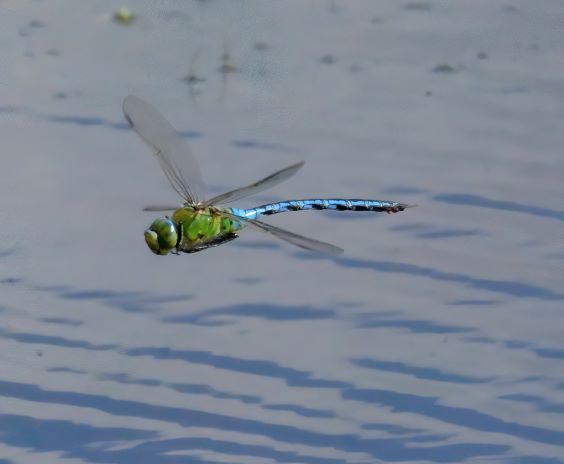
Male Emperor Dragonfly.
Female Emperor Dragonfly. Egg-laying.
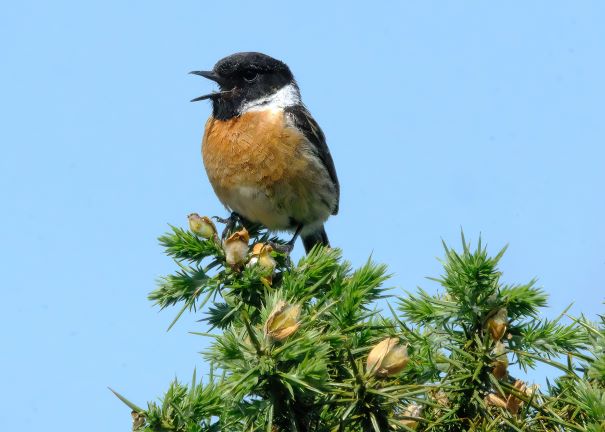
A Male Stonechat keeping its distance from the pond.
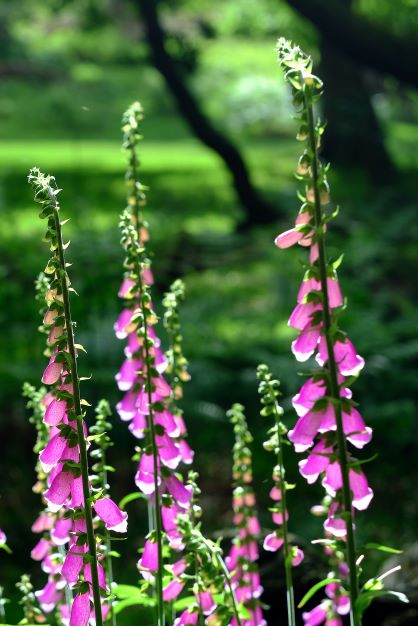
Foxgloves are now in full flower.
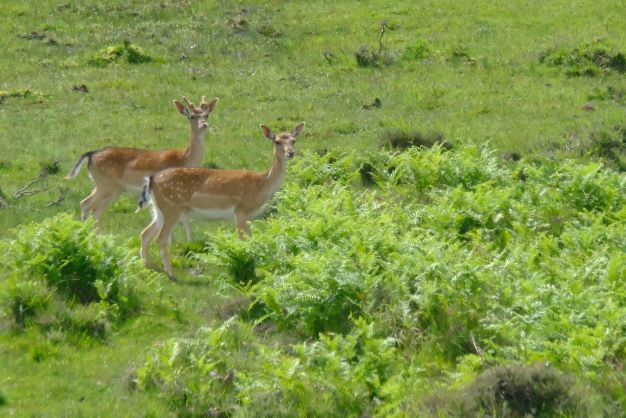
Fallow Deer are never far away on a New Forest walk.
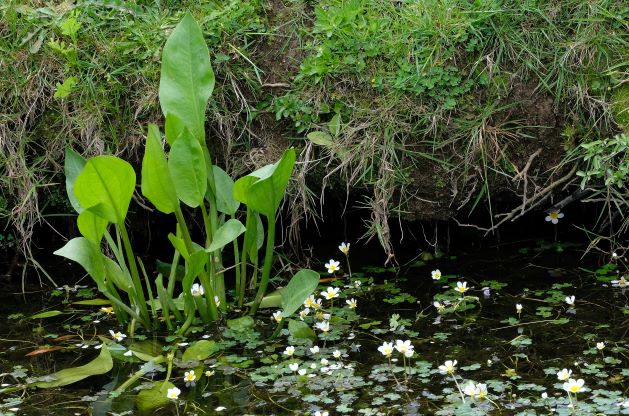
A nature walk along a small stream in the New Forest with a closer look and some of the water life in and around the waterway.
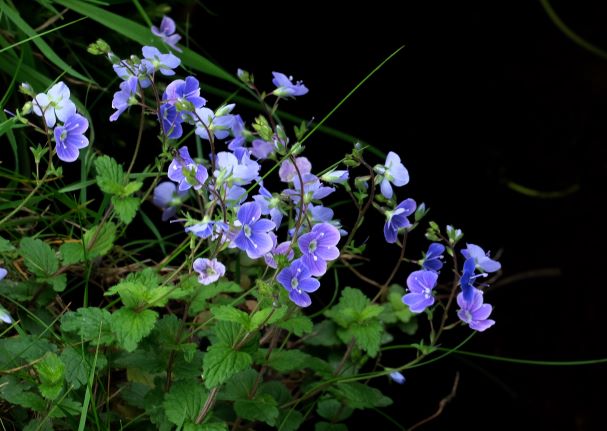
Speedwell (Veronica persica)
Lots of Tadpoles in the stream today.
Film of Dragonfly larva (+ some small fish). The larvae will climb out of the water for the last part of its life cycle and then it will split down its back and a Dragonfly will emerge.
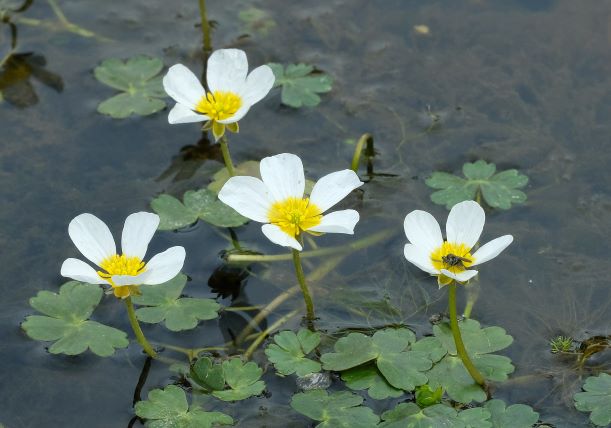
Water crowfoot, (Ranunculus aquatilis).
Water
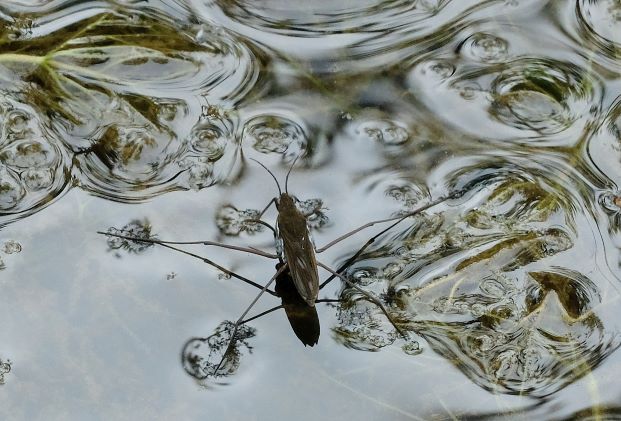
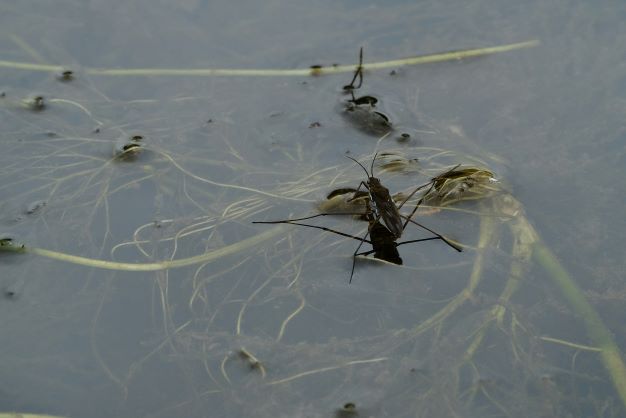
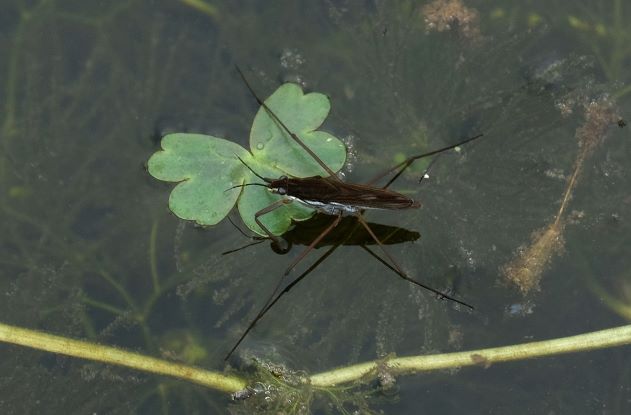
Water skimmers or striders are small insects that are adapted for life on top of still water, using surface tension to their advantage so they can “walk on water.”























 Continued Reflections from my World.