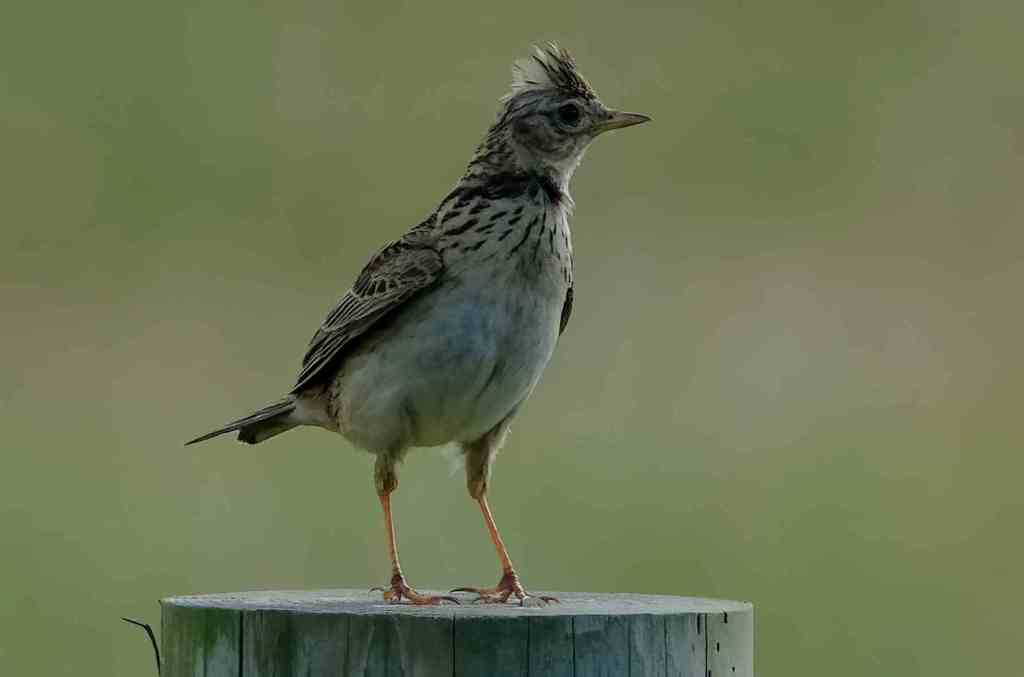
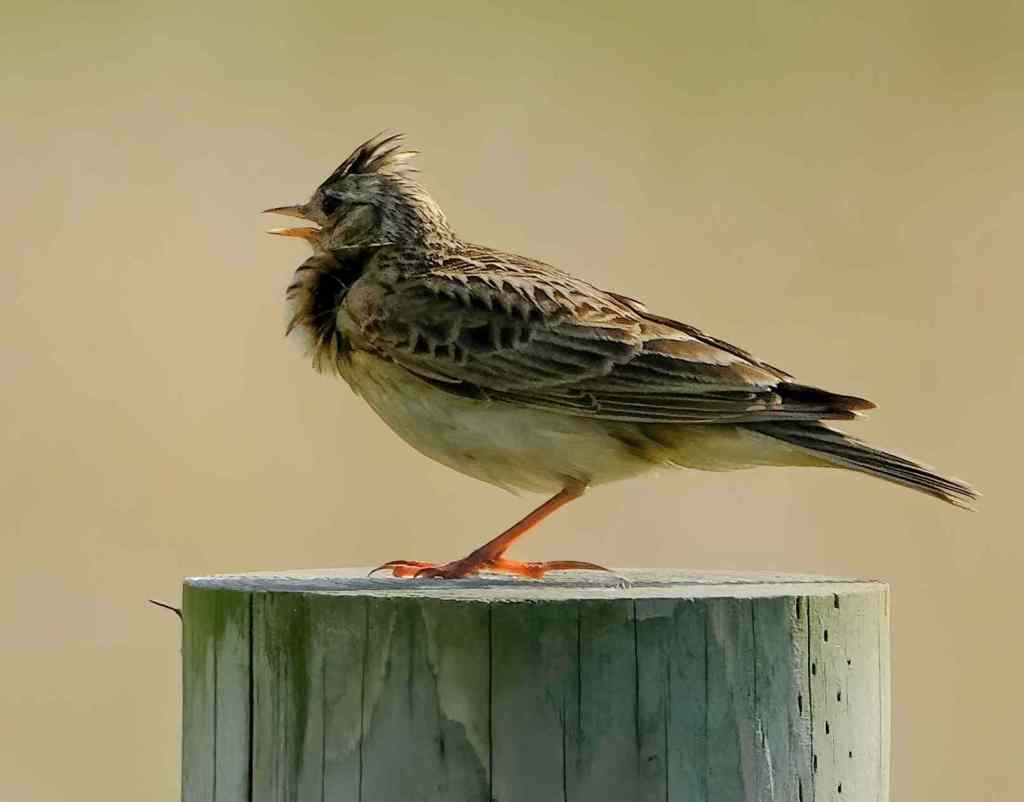
Male skylarks will rise almost vertically from grassland, salt marshes and moorland. They hover effortlessly, singing from a great height. Normally, a speck in the sky, but a treat to hear. This bird was keeping its feet on the ground, singing like mad.
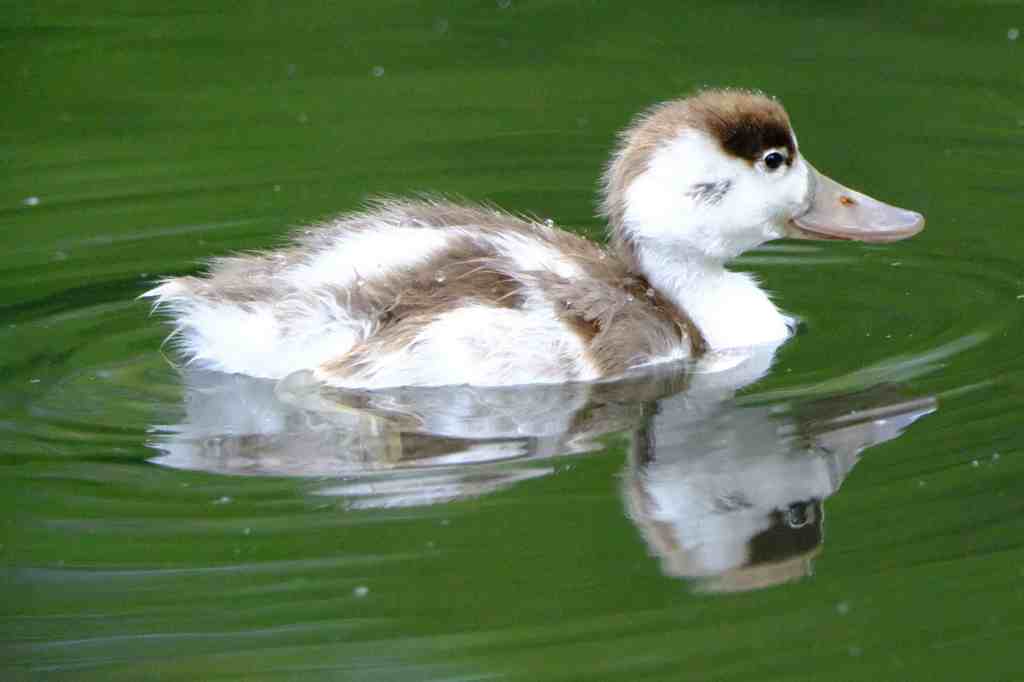
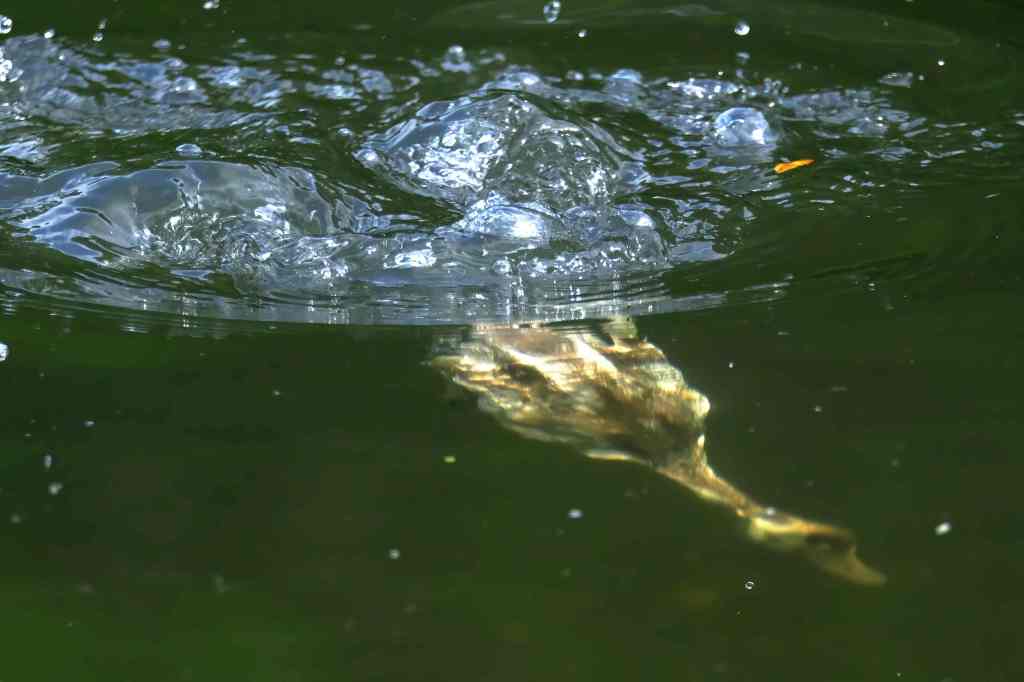
I was watching a Shelduck chick learning to dive, he would dive down, pushing off with his over large feet. He would then stop and just pop up to the surface. I felt it made an interesting sequence of pictures.
I got to see several male Ruff at Slimbridge Wetland Centre yesterday. There is a small breeding population of ruff in the UK. The Ruff is a large Sandpiper; they get their name from the large ruff of feathers around the males’ neck when in breeding plumage. The colour of the ruff can be white, black or buff. I have seen a few of these birds in non-breeding plumage at the marshes locally to me in Lymington. These birds were fairly plain-looking waders – pale fawn-brown all over, with a paler belly.
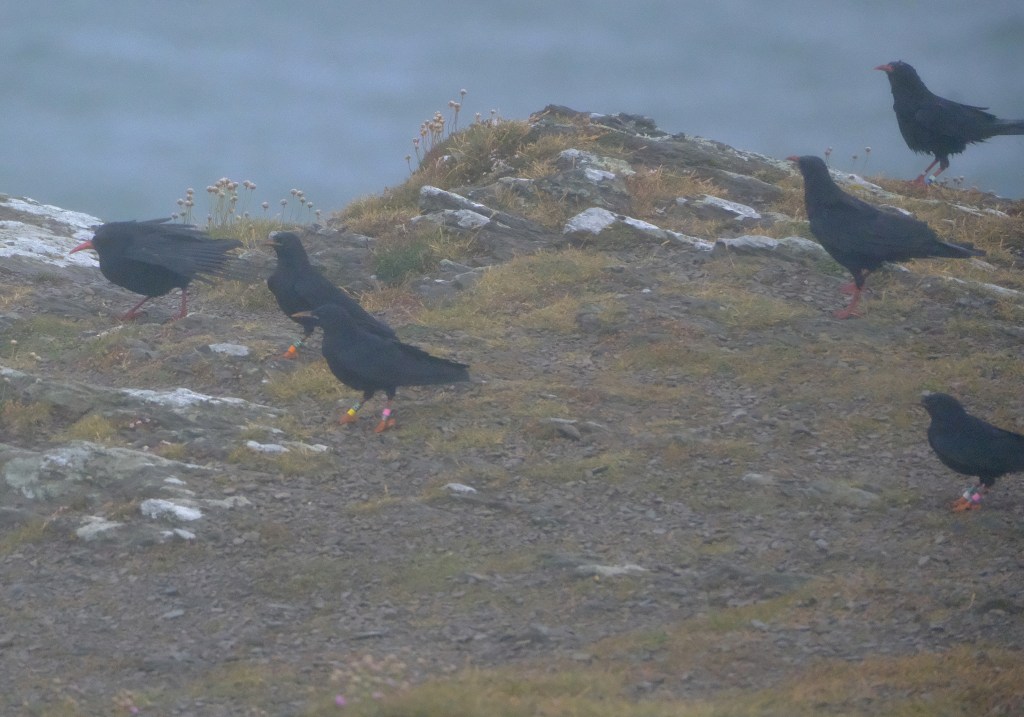
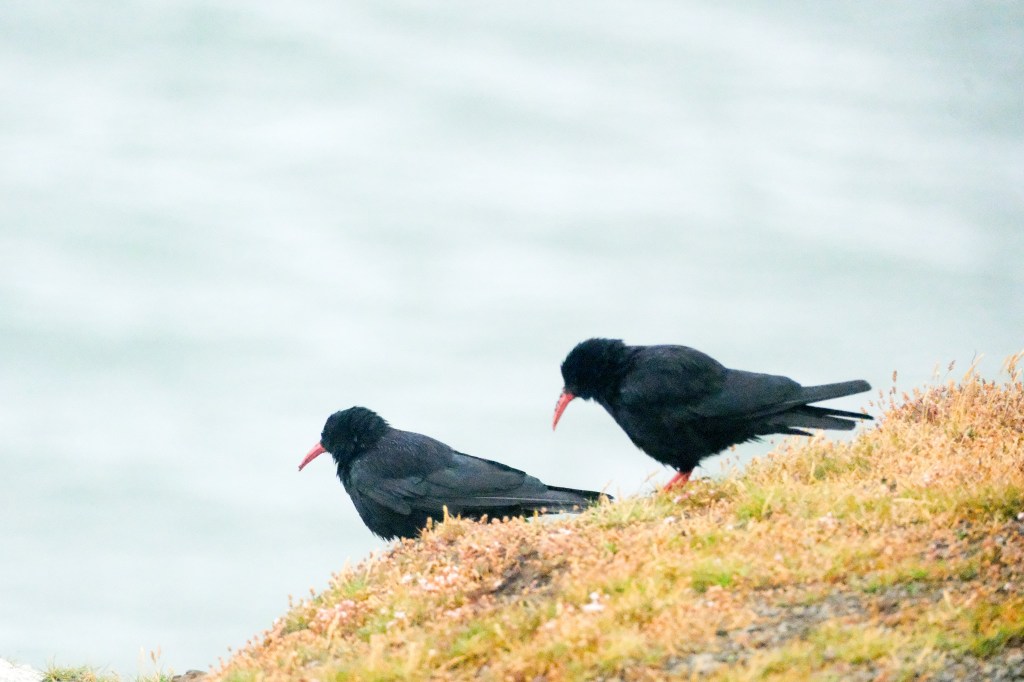
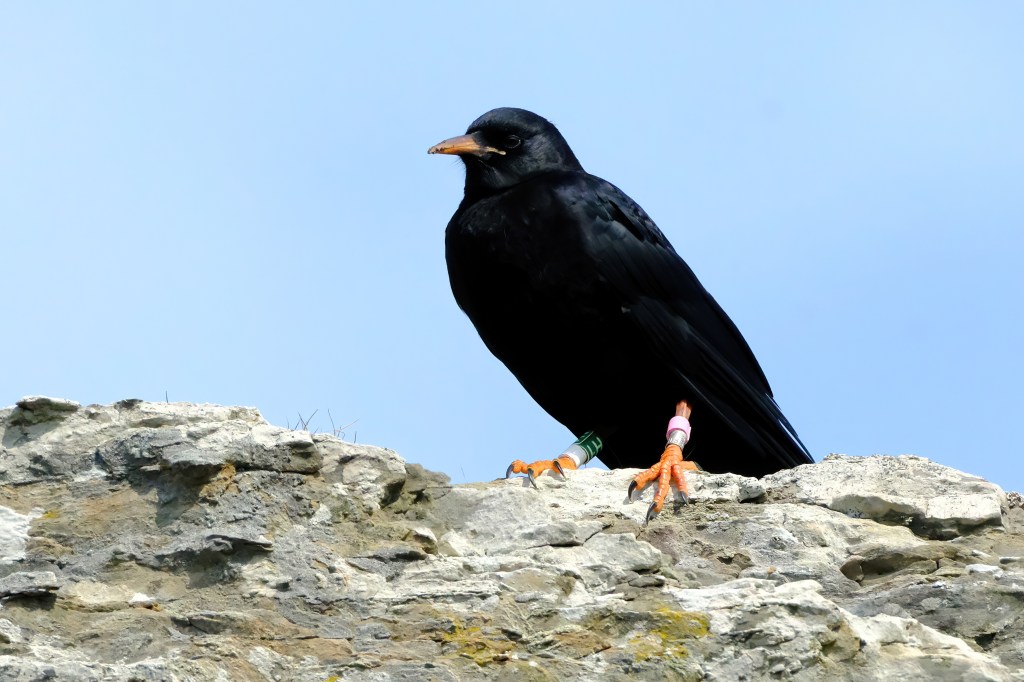
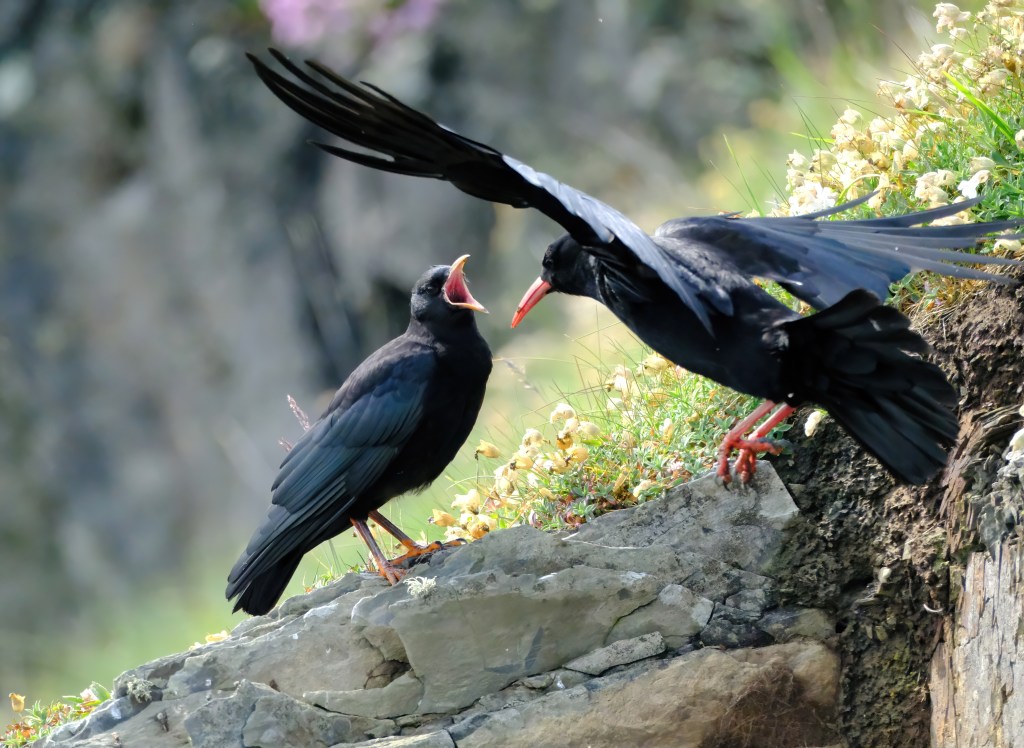
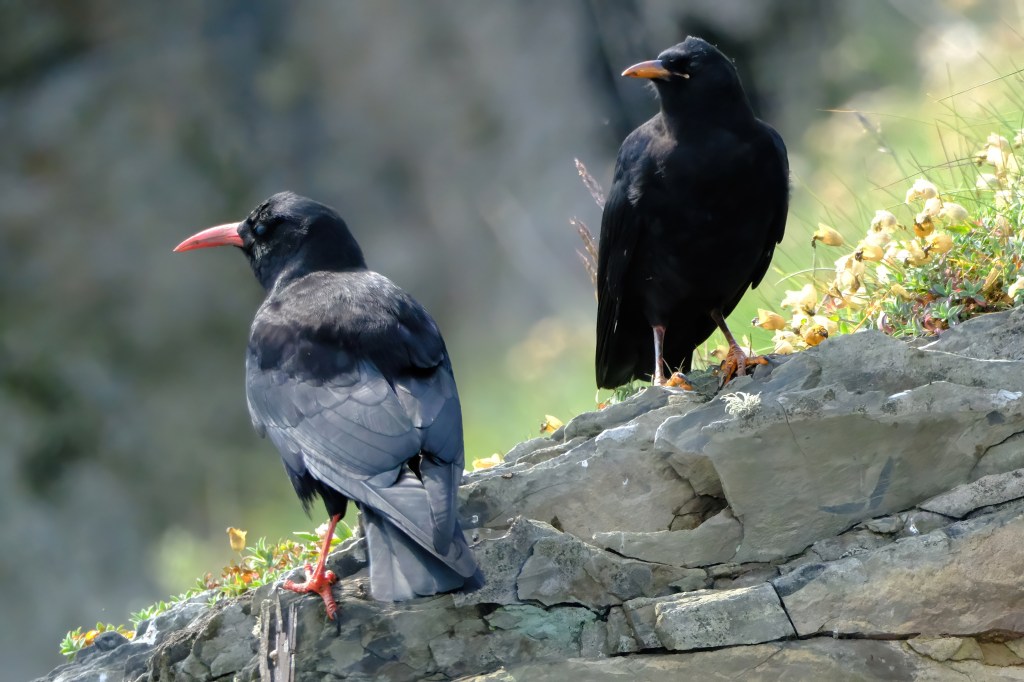
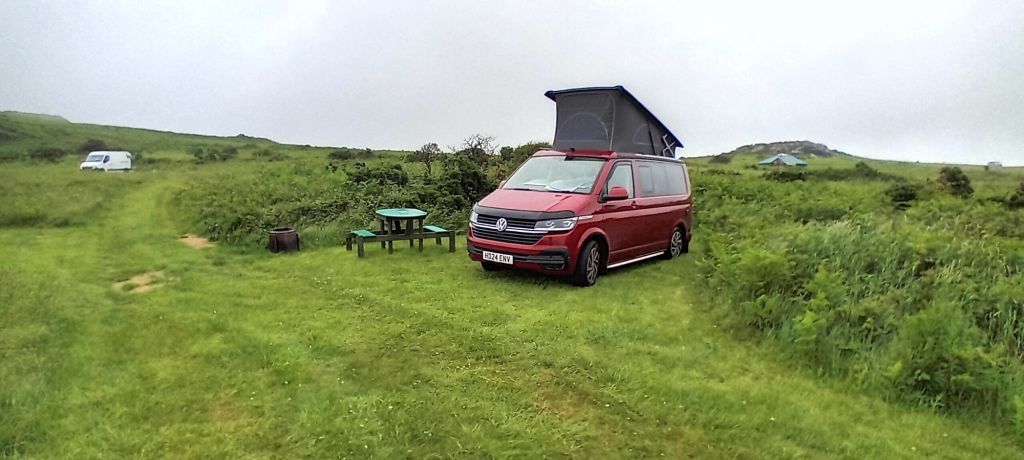
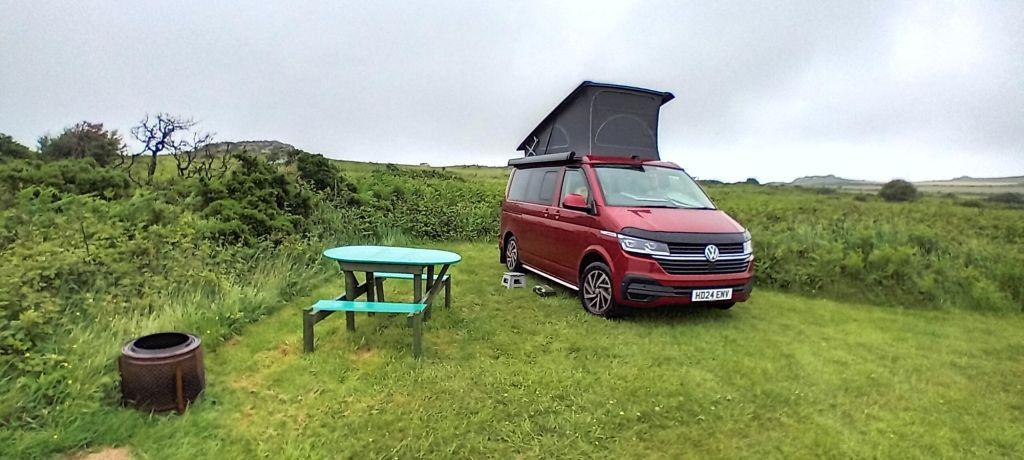
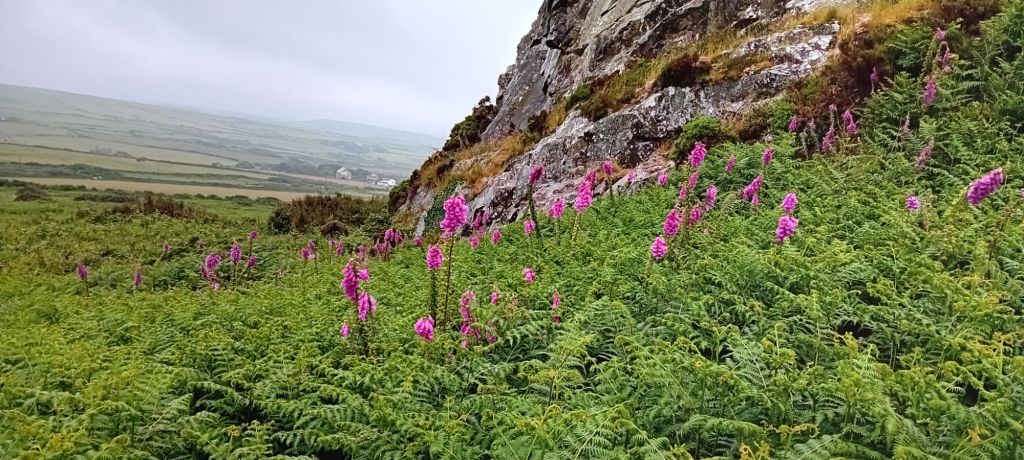
I visited an area in Pembrokeshire, Wales, on our camping trip where, several years before, I had seen Choughs. On a few miles of rugged coastline, I was lucky to see about 15 birds. This included two family groups – both had two parent birds and at least 3 juvenile birds in their group. One set of chicks had been ringed.
Unfortunately, the weather was very wet with high winds, so getting photographs was challenging.
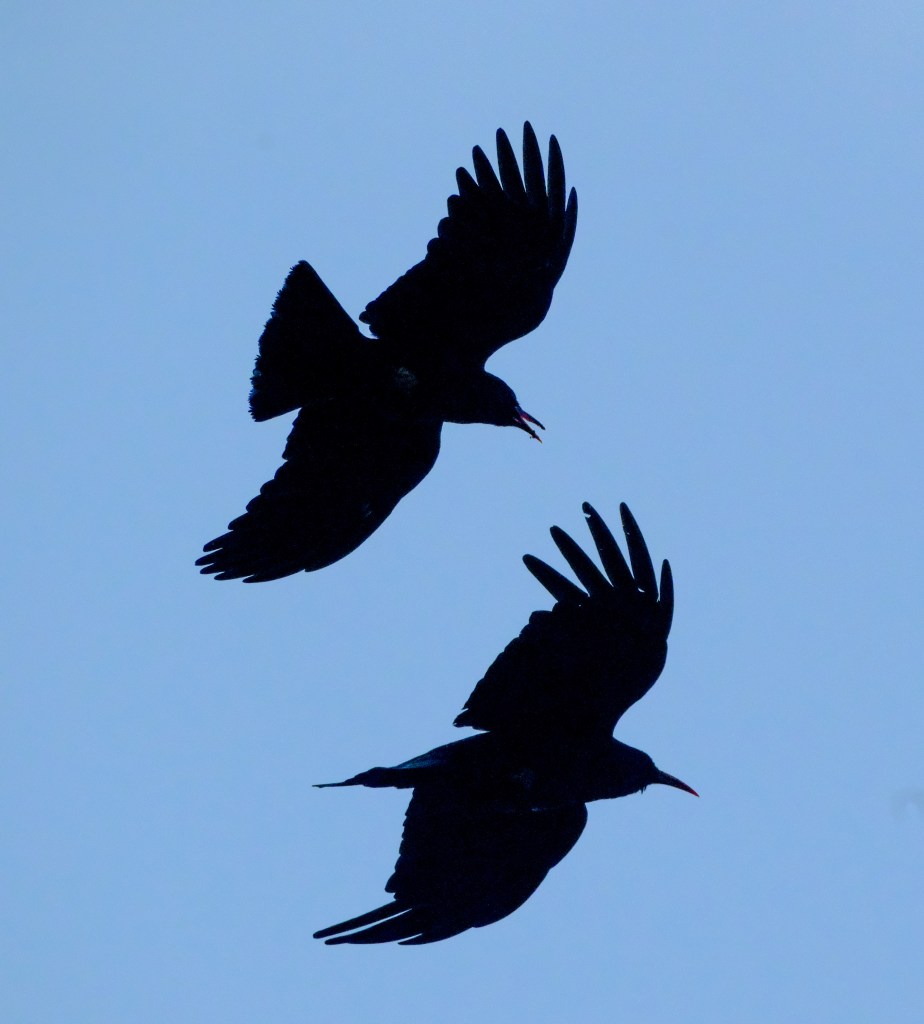
The Chough—pronounced ‘chuff’— is a member of the crow family, but unlike any crow, it has an orange bill and legs. It is found only on the west of the British Isles. It’s a master aerobatics with dramatic aerial displays of diving and swooping. These birds are rare, with only 500 breeding pairs in the UK and the Isle of Man. They are Schedule 1 species.
They feed on short grassland and coastal heathland, where they probe the ground with their long bill for insects, such as leatherjackets and beetle larvae. Nests are in crevices and fissures, on rock ledges and cliff faces.. The female lays three to five eggs, and both parents help to raise the chicks.
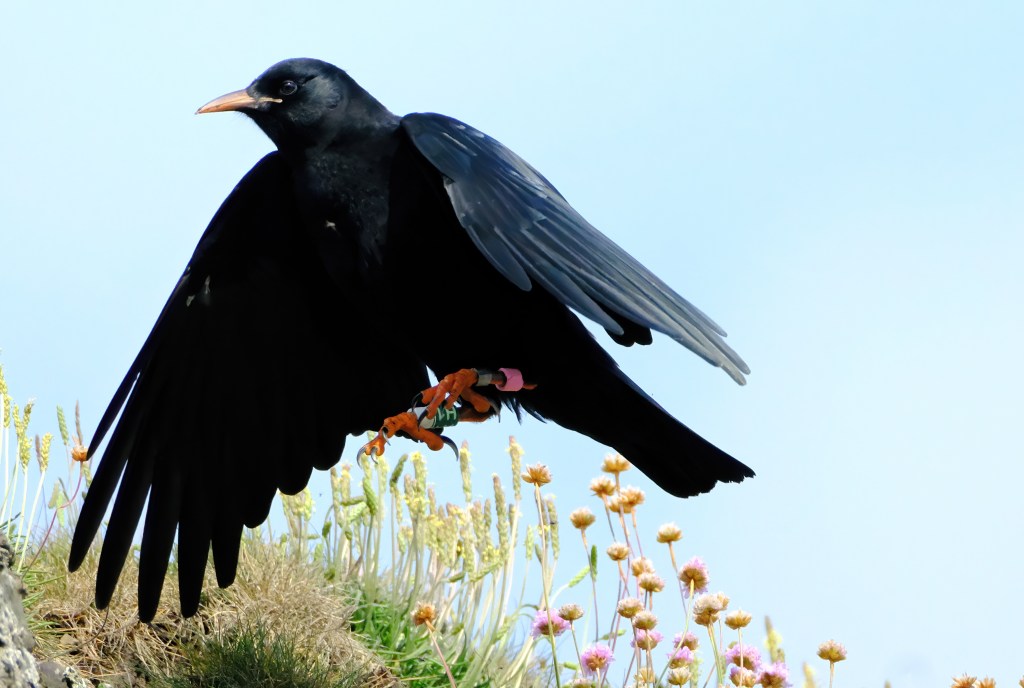
Later in the morning the weather improved so did the light so my pictures improved.
Below is a juvenile bird (ringed), note the paler bill.
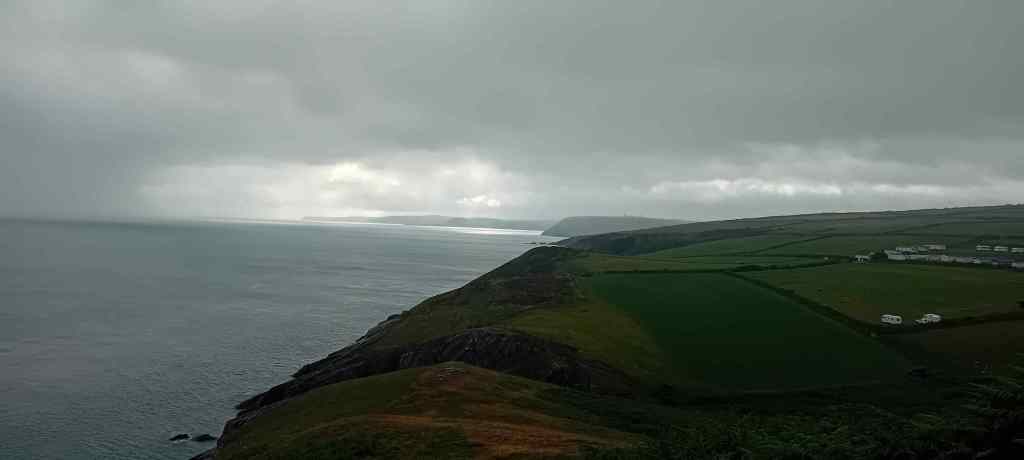
I’ve been away since last week, touring in West Wales. Poor or no wifi, so no posts. It rains a lot in Wales! Some good coastal nature spotting to follow. Posted from a smartphone.
In the UK, the most well-known amphibian is the common frog. It is a regular visitor to garden ponds across the country, and it hibernates in pond mud or under log piles.
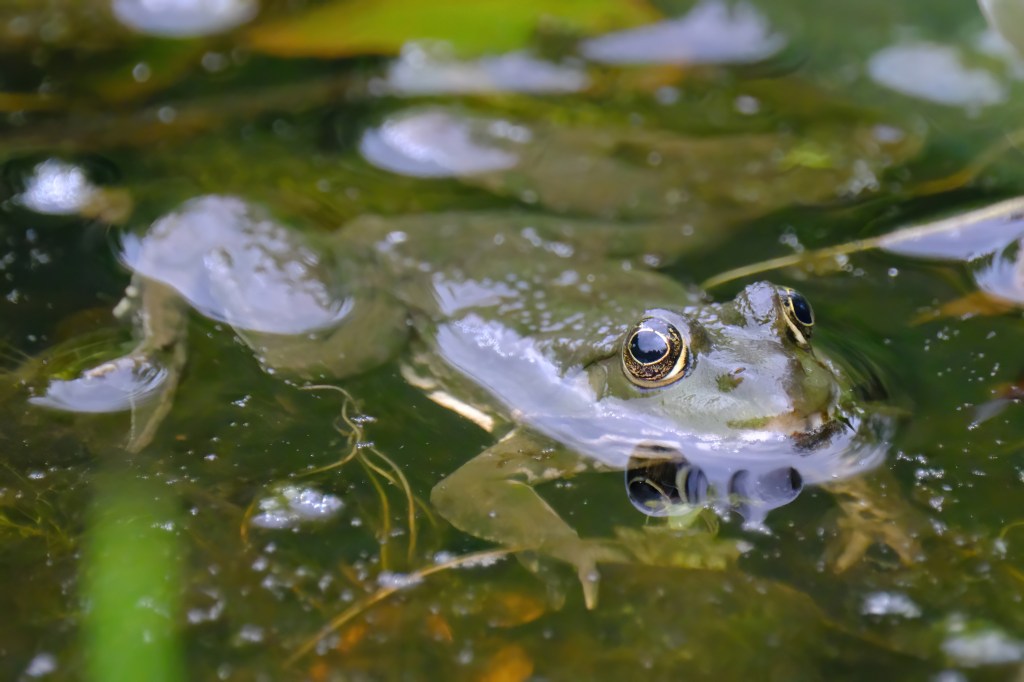
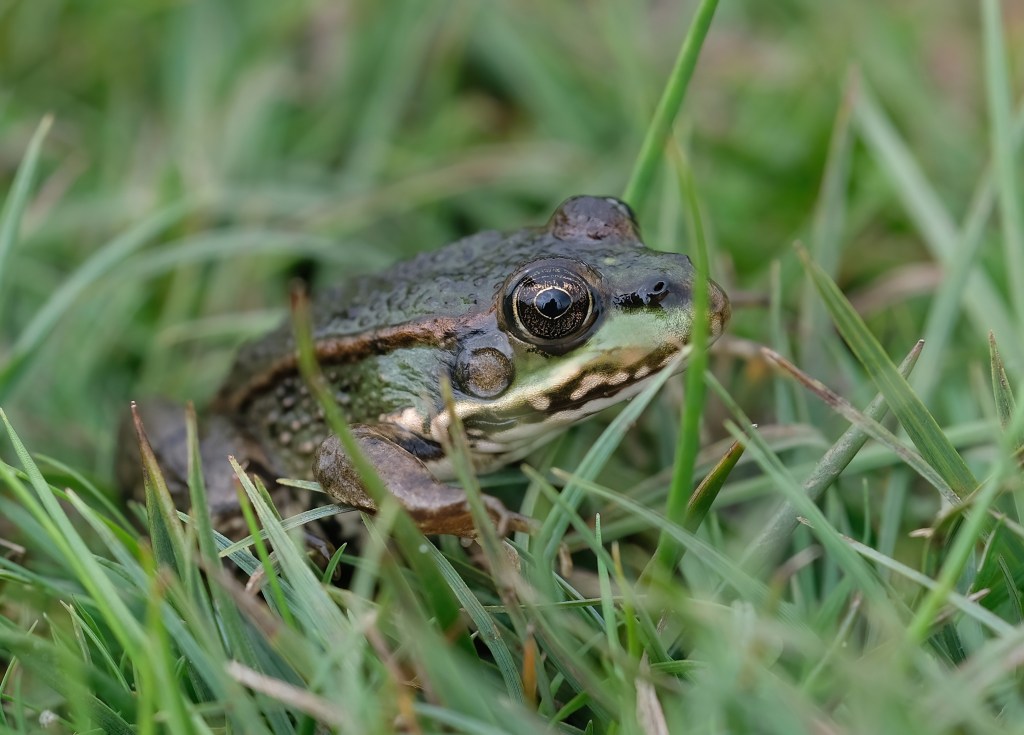
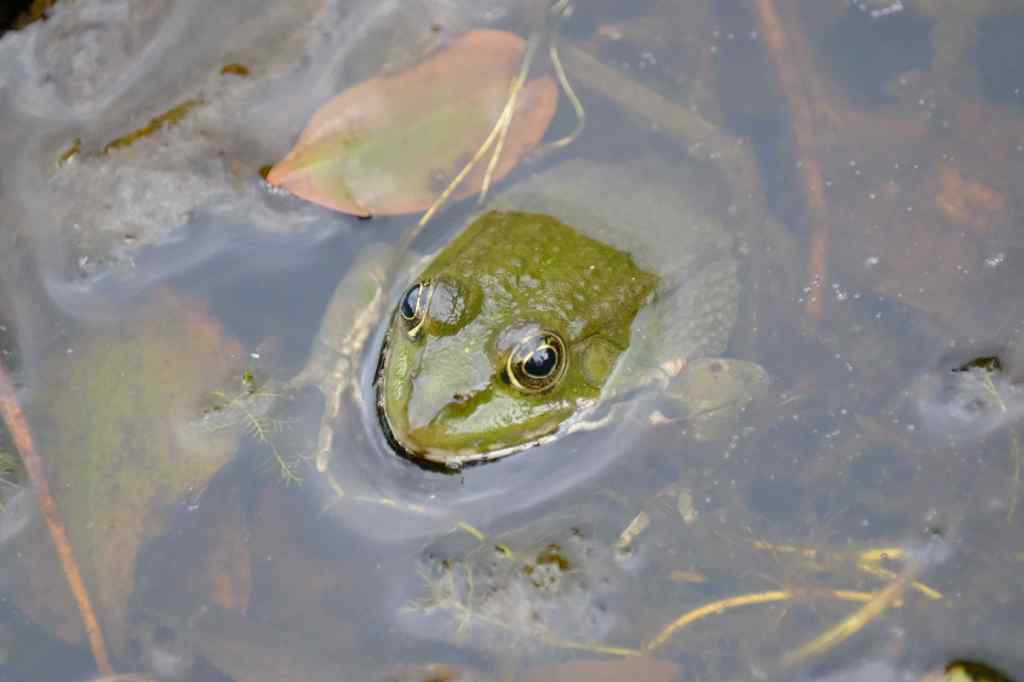
The marsh frog, a non-native species, was introduced to the UK in the 1930s, with populations establishing in Kent and spreading to other parts of southern England. While most common in the southeast, isolated populations have been recorded further north. Unlike our native frogs, they never stray too far from water. They either are in it, or sat close to it. They are alert and wary as you approach, they will launch themselves into and plop into the water. Last August, we watched a New Forest population.
Today we returned the the same area and spotted them again.


























 Continued Reflections from my World.