New month, a new bird.

There were 2 Little Gulls at Titchfield Haven this morning – I have seen a few social media posts popping up of this small gull along the South Coast. Someone near the entrance one of the volunteer wardens said there were 2 Little Gulls among the Black-headed gull at the far side of the lagoon I did not hold out much hope in spotting these small gulls a bird I had never seen before.

However, these birds stood out from the other gulls and flew much more erratically – more like Terns. Once seen not forgotten. Moving to a hide further inside the reserve a good view of these gulls was possible.

Some Facts about the Little Gull. from RSPB –

  • UK passage200-700 (spring)
  • UK wintering400-800
  • Wingspan 70 – 78cm {A Black-headed Gull has a wingspan of 100-110cm}
    100-110cm

This small gull in summer the adults have black heads, while young birds have a black mark on each. In flight, adults show a pale grey upper wing, with no black wingtips, and a very dark grey underwing. 

They have a diet of Insects and fish. The picture below shows this bird had caught a small fish, I think due to their diet it explains why they fly and behave like a tern although they do not dive under the water.

Above and below the 2 different Little Gulls in flight.

Avocet season.

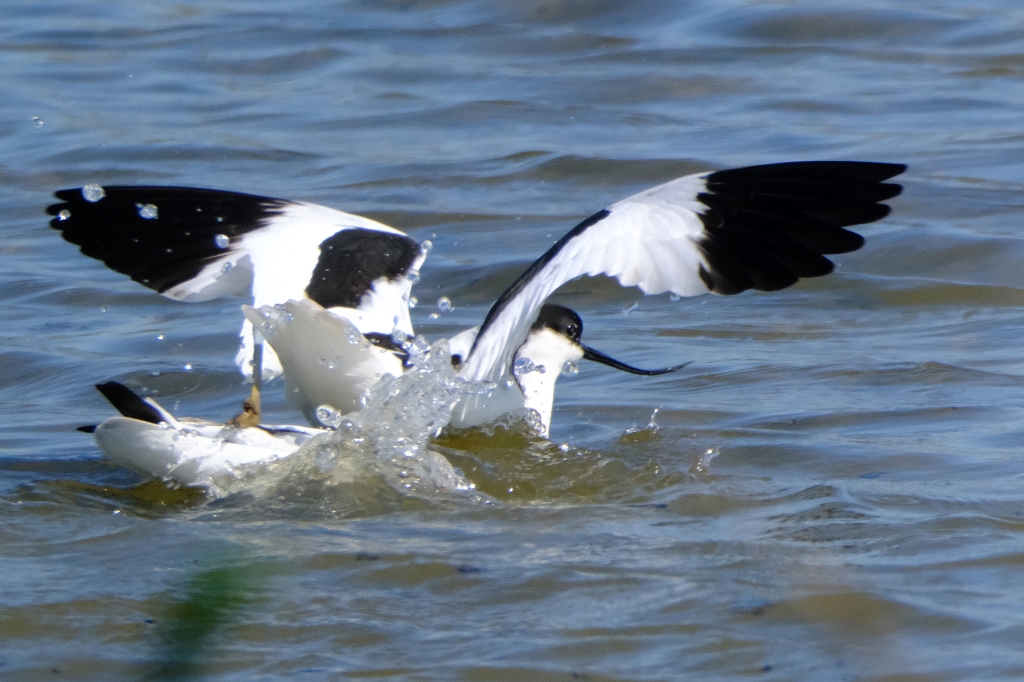
Avocet season has started their numbers are increasing in the South of England. At Titchfield Haven Nature Reserve, this is also the case and they are pairing up although conflicts for space are commonplace.

Avocet minding one’s own business then Mr Black-headed Gull takes offence, poto-session of Avocets over!

Humbugs.

Since last week the Great Crested Grebes have hatched and left the nest. They are now riding on the back of the parent bird, while the other parent is catching small fish that he passes to the young Humbugs.

Rainy Days.

Poor weather {again} with high seas and excessive rain here on the Solent and Southampton Water. This mornings bird watch was taking cover within one of the bird hides at Titchfield Haven Nature Reserve. Not many visitors today and as the weather deteriorated the reserve closed at lunchtime for safety reasons.

Northern Shoveler – the film catches these ducks using their large bills to filter water for their food.

Shovelers are surface-feeding ducks with huge spatula-shaped bills.

  • UK breeding birds 1,100 pairs
  • UK wintering 19,500 birds

Like many duck breeds the female is a fairly “brown” bird whereas the Drake is colourful with his dark green head white breasts and chestnut flanks making him very handsome.

River Walk.

Return to the River Hamble.

Here on the coast on the South Coast, we are lucky that there are great places for wildlife the area is rich in waders and wildfowl. Yesterday we walked from Warsash along the River Hamble to Bursledon and back an easy walk along gravel paths (about 2 miles each way). This part of the river is tidal with exposed mud at low tide and with areas of reedbeds. The stretch is used for more small pleasure crafts in the central chancel. Seals frequent this area but I have yet to spot one!

Little Egret.

Brent Geese.

Soon these birds will be leaving our shores for their breeding grounds they have wintered here in the UK due to our milder winter. There are two populations those with dark bellies we get here, while those with pale bellies can be found in the North East. Brent geese gather in large flocks of hundreds of birds ready to return North to nest in northern Russia and Siberia. Unlike Canada geese, they do not fly in tight ‘skeins’ (V-s)

Below gathering photographed last week.

Black-tailed Godwits – these are a large wader they are a Schedule 1 species. In summer, they have bright orangey-brown chests and bellies, while in winter they’re more greyish-brown. The 1st picture shows how camouflaged these birds are despite appearing very colourful.

Curlew are another large Wader and in fact, is the largest European wading bird they are similar to the Brent goose in size.