Canada Goose gosling.
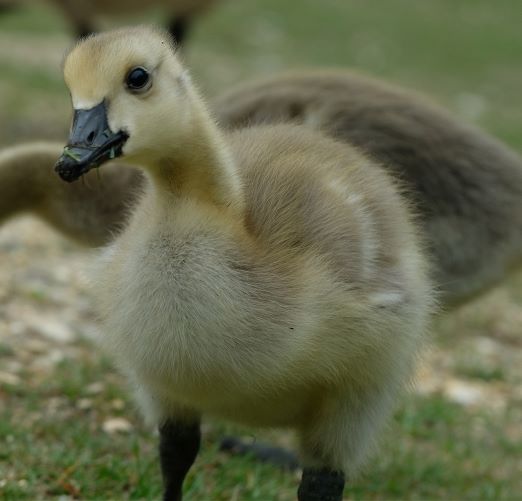
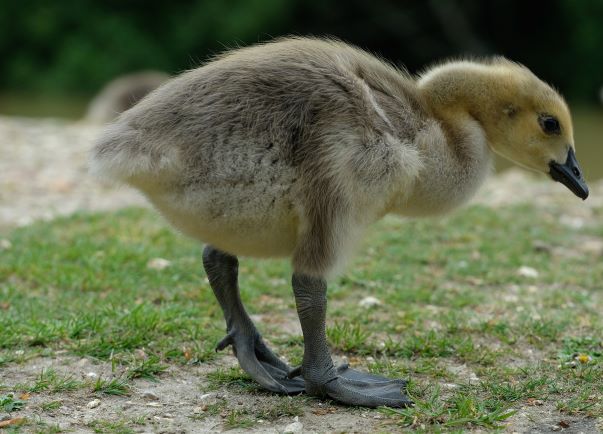
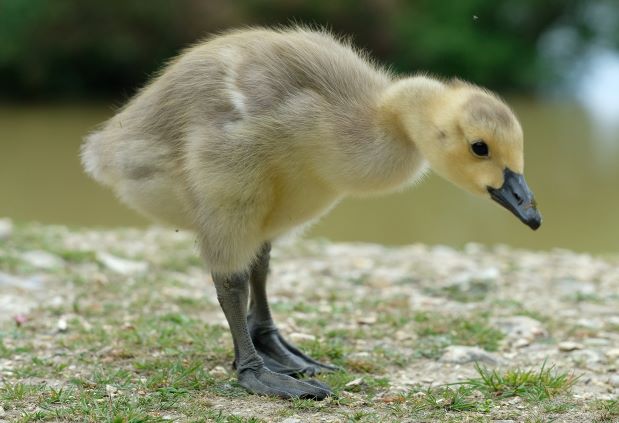
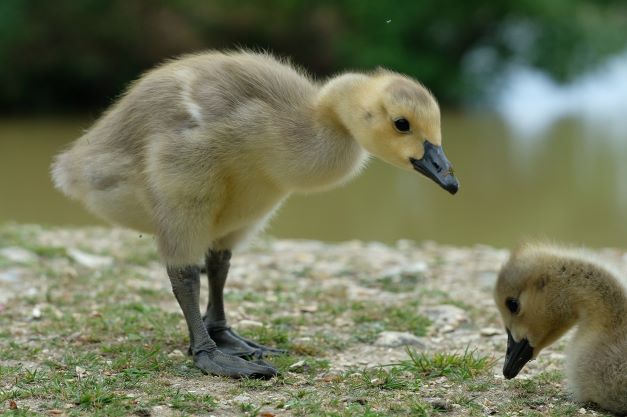
Canada Goose gosling.
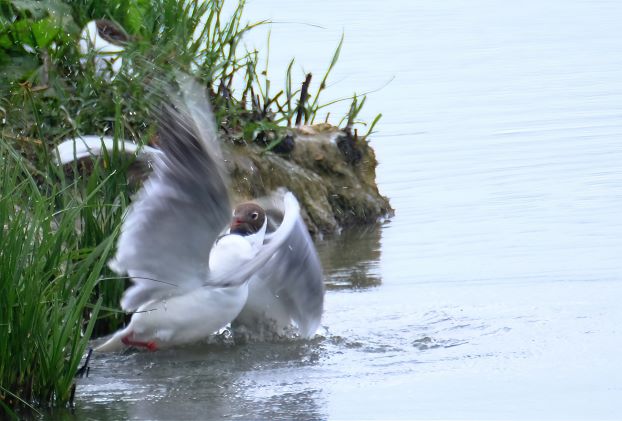
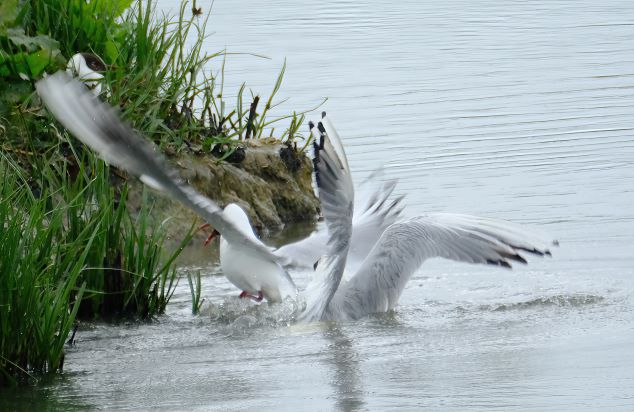
Full-blown scrap over nest site! Black-headed gulls.



#Wordless Wednesday
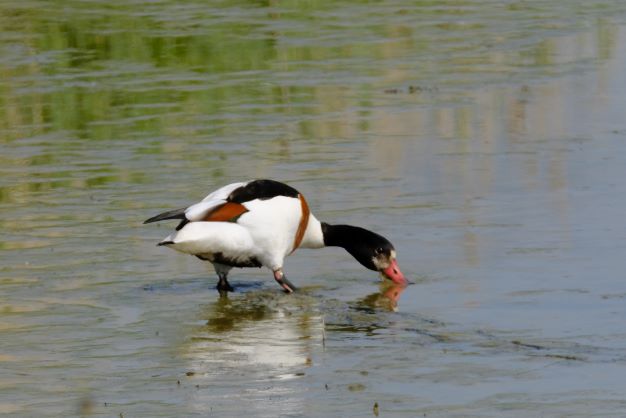
A day at Titchfield Haven nature reserve & Meon shore enjoying the sunshine and nature. There are real signs of summer with birds nesting and young birds in many areas.
Blackheaded Gull are sitting on nests and on eggs, others have fluffy chicks {not close enough to film yet}
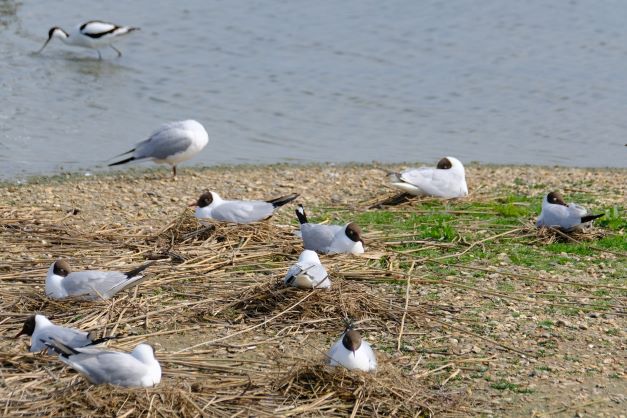
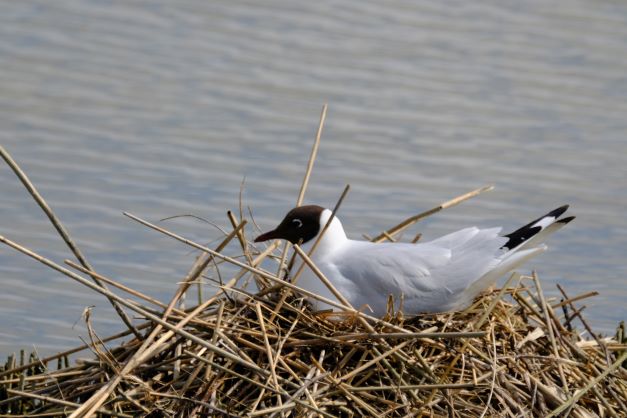

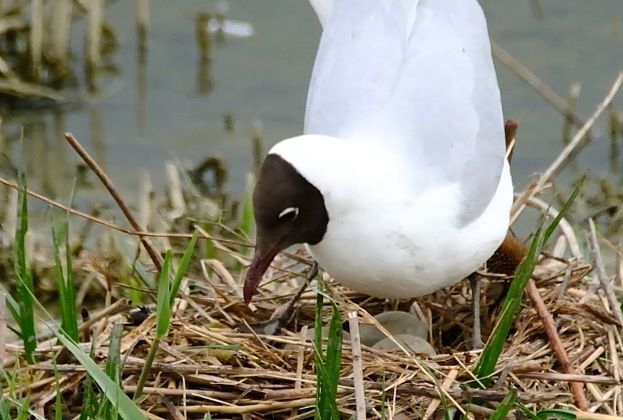
The gulls are very territorial in their nest areas and will chase off any invaders such as the larger Herring Gulls which will grab a chick for a quick meal. The pictures below show a Grey Heron being buzzed and steered away from the gull’s nests.

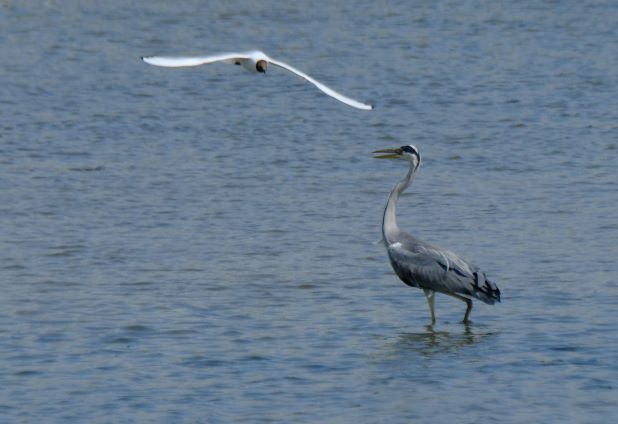
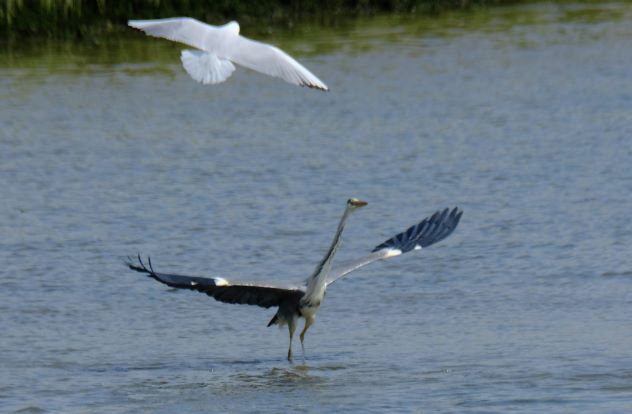
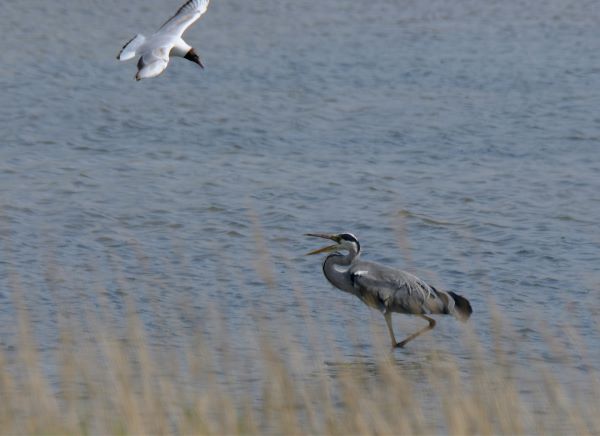
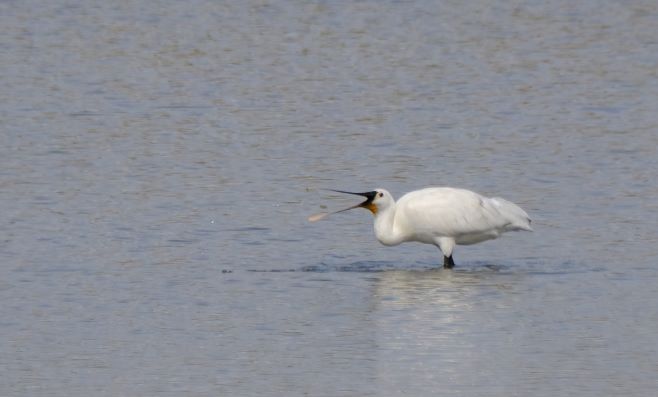
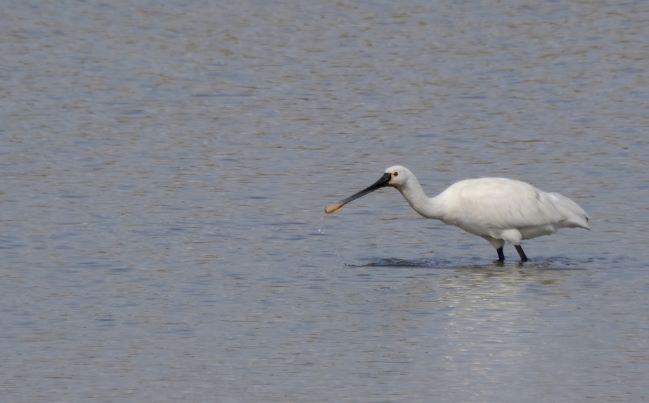
Over the weekend a pair of Spoonbills had been spotted in the nature reserve. There have been a few birds this year on the Beaulieu River across the Solent on the edge of the New Forest. Today one of the birds was still there and I was able to get a good view and some pictures. Spoonbills are named after their bizarre spatula-like bill. Young birds are known as tea Spoons. Although these birds bred in East Anglia during Medieval times, they had not bred in Britain for over 300 years. Then in 2010, when a small colony was discovered on the north Norfolk coast. By 2014 a flock of 30 birds were recorded in Norfolk ay Cley Marshes.


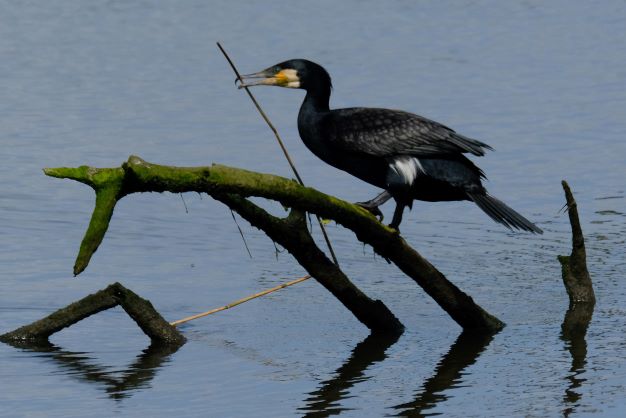
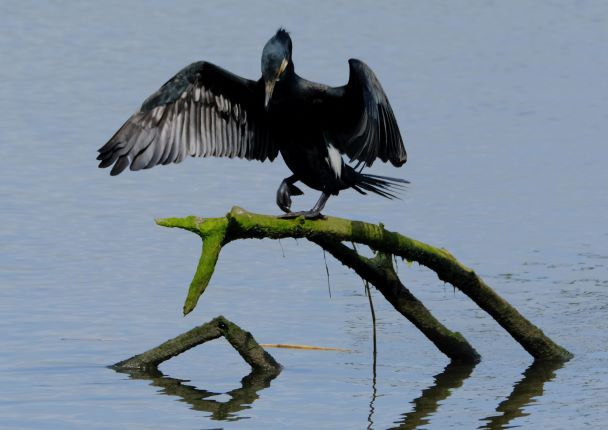
Cormorants are often spotted perched with their wings held out this is to dry their feathers off which are not waterproof.

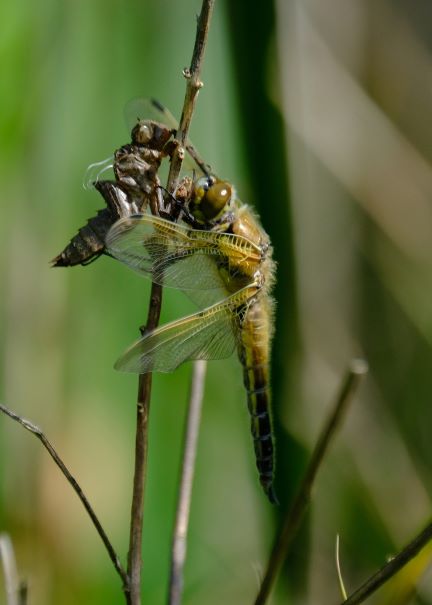
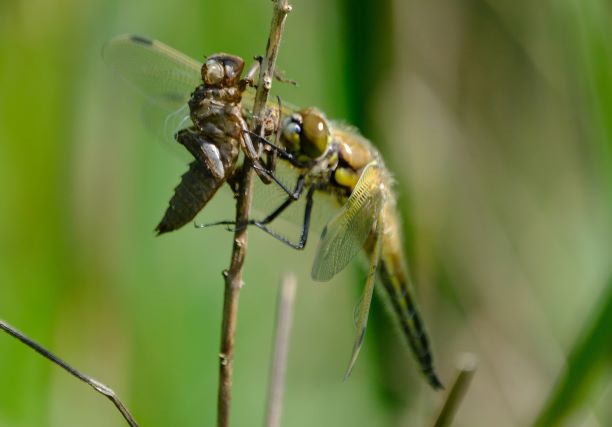
Dragonflies are starting to emerge, They have three stages in their life cycle: eggs which are layed under water these hatch into a lava{or Nymph} some species will remain in the lava stage and stay for in this state for several years. The final stage is the lava leaves the water and the dragonfly emerges. On the wing their life is short they mate and by the end of the summer they have gone.
This was a 1st for me a dragonfly just emerged from the lava drying its wings while perched by the empty husk of the lava.

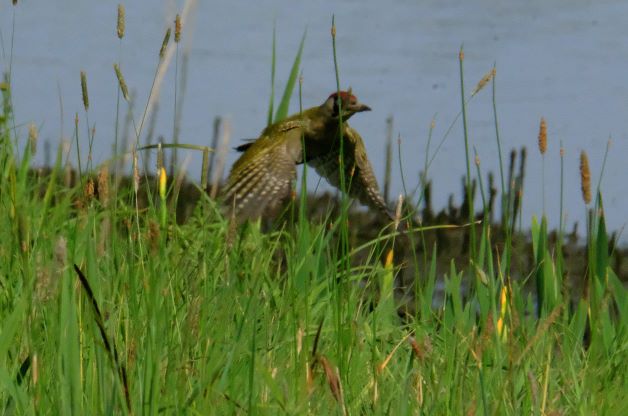
A quick view of a green Woodpecker.
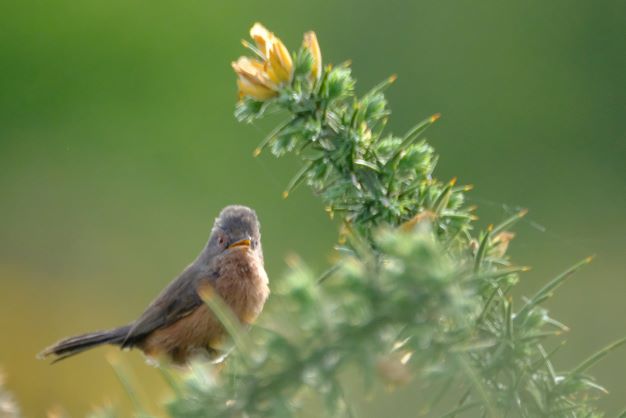
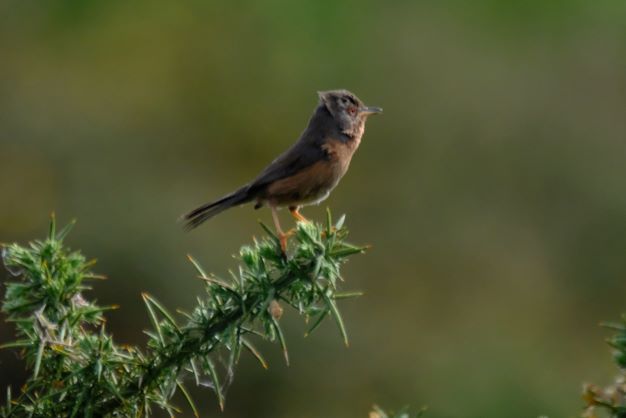
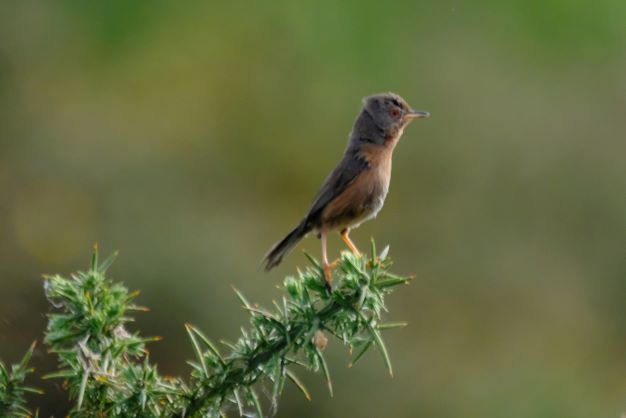
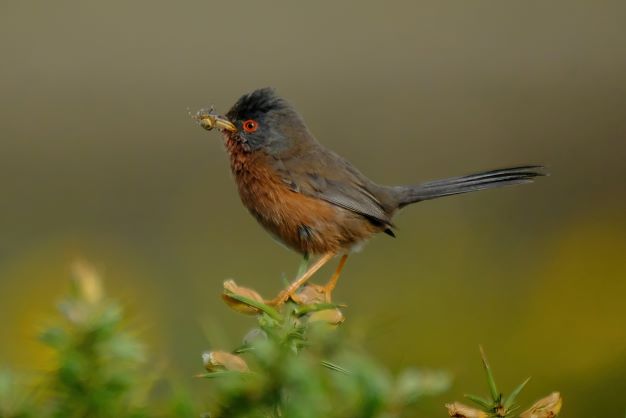
The Dartford Warbler is found in a few localised places in the UK. Back in early1960’s following servere winters Dartford warblers numbers crashed and only10 pairs remained (They only eat insects and do not migrate for the winter, which means it is vulnerable to cold weather and prolonged snow cover ). On a positive note today, there are about 3,200 pairs nesting.
They are dependent on dry heath habitats, particularly on gorse in good condition. It is a ground-nesting bird, preferring to breed under the protective cover of dense heather or compact gorse. It makes a grassy, cup-shaped nest, in which it lays three to five eggs. It can have up to three broods from April to July.
A bird I only saw once in my childhood today I know of 4 places where they are doing well close to my home.

Wordless Wednesday
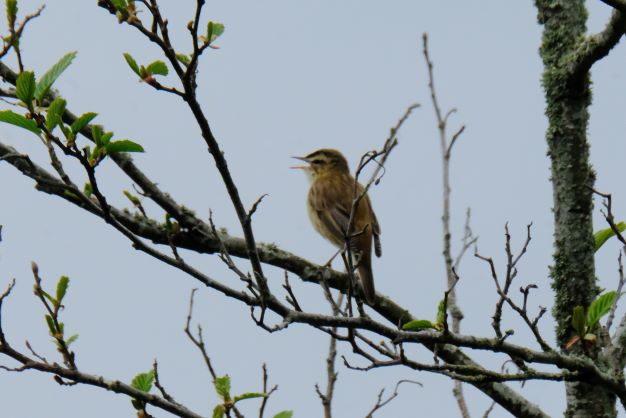
Often heard singing deep in reedbeds, this morning I got a good view of this medium-sized Warbler. This is a bird of the reedbeds and wetlands When spotted singing they are often perched on reeds or in willow bushes.


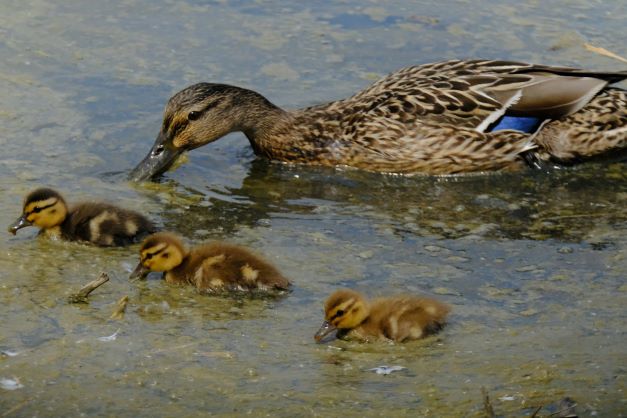
Mallard with ducklings Titchfield Haven.

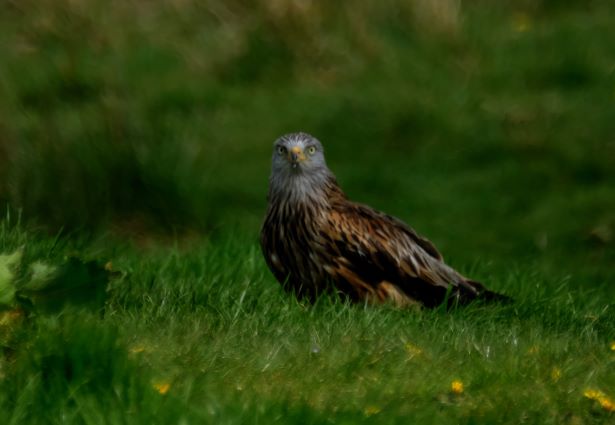
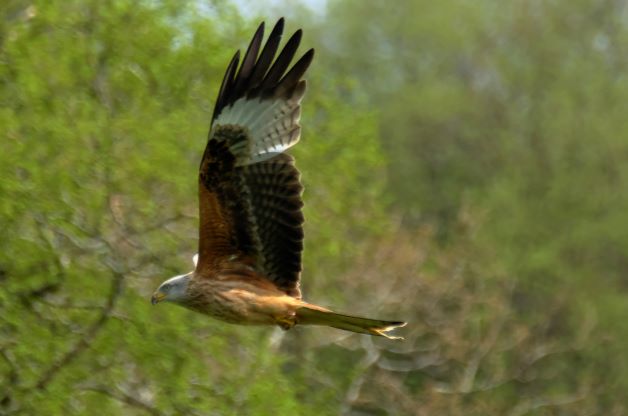
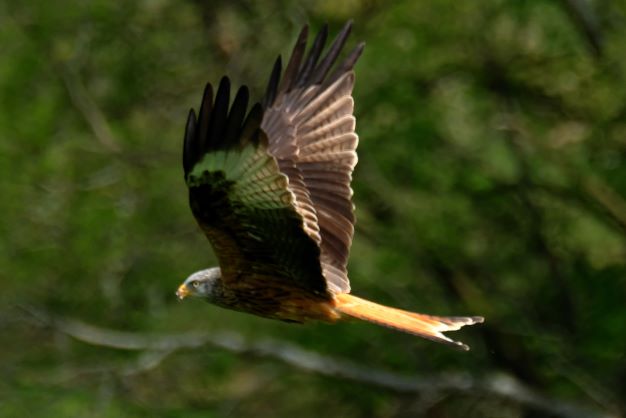
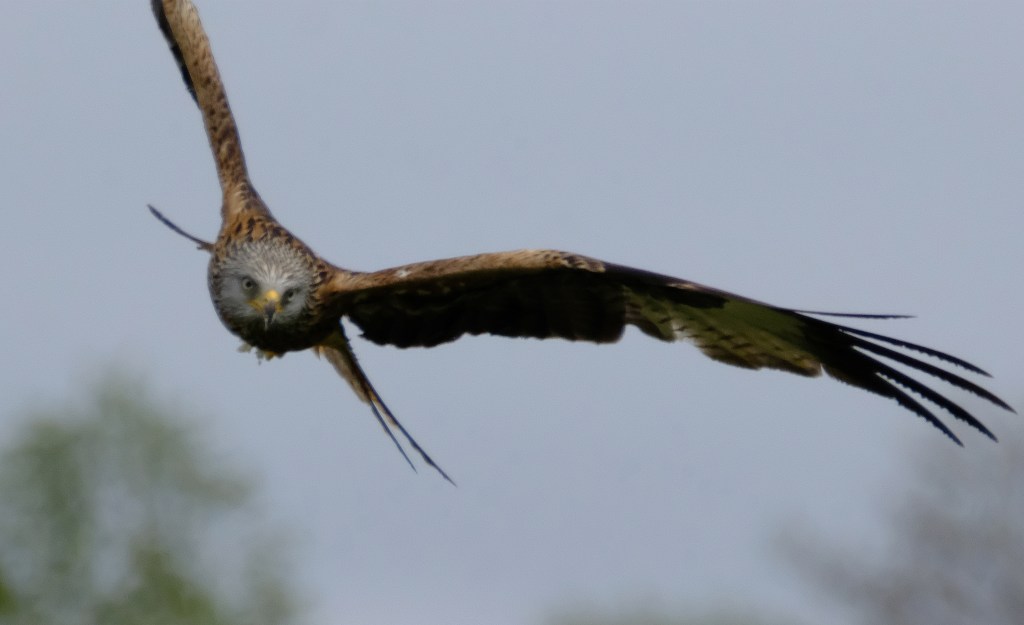
Red Kites in the Brecon Beacons- A success story. 35 years ago I saw my 1st Red Kite they were on the brink at that time and about only 25 pairs were in a stronghold in the Brecon Beacons. Over the years their numbers have increased and their range increased. It has now been successfully re-introduced to England and Scotland. It is estimated that there are now 4600 pairs in the UK, While we were on our recent campervan trip to Mid-Wales we visited a Red Kite feeding station at Gigrin Farm near Rhayader.
The farm became an official Kite Feeding Station in the winter of 1992/93 following a request from the RSPB. Today it welcomes many visitors for a daily feeding session where up to 600 birds come to feed.





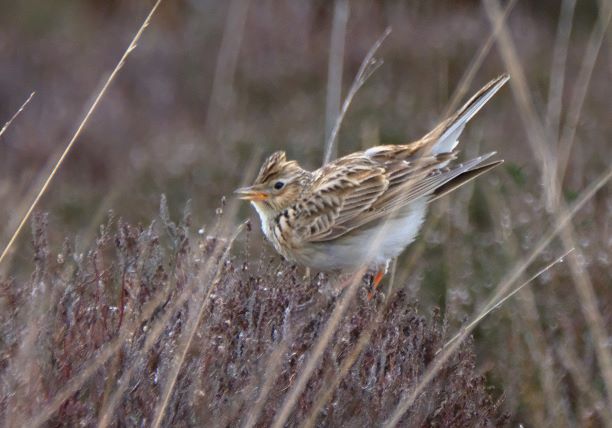
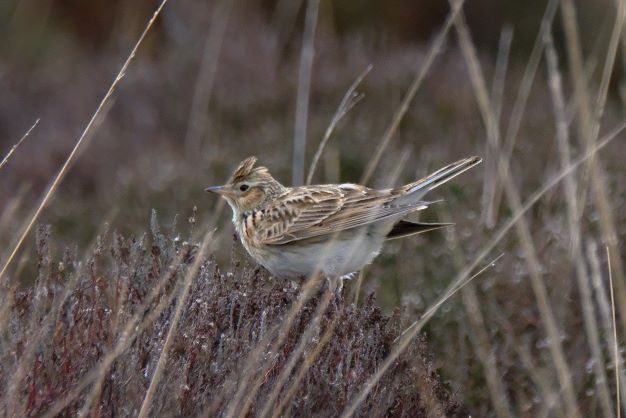
The Skylark is a LBB {a little brown bird}. It is a streaky brown colour with a small crest, which can be raised when the bird is excited or alarmed and a white-sided tail. It can fly, vertically up in the air. Often you can hear them high above fields singing their hearts out. When you locate it , it is often just a tidny speck up in the sky – it is a bird you hear before you see it.
In the Brecon Beacons in Mid Wales, I spotted this Skylark on the ground.Thenfirst time I was able to photograph one. They are ground-nesting birds and this is one of the reasons why their numbers have dramatically decreased in recent years and are now on the “Red List”.