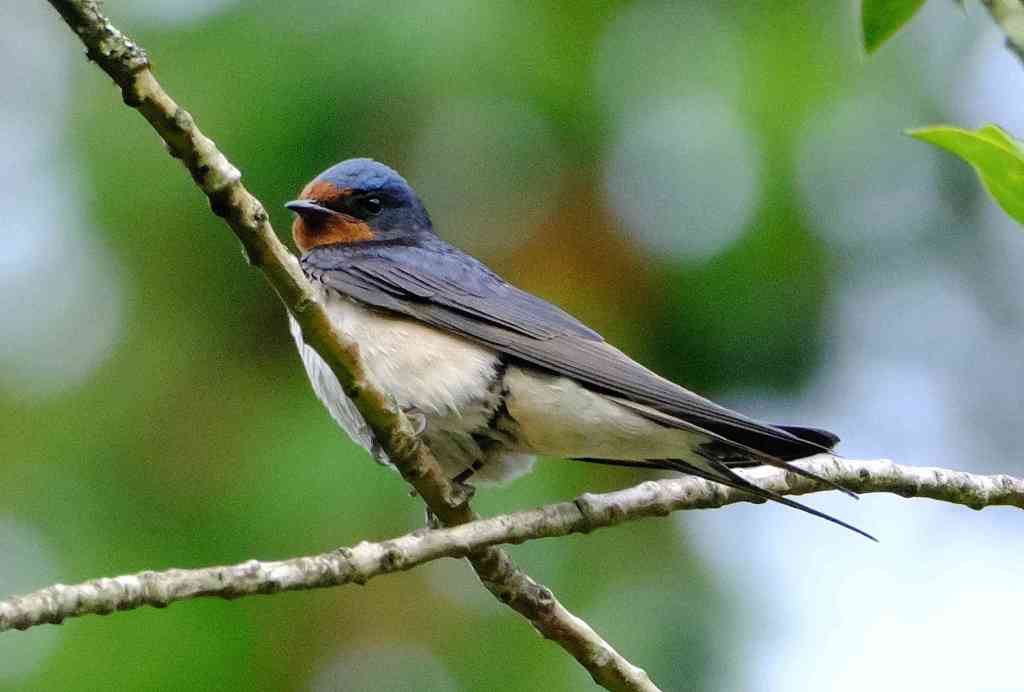
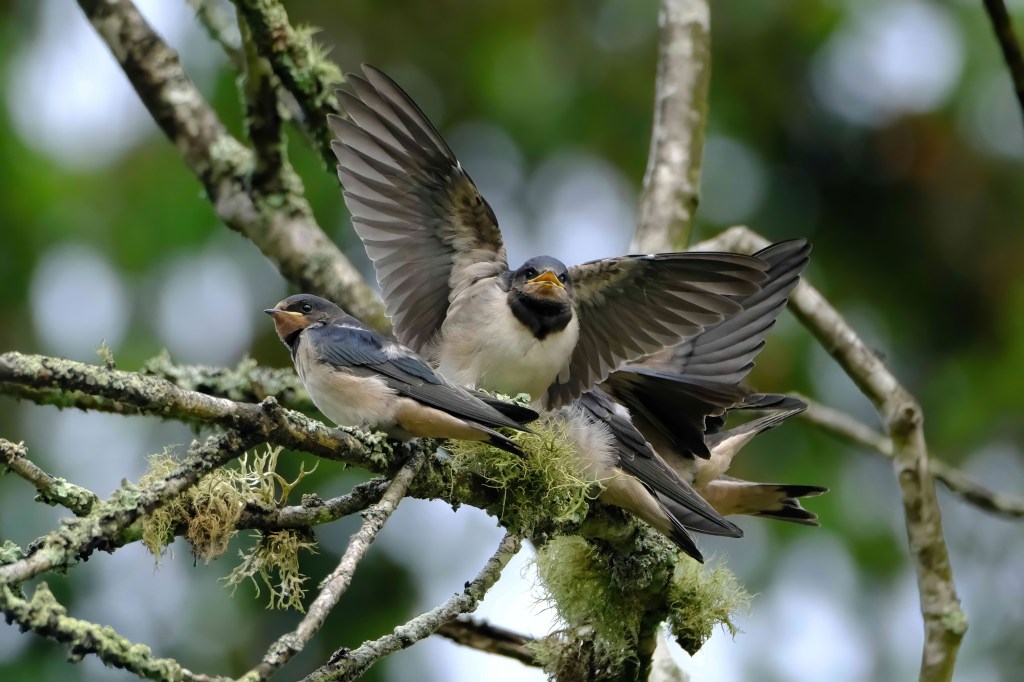
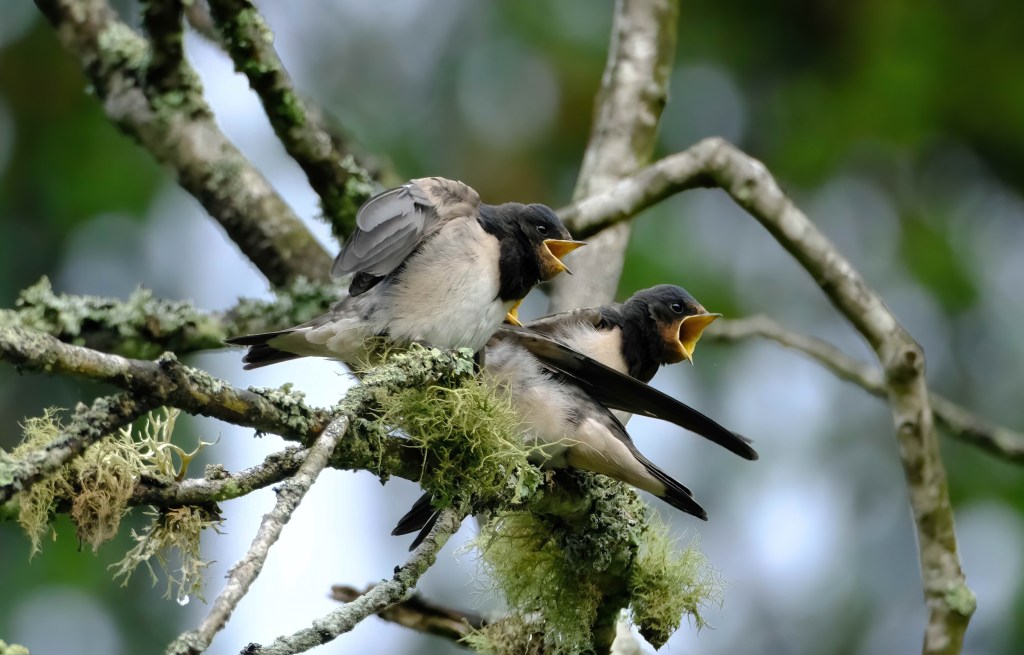
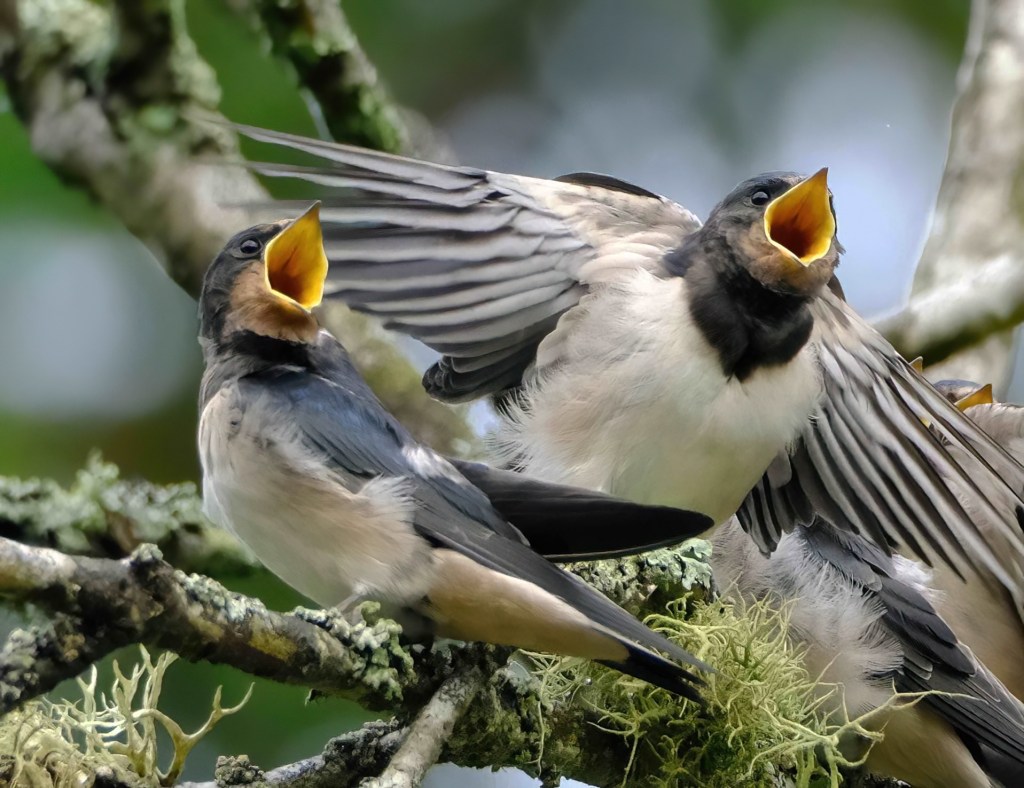
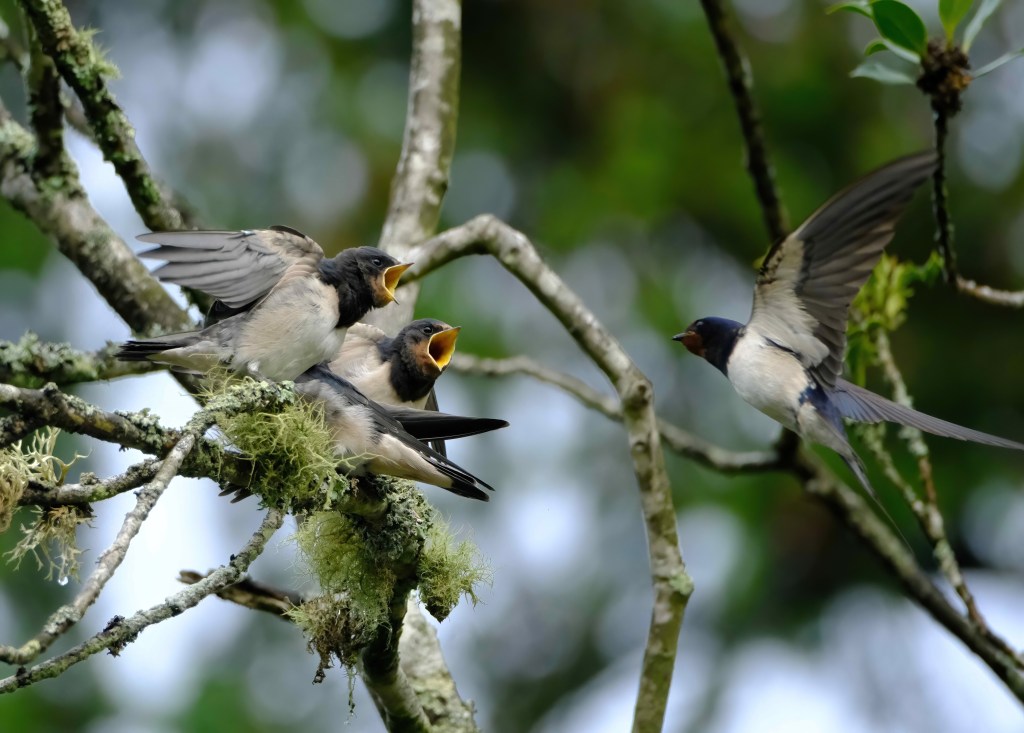
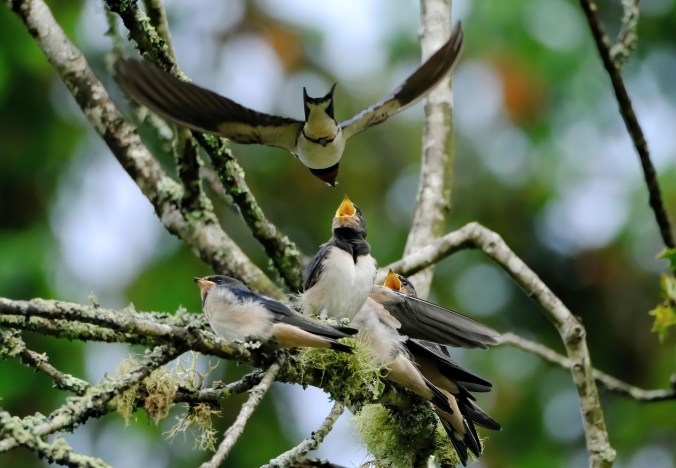
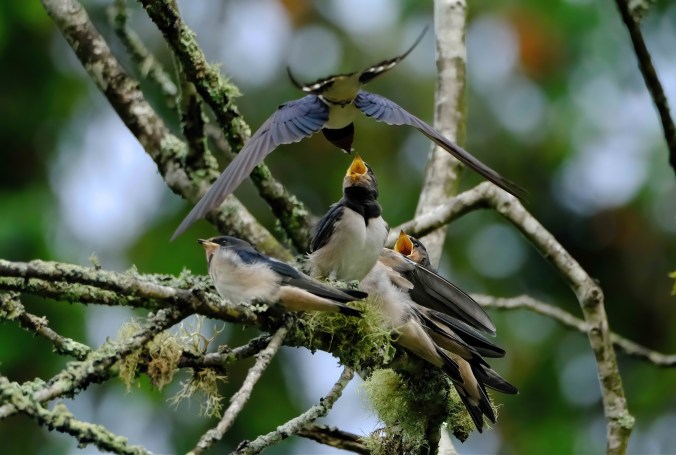
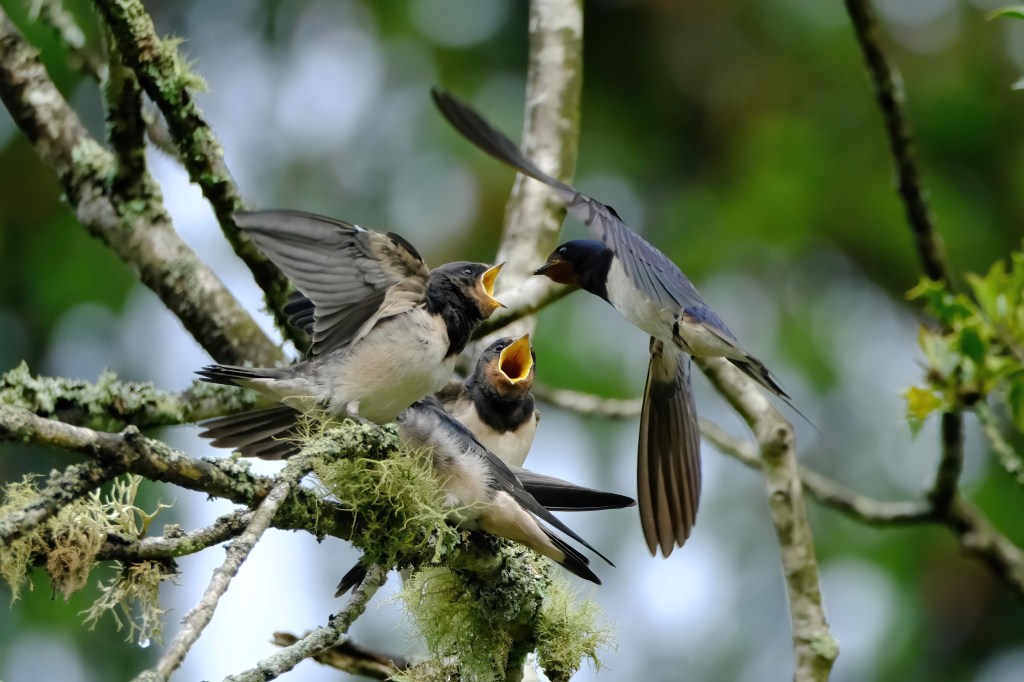
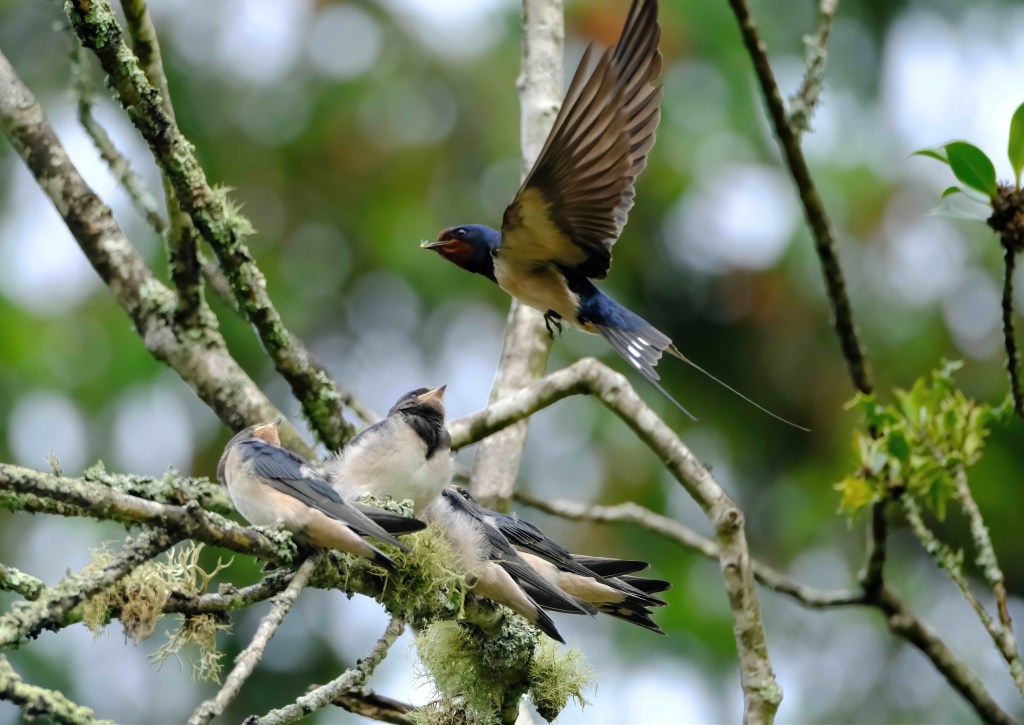
Swallows are small birds. They are extremely agile in flight and spend most of their time in the air. They are widespread breeding birds in the Northern Hemisphere and migrate south in winter. This family has left their nest and is being fed in a tree. They were a joy to watch on today’s walk in the New Forest.
After nice bright weather for a couple of weeks, we had a wet, grey day today, and the forecast says it is with us until early next week. On the positive my water butts in the garden are now full of water.
So, pictures today from Titchfield Haven are more like pictures from a winter’s day. Not very nice under sail in the Solent.
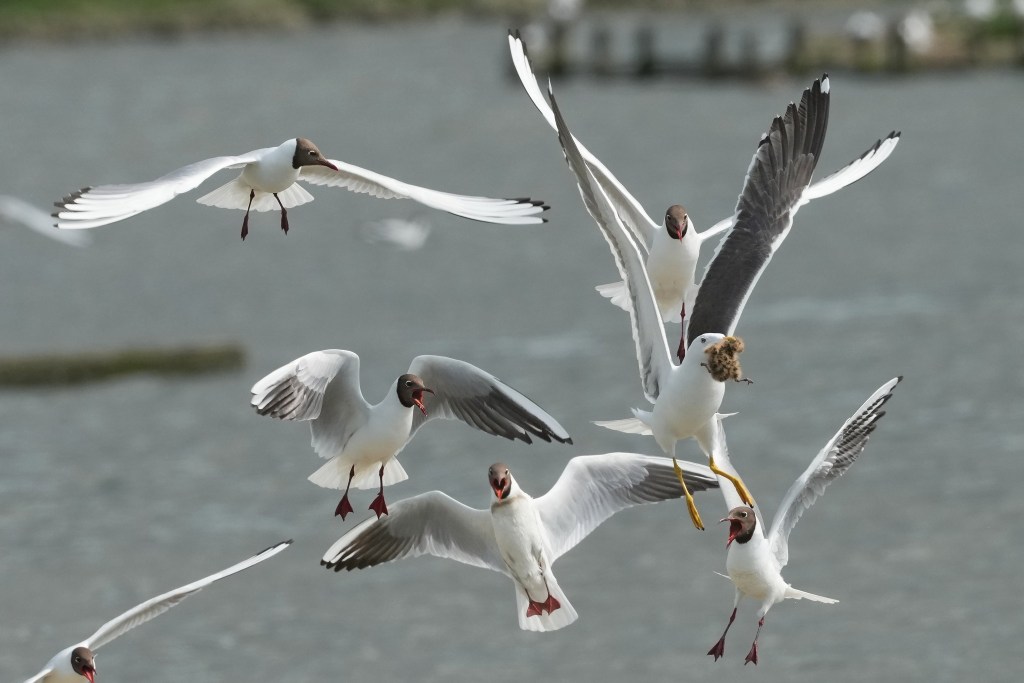
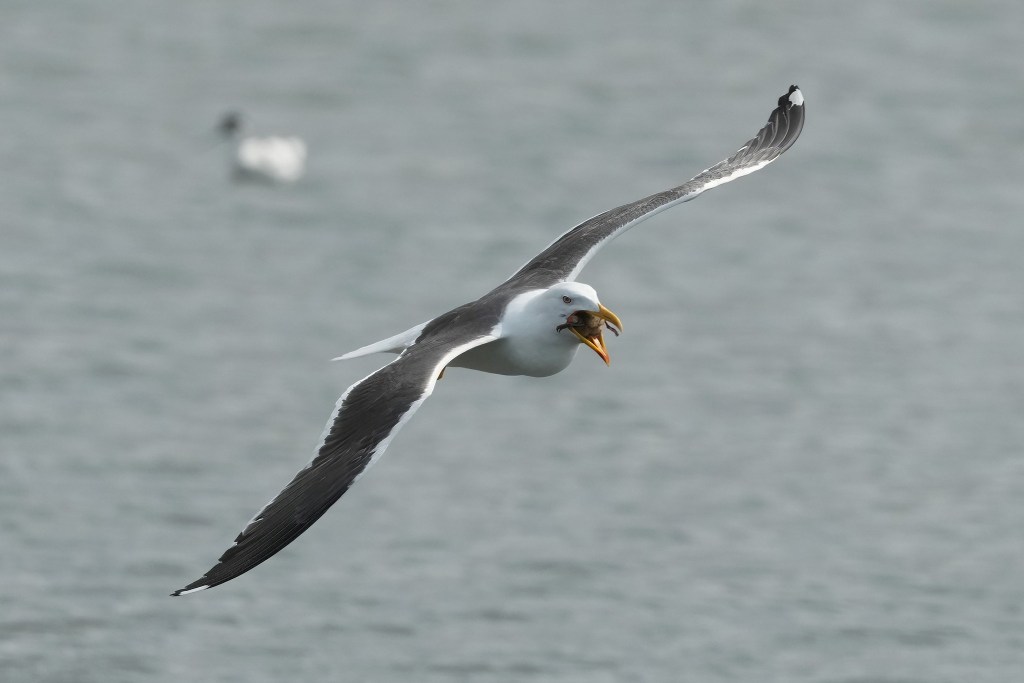
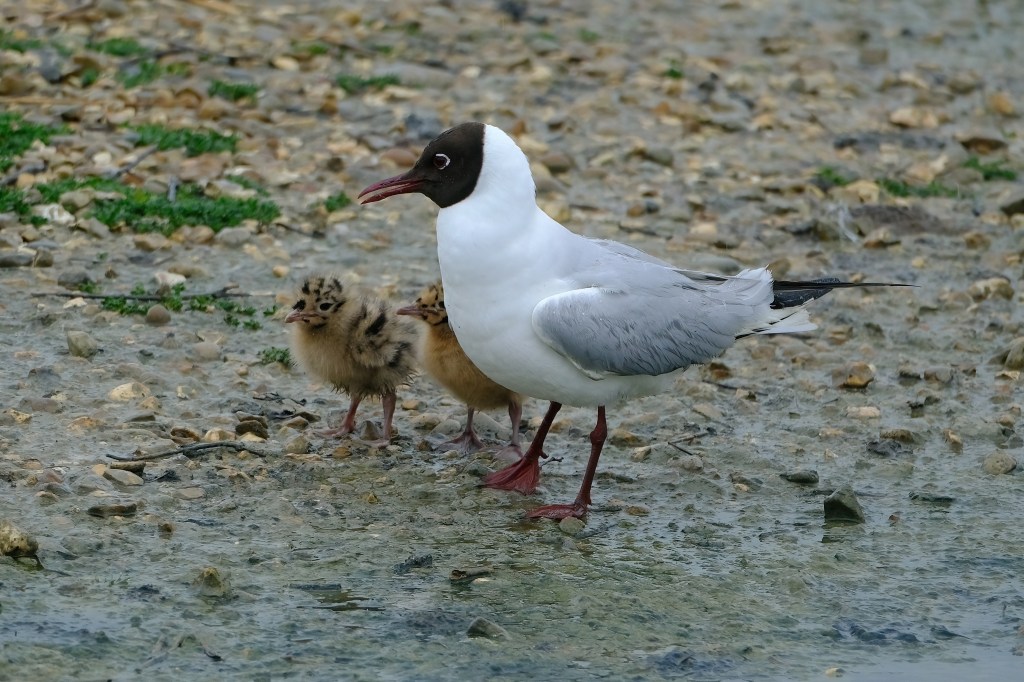
The next pictures show how hard it is for the chicks. A much larger Lesser Black-backed gull swoops down and snatches a chick. As this happened, the Black-headed gull colony erupted into the air, but they failed to save their baby.
Pictures taken by my brother Simon Finnegan {I missed this, although I have seen it happen in the past.}
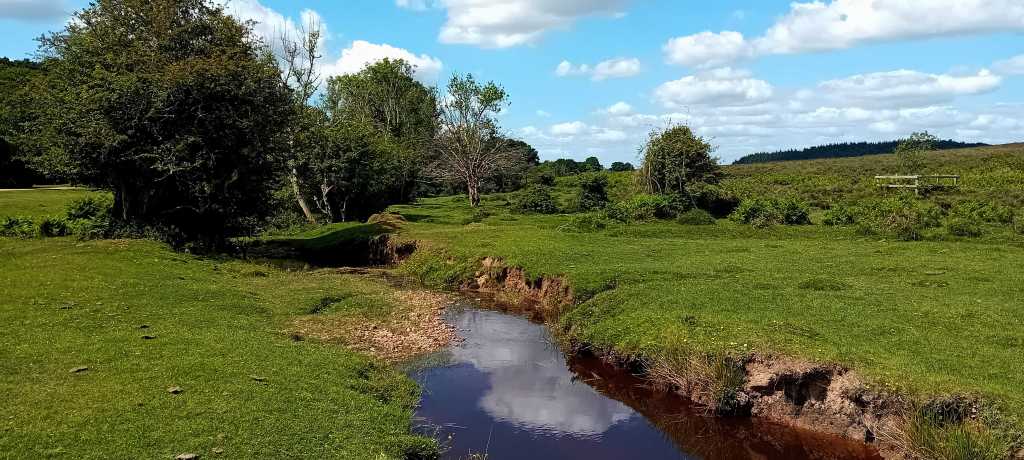
On Monday, we walked along a New Forest stream that we regularly visit. There is always something to see and enjoy, and on a bright, warm morning with few people about, you can enjoy nature fully without the distractions of everyday life and have a chance to get into the “zone.”
This old forestry house is a good mile or so off the road, reached by gravel tracks. It is a great place to watch House Martins, as many nest under its eaves. They get an easy meal of insects swooping over the stream. Not the easiest bird to get pictures of due to their size and speed!
As well as the Ponies on the forest, there are cattle these came down for a drink.
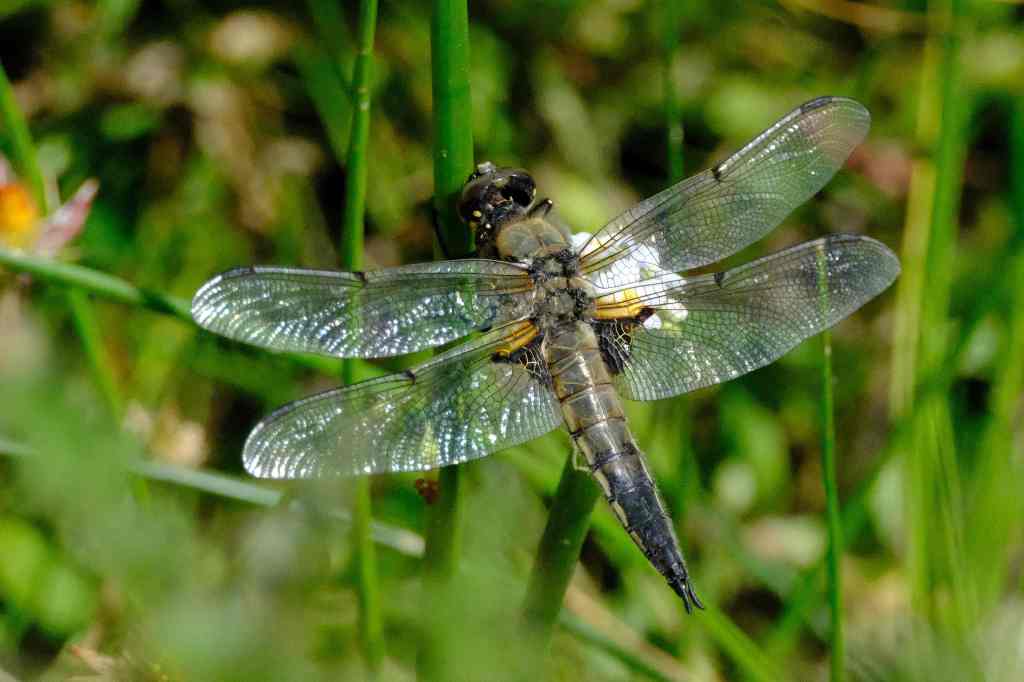
A few dragonflies that the House Martins missed.
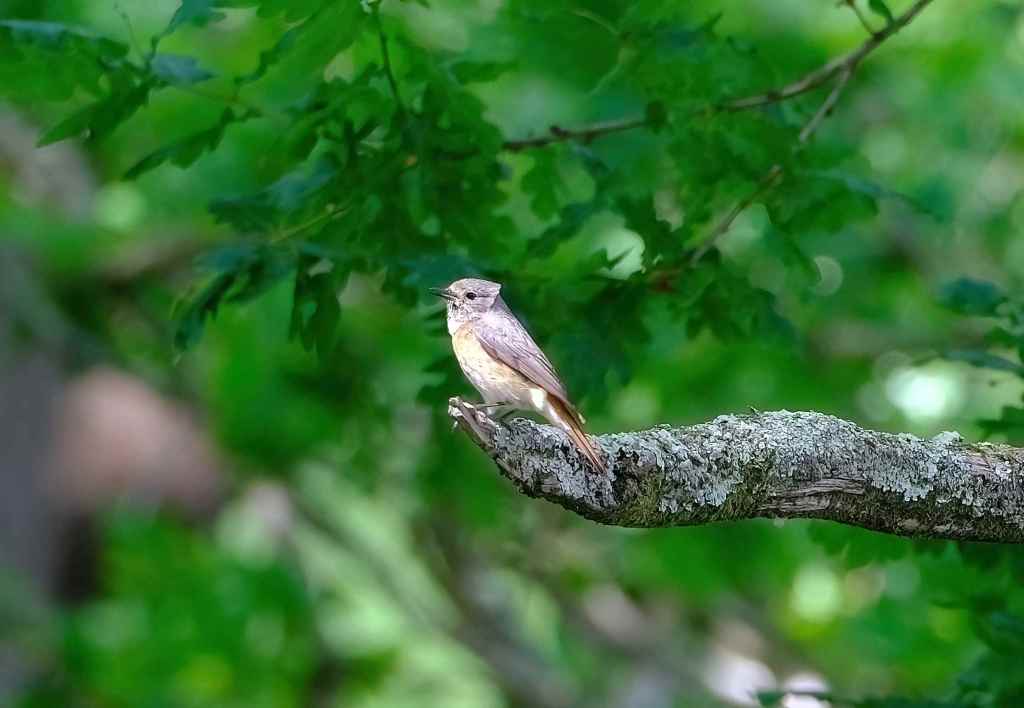
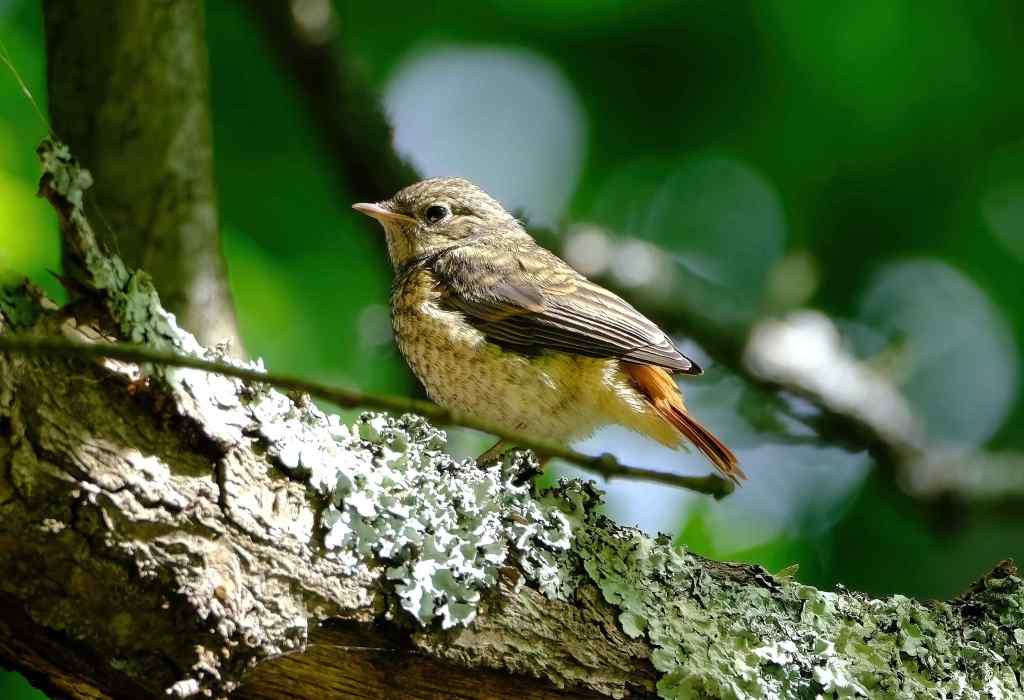
Along the stream were several Spotted Flycatchers. They are mostly grey-brown in colour with paler streaks, particularly on the head and wings. They has a creamy white breast which is streaked with pale brown.
A small bird, measuring just 14cm in length and weighing in at a maximum of 19g. Adept at snatching flying insects. They visit the UK during the warmer months and are often seen in woodland edges and clearings.
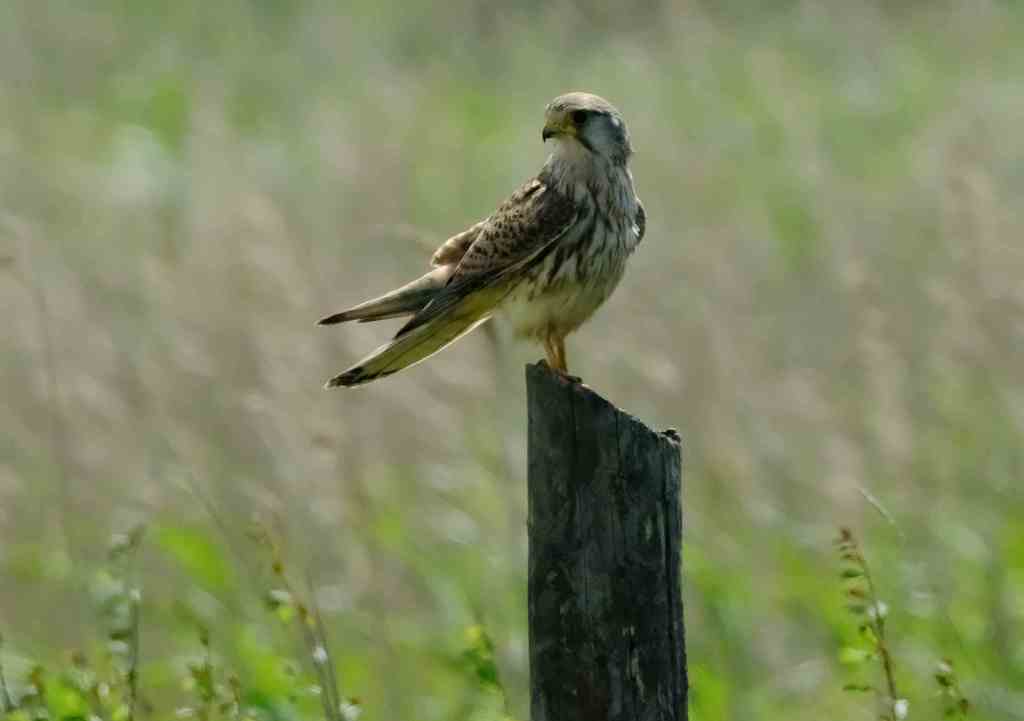
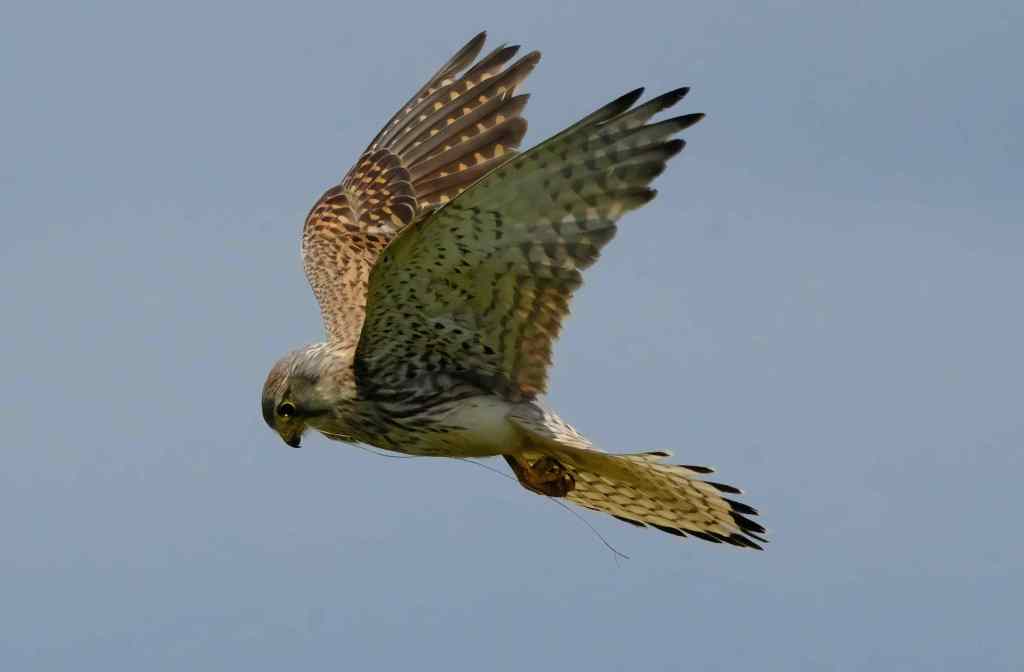
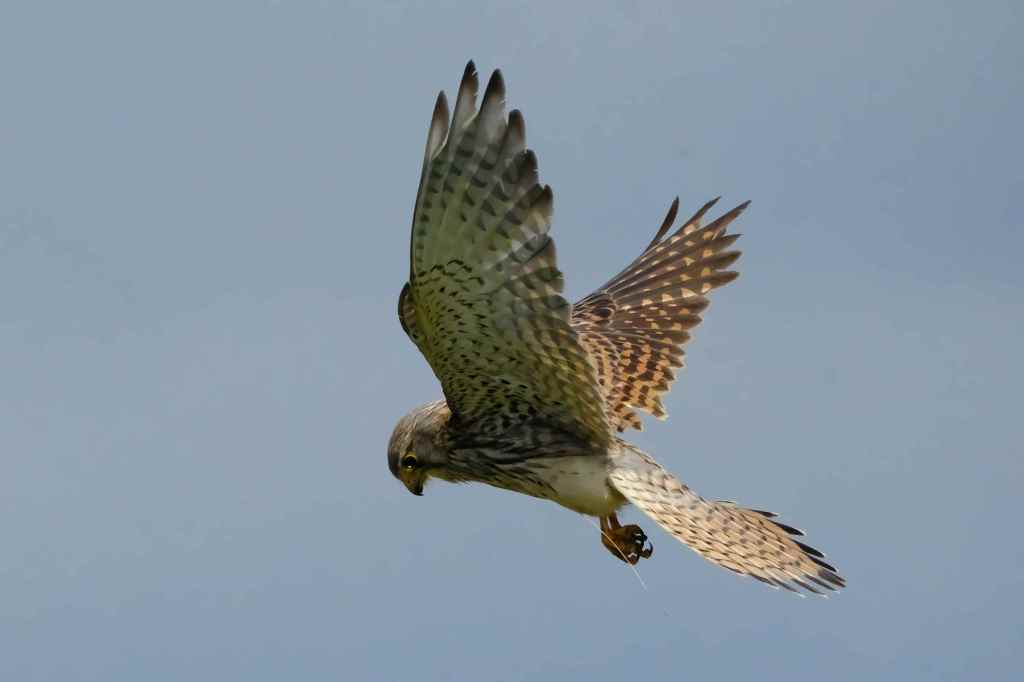
A Kestrel for a Knave is a novel by English author Barry Hines, published in 1968. The book is set in an unspecified mining town in Northern England. It follows Billy Casper, a young working-class boy troubled at home and at school. He finds and trains a kestrel, whom he names “Kes”. It was made into a film directed by Ken Loach and produced by Tony Garnett,
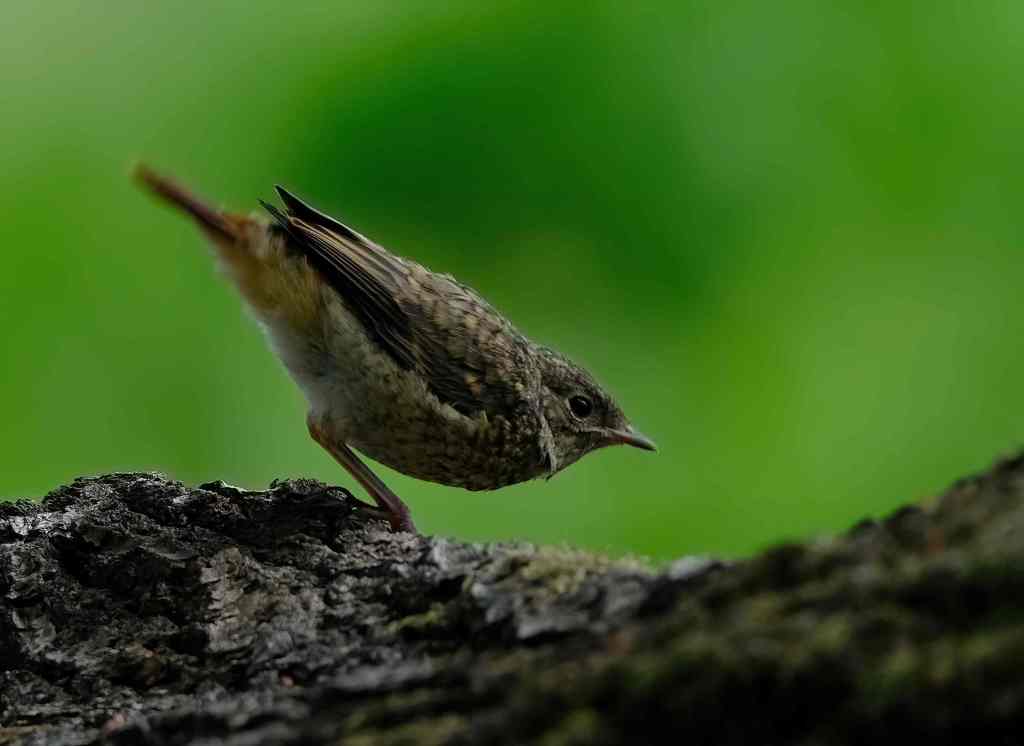
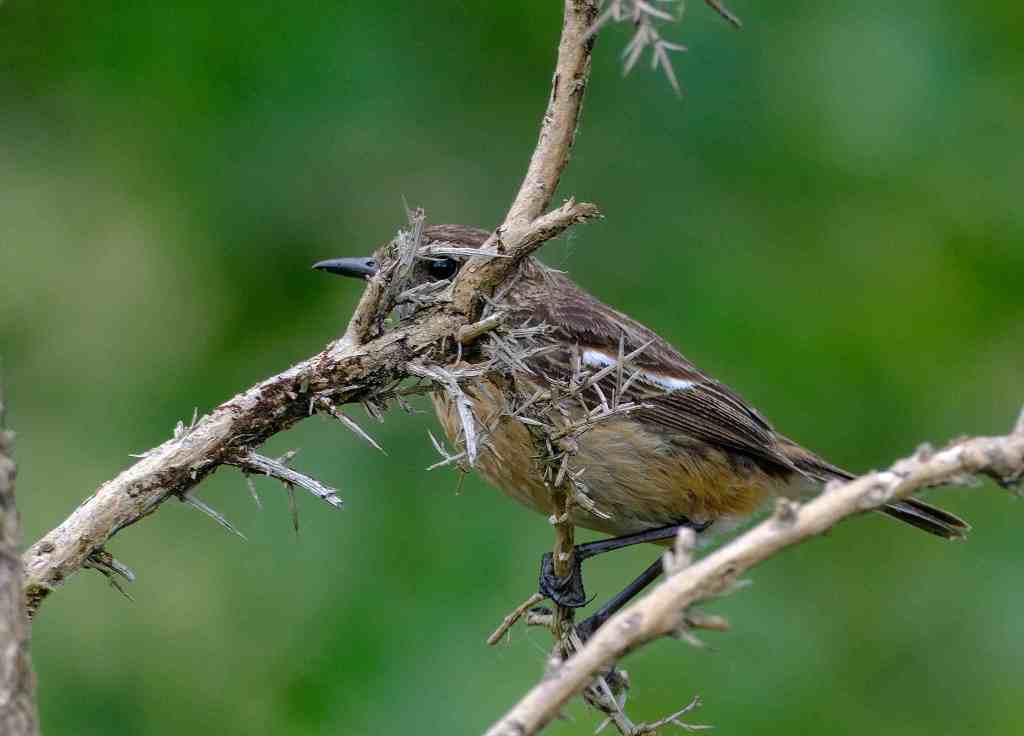
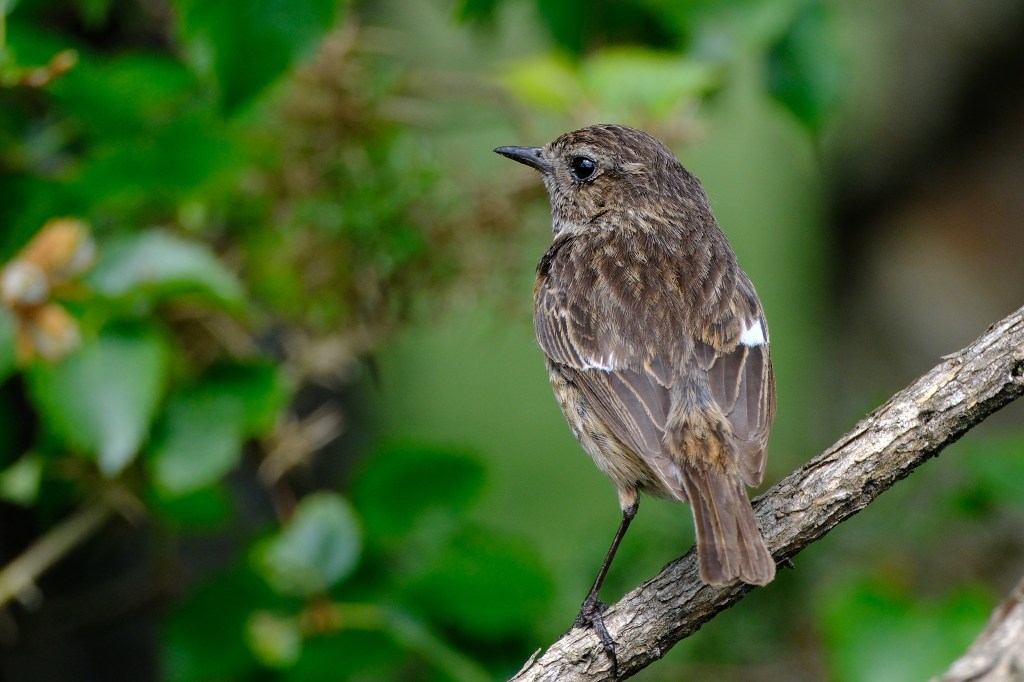
A Female Stonechat in the New Forest this morning. Looking at the photographs, you can see how well these birds blend into their environment. A cuckoo can be heard calling in the background of my YouTube post.
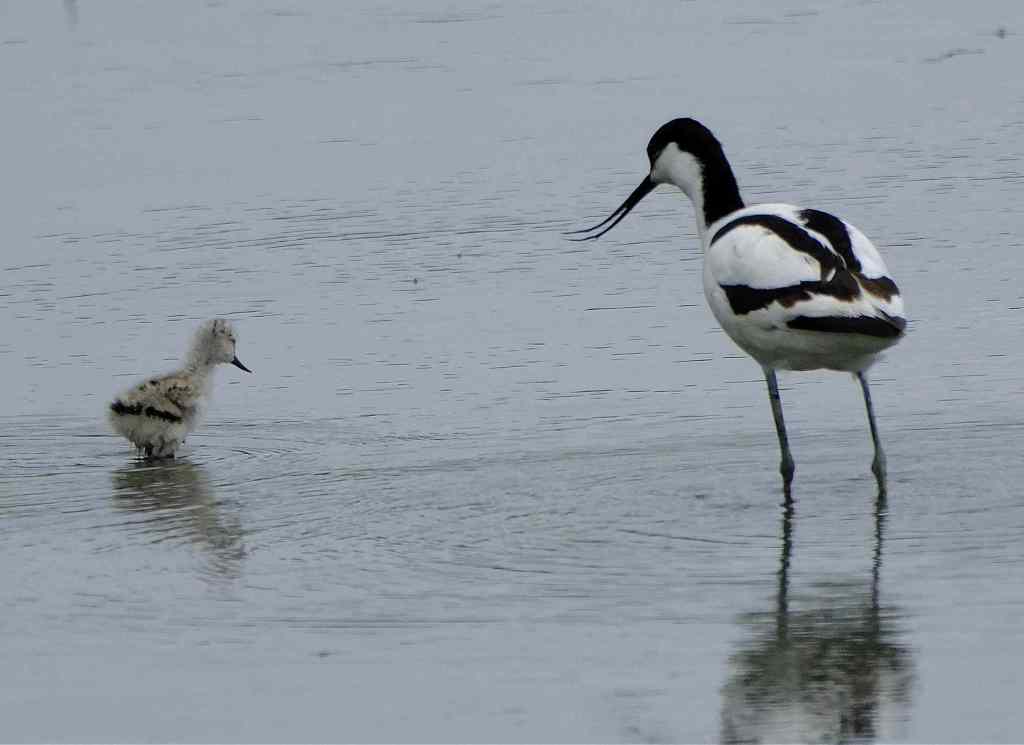
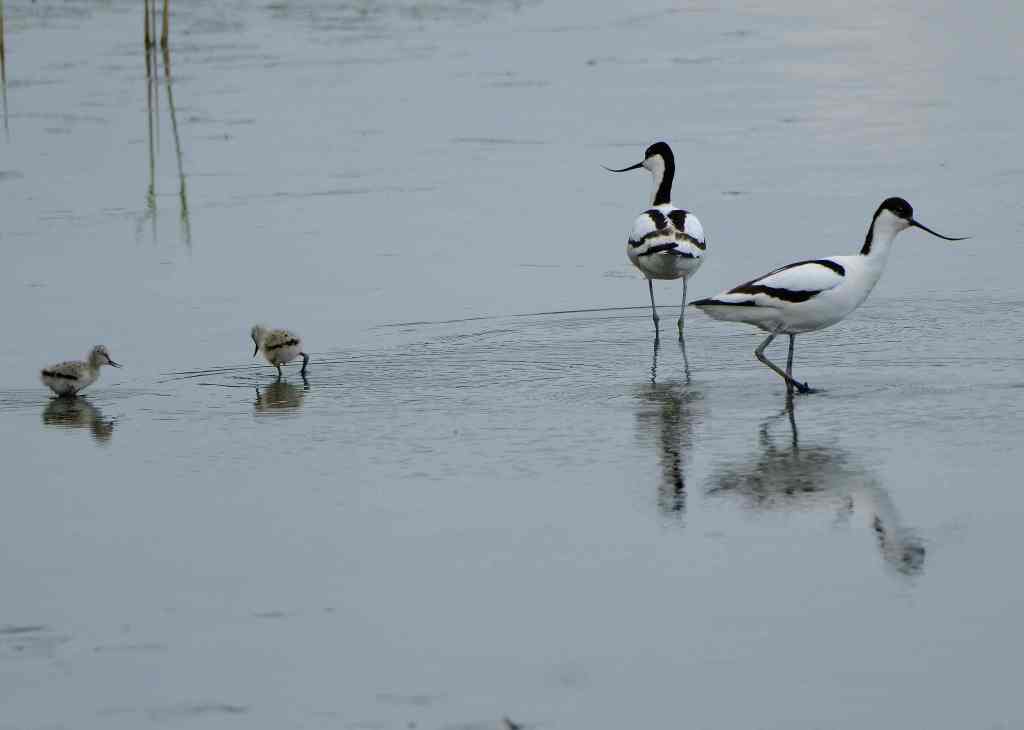
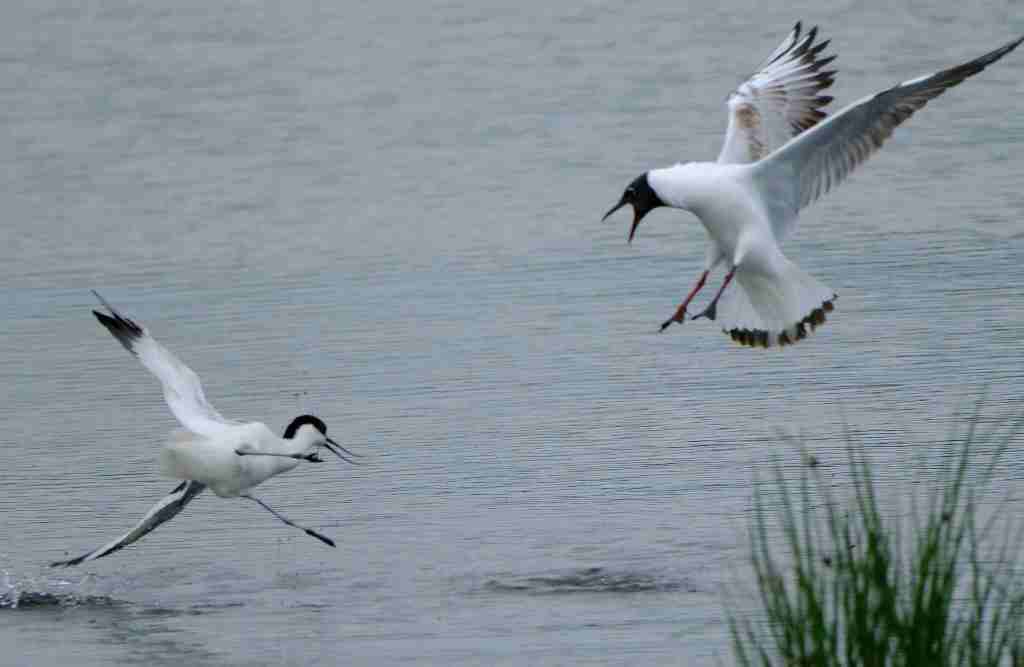
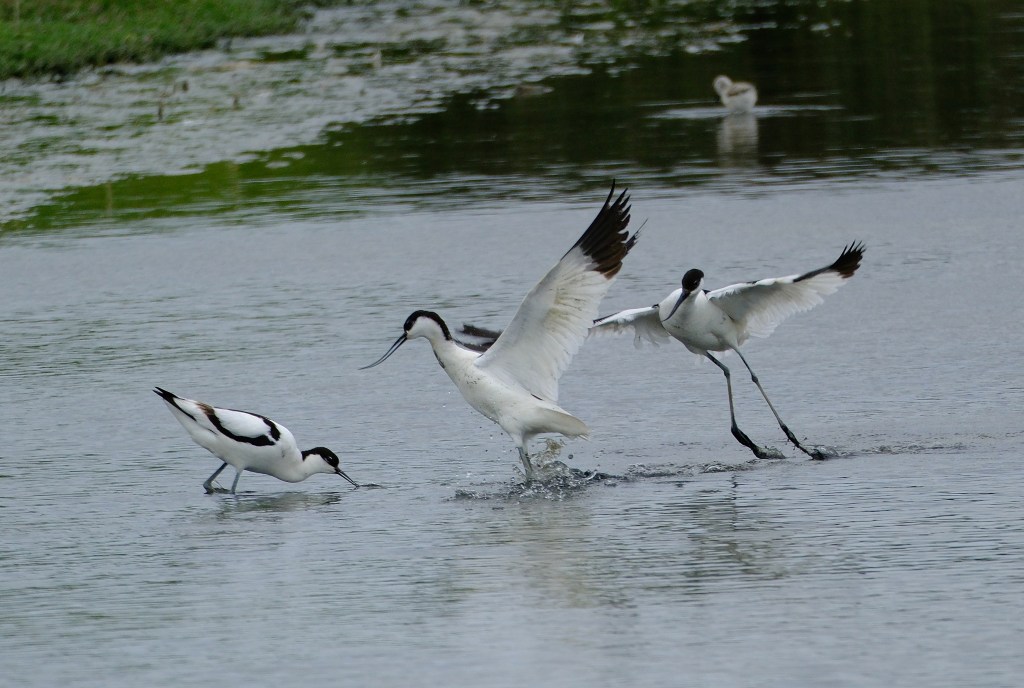
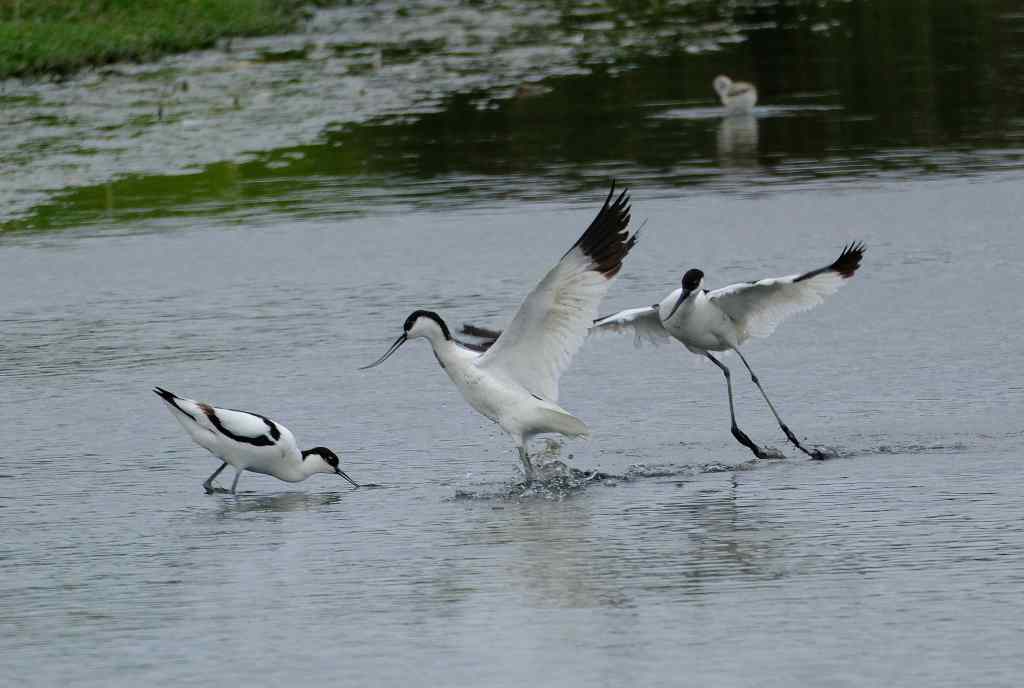
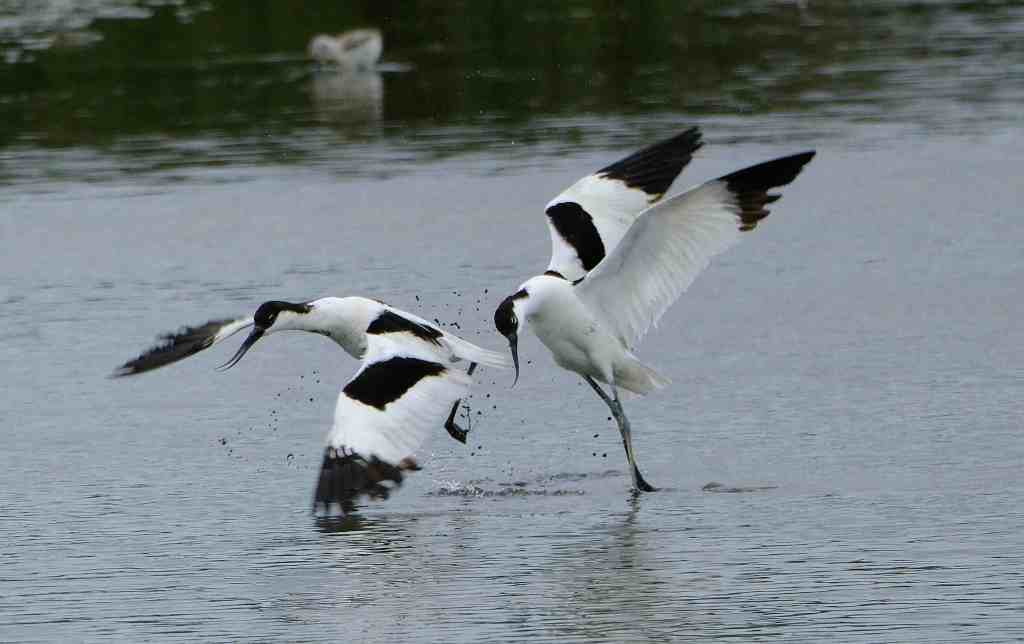
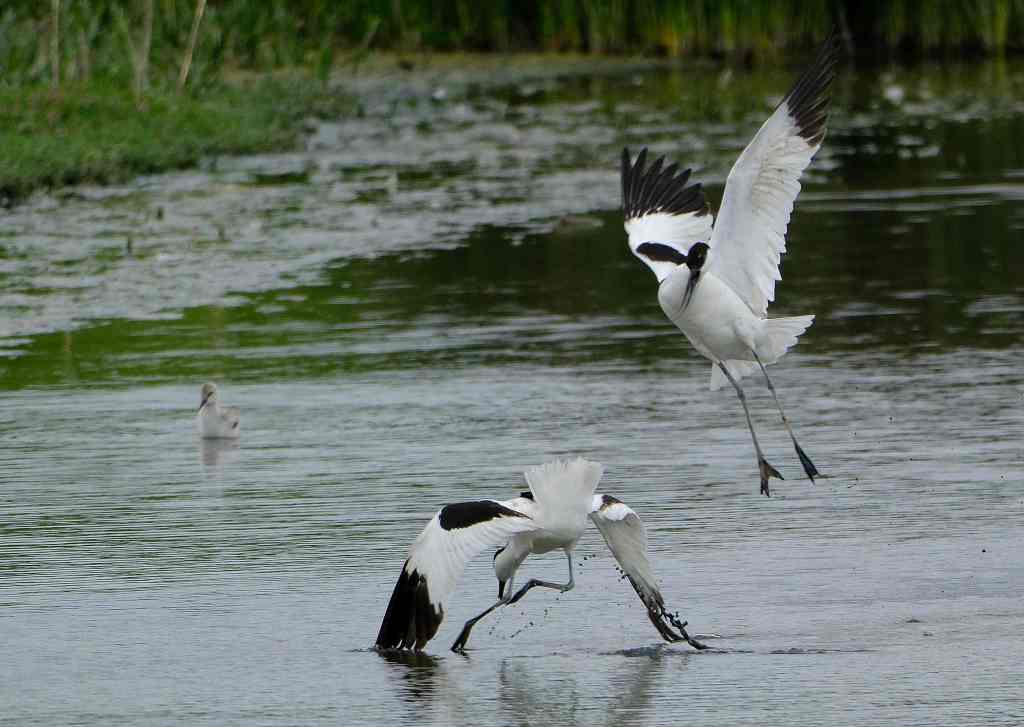
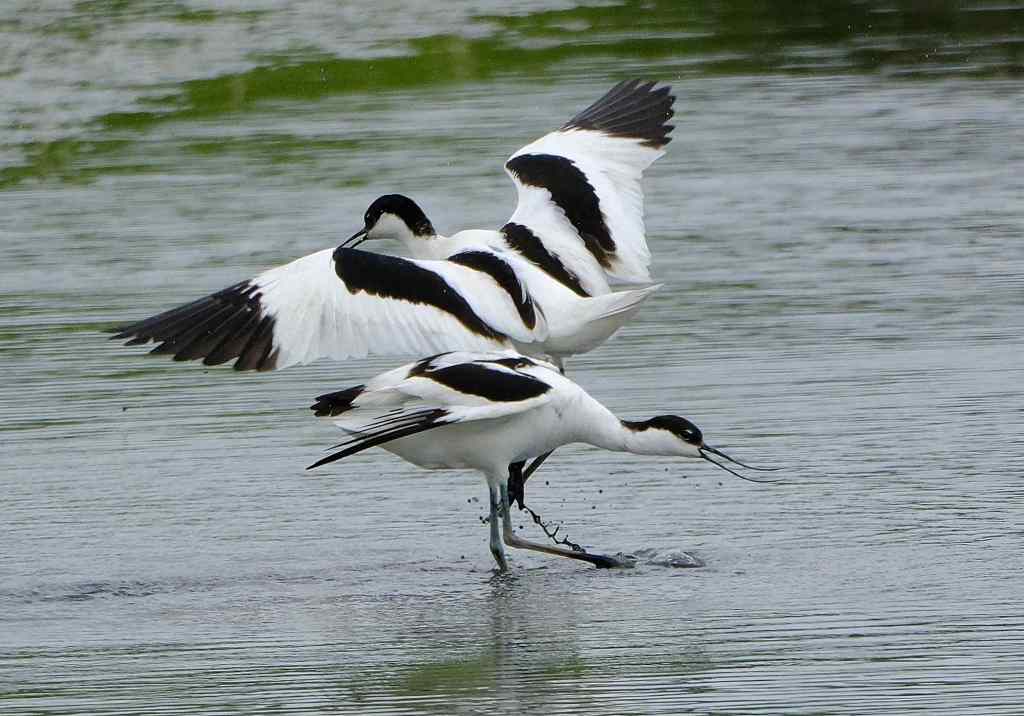
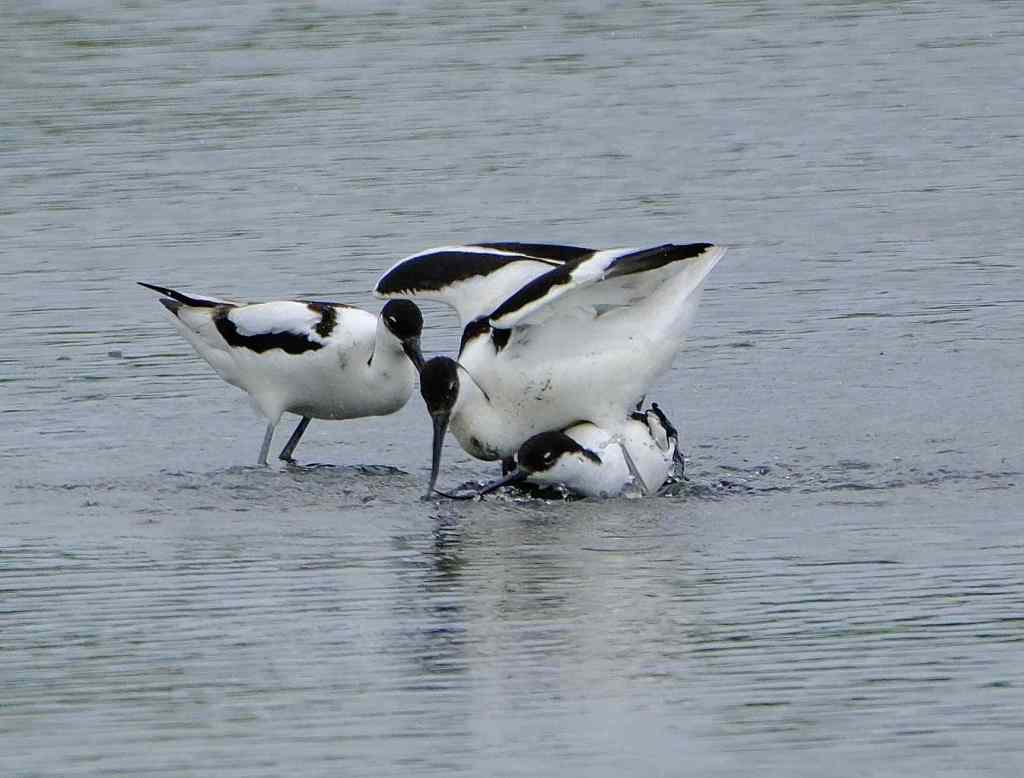
Avocet families at Titchfield Haven National Nature Reserve. Parent birds chase off anything that gets too close to their chicks, including other Avocets. Yet, the chicks wander far from mum and dad. This makes them fairly easy targets for predators like large gulls and Marsh Harriers.





























 Continued Reflections from my World.