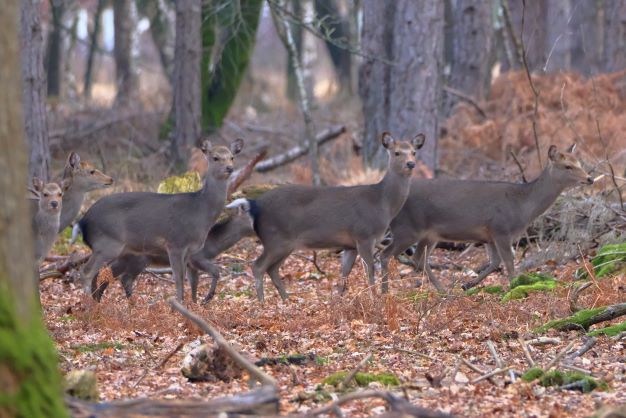
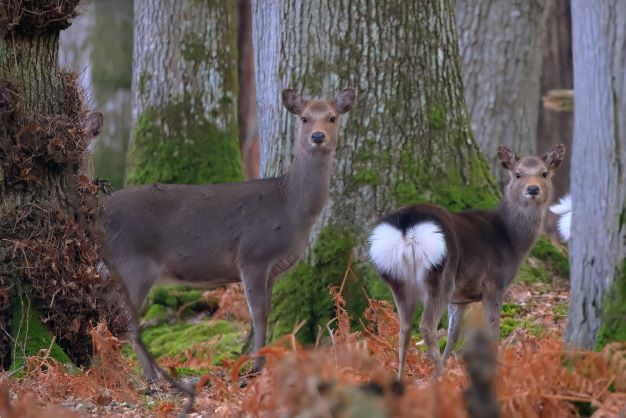
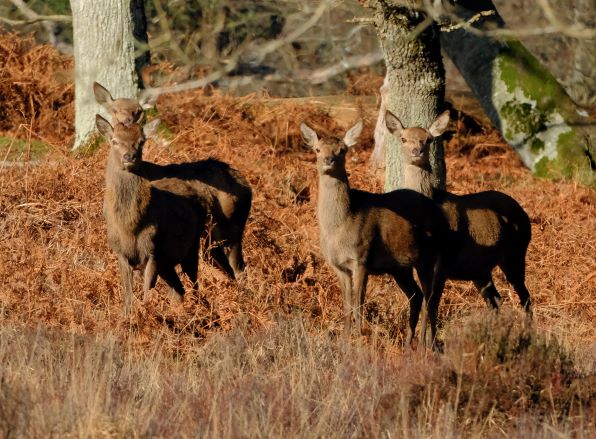
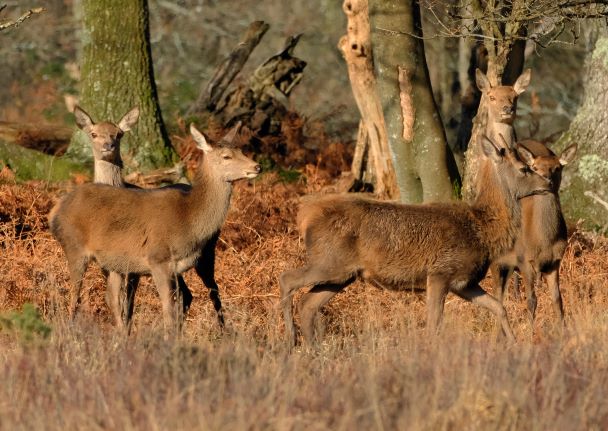
Sika Deer.

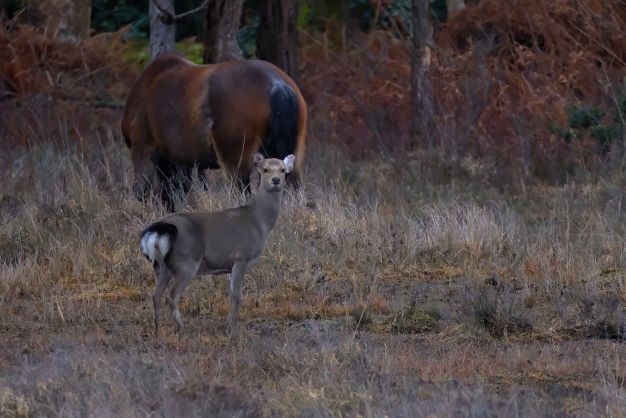
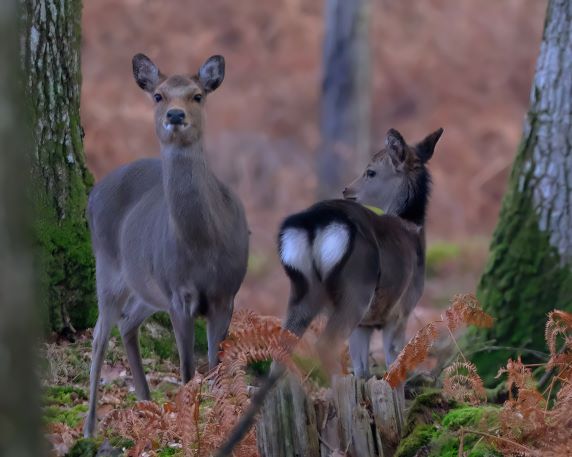
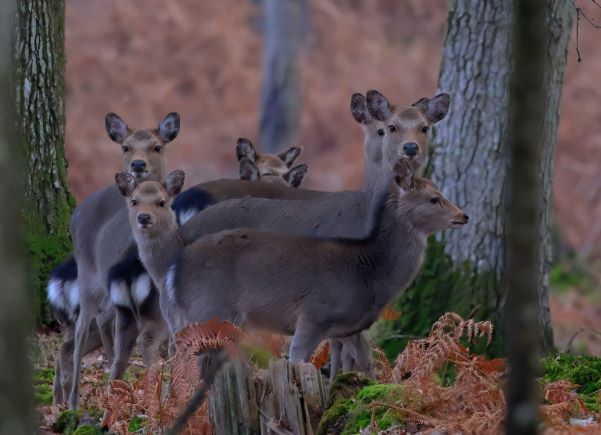
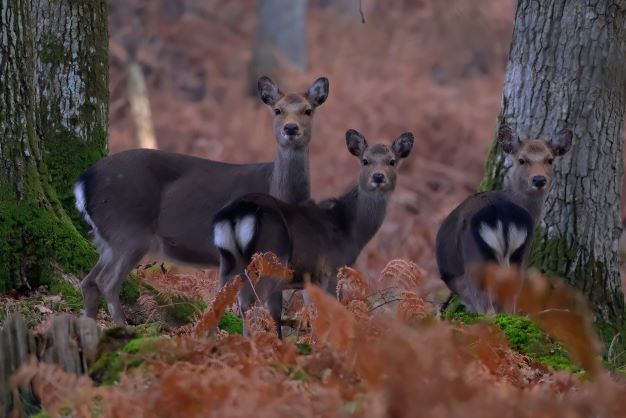
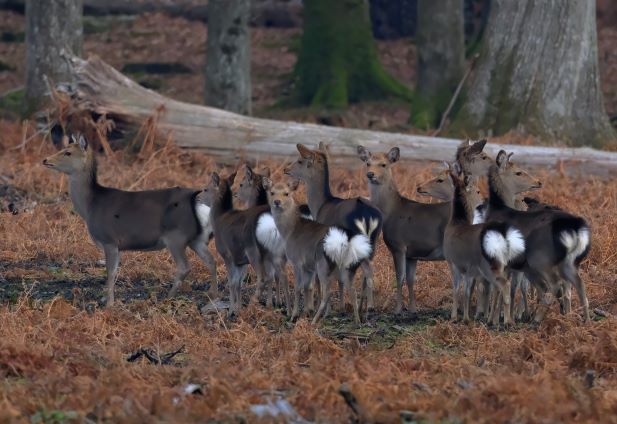
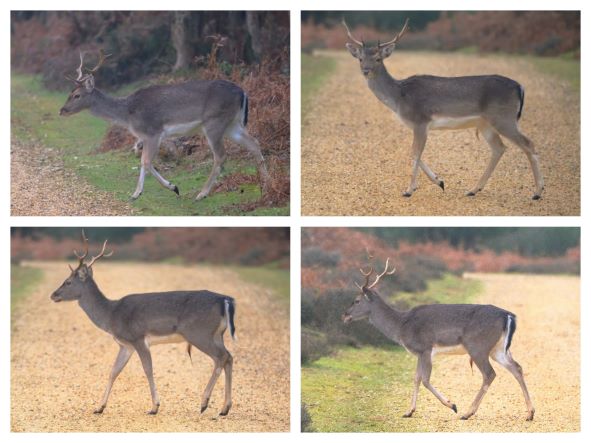
Sika deer have a stronghold in the New Forest they are a close relative of the Red deer. Sika deer originate from eastern Asia and were introduced to the UK in 1860 In the New Forest, Sika were introduced to the Beaulieu Estate in 1900, and the New Forest population is one of the UK’s purest. Sika and Red Deer can interbreed so in the New Forest the 2 populations are separated by the main Bournemouth to Southampton railway line. Numbers are maintained at about 100.
This morning I was lucky to spot a herd of about 12 deer.

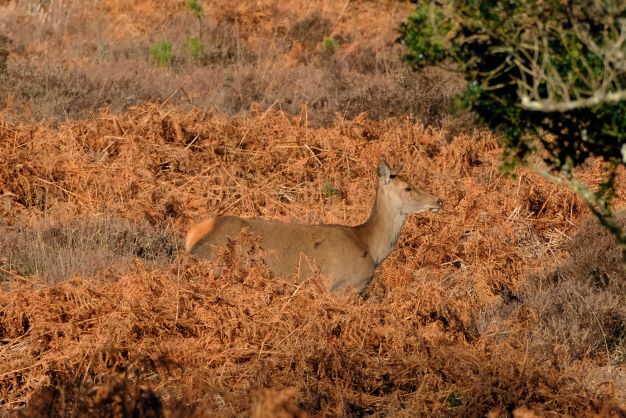
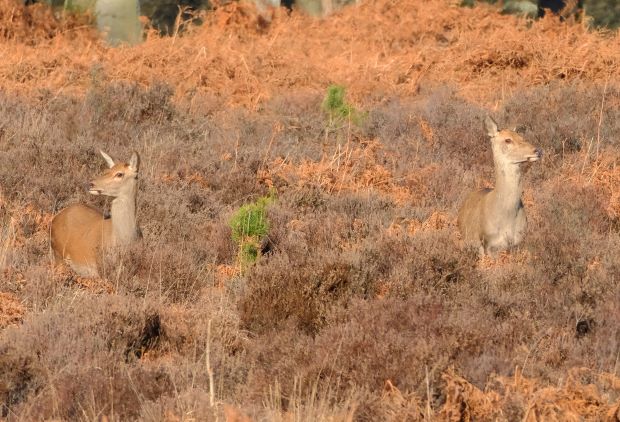
Red Deer.

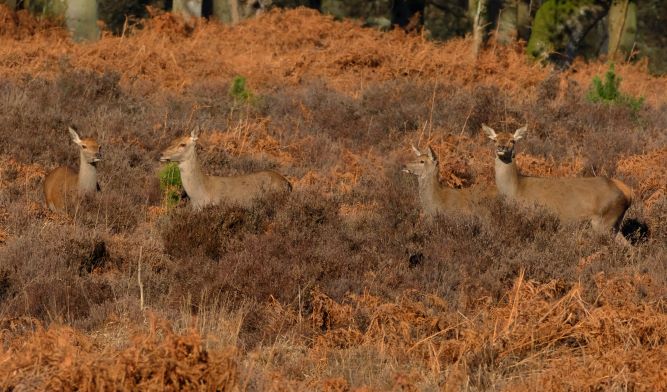
Today our walk in the New Forest yielded the UK’s largest Deer the Red Deer. In the forest, numbers are maintained around 90 animals.

Size: Up to 1.37 metres at the shoulder, length from nose to tail is 2.01m in males.

Muntjac in the New Forest.

Having recorded some of these small deer on our trail cameras in the past year today we were lucky enough to bump into this lone Muntjac while looking for fallow deer in the New Forest this morning. These shy deer are small and are only about the size of a small dog.

Muntjac is mainly a solitary deer. They use scent to communicate their territories. Individuals do this by rubbing the long v-shaped slits on their foreheads where their frontal glands are onto the ground or branches. They also have two large glands located just in front of the eyes, called the pre-orbital glands. Muntjac frequently lick these with their long tongues, this is thought to help them recognise their own scent.

Video film of Muntjac spotted today repeated in slow motion.

Hunting Forest.

In 1079 when William The Conqueror named the area his ‘new hunting forest’, close to 1,000 years later his ‘New Forest’ remains as a National Park. The ancient systems established by William The Conqueror to protect and manage the woodlands and heaths are still in place today.

Hunting Deer required planning, good horsemanship and the ability to handle weapons. It was dangerous. King William’s second son, Richard, and third son, William, were killed whilst hunting in the New Forest as was his grandson, Richard. Hunting was seen at that time as a method of practising many of the skills required for battle. 

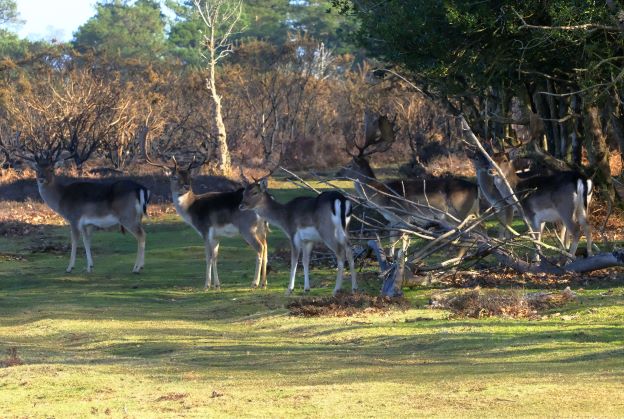
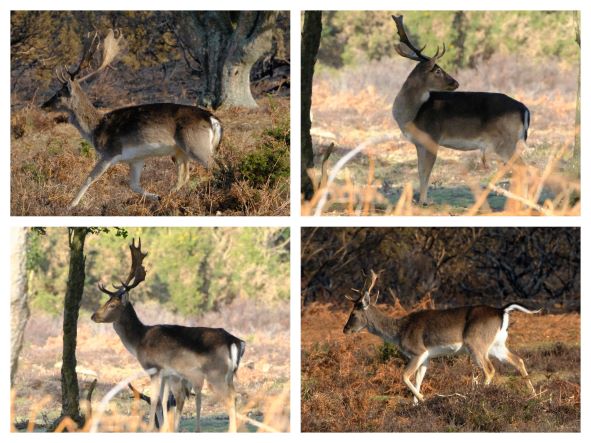
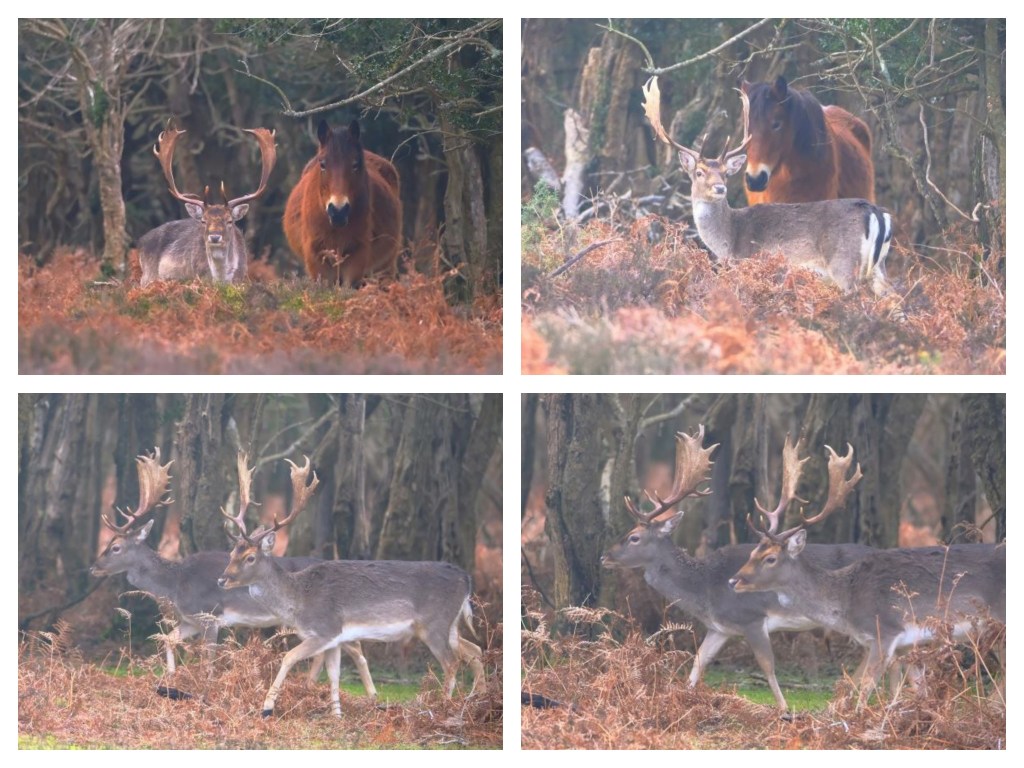
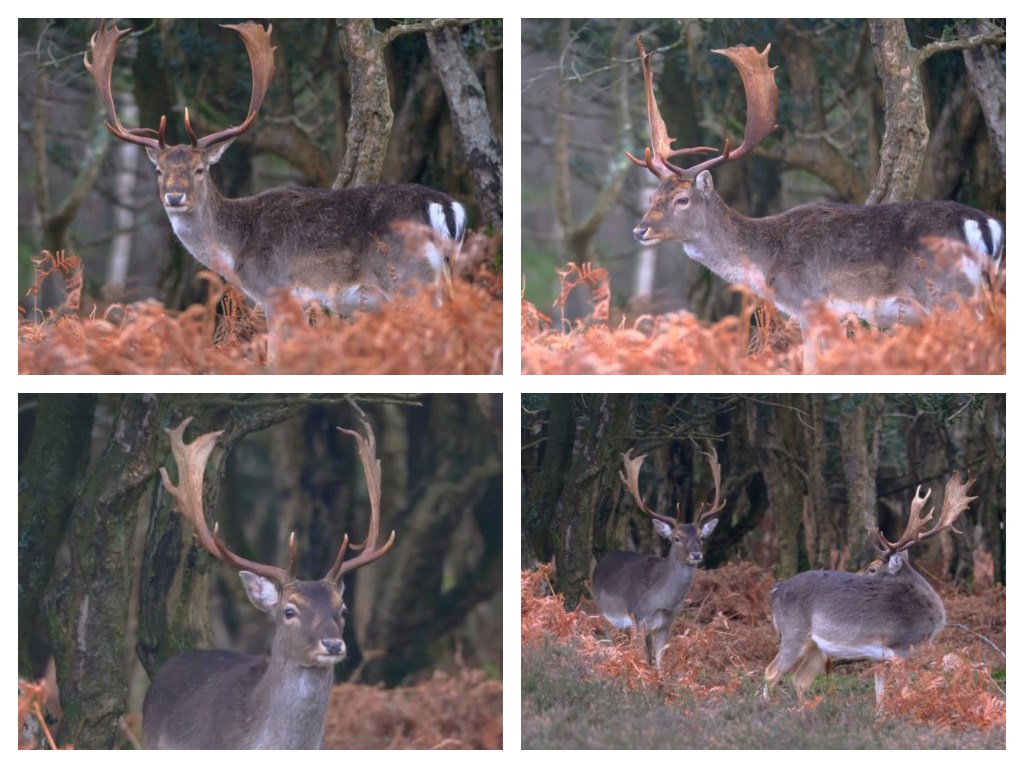
Fallow deer are today the most commonly seen deer in the New Forest. Numbers are maintained at about 1,300 on the Crown lands. Although not a native species to the UK, they have been present since Norman times and have the longest continuous lineage of any deer species in the Forest.

This time of year the Deer keep in their herds – Stags together separate from the young female deer.

Grebe.

Great Crested Grebe in toned down non-breading Winter plumage.

Then it was gone! Great Crested Grebes dive to feed and also to escape, preferring this to flying. On land, they are clumsy because their feet are placed so far back on their bodies.