Wordless Wednesday
birdwatching
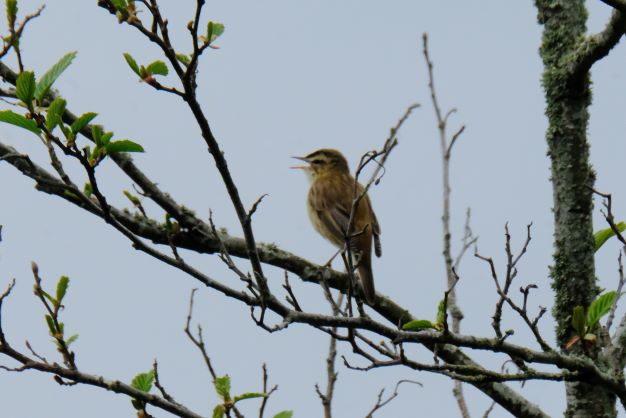
Sedge Warbler.
Often heard singing deep in reedbeds, this morning I got a good view of this medium-sized Warbler. This is a bird of the reedbeds and wetlands When spotted singing they are often perched on reeds or in willow bushes.


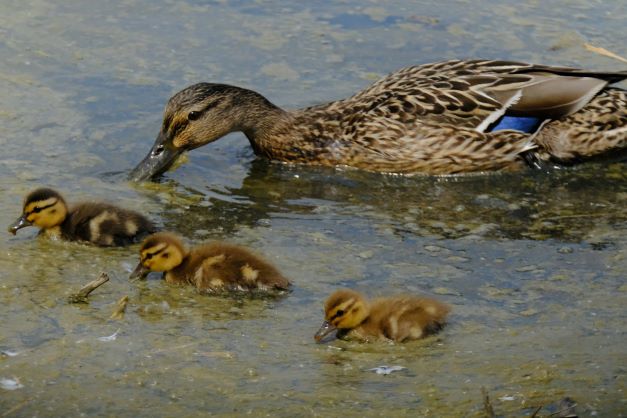
Cute.
Mallard with ducklings Titchfield Haven.
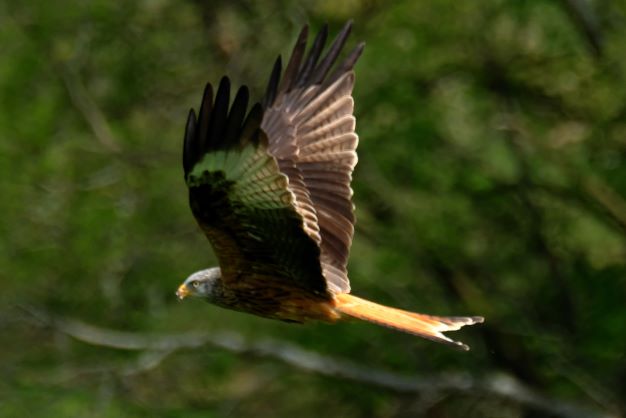
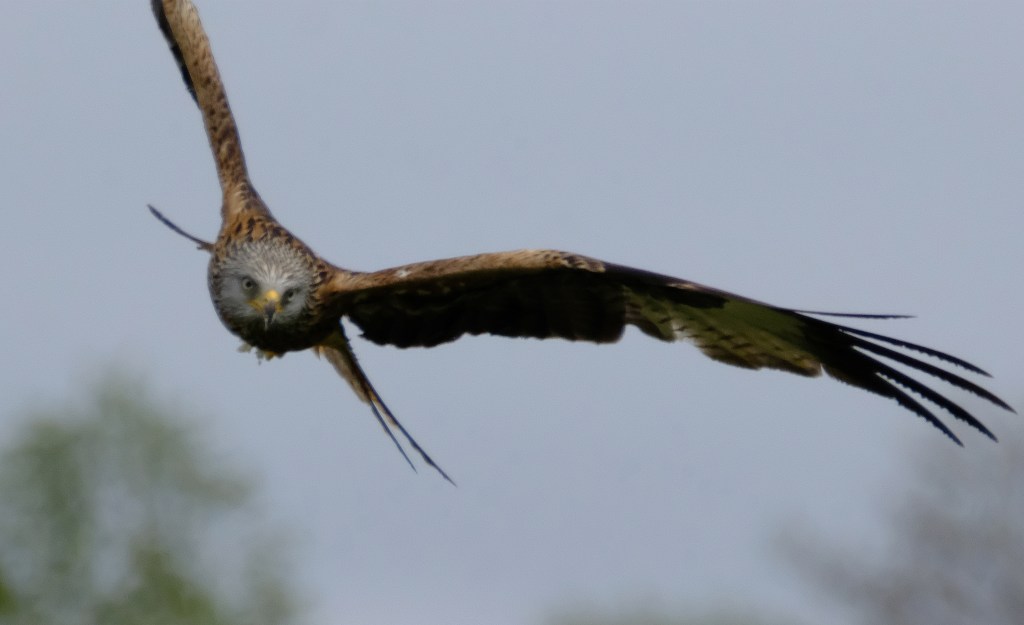
Red Kites.

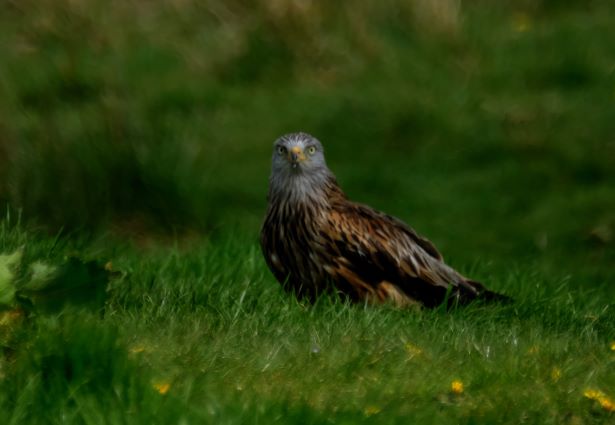
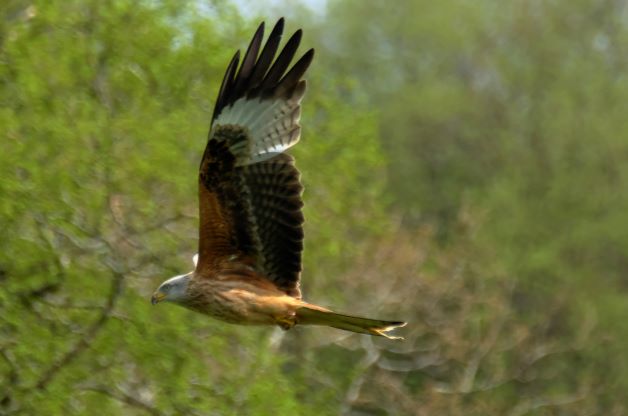
Red Kites in the Brecon Beacons- A success story. 35 years ago I saw my 1st Red Kite they were on the brink at that time and about only 25 pairs were in a stronghold in the Brecon Beacons. Over the years their numbers have increased and their range increased. It has now been successfully re-introduced to England and Scotland. It is estimated that there are now 4600 pairs in the UK, While we were on our recent campervan trip to Mid-Wales we visited a Red Kite feeding station at Gigrin Farm near Rhayader.
The farm became an official Kite Feeding Station in the winter of 1992/93 following a request from the RSPB. Today it welcomes many visitors for a daily feeding session where up to 600 birds come to feed.





Hark a Lark.
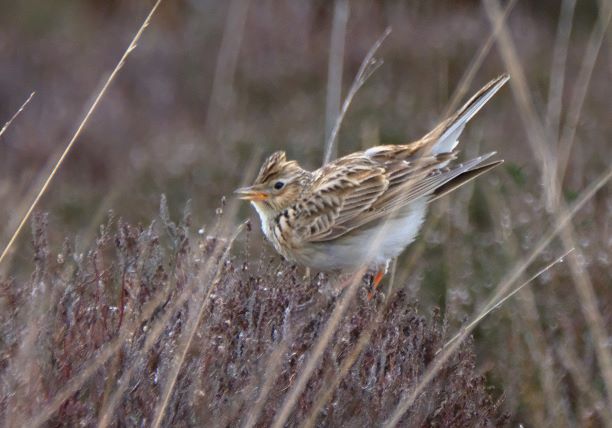
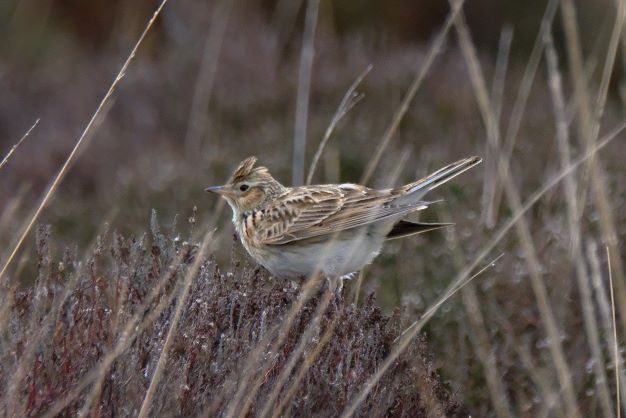
The Skylark is a LBB {a little brown bird}. It is a streaky brown colour with a small crest, which can be raised when the bird is excited or alarmed and a white-sided tail. It can fly, vertically up in the air. Often you can hear them high above fields singing their hearts out. When you locate it , it is often just a tidny speck up in the sky – it is a bird you hear before you see it.
In the Brecon Beacons in Mid Wales, I spotted this Skylark on the ground.Thenfirst time I was able to photograph one. They are ground-nesting birds and this is one of the reasons why their numbers have dramatically decreased in recent years and are now on the “Red List”.

Still here.

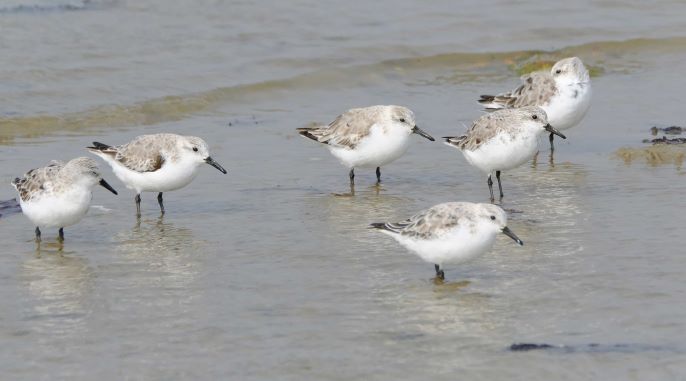
Seven Sanderlings were on Meon Shore yesterday morning feeding on the incoming tide I had not seen any for several weeks normally by now most have returned to their Arctic breeding grounds and I thought they had all left. Normally I see only the odd bird this time of year which has decided to stay on our shores. Interestingly these birds remain in their winter plumage and not changed to their breeding colours where their backs heads and wings change to a light brown.



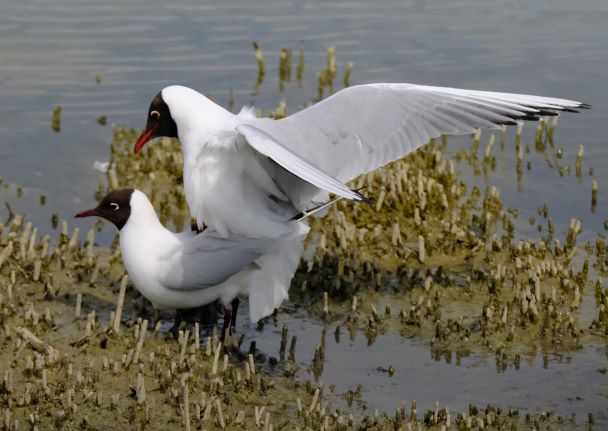
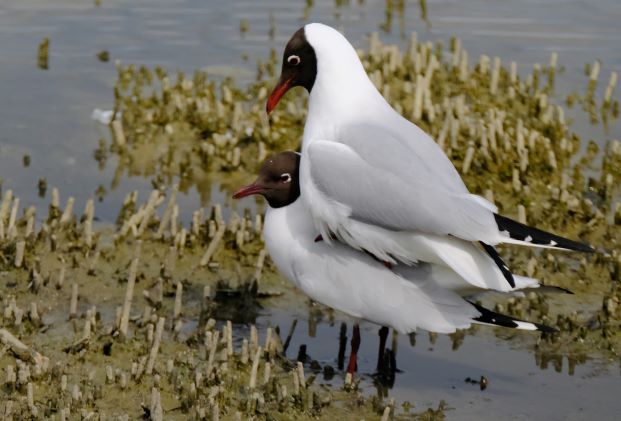
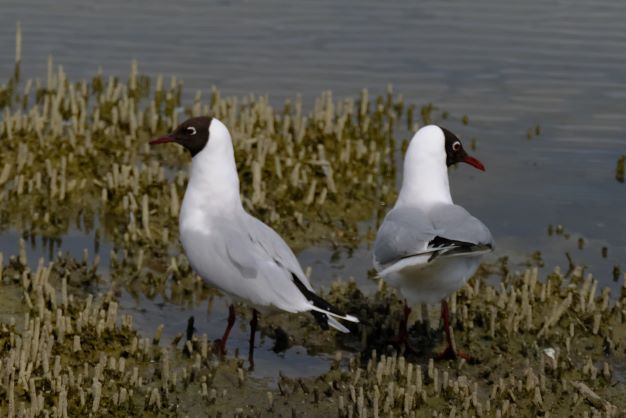
Action in the colony
The black-headed gull is the UKs commonest small gull. The black-headed gull has actually a chocolate-brown head in the breeding season (In the winter their heads turn to mainly white ). I have posted pictures many times before as they are a common sight both on the coast and inland area where we live. There is a large breeding colony within Titchfield haven nature reserve. Now we are into April the colony is noisy with birds displaying pairing up and squabbling over nest spots. Many bird watchers will overlook this spectacle for rarer birds that visit our shores. Apart from the noise each year I look forward to this gull’s breeding season.
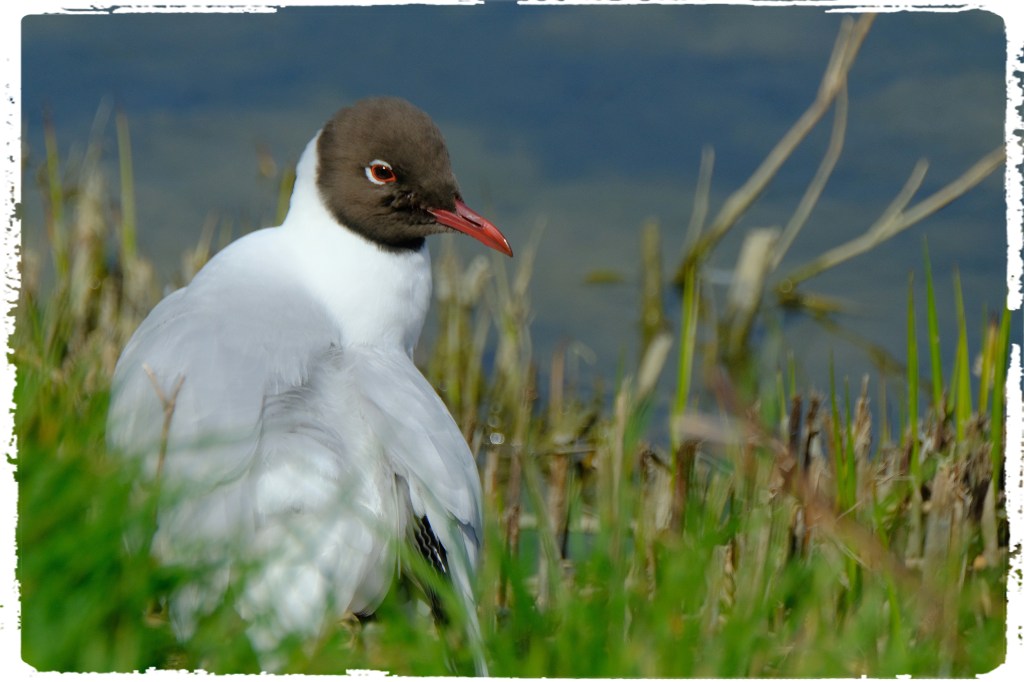
Length: 35-38cm
Wingspan: 1m
Weight: 250-330g
Average lifespan: 11 years

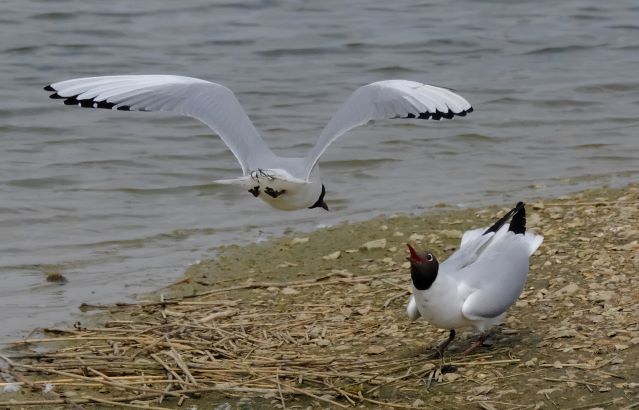
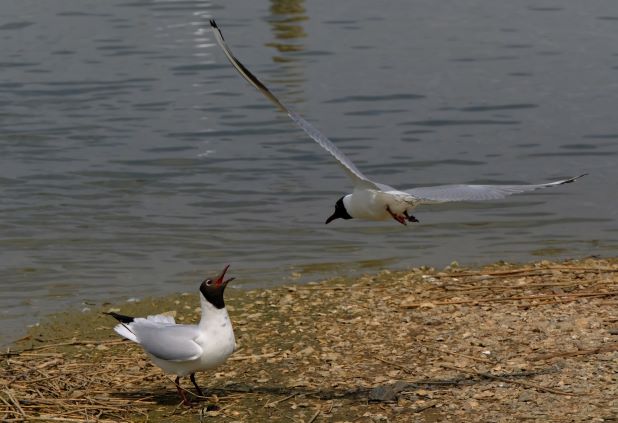


Black-headed Gulls are opportunistic feeders, they will eat most things taking invertebrates and plant materials, seeds bread, and are fond of chips thrown by tourists at the seaside.
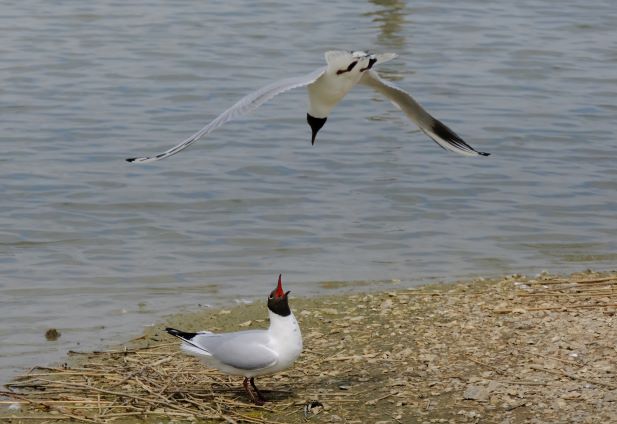

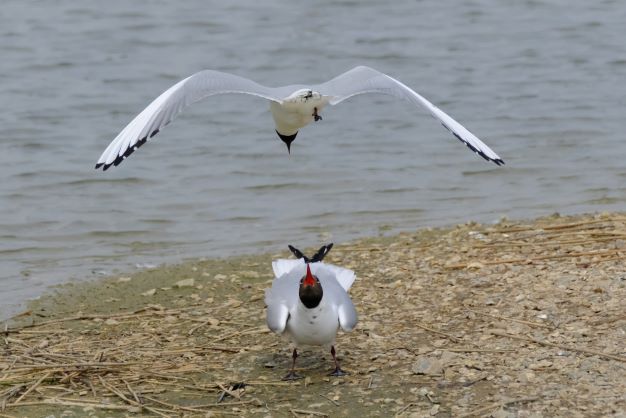

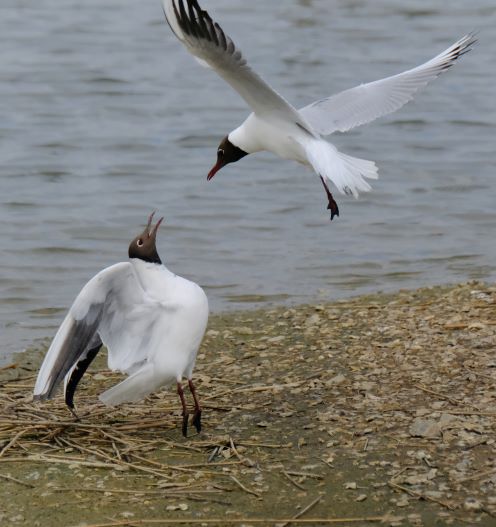
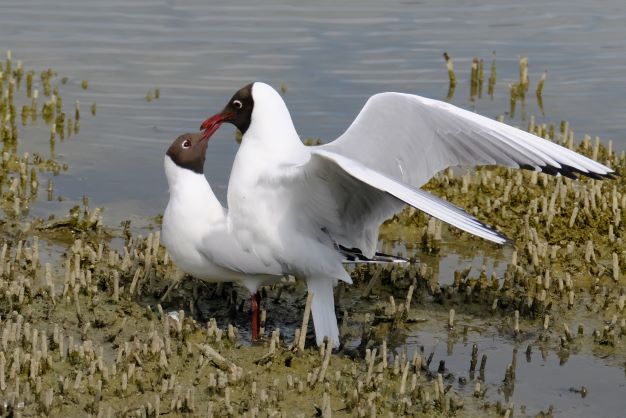
Long-tailed Tit.
Long-tailed tits are easily recognisable with their distinctive black and white colouring with a hint of pink. They have a tail that is bigger than their body. They are often seen in small, excitable flocks and can number up to 20 birds. most flocks I see locally number between 6 to 8 birds. These small birds look like flying balls of fluff. and are said to be one of Britain’s cutest birds.


Length:14cm
Wingspan:16-19cm
Weight:7-10g

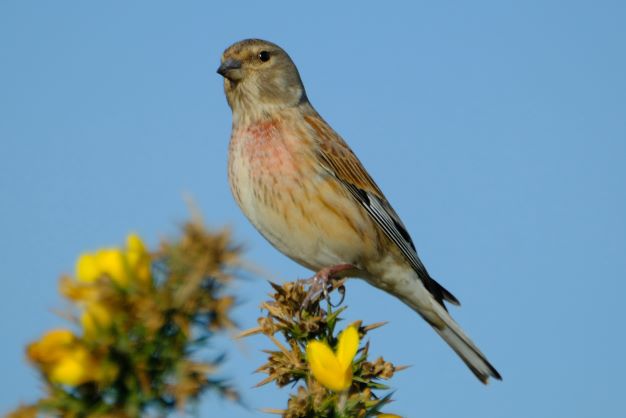
Common Linnet.
More photographs of the Common Linnet at Hamble Point on Southampton Water.
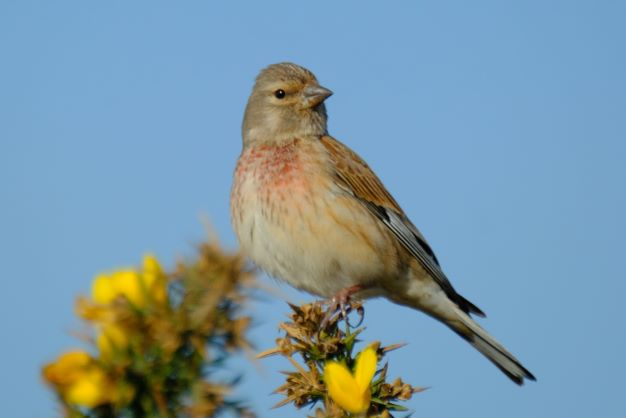
Once popular as a caged bird because of its song and markings. Today this bird is on the “Red List” due to conservation concerns. They are a small slim finch. Males are attractively marked with crimson foreheads and breasts, females much browner. It has an undulating flight, usually twittering as they fly. They can be seen in large flocks during the winter.
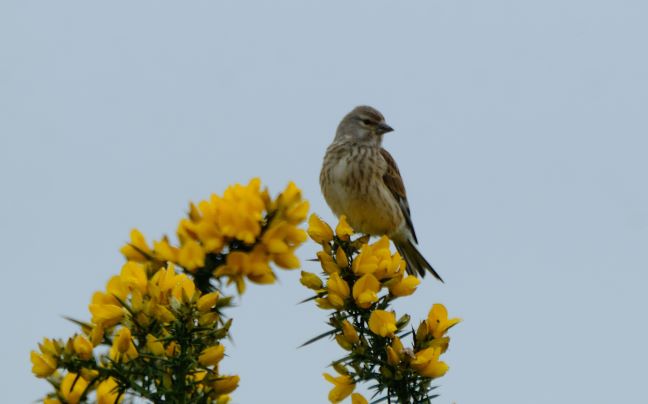
Length: 14cm
Wingspan: 24cm
Weight: 19g
Average lifespan: 2 years


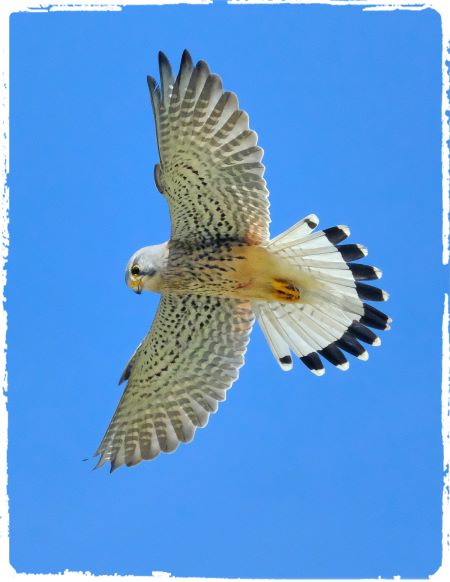
Hover.
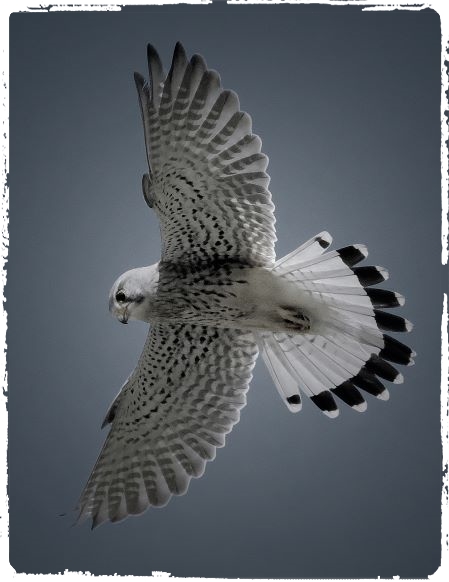
Kestrels are small, chestnut brown birds of prey. They are often seen hovering over fields or by the sides of roads. They feed on small mammals, such as voles, shrews, mice, and small birds. They also feed on invertebrates and worms.
 Continued Reflections from my World.