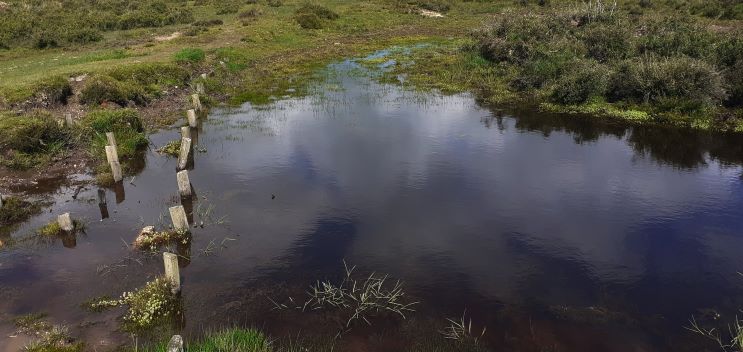
A dry spell.

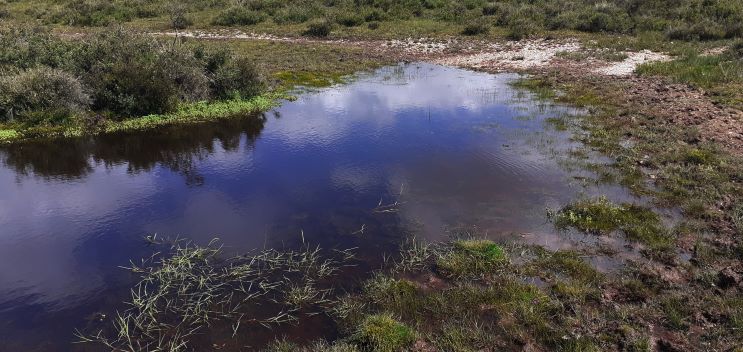
Back in June we found this New Forest Pool a mile or so from the road and enjoyed a few hours photographing and watching dragonflies.

Posted a couple of views back then.

We walked back there this morning. The same pond a month later. After our heat wave.

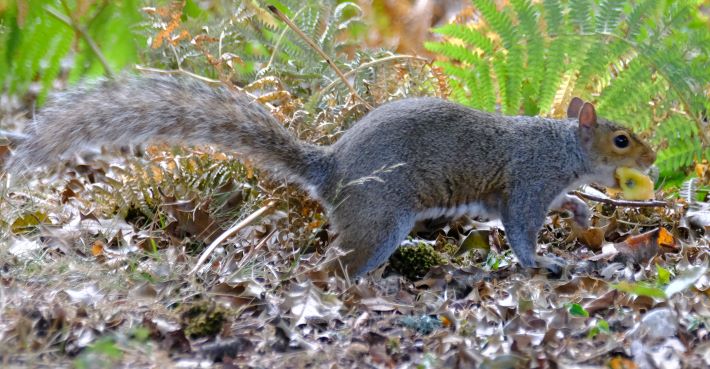
Temptation.

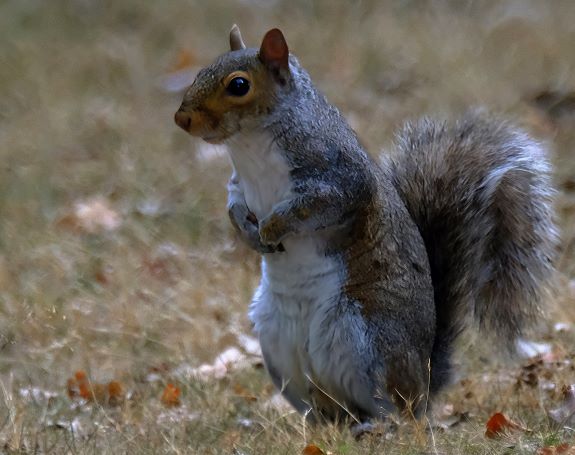
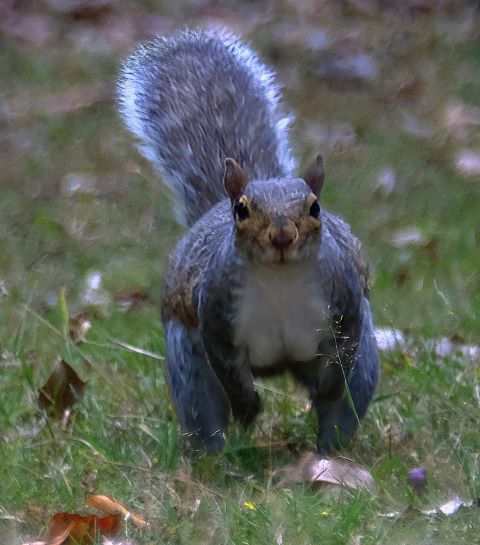
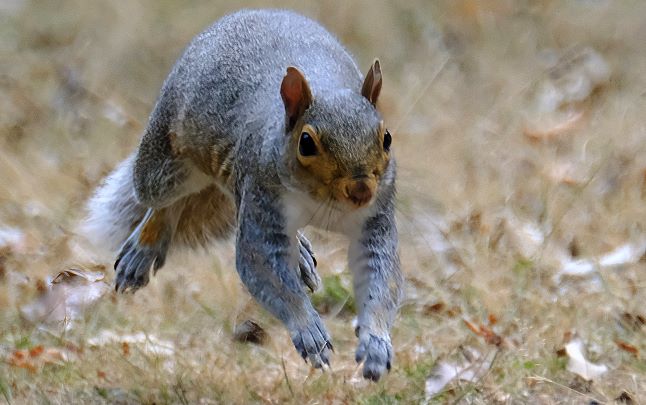
An apple core snatch and grab. Sometimes the temptation of getting close to a human for a tasty bit of food overcomes any fear. This Grey Squirrel was showing an interest in my apple while I was sitting on our van step. When I had finished eating it I dropped it on the grass within seconds he was on it.

And the prize.

More Terns

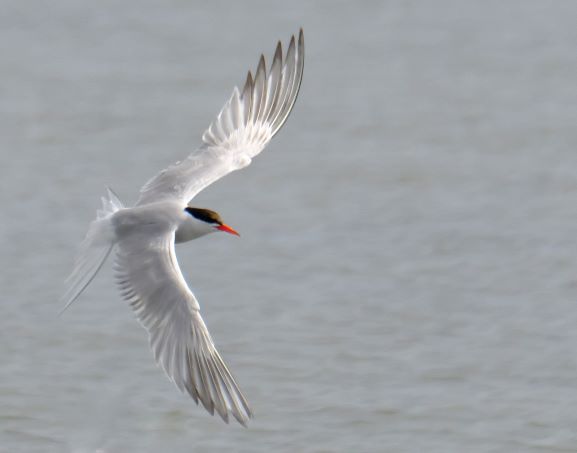
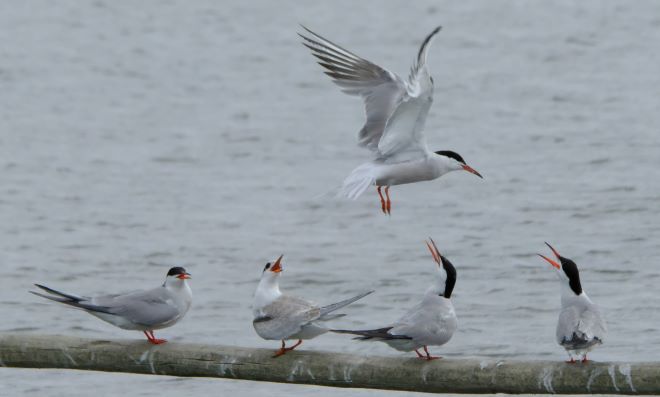
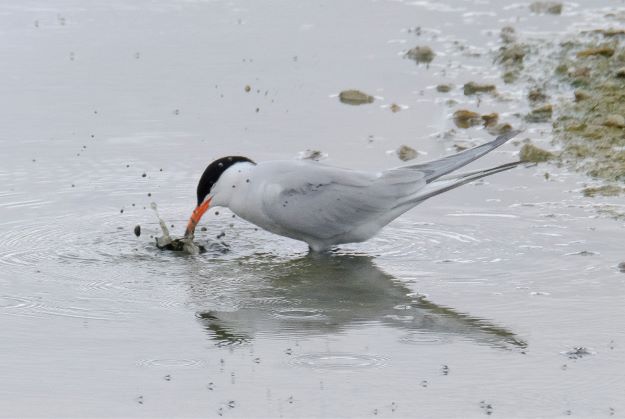
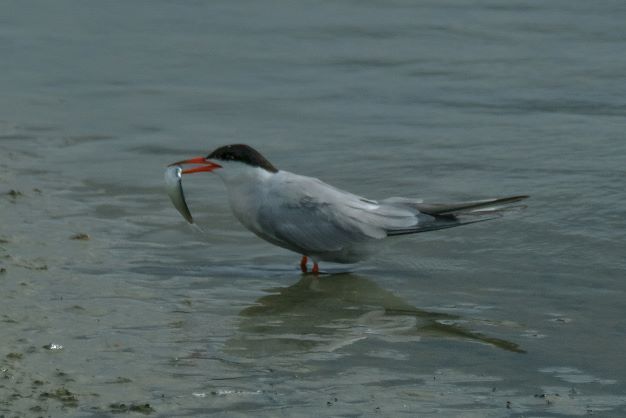
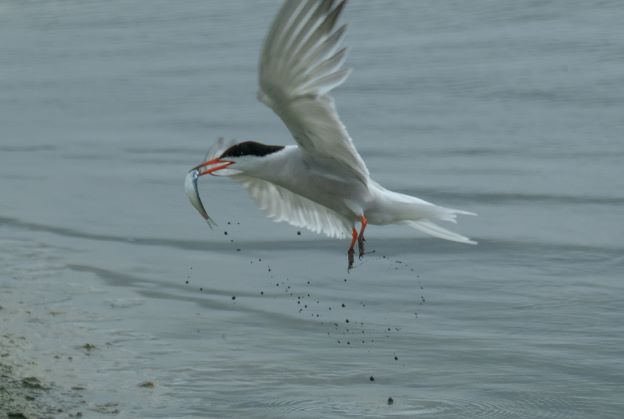
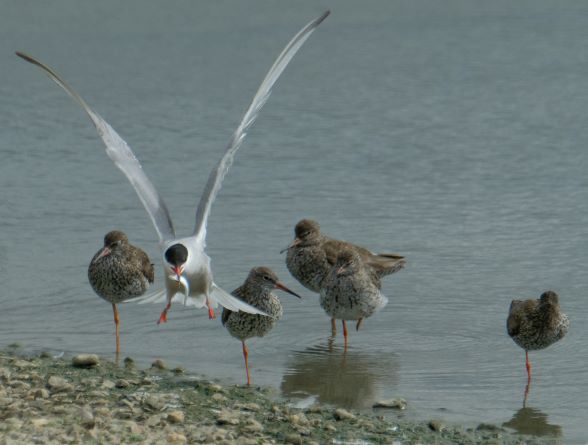
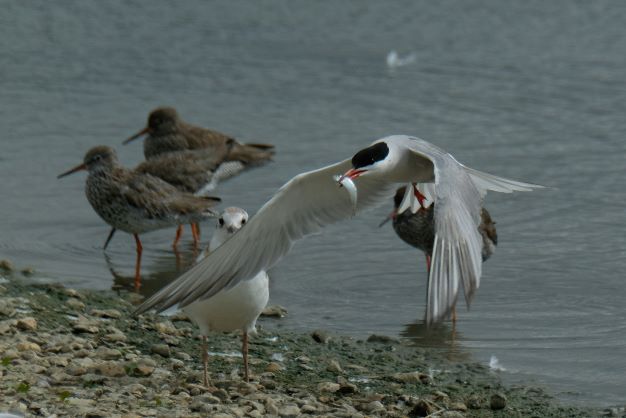
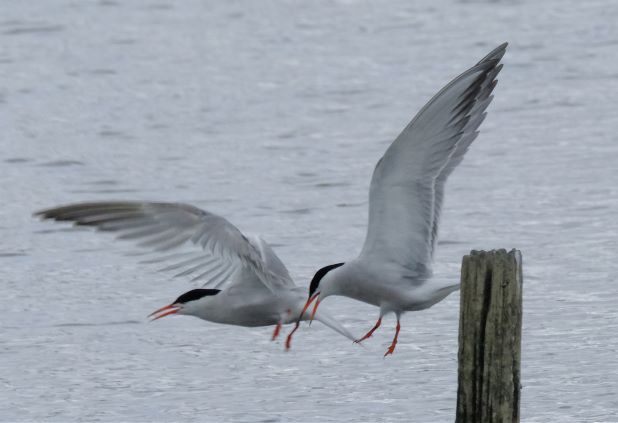
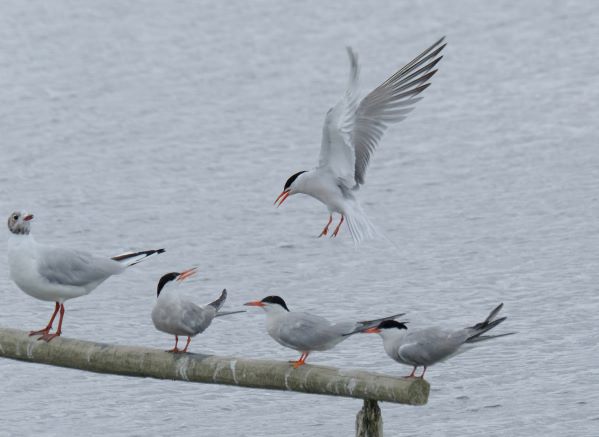
Common Terns.

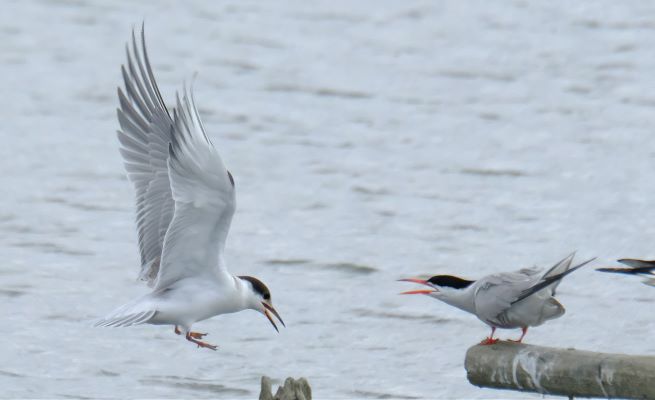
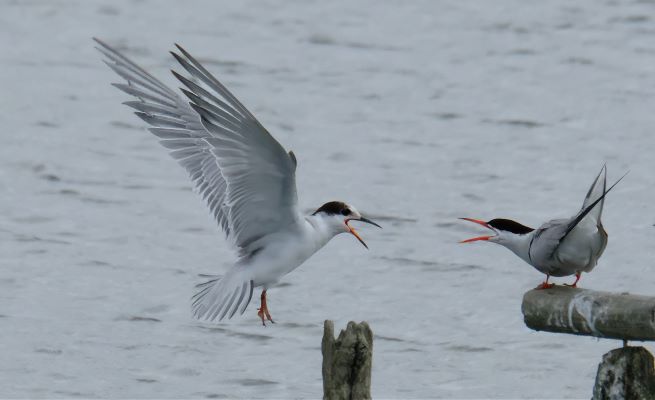
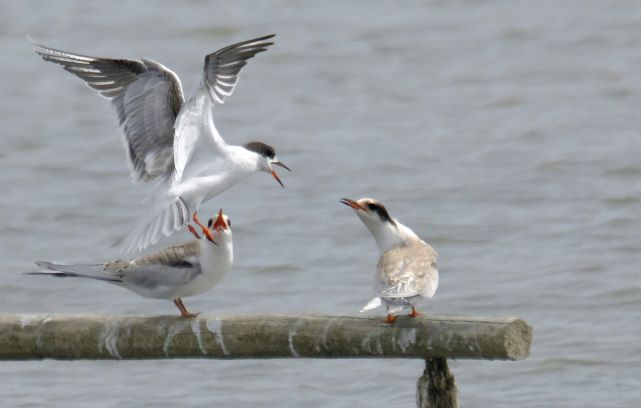
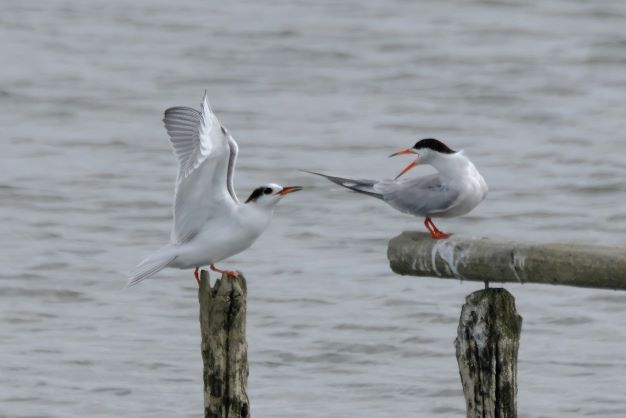
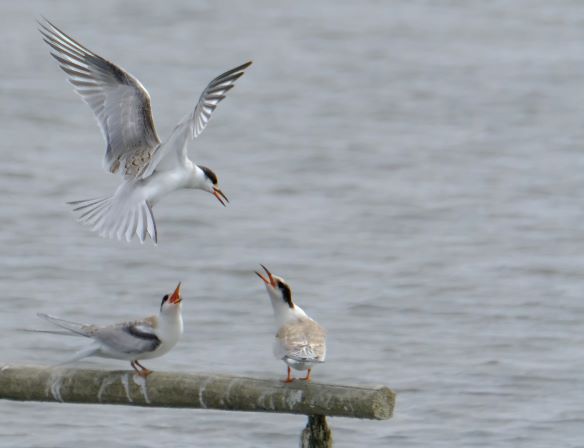
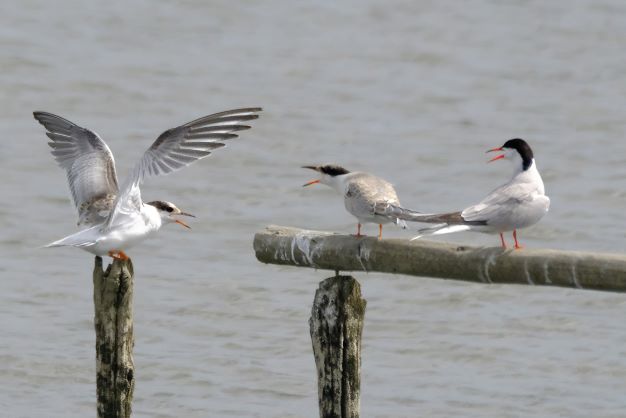
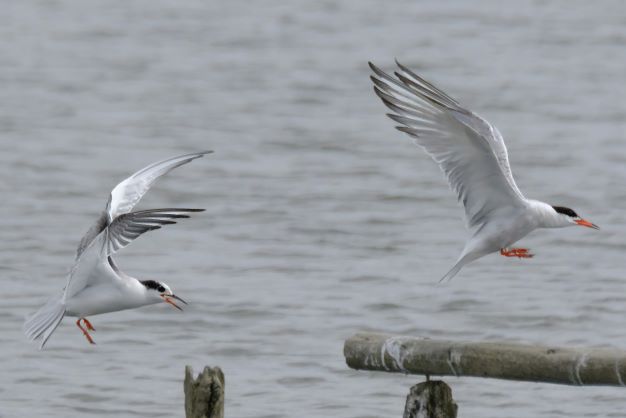
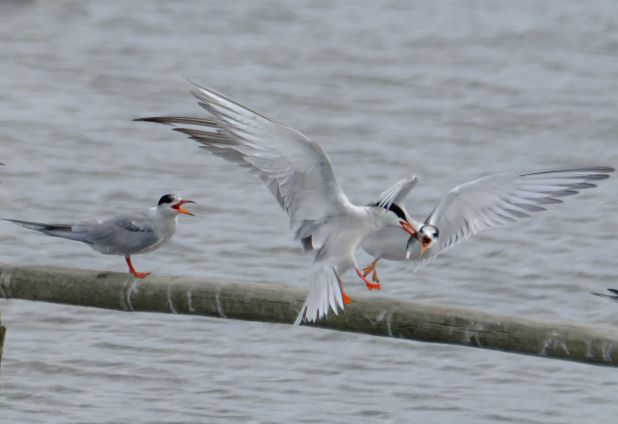
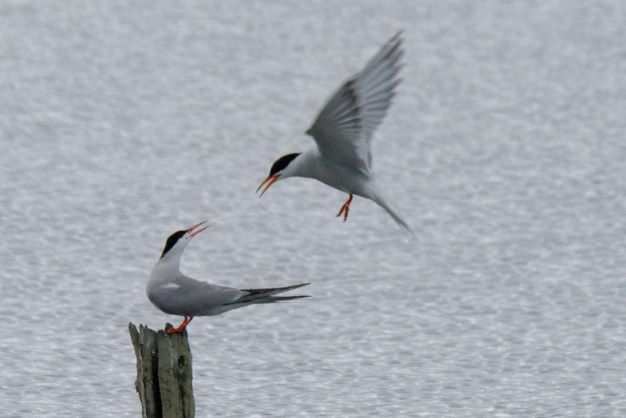
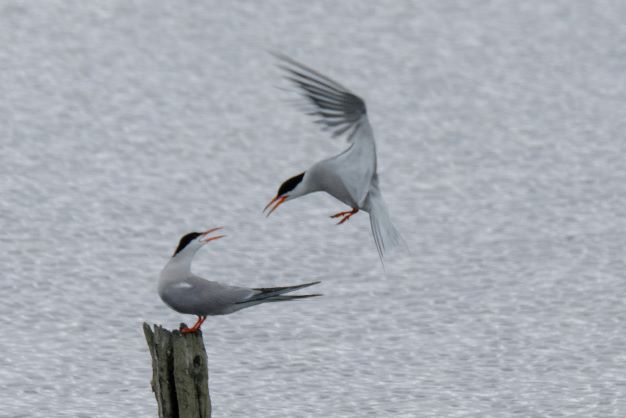
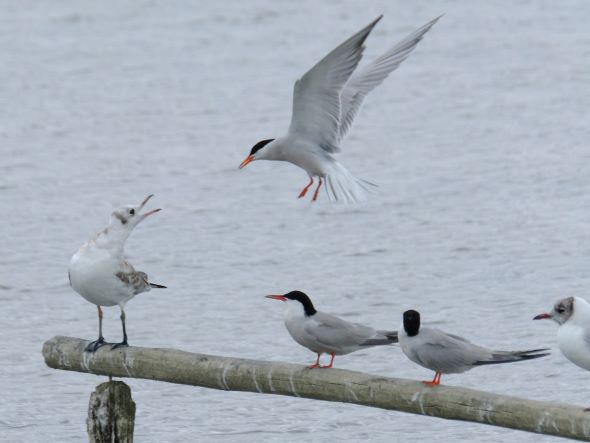
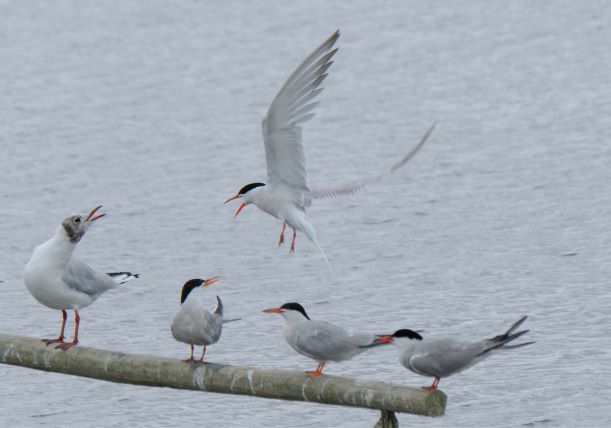
Another visit to Titchfield Haven nature reserve today to watch the Terns. As well as the adult birds lots of juvenile birds learn the ropes before they leave and head off to Africa from their parents.

The juvenile bird is on the left note the black cap not fully developed.

The Terns are the stars.

Common Terns at Titchfield Haven Nature reserve. A picture-heavy post. (includes some Red Shank & Black-headed gulls).

Common Terns are silvery-grey and white birds with long tails that have earned them the nickname sea-swallows They are graceful flight and frequently hover over water before plunging down for fish. They are often noisy. Each year nesting colonies are good at Titchfield Haven. UK breeding:12,000 pairs. I always look forward to their arrival in April and notice their absence when they leave in late August or early September. They migrate South to Africa after the breeding season.

The times are a changing.

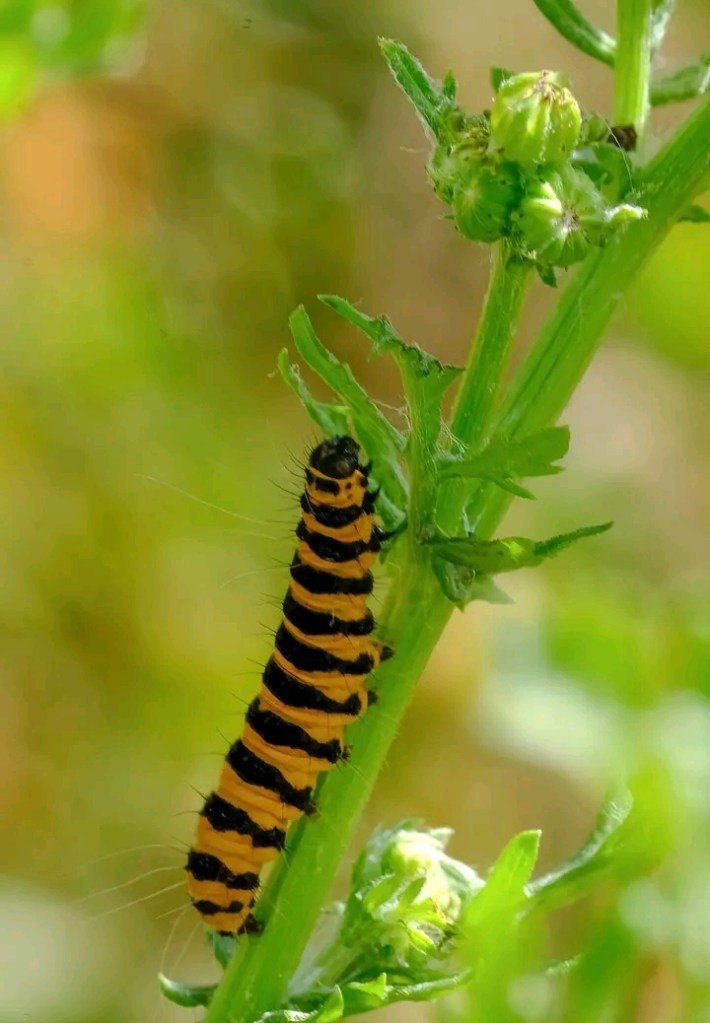
Black and orange or orange and black. In recent years I have only found a few Cinnabar caterpillars. When we were kids each Ragwort plant in the fields behind our family home had many of these colourful caterpillars. When l find one today I am transported back to the carefree days of my childhood in the 60s unaware of the Cold War, the Bay of Pigs and the Cuban Missle Crisis.

The moth.

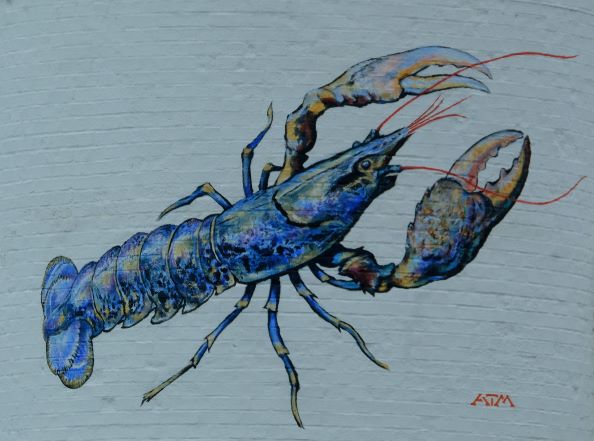
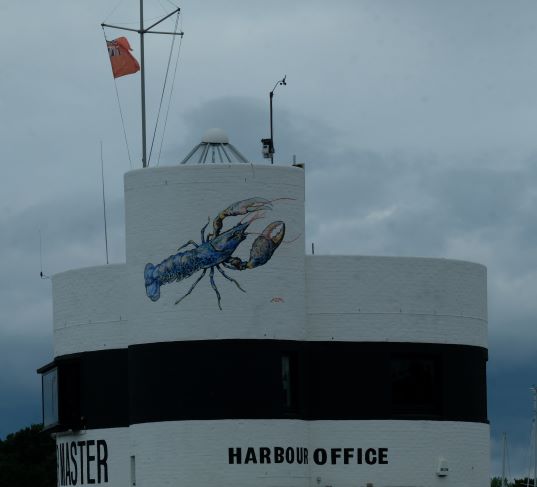
New paint job.

One of 6 murals which have been painted across Hampshire, all depicting sea creatures.

As well as this lobster on the harbour master’s office at Warsash on the River Hamble other sea creatures are at Hythe Pier, & Ocean Village in Southampton and others on the Isle of Wight.

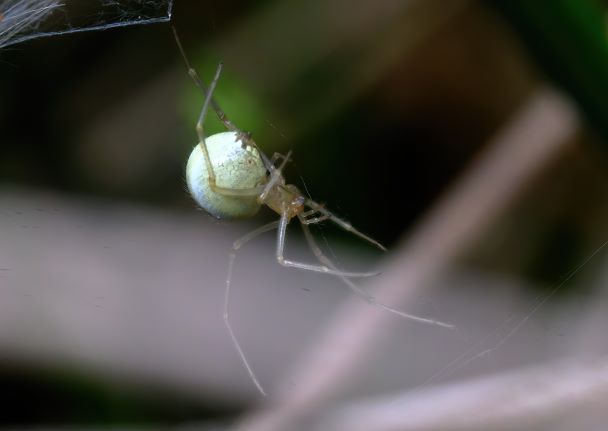
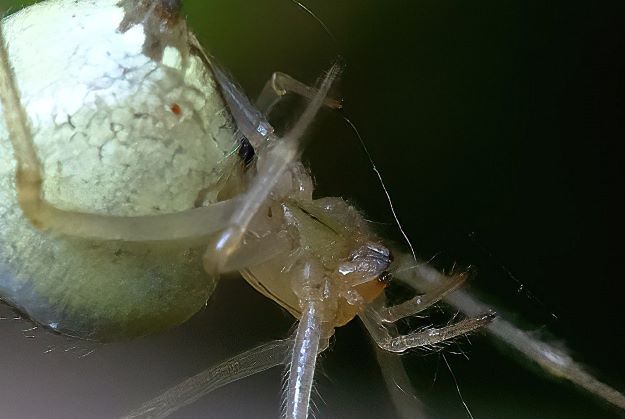
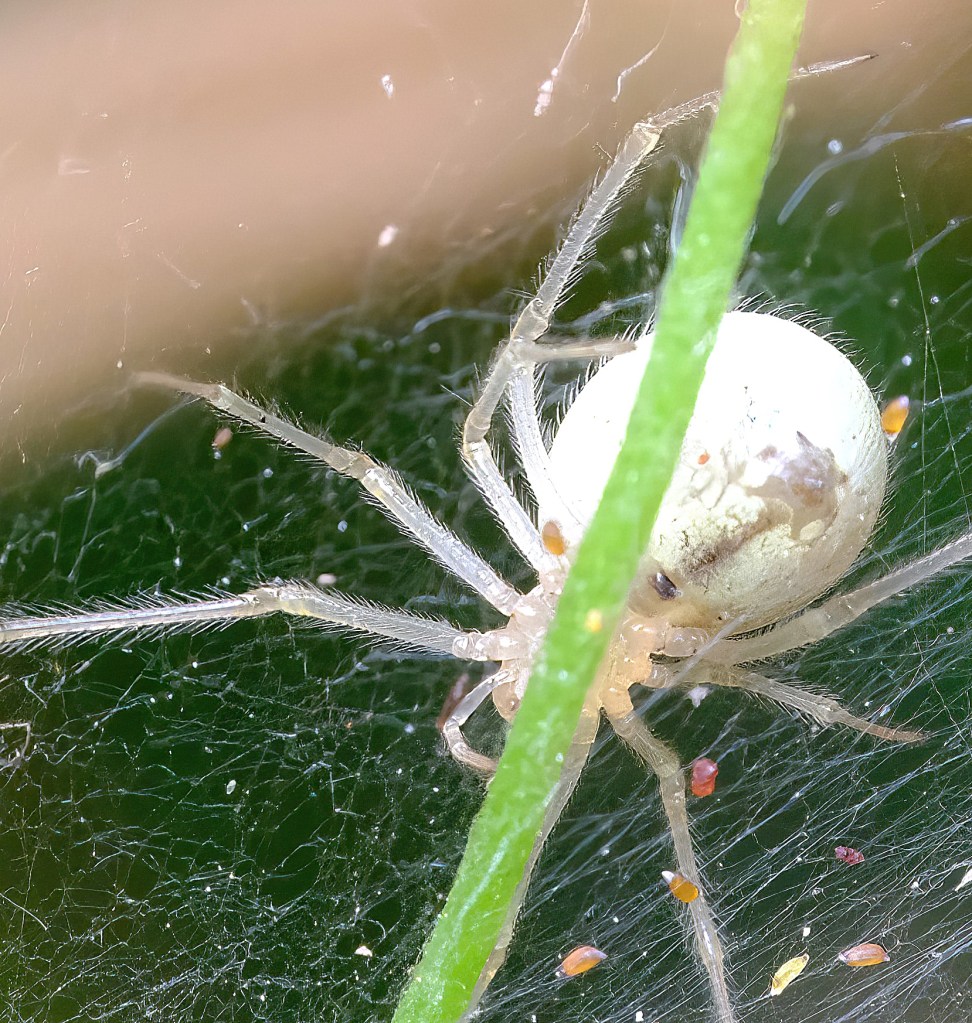
Candy Stripe spider.

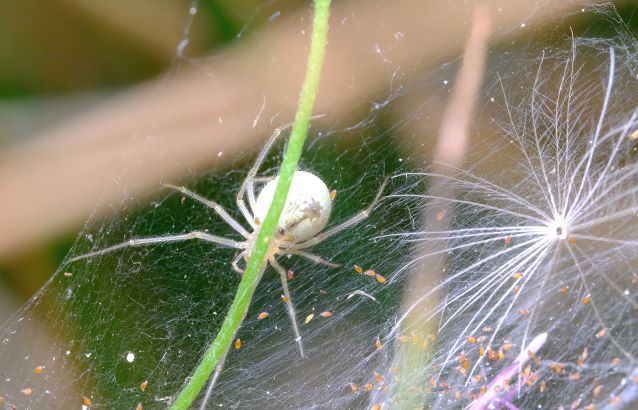
Common Candy-striped Spider Enoplognatha ovata.

This spider can reach a length of 6 mm (excluding legs), and their legs are translucent. This spider’s globular abdomen is extremely variable in colour and pattern their background colour is white/cream or green and can be marked with a row of dark spots, a broad red stripe or with two red stripes in a v-shape. Despite its small size, this spider can prey on insects many times its size. 

Egg Sack.

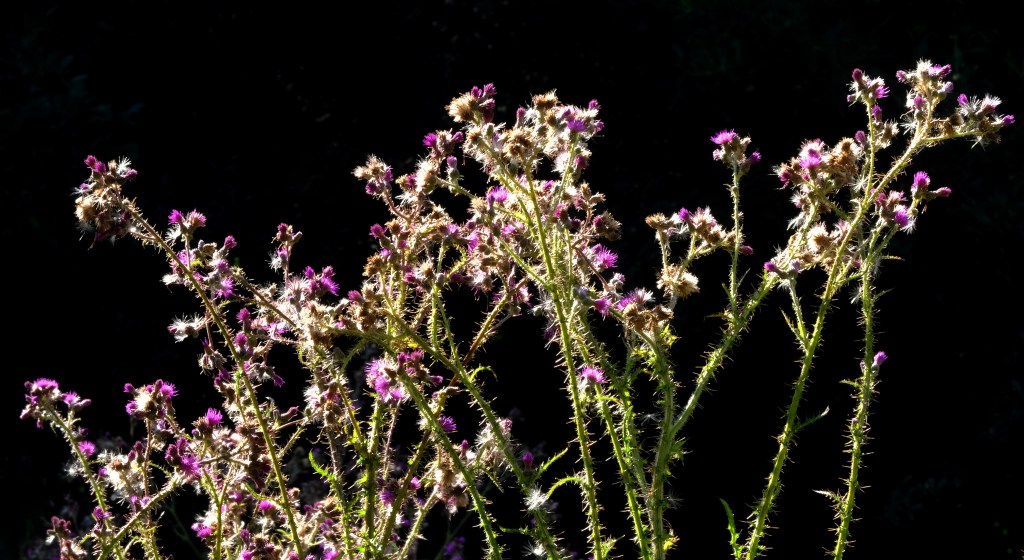
This spider was within a field of thistles.

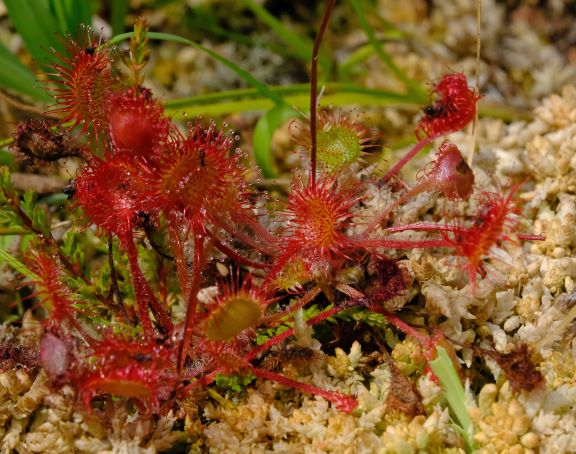
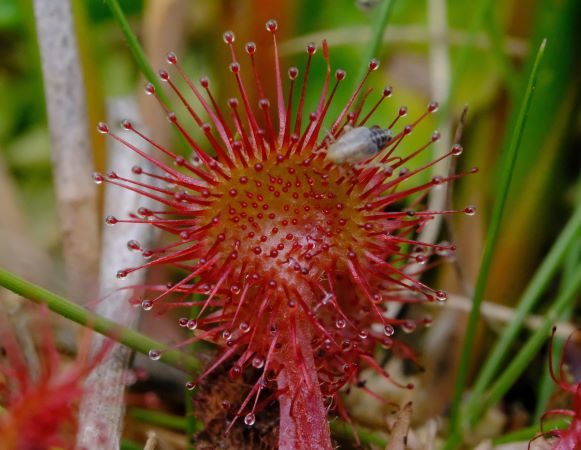
Sundew safari.

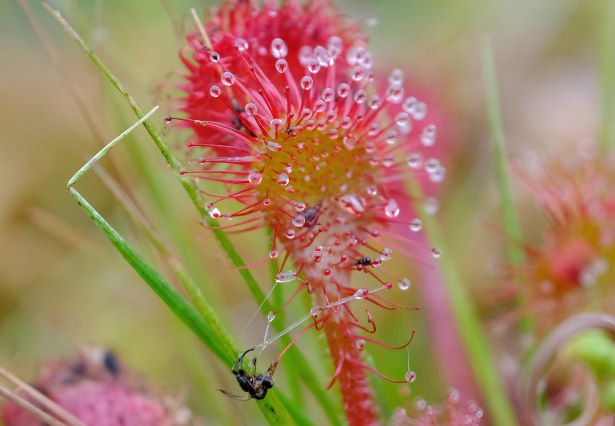
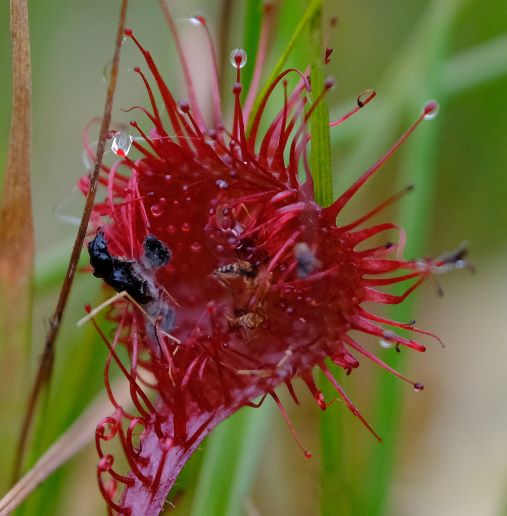
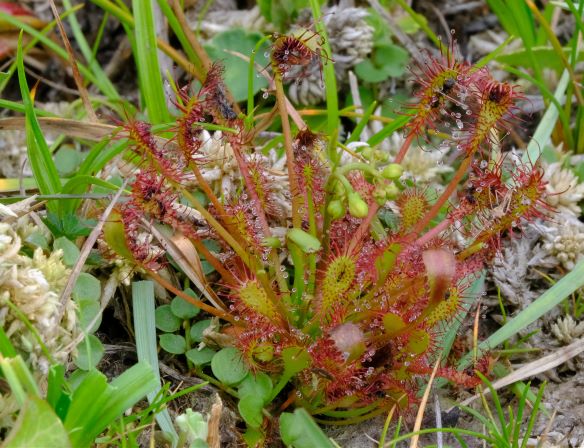
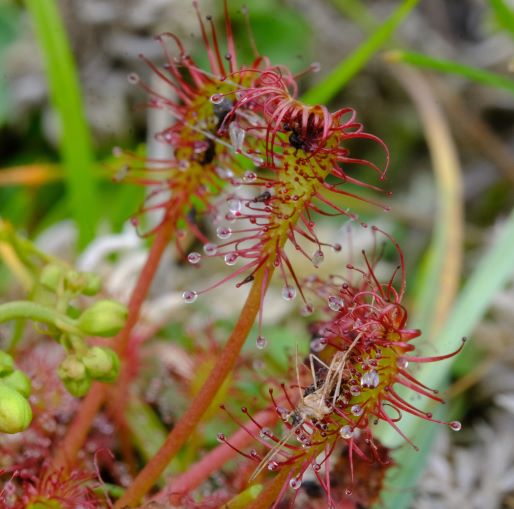
There are many carnivorous plants native to the UK. These are Sundews, Butterworts and Bladderworts. Sundews are not a common plant in southern England. However, in the New Forest, they are widespread in many of the boggy areas. In the New Forest, there are 3 types of Sundew. The Round-leaved Sundew seems to be the most abundant and as its name has a round end to the leaves, The Oblong-leaved Sundew is also fairly easy to find. It has longer, narrower leaves. The Great Sundew is twice as large as the oblong-leaved plant I have not found one yet.

You need to get down low to get a good view of these interesting little plants.

Round-leaved Sundew.

(to get a scale the pad on this plant is about the size of my little fingernail).

Sundews eat insects! They produce a sticky ‘glue’ all over the leaves; insects become trapped in the glue, the plant curls the leaf edges over and releases digestive enzymes that consume the insects, passing nutrients into the plant.

Oblong-leaved Sundew.

The picture below shows the Sundew with a flower bud.
And down came a spider.
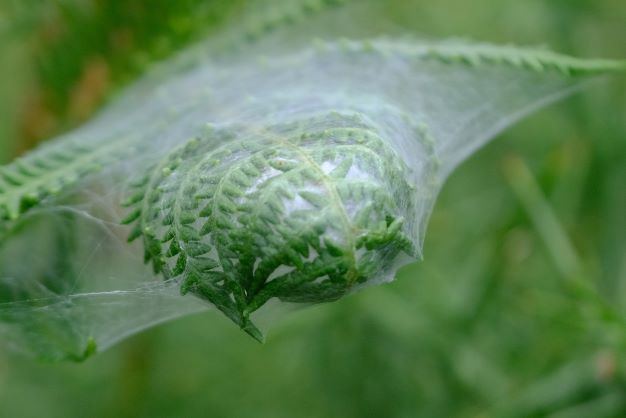
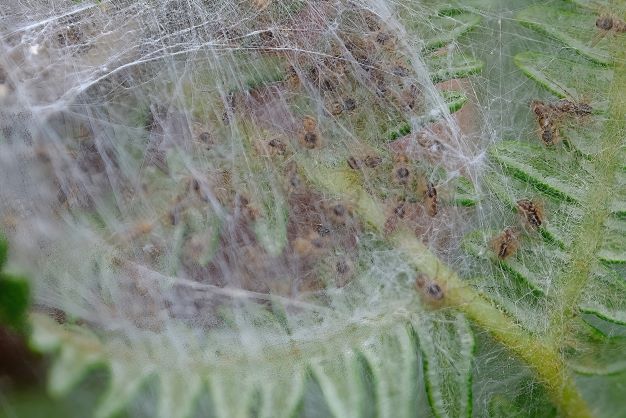
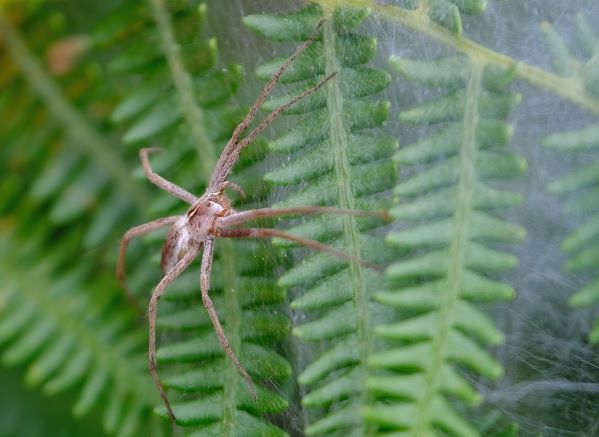
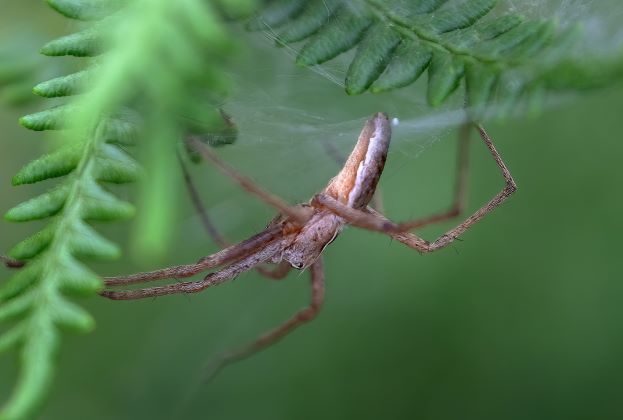
A spider’s nest on some bracken. The nursery web spider builds a nest and is very parental overseeing the eggs and carefully supporting the baby spiders when they hatch. In this nest, they have already hatched turning the leaf to look brought out the mother spider!