Another walk along the River Hamble today – yesterday we had a flurry of snow although it did not lay this morning’s walk was bitter with a biting wind blowing down the river.
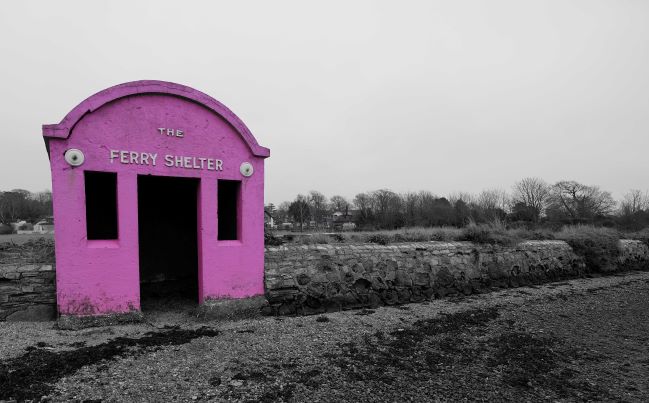
The ferry on the Hamble between Warsash and Hamble-le-Rice today is an ‘on-demand’ passenger ferry service is summoned via mobile phones – when my boys were small you had to jump up and down until the ferryman spotted you. What has also changed is the waiting shelter on the riverbank and the ferry which are all today painted a bright pink were then blue.
Records show there has been a ferry on the site dating back to 1493 when the crossing was part of a pilgrim’s route. The ferry now provides a link for local, and national footpaths such as the Solent Way and the National Cycle Route 2.
A pair of Shelduck on the mud they are large ducks that are about the size of a small goose.
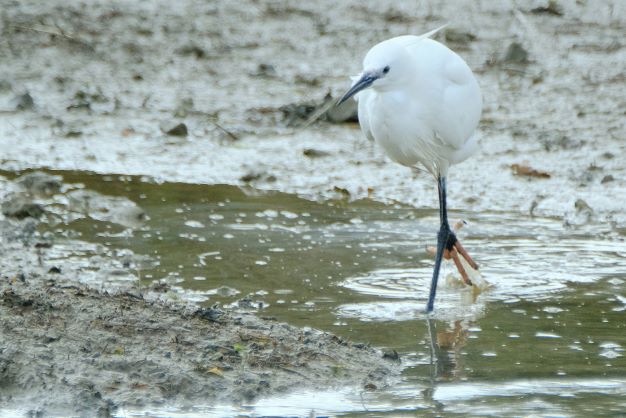
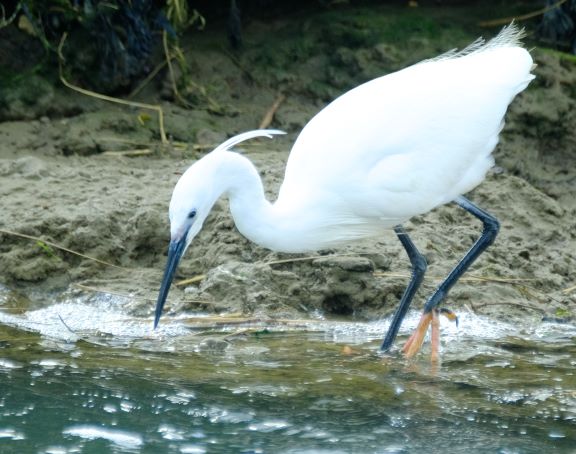
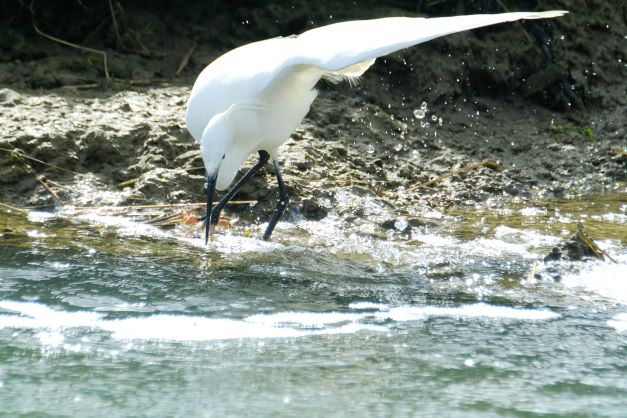
A Little Egret fishing as the tide comes in.
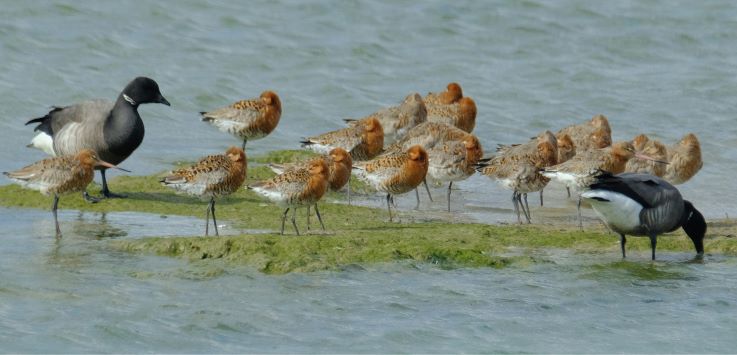
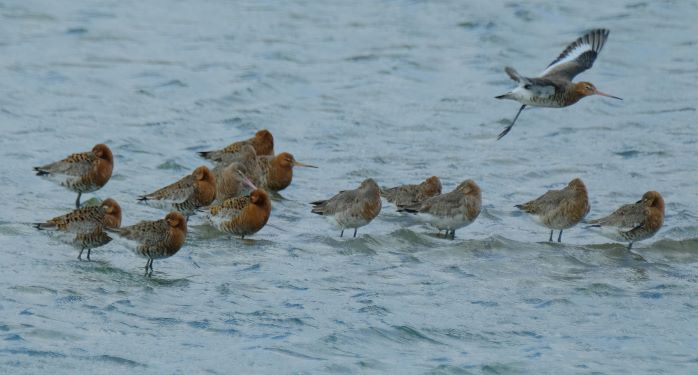
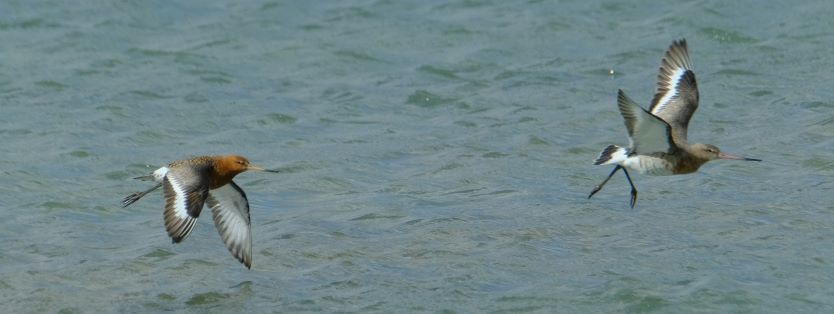
Black-tailed Godwits (+ a couple of Brent Geese) holding onto the last part of the land as the tide comes in.
Edit extra picture from one of my previous blogs. Ferry waiting hut.
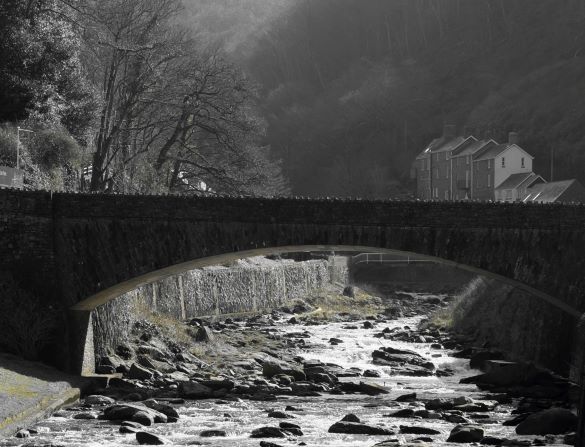
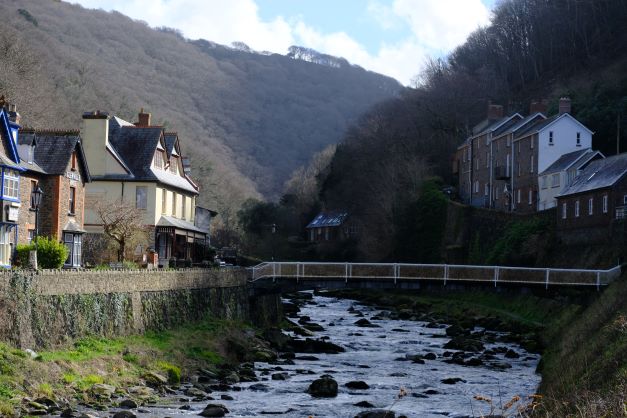
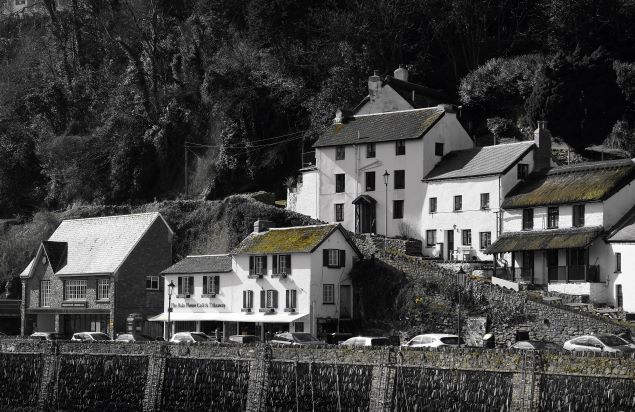
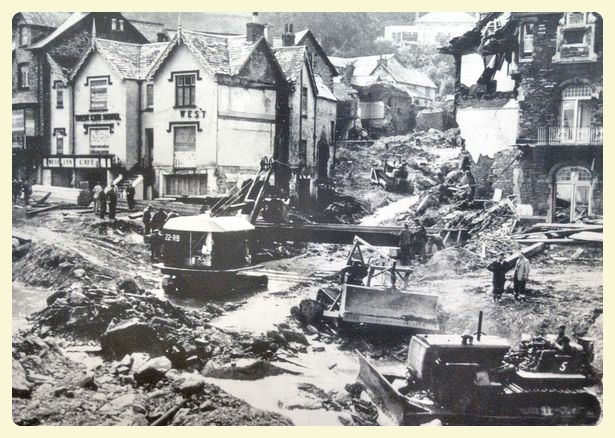
River at Lynmouth – On the 15th and 16th of August 1952, a storm broke over south-west England, depositing 9 inches of rain within 24 hours on the already saturated soil of Exmoor and Devon. Debris in the floodwaters cascaded down streams and rivers converging upon the village of Lynmouth. Above the village in the upper West Lyn valley, fallen trees and other debris formed a dam, which in due course gave way, sending a huge wave of water and debris down the river. Overnight, more than 100 buildings were destroyed or seriously damaged 38 cars were washed out to sea, 34 people died.
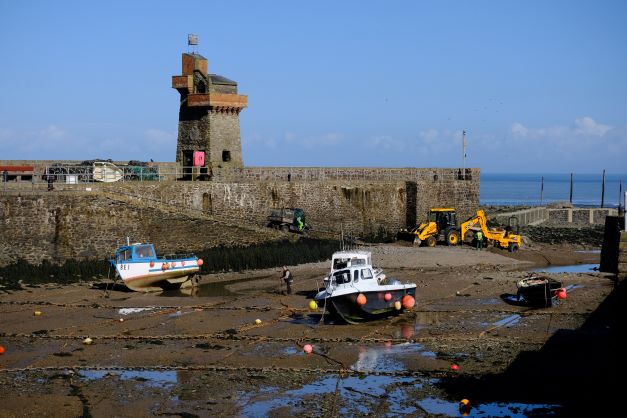
The rebuilt Rhenish Tower survived the main flood but was seriously undermined. The tower collapsed into the river the next day. A digger is in the harbour removing gravel that built up after a recent storm blocking some of the harbour.
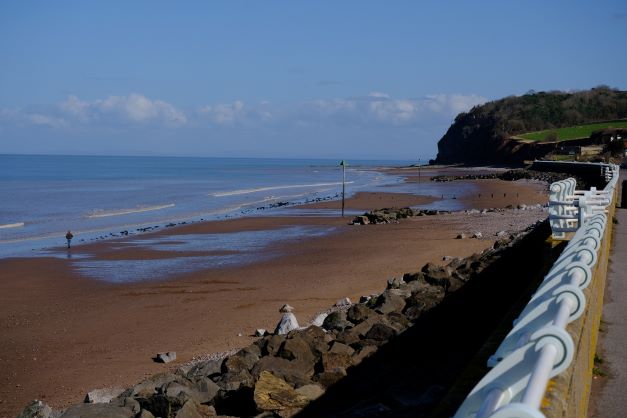
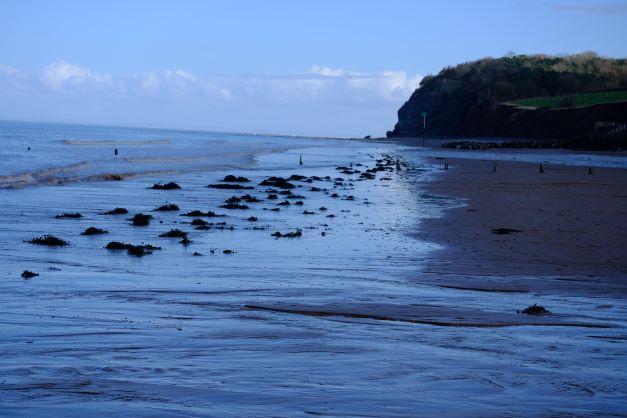
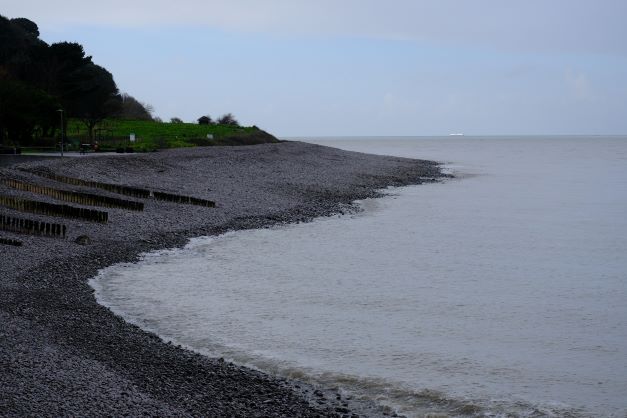
Views along the coast views of the sea at Blue Anchor and Minehead.
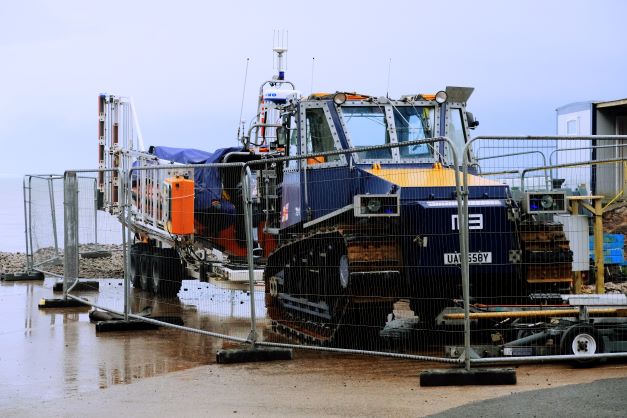
Minehead RNLI B Class rigid-hulled lifeboat and launch tractor are housed in the car park while the 1901 lifeboat house is being refurbished and extended – always ready for the call.
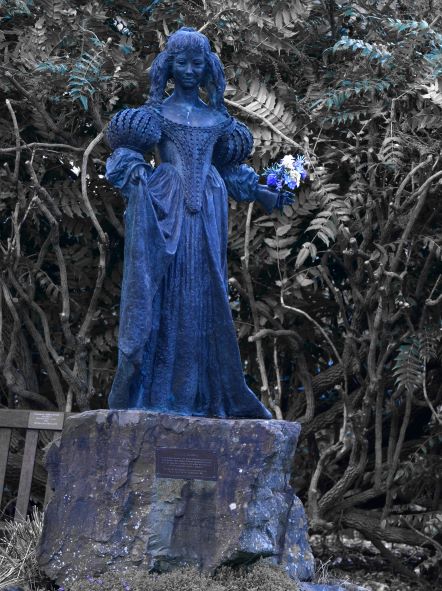
Statue of Lorna Doone at Dulverton. Lorna Doone a Romance of Exmoor is a novel by author Richard Doddridge Blackmore, published in 1869. It is a romance based on a group of historical characters and set in the late 17th century in Devon and Somerset, particularly around the East Lyn Valley area of Exmoor.
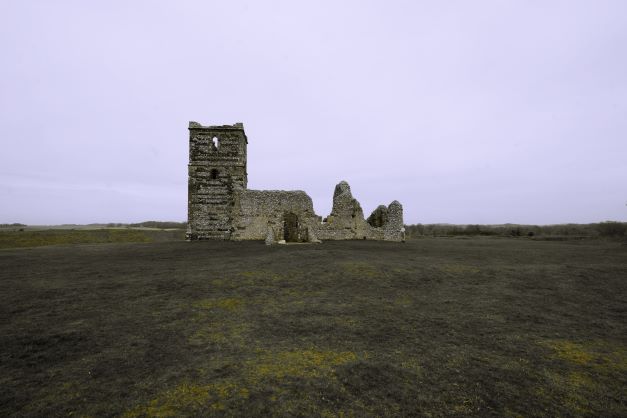
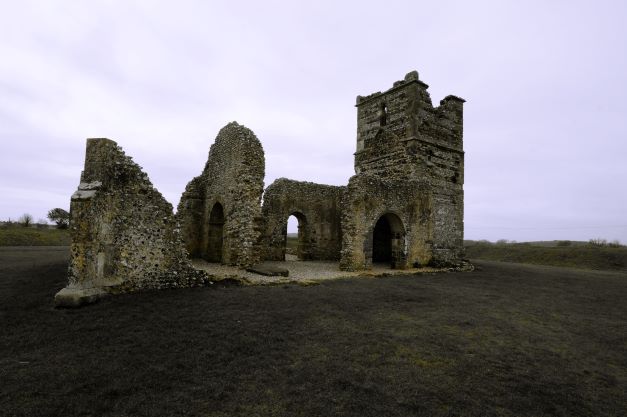
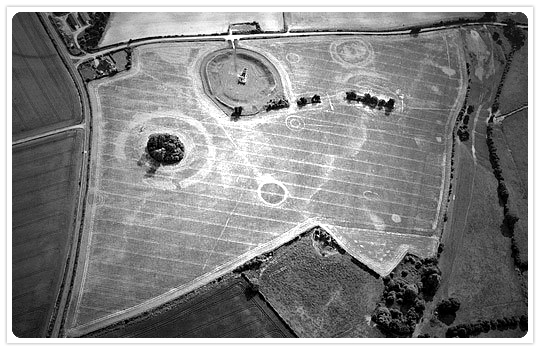
On the way home after our trip away, we stopped at Knowlton Church And Earthworks (a usual stopping place for us). Situated near the village of Cranborne in Dorset it is on a route we regularly take to avoid the city of Salisbury where there is a traffic bottleneck. The site is now in the care of English Heritage. It is an interesting historic site with a ruin of a 12th-century Norman Church situated at the centre of a Neolithic henge earthwork. Like other Christian sites, it symbolises a transition from much older sites of importance and pagan worship to Christian worship.
As well as the main earthworks the landscape around the church is a part of a larger Neolithic and Bronze Age ceremonial area most of which can now only be seen from aerial study as crop marks.
Below a picture that was taken from online shows an overview of the area and its features.
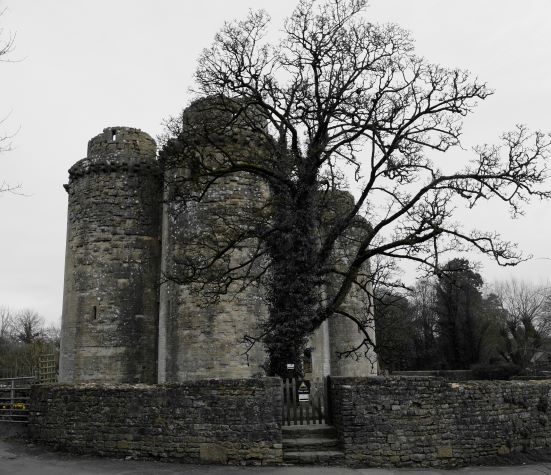
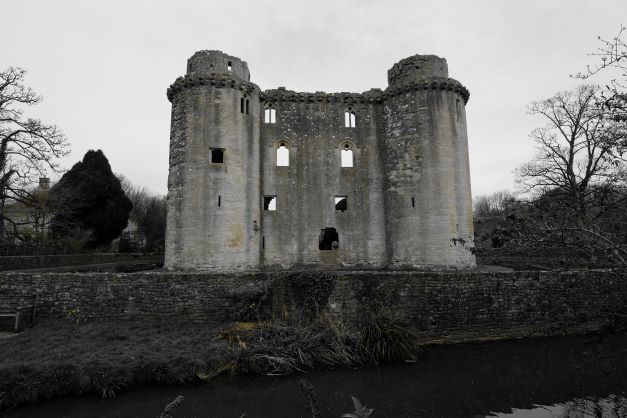
Nunney Castle in Somerset dates from the 1370s. It was built for Sir John de la Mare, a local knight. His castle was inspired by French castles seen on campaigns. The castle was modernised in the late 16th century, the castle was besieged and damaged by the Parliamentarians in 1645, during the English Civil War.
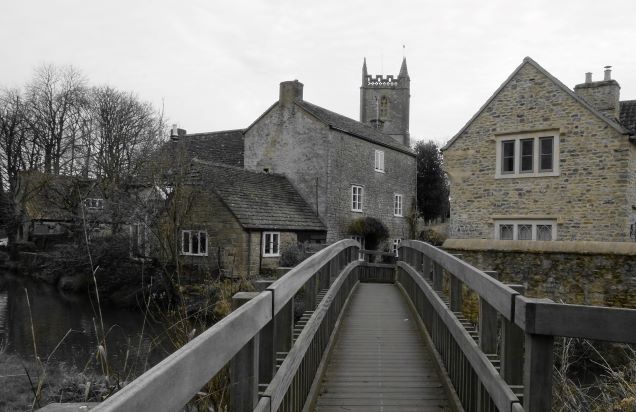
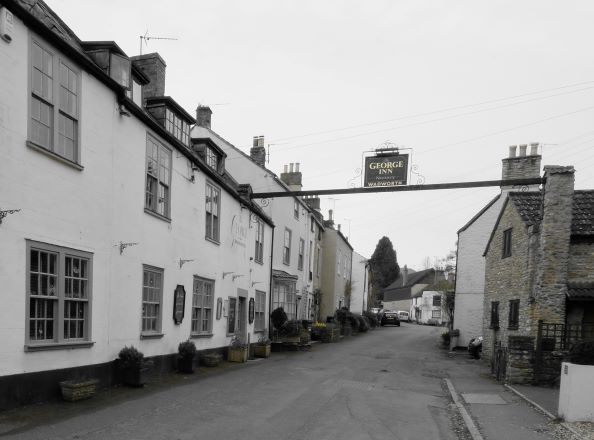
Today the ruin is picturesque the moated tower is well preserved and dominates the centre of the village.
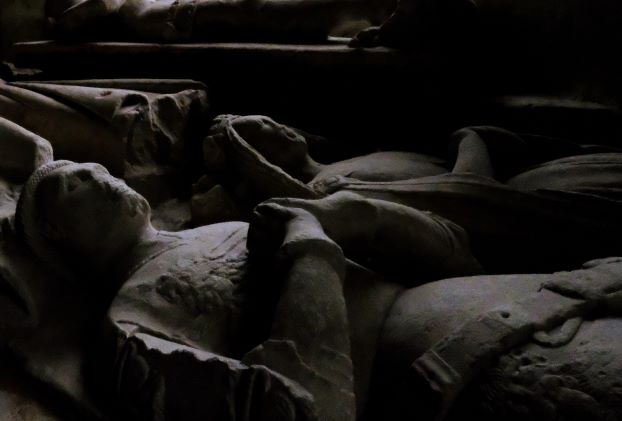
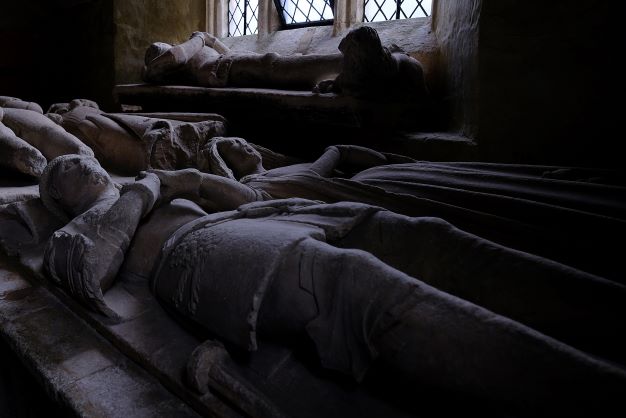
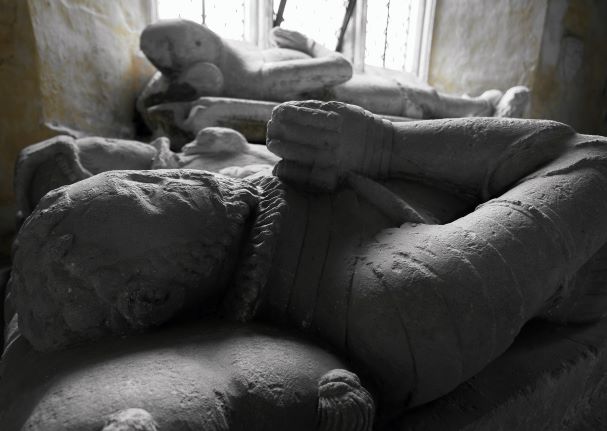
Sir John de la Mare and other lords of Nunney Castles are buried in the village church. The Church is a grade1 listed building dating from the 12th century it is said it was built on the site of an earlier church dating from an earlier Saxon or Norman Church.
Thinking of Ukraine at this difficult time and hoping for peace.
Back in 2014 on our 1st camper van tour of Scotland, we headed for the Lockerbie memorial garden the memorial to Pan Am Flight 103. On 21st December 1988 shortly after 19:00 while the aircraft was in flight over the Scottish town of Lockerbie, it was destroyed by a bomb that had been planted on board, killing all 243 passengers and 16 crew in what became known as the Lockerbie bombing. Large sections of the aircraft crashed in a residential street killing 11 residents.
After leaving the town we saw a road sign to Ukrainian POW Chapel so we followed it to find out more. Away from the town were remains of a few huts (which numbered about 40 originally). One of these huts had been converted into a chapel by the prisoners.
Looking around it was all closed up, but before we left an old car turned up and an elderly gentleman turned up and unlocked the chapel.
He told us that the camp held 400 Ukrainian prisoners of war who had fought with Germans on the Russian front against the Red Army. The hut that had been turned into a chapel was looked after by him. He also had a small museum in a caravan he took the time to tell us about the history of the camp. The prisoners left the camp during the day to work on local farms and return there at night. When the war ended the Russians occupied Ukraine. The prisoners could not return home as they would have been sent to the gulag or executed. The camp closed in 1947 and many prisoners had become part of the community. The man who looked after the chapel’s father was one of the prisoners and had married a local woman.
A few years later we visited again but the chapel was locked up. I was told with the failing health of the caretaker the chapel remained closed for a while.
Today looking online it appears services are still held at Hallmuir chapel on the first Sunday of each month and the building again is also used for marriages of members of the Ukrainian community.
The inside of this simple hut is ornate and reflects the Orthodox Catholic religion of the people who lived in the camp and built it.
A walk around Southampton this morning. The Town of Southampton became a city in 1964.
Parking up at Mayflower Park a short walk takes you into the old part of the town.
The view from the park is a great place to watch ship movement in and out of the port.
Just outside the park by the city wall is the Mayflower Memorial It commemorates the sailing of the Pilgrim Fathers to America in the Mayflower and Speedwell in 1620. The monument is a 50 ft high column of Portland Stone, surmounted by a cupola and a copper model of the Mayflower.
The old customs house and the Wool House which is is a medieval building which was built to serve the wool trade
Westgate from Westgate Street (inside the town wall looking out).
Old houses by the Westgate.
The Duke of Wellington pub in Bugle Street is a historic building with some old beams dating back to 1220.
Said to be Southampton’s most important historic building, Tudor House is now a museum. The timber-framed building in St Michael’s Square was built in the late 15th Century. King John’s Palace, an adjacent Norman house is accessible from Tudor House Garden, it dates back a further 300 years.
Opposite Tudur House is St. Michael the Archangel Church it is said to be the oldest building still in use in the city. The spire was first built in the 15th century and then reconstructed in 1732. In 1887, to make it a better landmark for shipping, a further 9 ft was added to the blunt shape, It is now 165 ft.
Much of Southampton was devastated by the German bombing in WW2. Although the other churches in the central town, Holy Rood and All Saints, were both destroyed in 1940, St. Michael’s escaped with only minor damage. It is said the spire was used by the German bombers as a landmark and their pilots were ordered not to hit it.
The remains of Holy Rood Church now a merchant navy memorial
The church around 1900 before its destruction during the Blitz.
A victorian view of the city – note the church spires
Within the walls of Southampton was a castle but the site today is built on and only parts of the outer wall remain.
The Bargate is another gate to the old town.
Lions guard the gate into the old old town.
The Bargate (inside the town looking back).
Views from the old walls. In the sea in the past came up to the walls but the land now is reclaimed. The views included some nice Victorian House on the walls and the modern shopping centre.
Further away from the old town is an old Gasometer a listed structure but is under threat as the city wants the old gas works land to be redeveloped. A victorian structure to store coal gas. These structures once common in the UK are disappearing from the skyline quickly. These large containers in which coal gas was stored near atmospheric pressure at ambient temperatures. The volume of the container follows the quantity of stored gas, with pressure coming from the weight of a movable cap. As a child they fascinated me how the cap would move up and down. During the Blitz they were kept low due to the risks from bombing if they were hit when full.
An early picture of Gasmeter when full.
Before leaving my walk around the historic parts of the city I had to check if the Parrots were about and they were.
Ashlett Creek is a tidal inlet on the New Forest side of Southampton Water near Fawley. The creek is only accessible at high tide. There has been a mill on the site dating back to medieval times. The mill is a Grade II listed building that was built in 1816 and milled corn until it closed around 1910. Ashlett mill was a tidal mill – a mill driven by tidal rise and fall. The tide comes in, it enters the mill pond through a one-way gate, and this gate closes automatically when the tide begins to fall. When the tide is low enough, the stored water can be released to turn the mill wheel. Flat bottomed sailing barges were used to load and unload grain, salt and other supplies. A Victorian Quay was built in 1887 to celebrate Queen Victoria’s Golden Jubilee.
The Mill.
Mill pond.
The Jolly Sailor, a 160-year-old pub is an old smuggler’s inn near the mill.
A return to the New Forest. We Parked up again at Eyeworth Pond – watching the pond with a cup of tea until the rain stopped before heading into the forest to the North-East following the track from the old Gunpowder Mills this road was built to allow the explosives to be transported away from the factory safely avoiding the small village of Fritham.
A little way along the track you pass a fenced spring. Known as “The Iron Wells” shown on maps dating back to the late-18th century. Marked on today’s Ordnance Survey maps as “Irons Well (Chalybeate)”. The water is impregnated with iron salts and is the colour of rust.
The waters are said to have curative properties particularly helpful for sore eyes, gout and other ailments, including leprosy. The spring was also known as Lepers’ Well, it is rumoured a house of rest for those suffering from leprosy was close to the well. Looking at the spring I decided not to take the waters on this visit!
No deer to see on our walk today.
.
Back at the pond lots of birds as always – but the Mandarin ducks steal the show with their bright colours there seemed to be 5 males and 3 females present again. – lots of photographs at the end of this post.
Male Blackbird.
Song Thrush.
Pied Wagtail.
A first for me today was a Brambling. Not the best picture of this female bird but given I have never seen one before I am happy with this attempt.
A Male House Sparrow.
On the way home, we spotted lots of Snow Drops an early sign of spring.
A circular walk today in the New Forest starting and ending at Eyeworth pond.
History.
The pond was created by the Schultze Gunpowder Company as a reservoir to hold the water needed during the manufacturing process – it is estimated it held 6 million gallons of water. Work started on the factory in 1860. By the late 1890s the Company employed upwards of 100 people and there were some 60 buildings. The factory continued in operation under new ownership until 1921. The manufacturing of explosives deep in the forest away from the local population reduced the risk to the public. Today the reservoir remains although the factory has gone, it remains as a feature and wildlife habitat. Little other evidence of the factory survives, although the superintendent’s and gatekeeper’s houses remain and are private residences.
Birds. on the pond.
2 female Goosanders were on the far side of the pond ( I have seen males here as well in the past but not today). Goosanders are diving duck, they have long, serrated bills, used for catching fish. They 1st bred in the UK in 1871. ( These ducks are known as Common Merganser in the USA).
Mandarin ducks have for many years been a regular bird on Eyeworth pond. They always draw a crowd, they were introduced to the UK from China in the 20th century and have become established following escapes from captive collections. In the UK there are now said to be about 2,300 pairs and according to Wikipedia the population in China is only 1000 pairs.
Moorhen.
Woodland Birds. around the pond.
A woodland favourite is the Blue Tit.
Marsh Tit.
Great Tit.
Robin.
Dunnock
Dunnocks are also known as the ‘hedge sparrow’, although they are not actually a sparrow. They’re actually the only UK member of a bird family called the accentors. The dunnock is also commonly mistaken for a female house sparrow. Dunnock is derived from the Old English word for ‘little brown’. This is because they do look drab from a distance but close up they are quite pretty with a mottled blue-grey breast and face.
Deer.
Fallow deer are the most commonly seen deer in the New Forest currently numbers are maintained at about 1,300 Following the Norman Conquest of Britan ,the New Forest was proclaimed a royal forest, in about 1079, by William the Conqueror. Fallow deer were brought into the forest for the hunt. Forest Law, reserving the pursuit of beasts within it exclusively for the king and his officers.