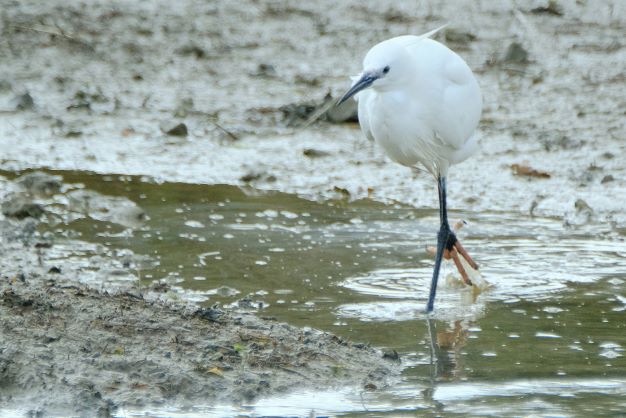
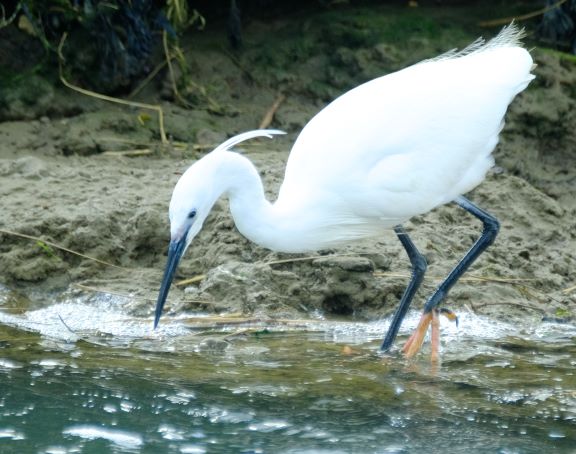
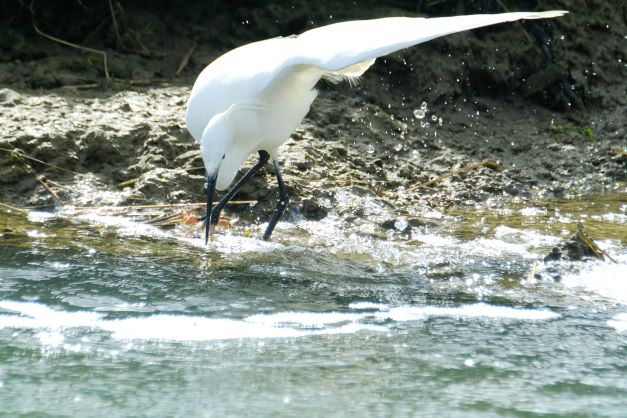
It has been a while since I have had the chance to observe a Little Egret fairly close to me – so I was pleased to see this bird today and get some pictures.
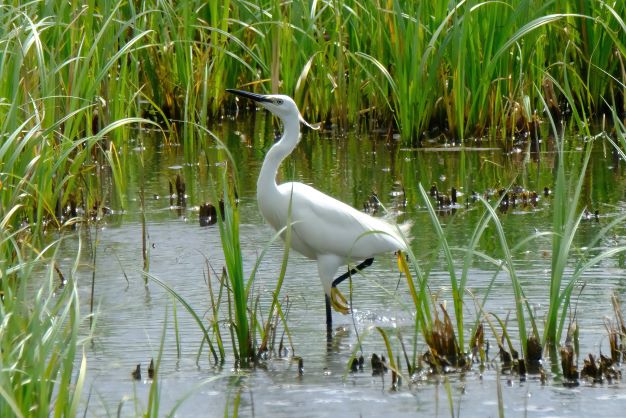
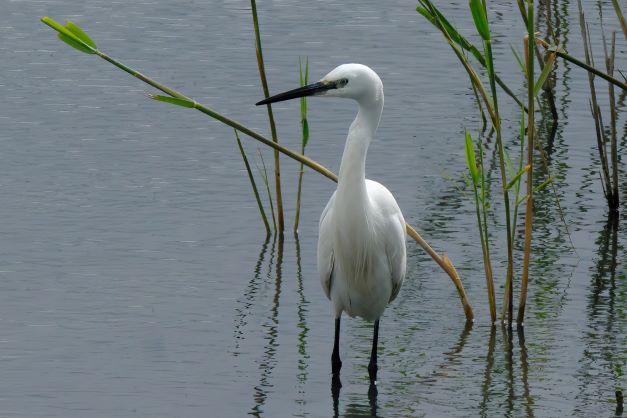
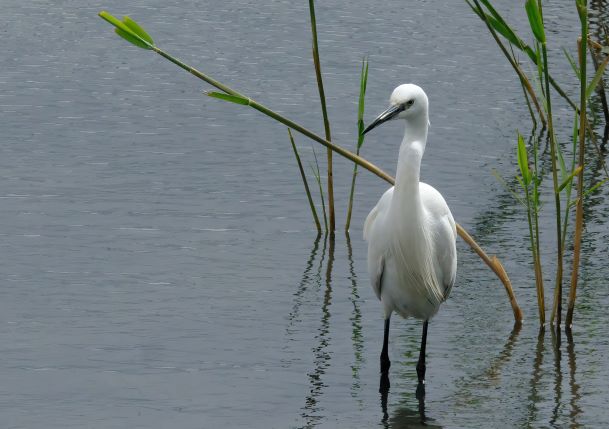
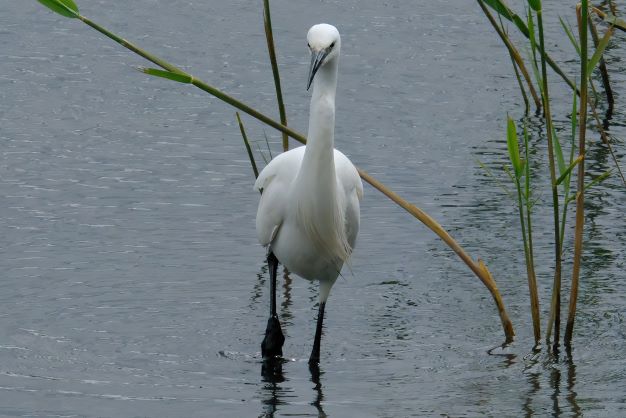
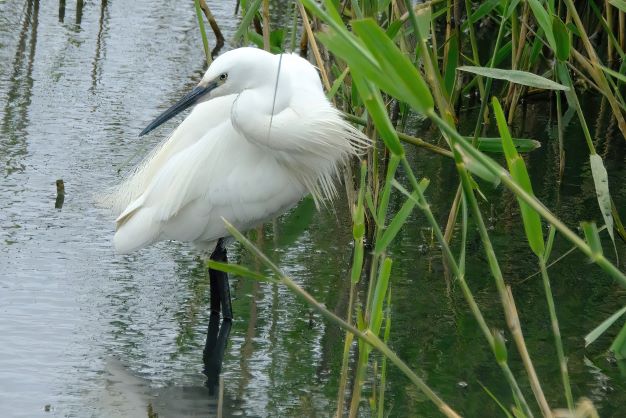
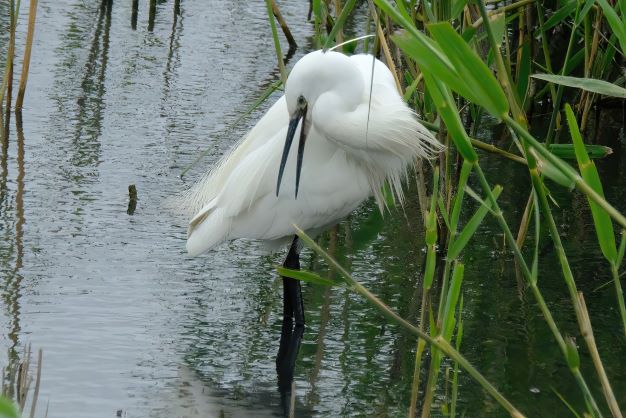
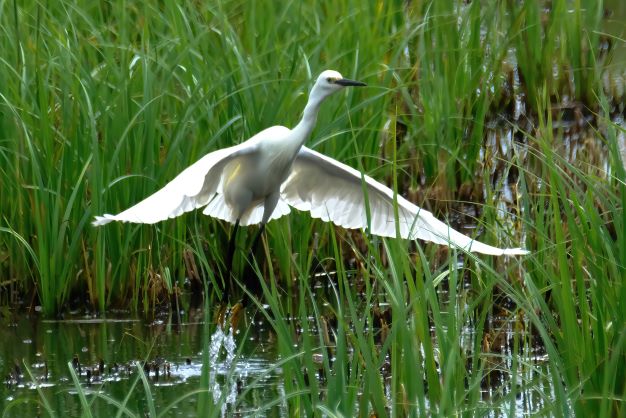
It has been a while since I have had the chance to observe a Little Egret fairly close to me – so I was pleased to see this bird today and get some pictures.
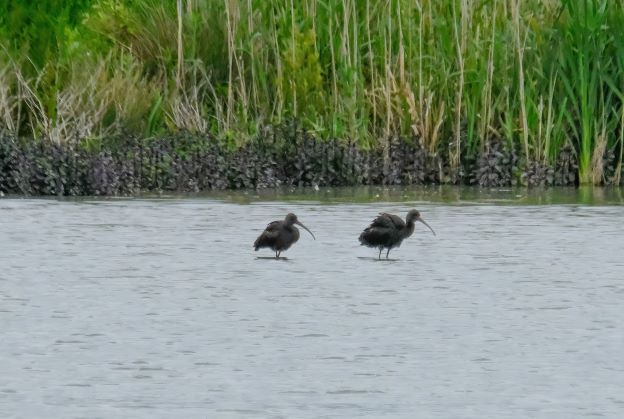
More from Titchfield HavenNature Reserve and today I had another 1st for me with a distant view of a pair of Glossy Ibis. In the UK they are considered rare migrants and winter visitors from SW Europe with typically less than 100 recorded per year although they are increasing – there have been recent reports of this bird on social media on nature reserves near Portsmouth and on the coast of the New Forest. Southampton Water is between these two reserves so I guess a sighting at the Haven was likely.
Both birds were a fair way off but I got a few pictures and a short video.

Lots of Black-headed gull chicks are hatching on the islands in the reserve. Many are at their spotty cute stage but as they grow they become rather ugly. A bit like the opposite of the “there once was an ugly duckling” poem by Hans Christian Andersen!
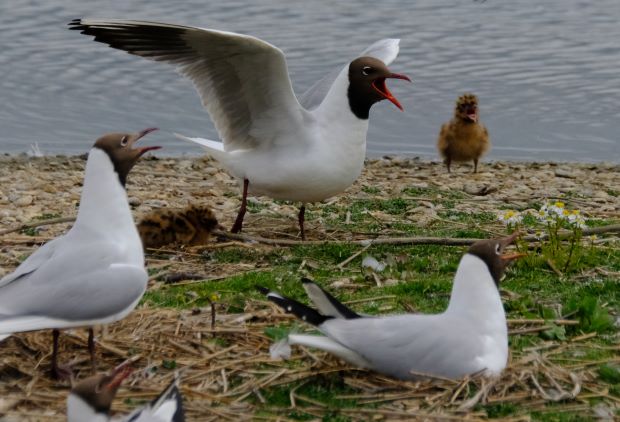
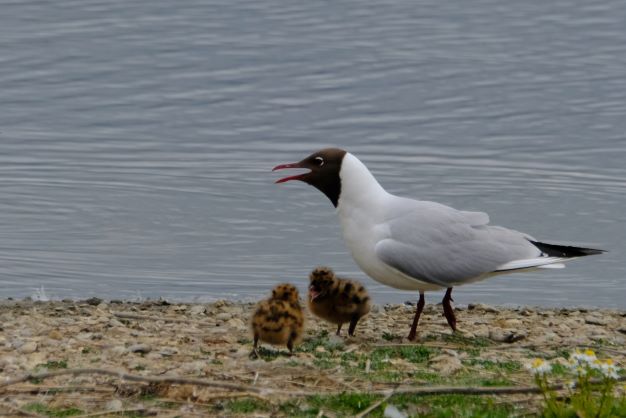
The chicks are in constant danger of predation. Herring Gulls and Black-backed gulls. They fly over the nests putting the Black-headed gulls into a frenzy below a Lesser Black-backed gull lands in the colony but is chased off before it can catch a chick for a meal.
(Spot the Lesser-Black-backed gull -yellow legs feet and beak).

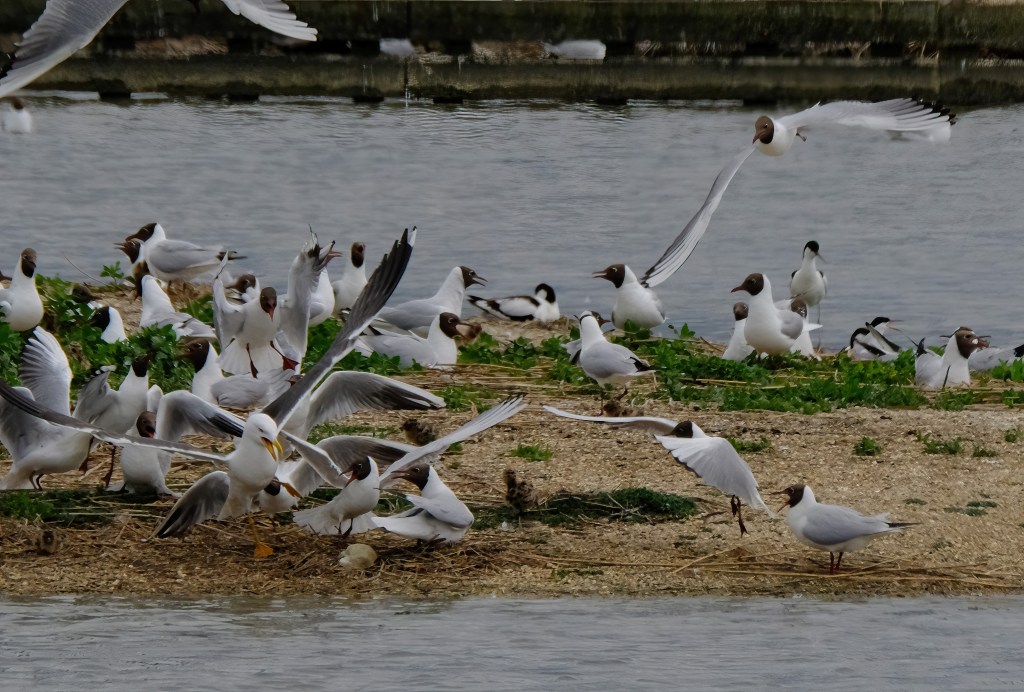

There are a lot of Avocets in the reserve at the moment a few have chicks but are hard to spot at the moment.
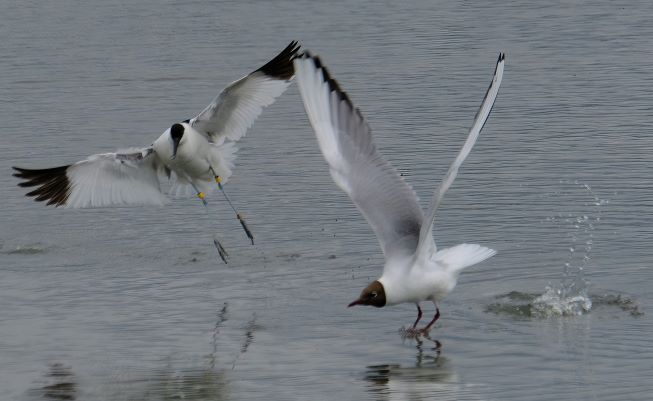


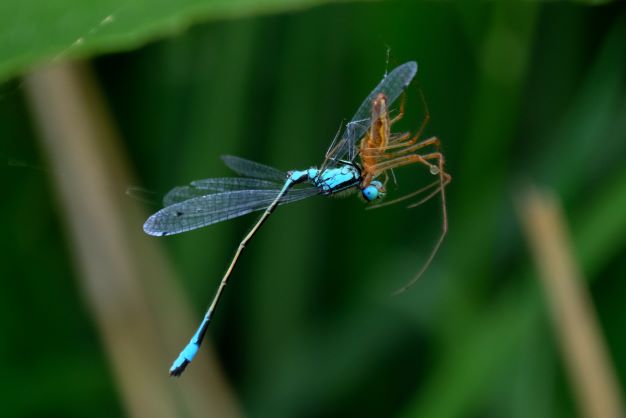
A spider catches a damselfly. The damselfly is truly stuck in the spider’s web the spider drops down and closes in for a meal.
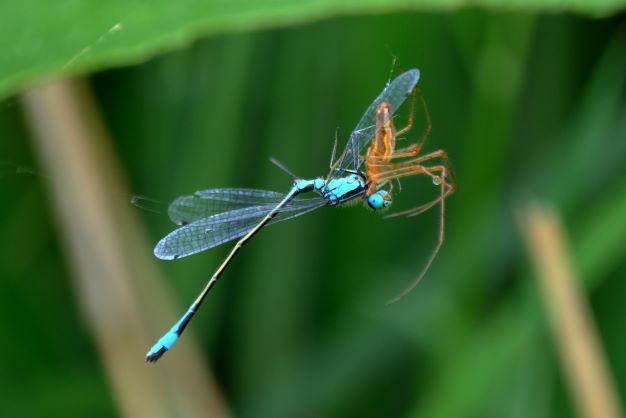
Common Blue Damselfly is the UK’s most common damselfly and can be found around almost any water body,
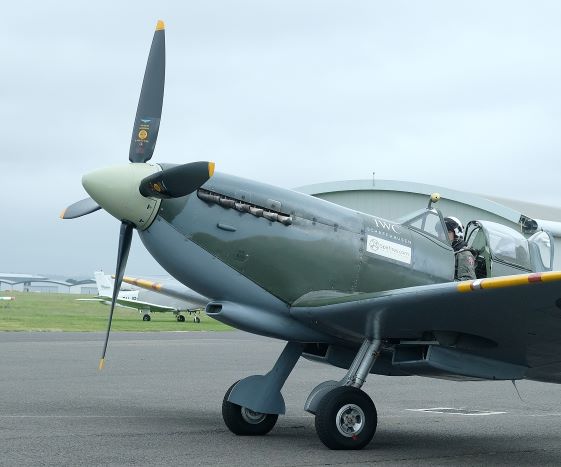
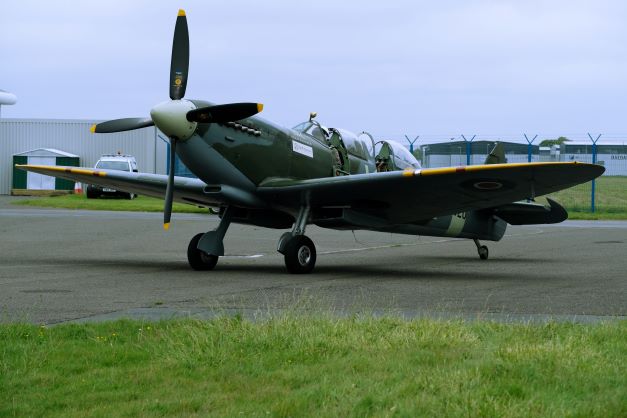
Timeslip, Solent Spitfires.
Spitfire at Solent Airport. Lee on Solent Hampshire.




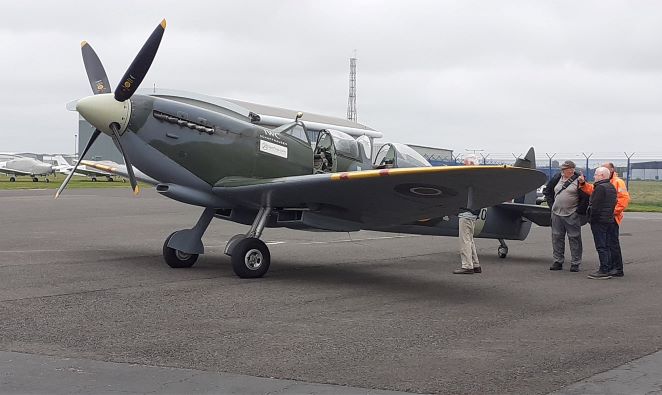
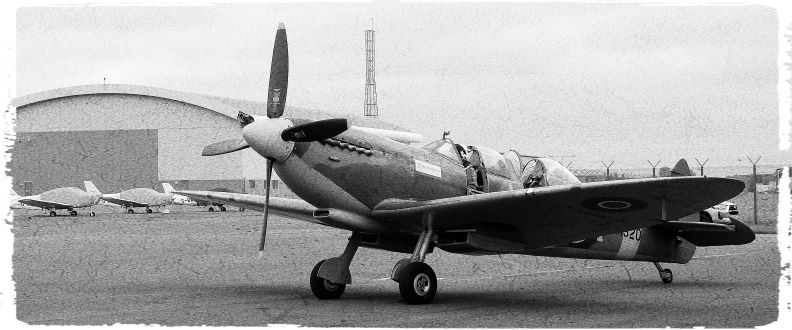
A day at Titchfield Haven nature reserve & Meon shore enjoying the sunshine and nature. There are real signs of summer with birds nesting and young birds in many areas.
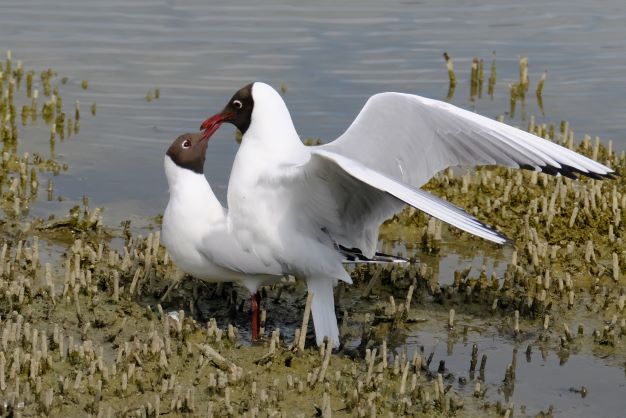
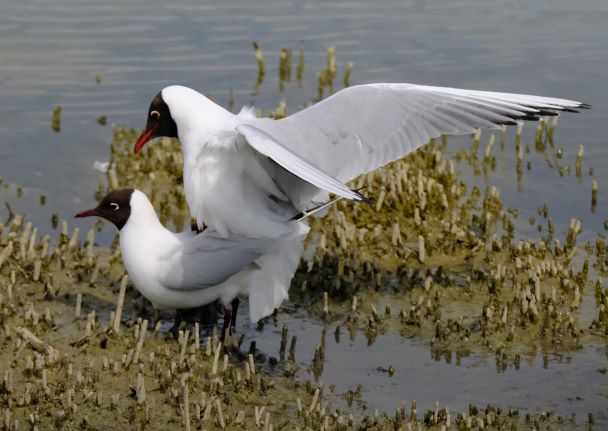
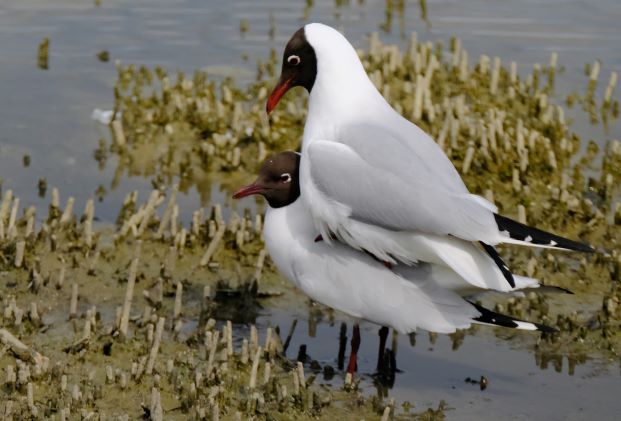
Blackheaded Gull are sitting on nests and on eggs, others have fluffy chicks {not close enough to film yet}
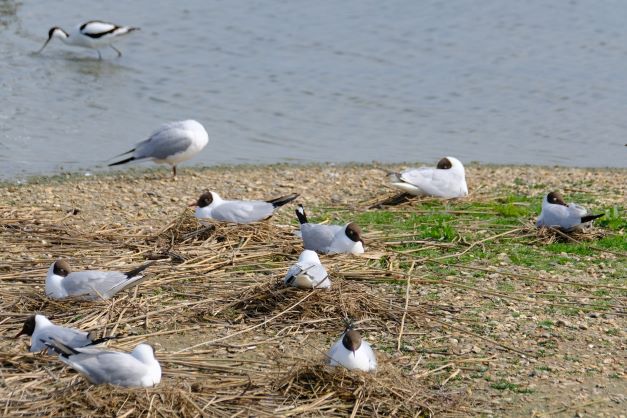
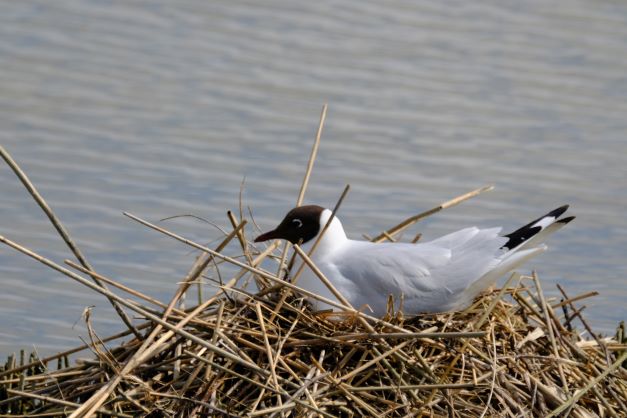

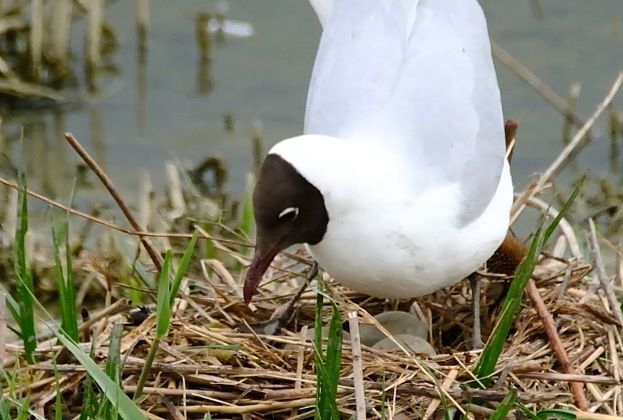
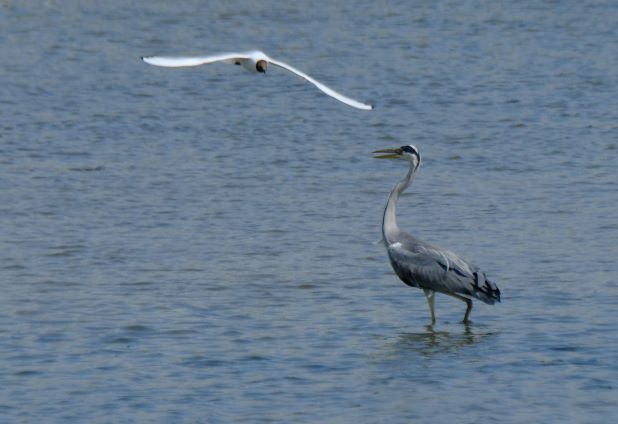
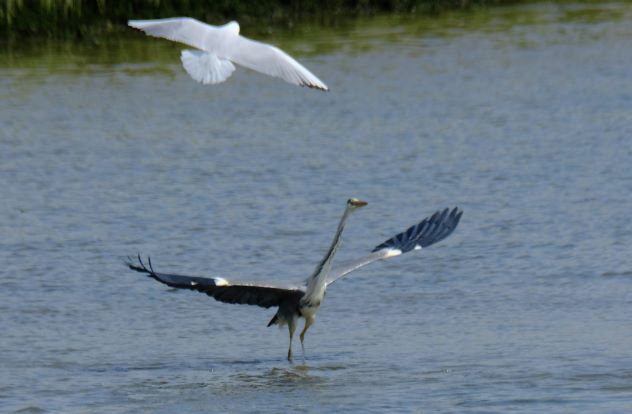
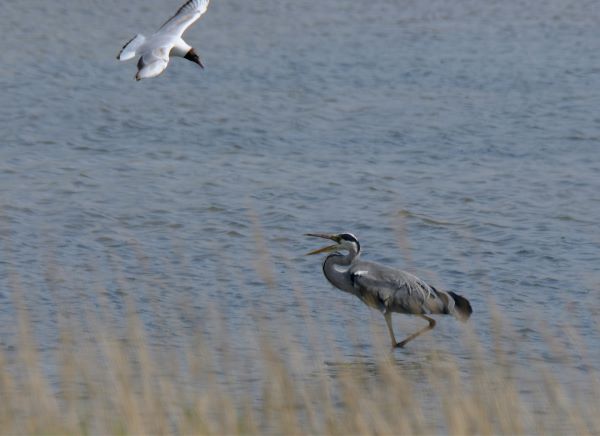
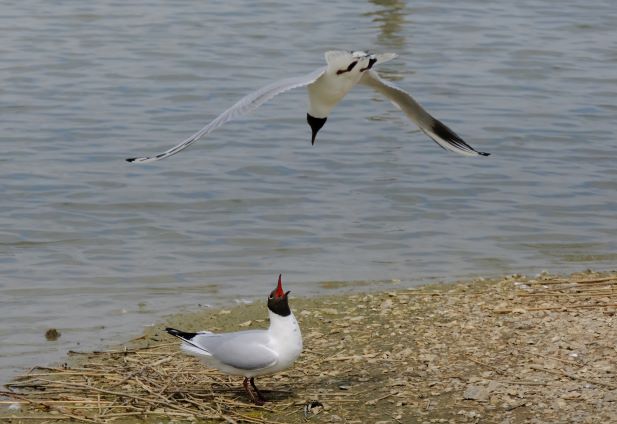
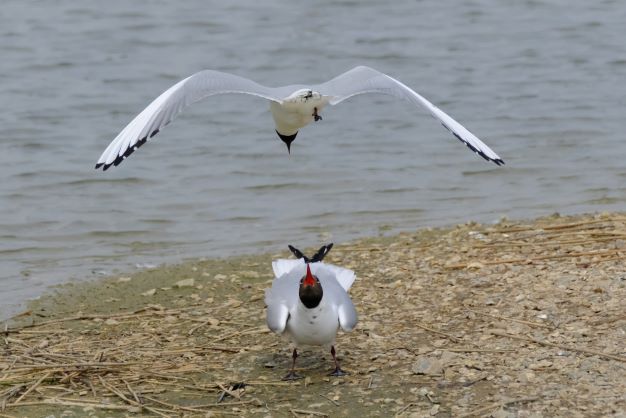
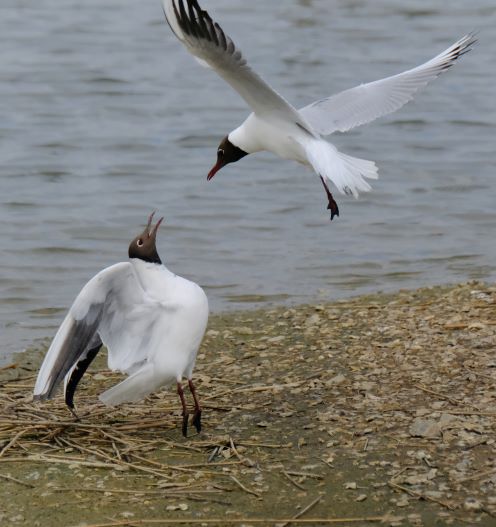
The gulls are very territorial in their nest areas and will chase off any invaders such as the larger Herring Gulls which will grab a chick for a quick meal. The pictures below show a Grey Heron being buzzed and steered away from the gull’s nests.

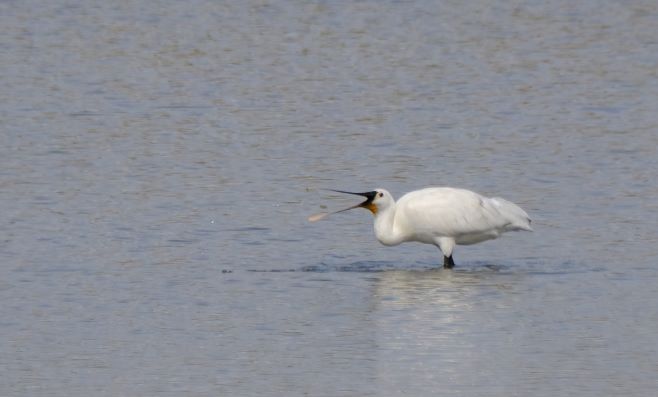
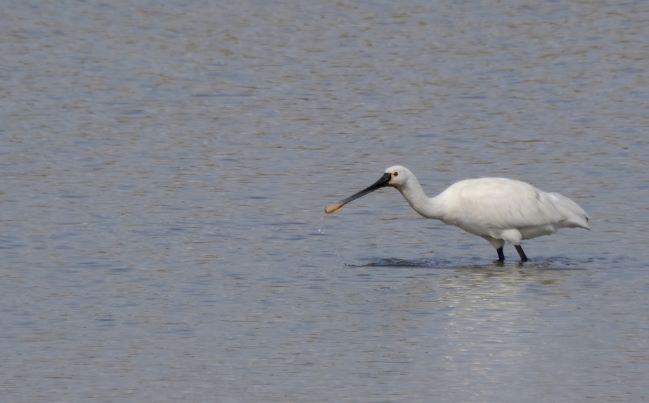
Over the weekend a pair of Spoonbills had been spotted in the nature reserve. There have been a few birds this year on the Beaulieu River across the Solent on the edge of the New Forest. Today one of the birds was still there and I was able to get a good view and some pictures. Spoonbills are named after their bizarre spatula-like bill. Young birds are known as tea Spoons. Although these birds bred in East Anglia during Medieval times, they had not bred in Britain for over 300 years. Then in 2010, when a small colony was discovered on the north Norfolk coast. By 2014 a flock of 30 birds were recorded in Norfolk ay Cley Marshes.


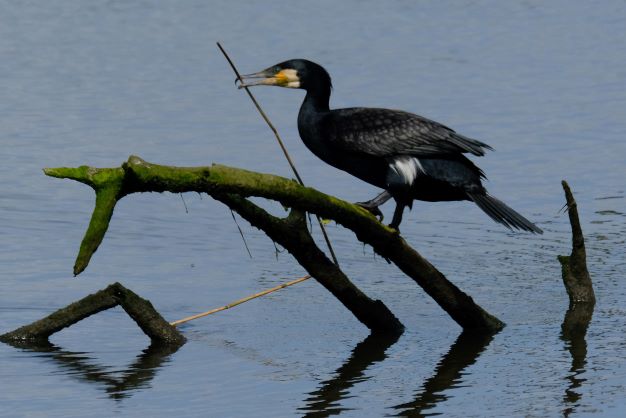
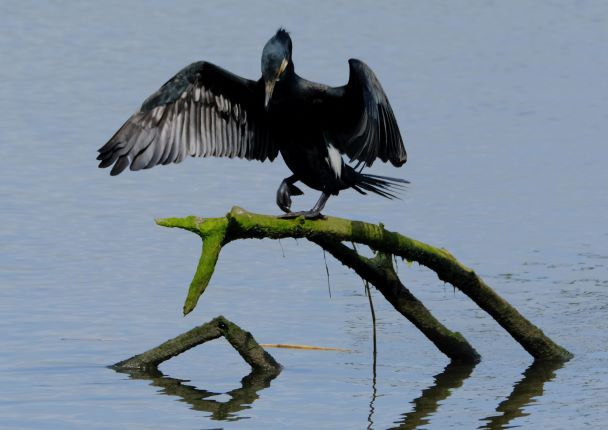
Cormorants are often spotted perched with their wings held out this is to dry their feathers off which are not waterproof.

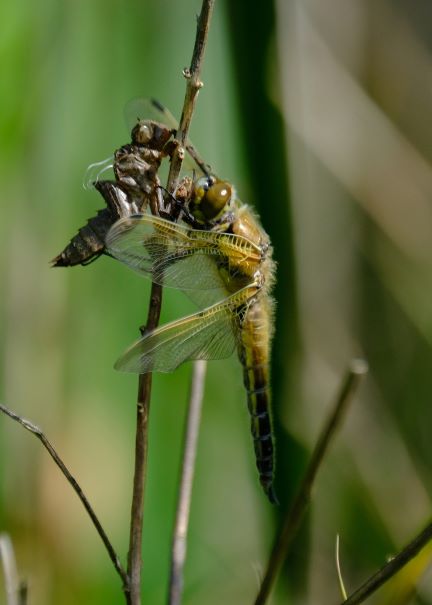
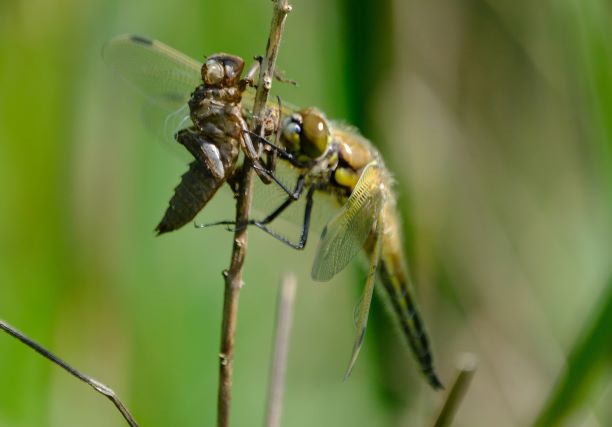
Dragonflies are starting to emerge, They have three stages in their life cycle: eggs which are layed under water these hatch into a lava{or Nymph} some species will remain in the lava stage and stay for in this state for several years. The final stage is the lava leaves the water and the dragonfly emerges. On the wing their life is short they mate and by the end of the summer they have gone.
This was a 1st for me a dragonfly just emerged from the lava drying its wings while perched by the empty husk of the lava.

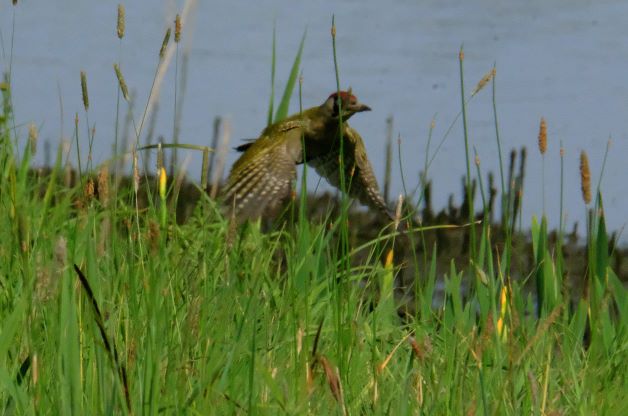
A quick view of a green Woodpecker.

Wintering in southern Africa. Wheatears have one of the longest migration routes of any songbird.
Birds spotted in the UK are summer visitors and passage migrants. Some birds do breed in the UK these are mainly found in western and northern Britain and western Ireland, although smaller numbers do breed in southern and eastern England.
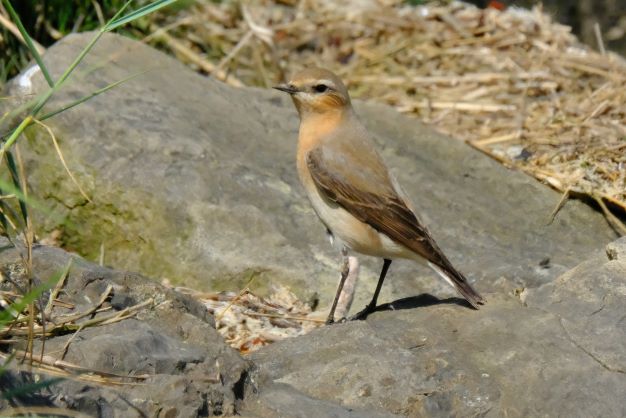

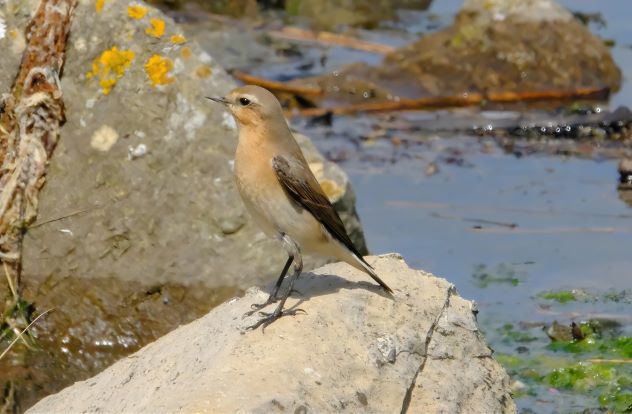
This bird is a female I spotted today at Calshot point Hampshire this morning.
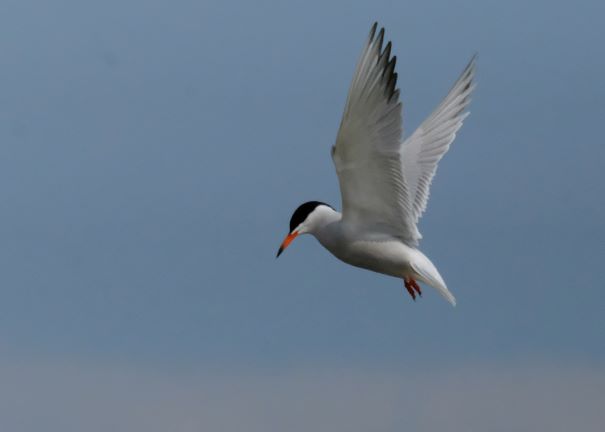
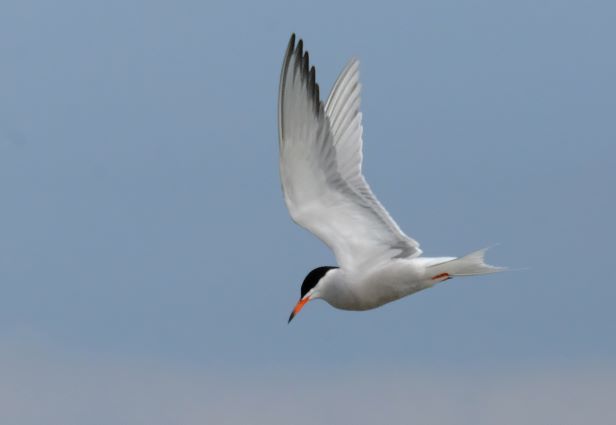
The terns are back in town. Common Terns have arrived back at Meon Shore on the Solent and will be heading into Titchfield Haven Nature Reserve soon to nest.

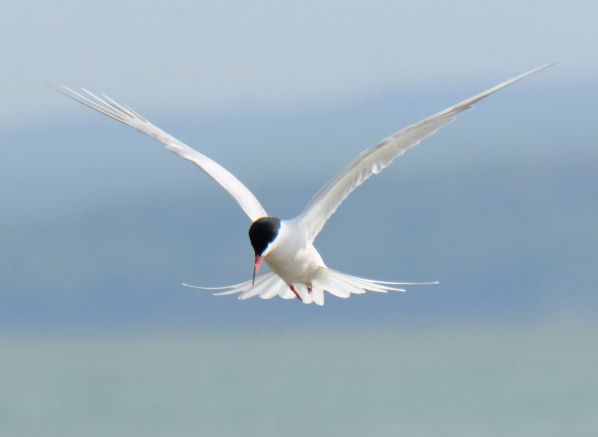


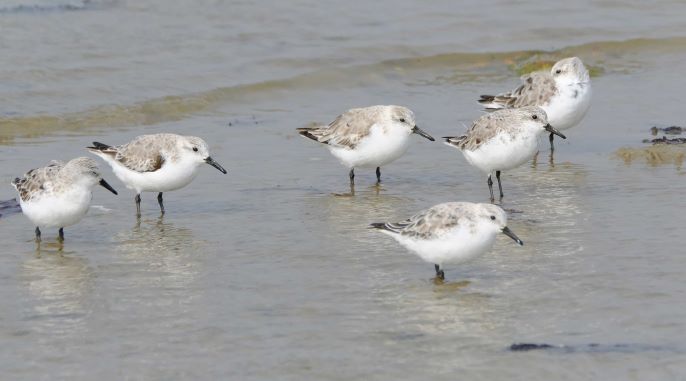
Seven Sanderlings were on Meon Shore yesterday morning feeding on the incoming tide I had not seen any for several weeks normally by now most have returned to their Arctic breeding grounds and I thought they had all left. Normally I see only the odd bird this time of year which has decided to stay on our shores. Interestingly these birds remain in their winter plumage and not changed to their breeding colours where their backs heads and wings change to a light brown.



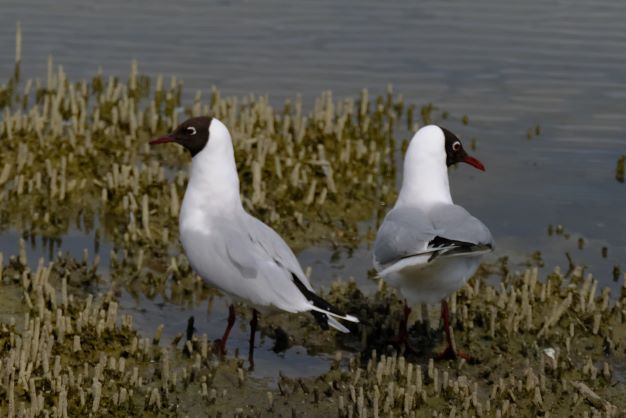
The black-headed gull is the UKs commonest small gull. The black-headed gull has actually a chocolate-brown head in the breeding season (In the winter their heads turn to mainly white ). I have posted pictures many times before as they are a common sight both on the coast and inland area where we live. There is a large breeding colony within Titchfield haven nature reserve. Now we are into April the colony is noisy with birds displaying pairing up and squabbling over nest spots. Many bird watchers will overlook this spectacle for rarer birds that visit our shores. Apart from the noise each year I look forward to this gull’s breeding season.
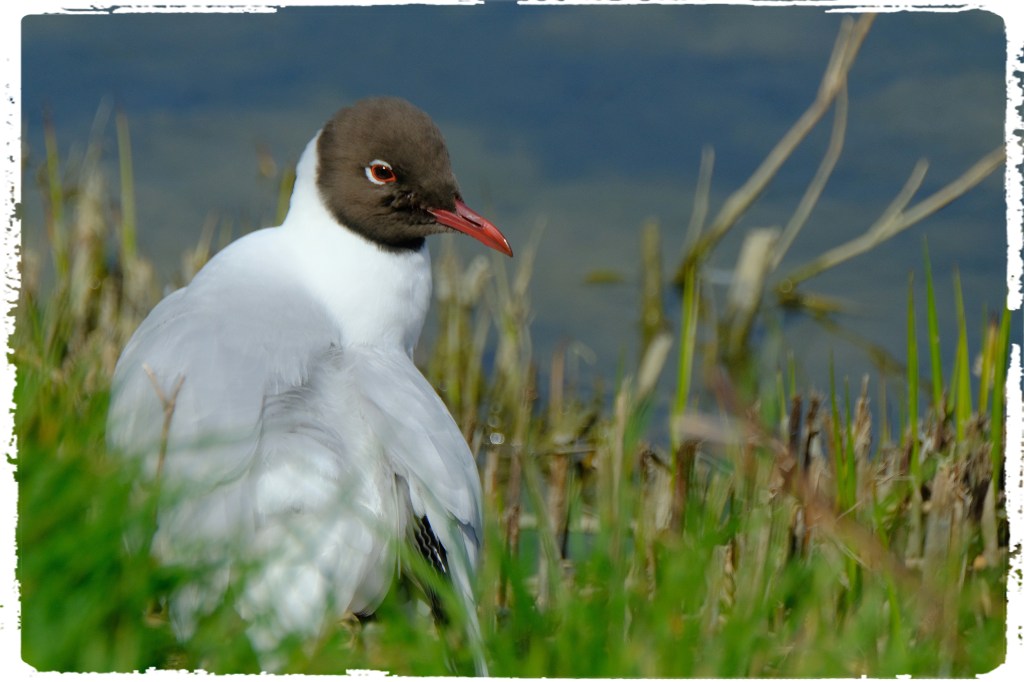
Length: 35-38cm
Wingspan: 1m
Weight: 250-330g
Average lifespan: 11 years

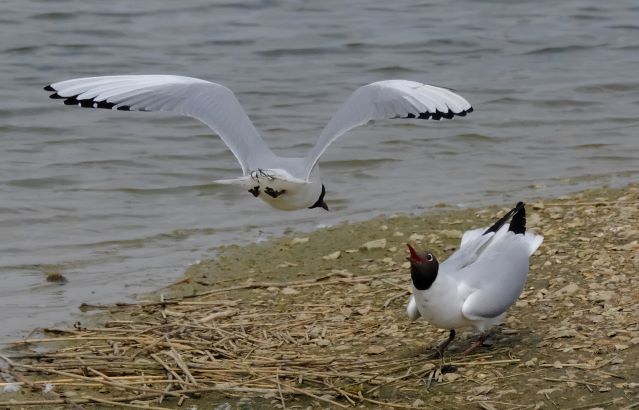
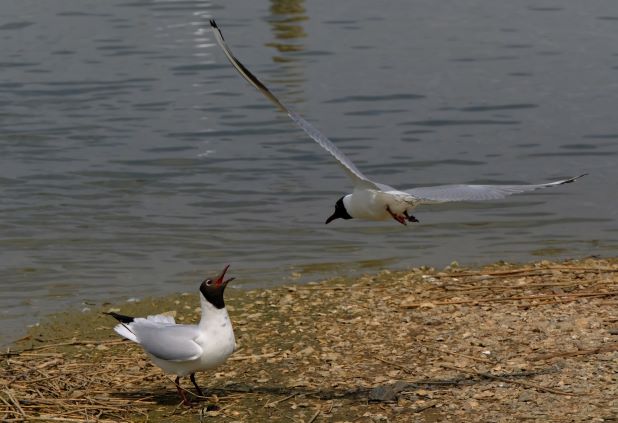


Black-headed Gulls are opportunistic feeders, they will eat most things taking invertebrates and plant materials, seeds bread, and are fond of chips thrown by tourists at the seaside.


A quick stop at Hamble Point at the mouth of Southampton Water where it meets the Solent.

The gorse is now fully out in flowers and the smell of the flowers fills the air with their strong scent which is like the smell of coconut.
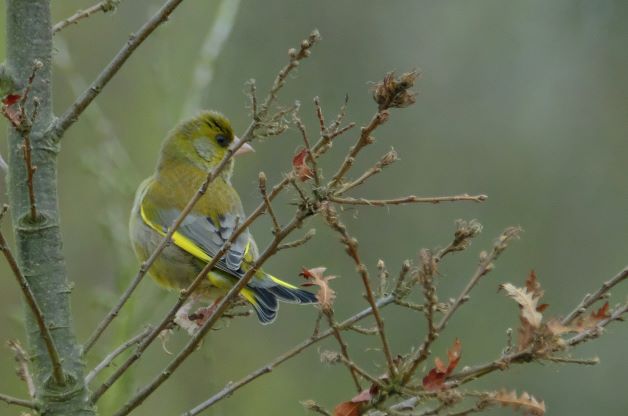
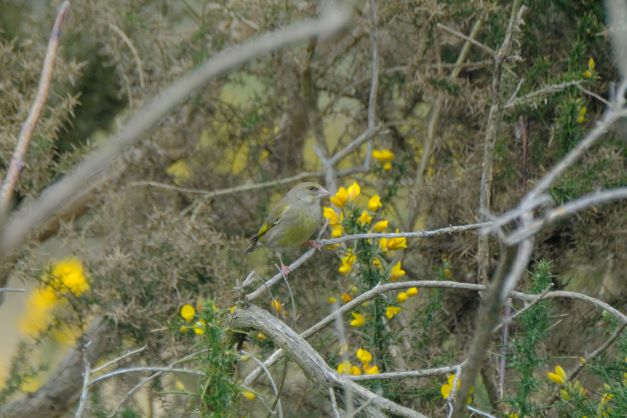
Greenfinches were a common sight when I was a child, especially on the bird table. I rarely see them today however, I spotted a pair feeding around the gorse flowers. (The male is darker in colour and is in the pictures I have posted 1st).


Another nice spot in the gorse was a small flock of long-tailed tits.


Another walk along the River Hamble today – yesterday we had a flurry of snow although it did not lay this morning’s walk was bitter with a biting wind blowing down the river.


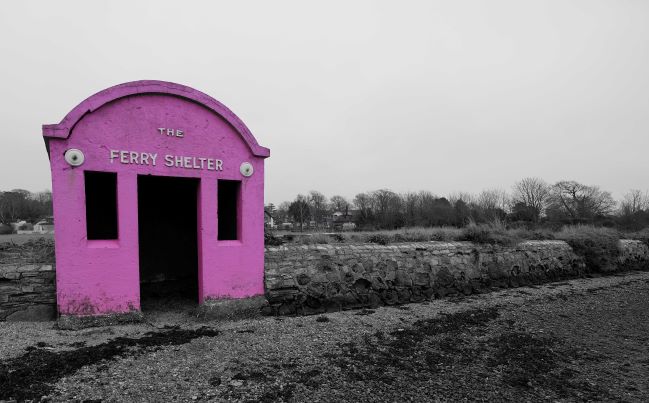
The ferry on the Hamble between Warsash and Hamble-le-Rice today is an ‘on-demand’ passenger ferry service is summoned via mobile phones – when my boys were small you had to jump up and down until the ferryman spotted you. What has also changed is the waiting shelter on the riverbank and the ferry which are all today painted a bright pink were then blue.
Records show there has been a ferry on the site dating back to 1493 when the crossing was part of a pilgrim’s route. The ferry now provides a link for local, and national footpaths such as the Solent Way and the National Cycle Route 2.
A pair of Shelduck on the mud they are large ducks that are about the size of a small goose.

A Little Egret fishing as the tide comes in.



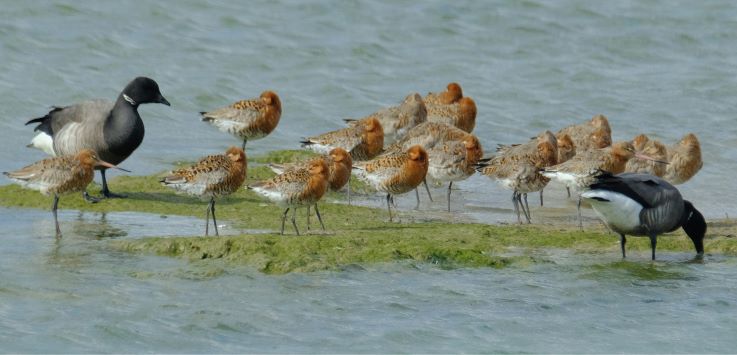
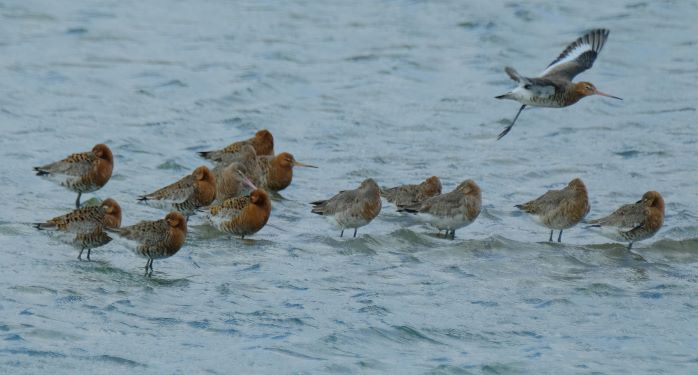
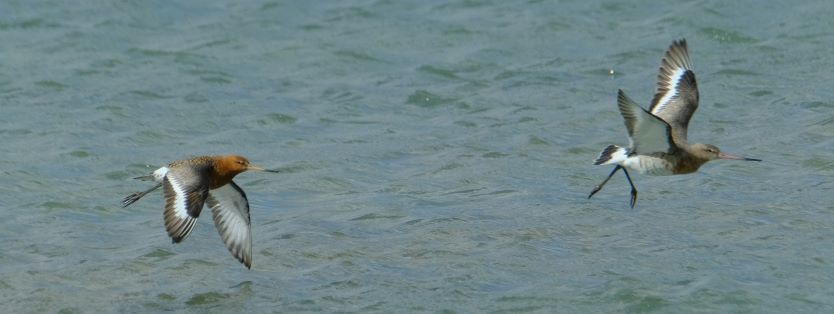
Black-tailed Godwits (+ a couple of Brent Geese) holding onto the last part of the land as the tide comes in.


Edit extra picture from one of my previous blogs. Ferry waiting hut.
 Continued Reflections from my World.