On the Solent, we have some large clams about the size of a clenched fist. They were introduced from North America where it is known as a Quahog clam into British waters several times since the middle of the nineteenth century. The first live specimen was found in 1864 in the Humber. It was successfully introduced from the USA into Southampton Water in 1925. These are long-lived species a clam dredged from Icelandic waters had lived for 400 years. Is this the longest-lived animal known to science.
An example of a clam from Southampton Water from a past blog to give an overview of their size.

It was about 10 years ago I first spotted Herring Gulls collecting bivalves such as cockles or mussels on the beach taking them to a height of about 30 feet into the air and dropping them, smashing open the shell to eat the prize inside.
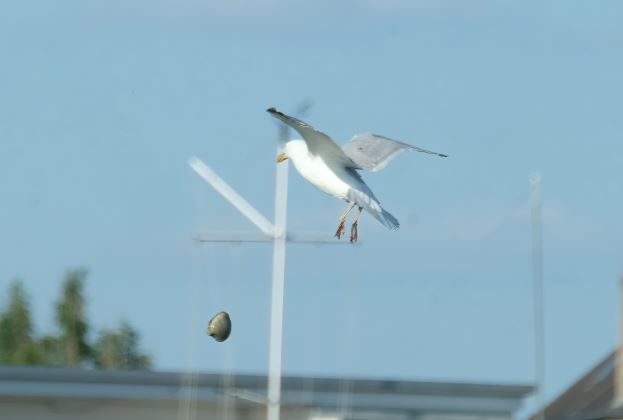
Yesterday I watched a Herring Gull pull a Quahog clam from the beach and drop it to smash it. I think this could have been fatal if it had landed on someone’s head!
“Gull finds its clam”.
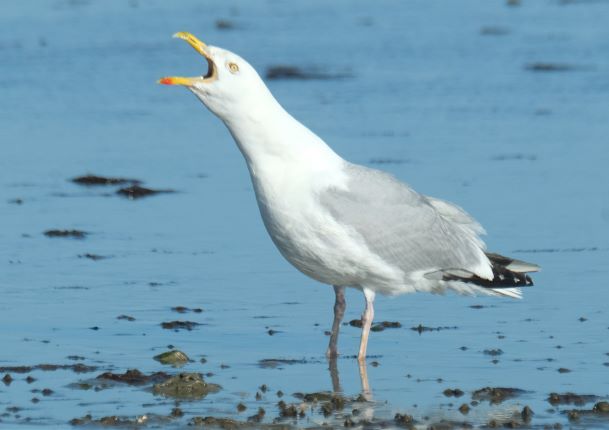

Once found it is time to pull it free of the beach.

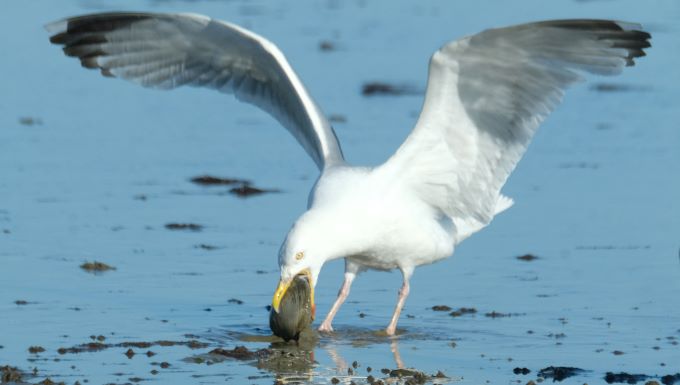
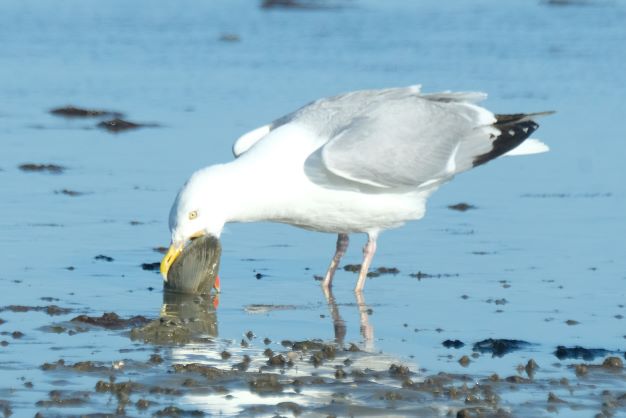
Once it is extracted a second gull takes an interest in it – not wanting to give up his prize a scrap ensues.
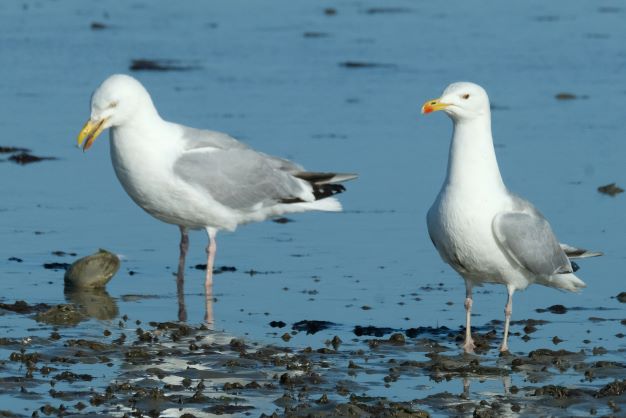


Scrap over now it is time to get the clam into the air.
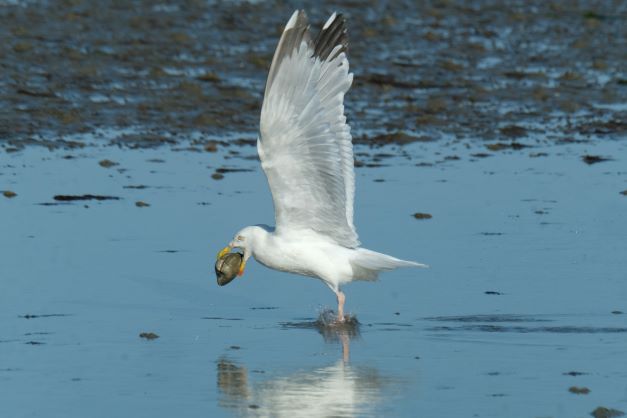
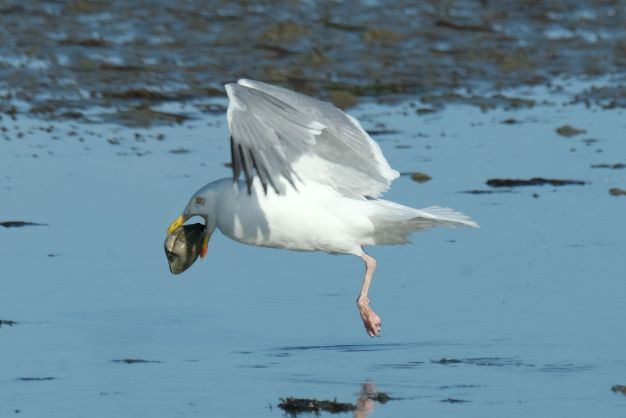
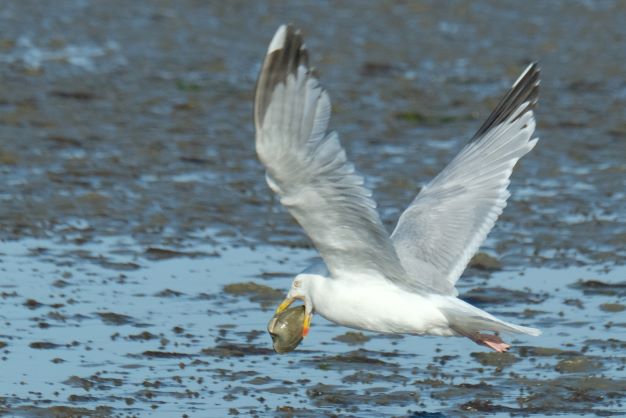
Once airborne the gull gains height and drops his “bomb”.
























 Continued Reflections from my World.