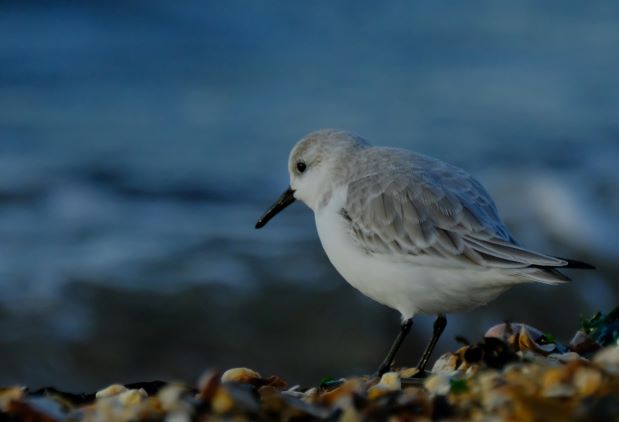
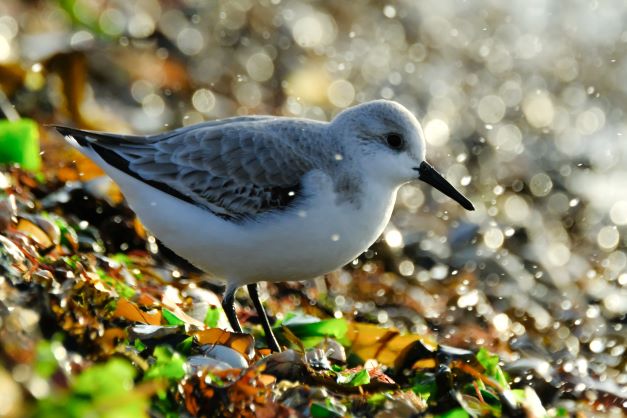
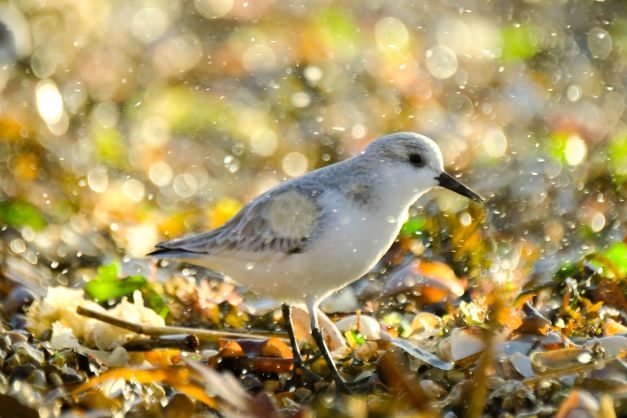
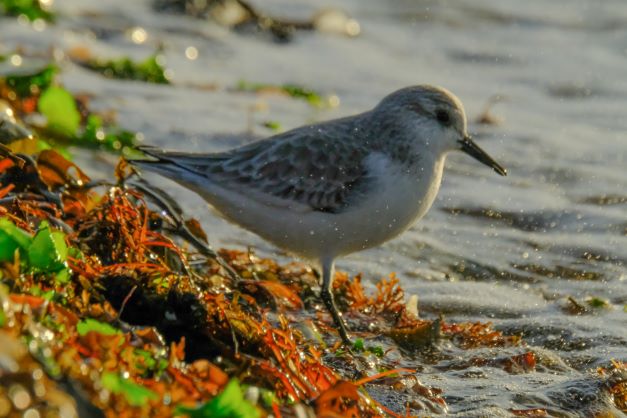
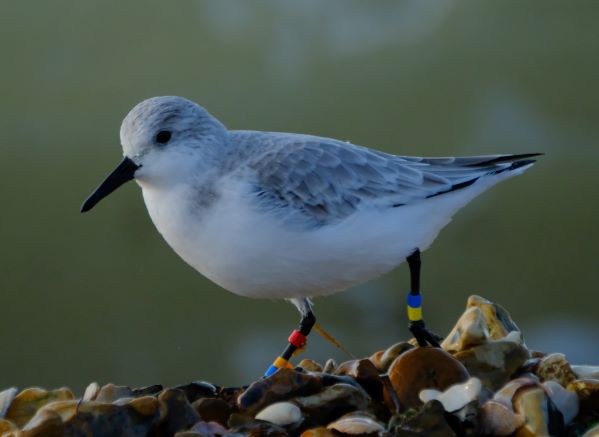
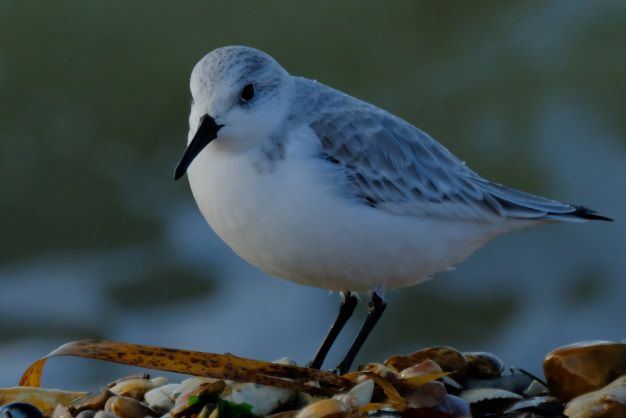
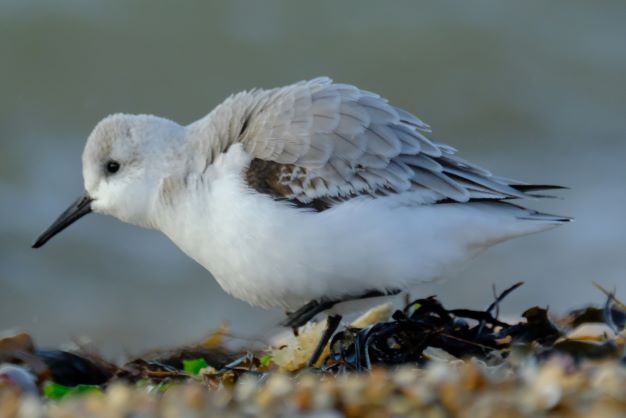
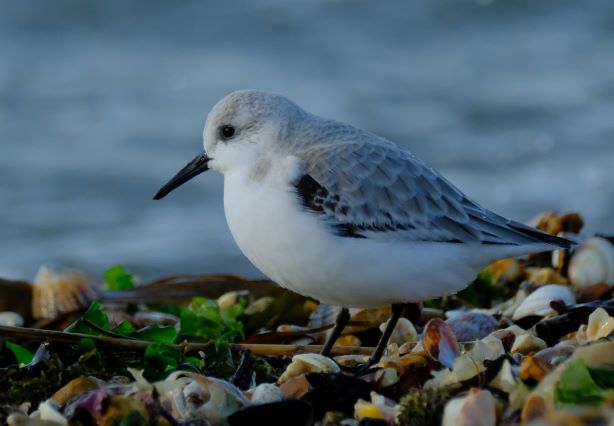
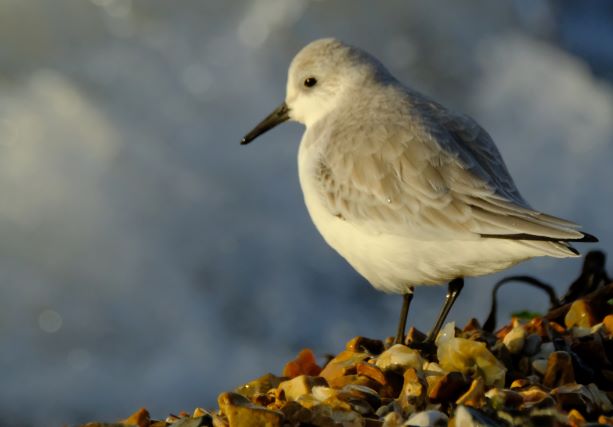
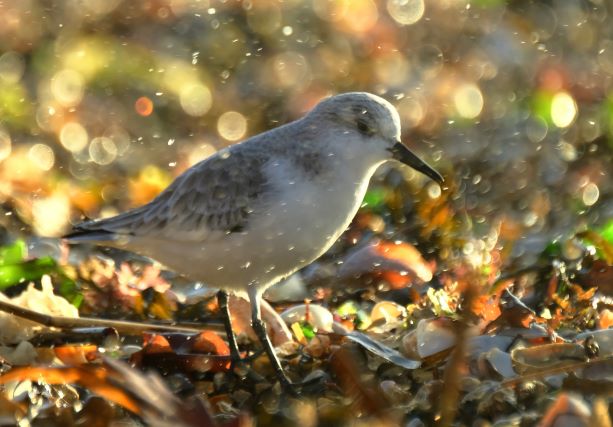
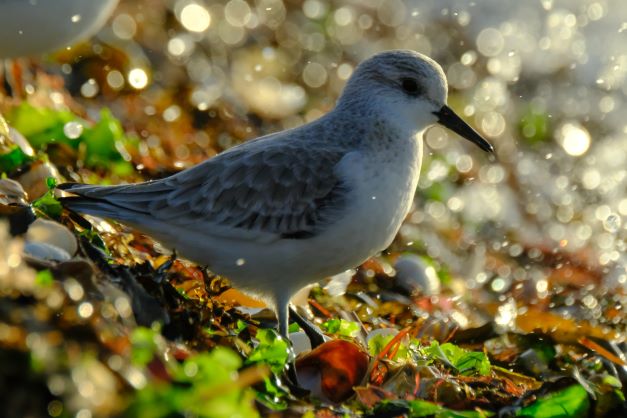
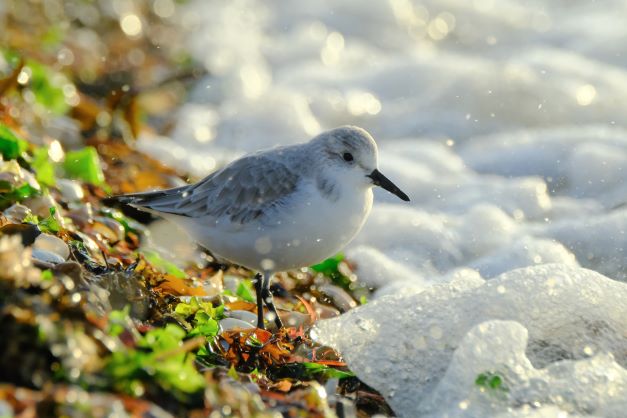
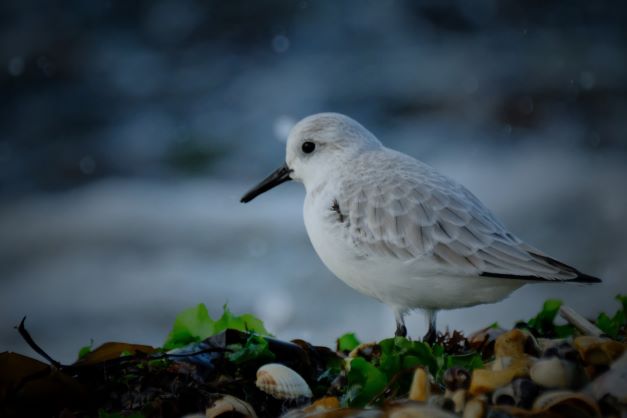
Some more photographs of the Sanderling on Meon Shore. These were taken on the 3rd December. My aim was to catch the sea spray crashing onto the beach and showering them. These little birds rush down to the water’s edge between waves to catch their lunch often little sand hoppers.
Waiting for the wave!
I always feel these little birds are tough little fellows. If I was the same height as a Sanderling the waves would be over twice my height I do not think I would have the nerve to stand at the water’s edge as they do! I also know how long it takes me to drive to Scotland from here on the south coast but how do these little birds fly past Scotland up to the Arctic tundra to breed each year?
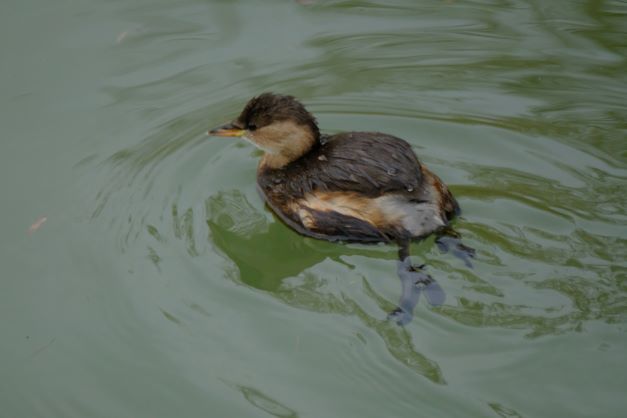
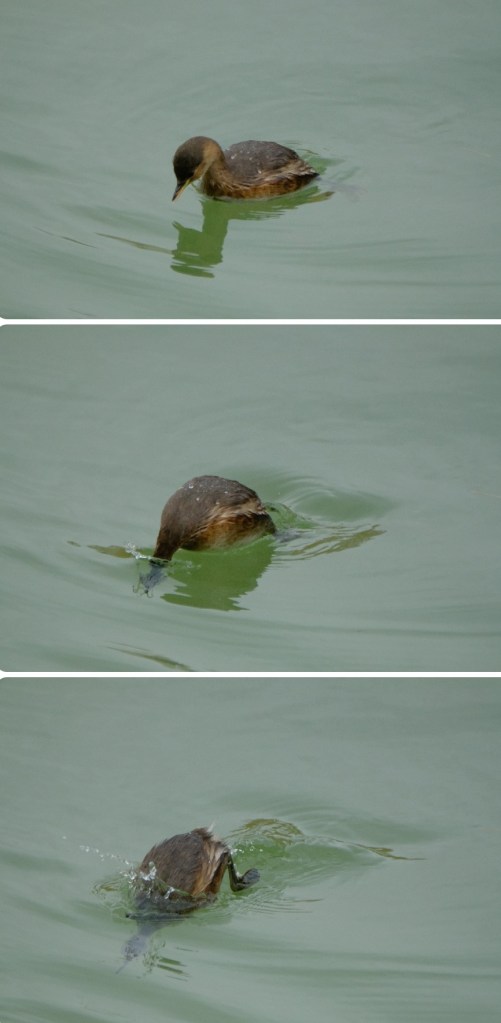
The Little grebe is also known as a dabchick, there are often up to 5 near the road bridge at Titchfield harbour. Yesterday I just spotted 2. In their non-breeding colours, they are quite toned down against their summer colours they have a bright chestnut throat and cheeks with a pale gape patch at the base of the bill.
They feed on little fish which they dive down for.
Today was a dull and damp morning by 08.30 I was led flat on the beach enjoying some close views of a large flock of about 100 of these busy little birds feeding along the shoreline and dodging the spray.
Today’s post gives just a “few” of the pictures I took this morning.
The longest living sanderling was from Nova Scotia and was recorded to be 13 years and one month old.
The birds we see in the UK are long-distance migrants who have moved south to winter from their Arctic breeding grounds
We woke to a tiny sprinkle of snow which was the 1st of the winter by 08.45 it had gone and we had a fairly bright but cold morning.
We had a good flypast of the Male Marsh Harrier in Titchfield Haven. There is a pair in the haven they can often be seen over the reedbeds. There are about breeding 400 pairs in the UK mainly in the south and south-east. Their wingspan can be a good 4.25 feet.
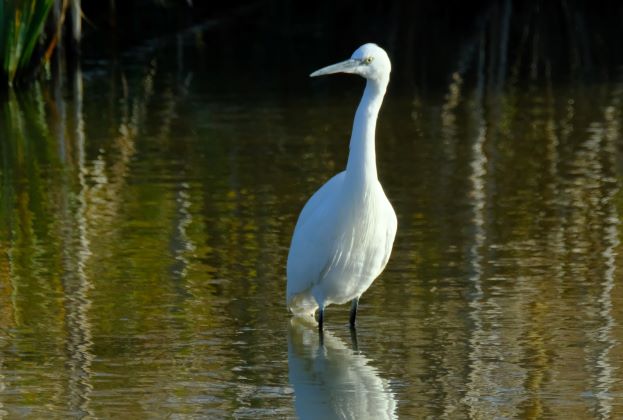
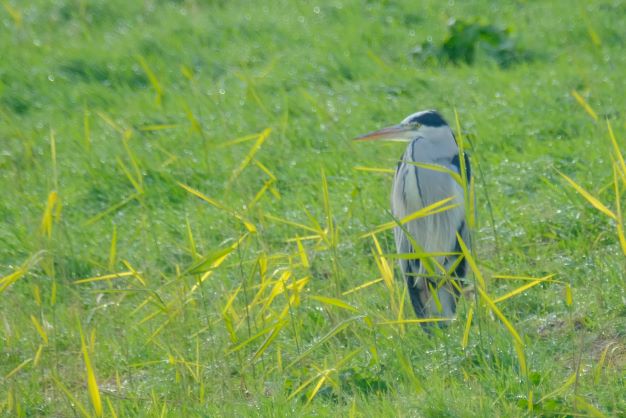
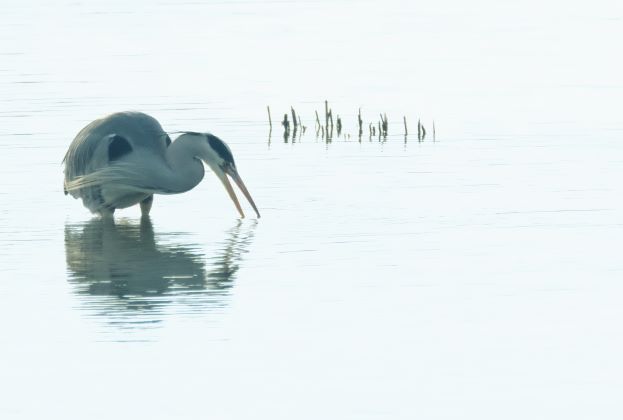
A Heron resting before a fishing trip into the cold water.
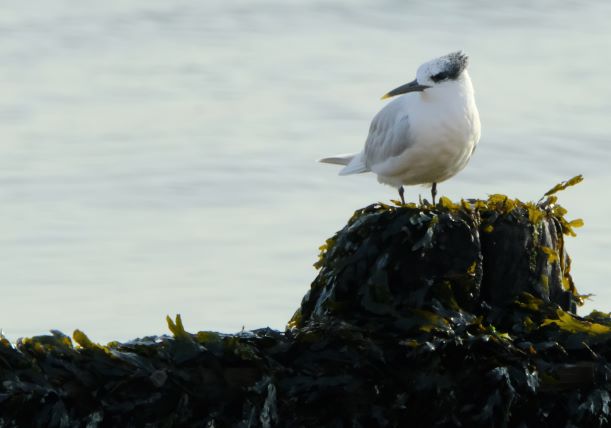
We were surprised to see 2 Sandwich Terns still on the beach normally they would be back in South Africa by now.
The seaside towns we visit along the coast at North Devon and Somerset are empty of most holidaymakers seasonal shops are closed for the winter. Pleasure boats have been taken out of the water and many car parks have become winter boat parks.
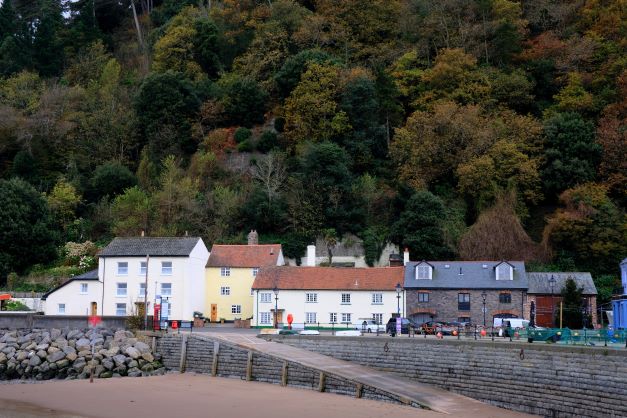
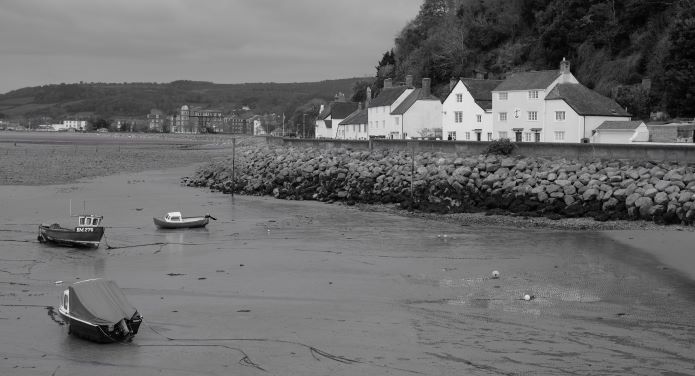
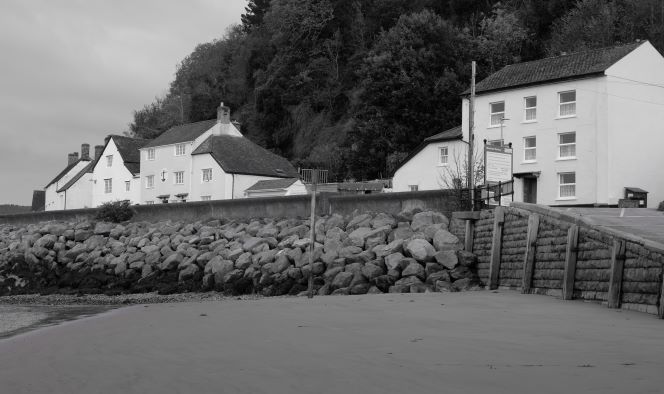
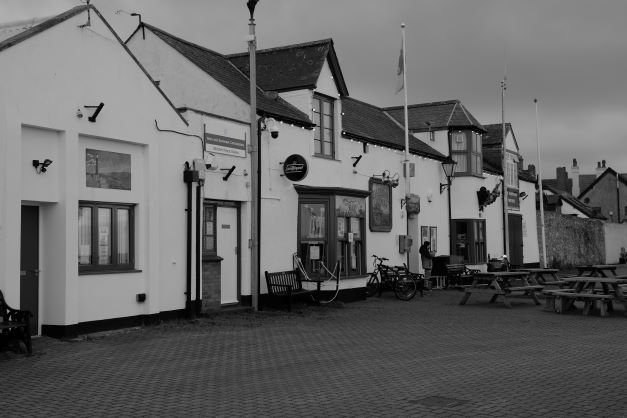
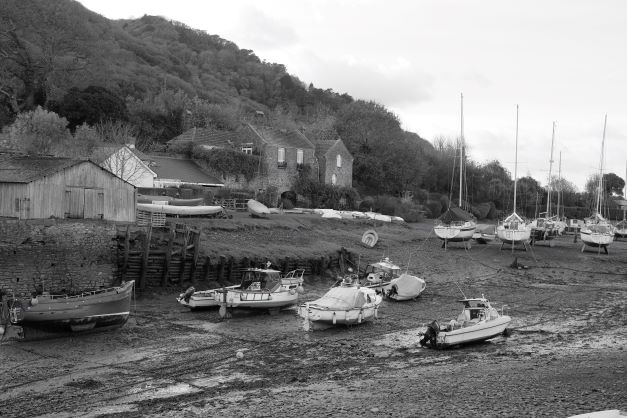
MINEHEAD. old harbour area.
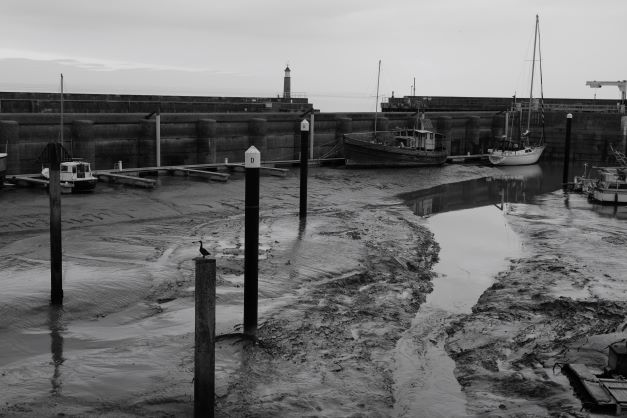
WATCHET. a small historic harbour town.
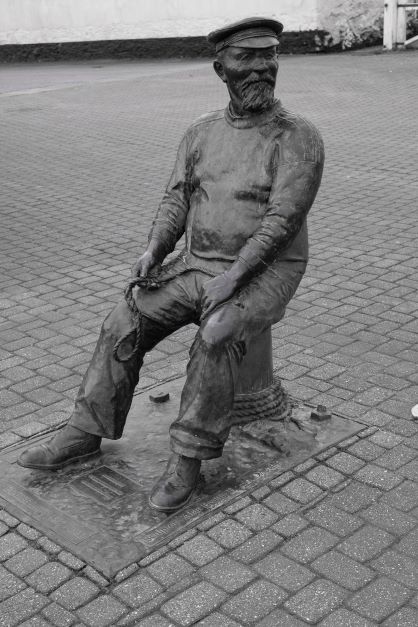
John Short was born near Watchet in 1839. He first went to sea from Watchet as a boy in 1860’s joined a Yankee ship in the American Civil War. At the age of 61 he retired and returned to Watchet. He brought the songs of the sea home with him. He became known as ‘Yankee Jack’ he became known for sea shanties. They were collected and collated by Cecil Sharp and Sir Richard Terry for our English musical heritage. A statue of “Jack” was placed overlooking the harbourside.
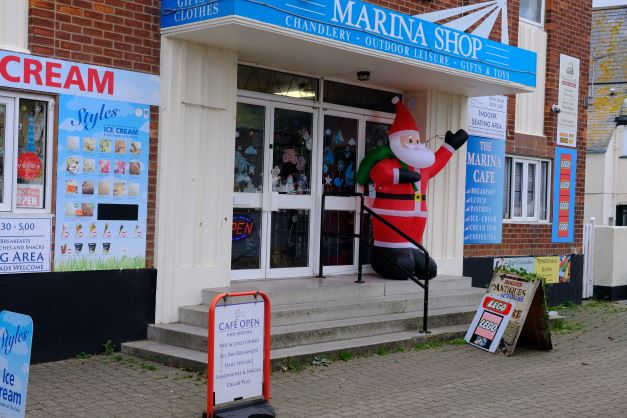
Christmas has started in the town of Watchet.
Watchet harbour became the inspiration for the epic poem The Ancient Mariner by the poet Samuel Taylor Coleridge. He walked over the Quantock Hills from his home in Nether Stowey, with his friends William and Dorothy Wordsworth. It has been said that looking down on Watchet from St. Decuman’s Church gave him inspiration for his poem.
2003 statue of the Ancient Mariner also on the harbourside.
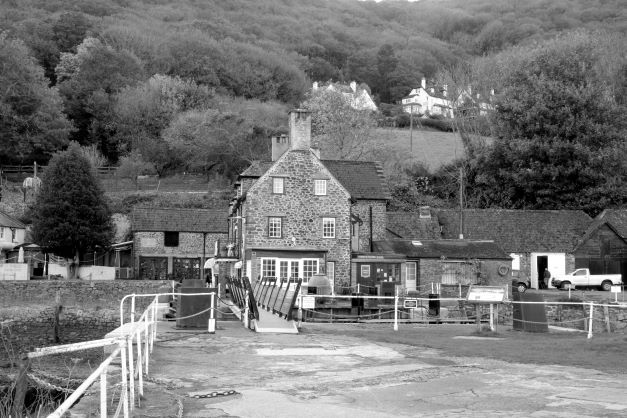
PORLOCK WEIR. The settlement at the sea here is like stepping back in history and if it was not for the modern cars and TV ariel you could be could get lost in the moment.
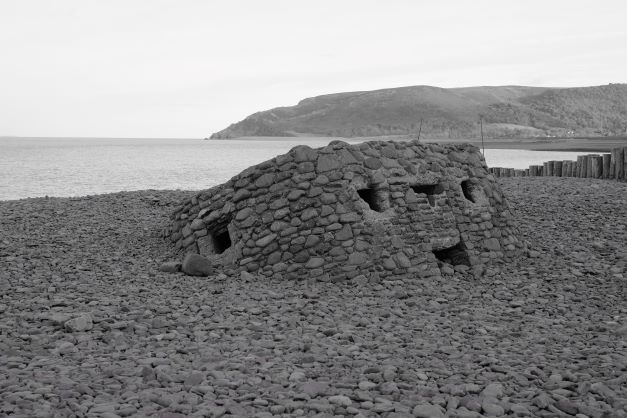
WW2 Pillboxes using local beach stones to camouflage their outline.
ILFRACOMBE. you can tell the season is over in this town many of the waterfront businesses have shut and are boarded up for the winter, the hustle and bustle has now gone – it is so different here in the summer. The boat trip kiosks on the harbour are waiting for spring.
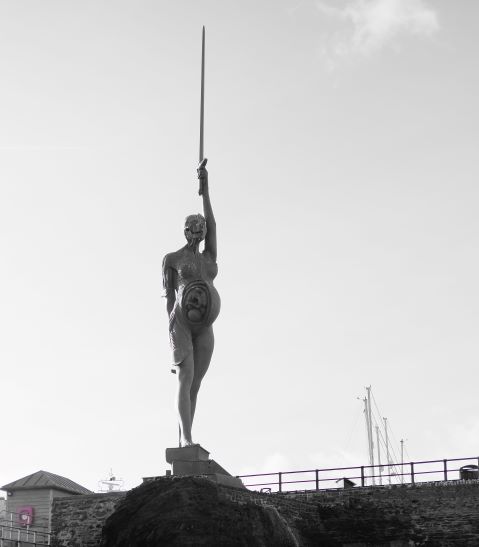
A 66 foot stainless steel and bronze sculpture named Verity, created by artist Damien Hirst, stands on the pier at the entrance to the harbour looking out over the Bristol Channel towards South Wales.
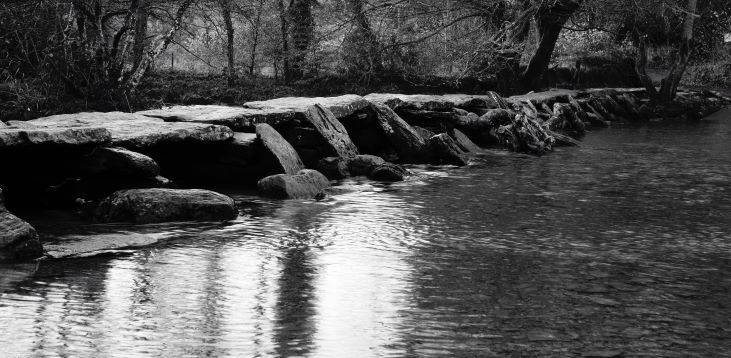
Tarr Steps is a clapper bridge across the River Barle in the Exmoor National Park, Somerset, England.
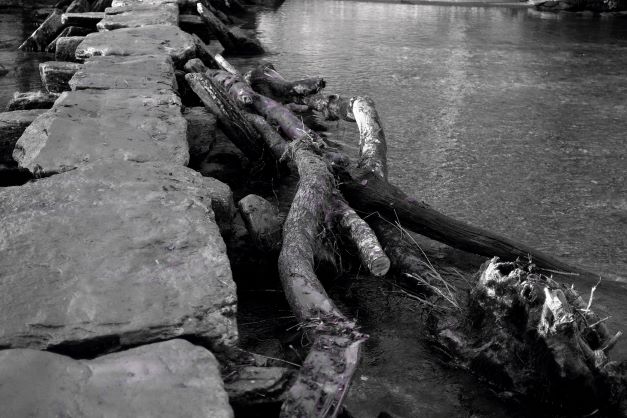
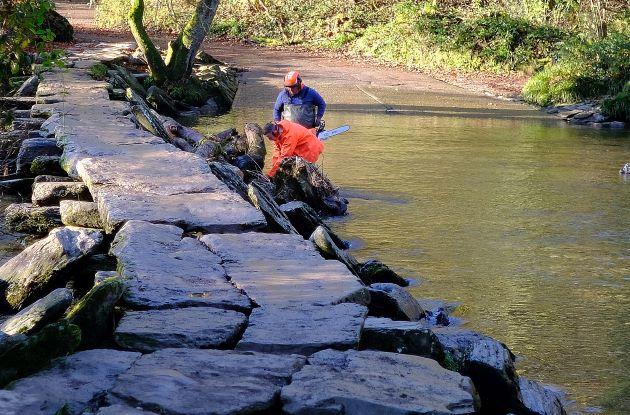
Its age is unknown, as several theories claim that Tarr Steps dates from the Bronze Age but others date them from around 1400 AD. The stones forming the spans weigh between one and two tons each. Over the years the bridge has been badly damaged by floodwaters and branches floating down with the flood and smashing into the bridge. After the flood of 1952 debris has been trapped by cables strung across the river upstream of the bridge. These cables were damaged in 2016 and failed which caused the bridge to be damaged so again had to be repaired.
While visiting the steps workmen arrived to remove a build up of logs.
log build up.
Upstream, the log catcher looks like a damaged suspension foot bridge.